

Can Dogs Eat Celery? Complete Safety Guide

Yes, dogs can eat celery. The entire plant, including the stalk, leaves, and seeds, is considered non-toxic to dogs, and celery can be served raw or cooked. Celery is about 95 percent water and very low in calories, which makes it a popular choice for dogs on a weight management plan. The main things to watch for are the stringy fibers in the stalk, which should be removed or softened to reduce choking risk, and portion size, since too much celery can cause digestive upset or increased urination.
Key Takeaways
- The whole celery plant, including stalks, leaves, and seeds, is considered non-toxic to dogs.
- Celery is about 95 percent water and very low in calories, making it a good weight-friendly treat.
- The stringy fibers running through celery stalks can pose a choking risk if not removed or cut properly.
- Celery can be served raw or cooked, as long as it is plain, with no salt, oil, or seasoning.
- Overfeeding celery can lead to digestive upset or more frequent urination due to its high water and fiber content.
- Treats, including celery, should never make up more than 10 percent of a dog’s daily calories.
Can Dogs Eat Celery?
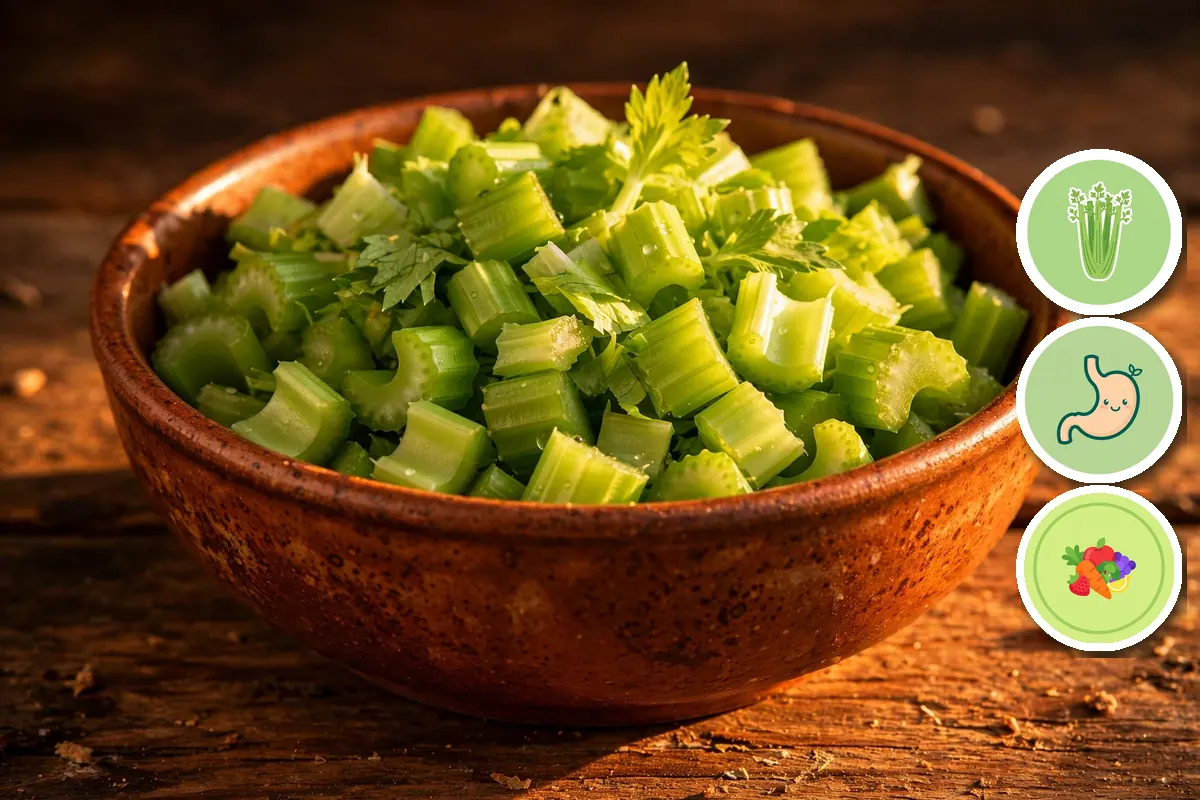
Yes, dogs can eat celery safely, and it is considered one of the more universally tolerated vegetables for dogs. Celery is non-toxic, low in calories, and high in water content, making it a refreshing, crunchy snack option. Unlike some vegetables that require careful preparation to remove toxic parts, celery is largely safe throughout the plant, though certain preparation steps still matter for comfort and safety.
The main caution with celery has less to do with toxicity and more to do with texture and portion control. The stalk contains long fibrous strings that can be tough to chew and swallow, and eating too much celery at once, given its high water and fiber content, can lead to mild digestive upset.
Nutritional Profile of Celery
Celery offers a modest but genuine range of nutrients relative to its very low calorie count.
| Nutrient | Benefit for Dogs |
|---|---|
| Vitamin A | Supports vision, skin health, and immune function |
| Vitamin C | Supports immune health and acts as an antioxidant |
| Vitamin K | Supports healthy blood clotting and bone health |
| Potassium | Supports muscle and nerve function |
| Calcium | Supports bone and dental health |
| Folate | Supports cell function and metabolism |
| Water content (about 95%) | Supports hydration |
Because celery is mostly water and fiber with very little protein or fat, it should be viewed as a light, hydrating snack rather than a meaningful source of nutrition on its own. A complete and balanced commercial dog food already provides everything a dog needs.
Calories in Celery
Celery is one of the lowest calorie vegetables a dog can eat, which is part of why it is often recommended for dogs that need to manage their weight.
| Portion | Approximate Calories |
|---|---|
| 1 medium celery stalk | About 6 to 10 calories |
| Half cup of chopped celery | About 8 calories |
| A standard dog biscuit, for comparison | About 40 calories |
A single celery stalk contains a small fraction of the calories found in a typical dog biscuit, which makes it an easy way to offer a generous treat without meaningfully affecting a dog’s daily calorie intake. The general treat guideline still applies. Treats, including celery, should make up no more than 10 percent of a dog’s total daily calorie intake, with the remaining 90 percent coming from a complete and balanced dog food.
Advantages of Feeding Celery to Dogs

1. Extremely Low in Calories
Celery allows for a generous serving size without significantly affecting a dog’s daily calorie budget, making it a strong option for dogs on a weight management plan.
2. Excellent Source of Hydration
With water content around 95 percent, celery can offer a helpful hydration boost, particularly during warm weather.
3. Low in Fat and Sodium
Plain celery contains virtually no fat and very little natural sodium, making it a cleaner treat option compared to many processed snacks.
4. Contains Vitamin K and Other Nutrients
Vitamin K supports healthy blood clotting and bone health, and celery also provides small amounts of vitamin A, vitamin C, potassium, and calcium.
5. Natural Crunch May Support Dental Health
The fibrous, crunchy texture of raw celery can provide a mild scrubbing effect on a dog’s teeth as they chew, though it should not replace regular dental care.
6. Easy to Prepare
Celery requires no cooking and can be served fresh, frozen, or lightly cooked with minimal preparation.
Disadvantages and Risks of Feeding Celery to Dogs
1. Choking Hazard From Stringy Fibers
Celery stalks contain long, stringy fibers that can be difficult to chew and swallow. A whole stalk or large pieces can pose a choking risk or, in rare cases, contribute to an intestinal blockage, particularly in small dogs or dogs that swallow food quickly.
2. Digestive Upset From Overfeeding
Because celery is so high in water and fiber, feeding too much at once can lead to soft stool, gas, or diarrhea in some dogs.
3. Increased Urination
Due to its high water content, feeding a large amount of celery can lead to more frequent urination in some dogs. This is generally not a health concern on its own, but it is worth being aware of.
4. Pesticide Residue on Non-Organic Celery
Conventionally grown celery is often noted for carrying pesticide residue, particularly on the leaves. Washing celery thoroughly, or choosing organic when possible, can help reduce this concern.
5. Celery Seed Extracts and Essential Oils Should Be Avoided
While whole celery seeds in very small amounts are generally considered acceptable, concentrated celery seed extracts, essential oils, or supplements should not be given to a dog without direct veterinary guidance, since they are far more concentrated than the plant itself.
6. Not a Nutritional Requirement
Celery is a supplemental treat, not a required part of a dog’s diet. A complete and balanced commercial dog food already provides everything a dog needs.
Advantages vs. Disadvantages at a Glance
| Advantages | Disadvantages |
|---|---|
| Extremely low in calories | Stringy fibers can pose a choking risk |
| Excellent source of hydration | Overfeeding can cause digestive upset |
| Low in fat and sodium | Can lead to increased urination in large amounts |
| Contains vitamin K and other nutrients | Non-organic celery may carry pesticide residue |
| May support dental health through crunch | Seed extracts and essential oils should be avoided |
| Easy to prepare | Not nutritionally required |
Can Dogs Eat Raw Celery?
Yes, and raw celery is generally the form most recommended for dogs. Raw celery retains the highest water content and the most vitamin C, along with the satisfying crunch that many dogs enjoy. To serve raw celery safely, wash the stalk thoroughly, use a vegetable peeler or paring knife to remove the tough strings along the back of the stalk, and cut it into small, appropriately sized pieces before offering it.
Can Dogs Eat Cooked Celery?
Yes, cooked celery is also safe for dogs. Lightly steaming or boiling celery until it softens can make it easier to chew and digest, which can be especially helpful for senior dogs or dogs with dental issues. Cooking does reduce some of the vitamin C content compared to raw celery, but it also softens the stringy fibers that contribute to choking risk. As with any prepared vegetable, cooked celery should be plain, with no salt, butter, oil, or seasoning, and should not be cooked in a broth made with onion or garlic.
Can Dogs Eat Celery Leaves and Seeds?
Celery leaves are generally considered non-toxic and can be offered to dogs in small amounts, torn or chopped and washed thoroughly. Some sources note that the leaves carry a slightly higher concentration of certain natural compounds than the stalk, which can occasionally cause mild stomach upset in sensitive dogs, so smaller portions are advisable if leaves are included.
Whole celery seeds are also generally considered acceptable in very small amounts, such as a light sprinkle over food. However, concentrated celery seed extracts, supplements, or essential oils are a different matter and should not be given to a dog without veterinary guidance, since they are far more potent than the whole seed and can potentially interact with certain medications or health conditions.
How Much Celery Can a Dog Eat?
Portion size should scale with a dog’s body weight. Use this chart as a general starting point, and adjust based on the individual dog’s activity level, health status, and any veterinary recommendations.
| Dog Size | Weight Range | Safe Serving | Frequency |
|---|---|---|---|
| Extra small | 2 to 10 lbs | A few thin slices | 2 to 3 times per week |
| Small | 11 to 20 lbs | Half a stalk, chopped | 2 to 3 times per week |
| Medium | 21 to 50 lbs | 1 stalk, chopped | Up to daily, in moderation |
| Large | 51 to 90 lbs | 1 to 2 stalks, chopped | Up to daily, in moderation |
| Extra large | 91+ lbs | 2 stalks, chopped | Up to daily, in moderation |
As with any new food, it is best to start with a small amount and monitor for digestive reaction before making celery a regular part of a dog’s treat rotation.
Can Puppies Eat Celery?
Puppies can eat celery in very small amounts, but it is generally not the best treat choice for young dogs. Puppies have developing digestive systems that are more sensitive to new foods, and introducing too many new items at once can lead to gastrointestinal upset. If offering celery to a puppy, start with a very small, well-cut piece and monitor closely for any signs of diarrhea or vomiting.
Celery and Dogs with Health Conditions
Certain dogs should approach celery with more caution.
| Condition | Consideration |
|---|---|
| Kidney disease | Potassium content should be discussed with a veterinarian before regular feeding |
| Digestive sensitivities | High water and fiber content may cause looser stool or discomfort more easily |
| Dogs on certain medications | Celery seed in concentrated forms may interact with some medications, so whole seeds should only be given in very small amounts |
How to Safely Feed Celery to Your Dog
- Wash the celery thoroughly, especially if it is not organic.
- Remove the tough strings from the back of the stalk using a vegetable peeler or paring knife.
- Cut the stalk into small, bite-sized pieces appropriate for the dog’s size.
- Serve plain, with no salt, butter, oil, or seasoning.
- Start with a small amount and monitor for digestive reaction before offering it regularly.
Ways to Serve Celery to Dogs
- Raw slices: Wash, destring, and cut into small pieces for a crunchy, hydrating snack.
- Steamed or boiled: Lightly cook until softened for older dogs or those with dental issues.
- Frozen pieces: Freeze small celery chunks for a refreshing treat during warm weather.
- With a smear of peanut butter: A thin layer of xylitol-free peanut butter can make celery more appealing as an occasional treat.
- Mixed into food: Add a few small chopped pieces to a dog’s regular food for variety.
Celery vs. Other Low-Calorie, Hydrating Vegetables
| Vegetable | Water Content | Calories (per 100g) | Key Benefit | Watch Out For |
|---|---|---|---|---|
| Celery | About 95% | About 16 | Low calorie, crunchy | Stringy fibers are a choking risk |
| Cucumbe | About 96% | About 15 | Very low calorie, hydrating | Choking risk in large pieces |
| Zucchini | About 94% | About 17 | Fiber, low calorie | Serve cooked or raw in small pieces |
| Bell peppe | About 92% | About 31 | Vitamin C | Remove seeds and stem |
| Carrot | About 88% | About 41 | Beta carotene, fibe | Cut into manageable pieces |
For dogs on a strict weight management plan, celery and cucumber are both excellent low-calorie choices that can be offered generously within the 10 percent treat allowance.
Signs of Overfeeding or an Adverse Reaction
Watch for the following after introducing celery or increasing the portion size:
- Diarrhea or loose stool
- Gas or bloating
- Vomiting
- Increased urination
- Signs of choking or difficulty swallowing, particularly with larger stalk pieces
If any of these symptoms appear, especially choking or repeated vomiting, stop feeding celery and consult a veterinarian.
Frequently Asked Questions
Can dogs eat celery every day?
Small amounts can generally be fed regularly, since celery is very low in calories. As with any treat, it should stay within the overall 10 percent daily treat allowance, and portions should remain modest to avoid digestive upset.
Can dogs eat raw celery?
Yes, raw celery is safe and is often the recommended form, as long as the tough strings are removed and the stalk is cut into appropriately sized pieces.
Can dogs eat cooked celery?
Yes, cooked celery is safe and can be easier to chew and digest, particularly for senior dogs or dogs with dental issues. It should always be served plain.
Can dogs eat celery leaves?
Yes, celery leaves are generally considered non-toxic and can be offered in small, washed, chopped amounts, though some sensitive dogs may experience mild stomach upset from them.
Can dogs eat celery seeds?
Whole celery seeds in very small amounts are generally considered acceptable, but concentrated celery seed extracts, essential oils, or supplements should only be given with veterinary guidance.
Is celery a choking hazard for dogs?
It can be if served in large pieces or as a whole stalk, due to the long, stringy fibers. Removing the strings and cutting celery into small pieces reduces this risk significantly.
Can puppies eat celery?
Yes, in very small, well-cut amounts, though it is not typically the best treat choice for young dogs due to their more sensitive digestive systems.
Why is my dog urinating more after eating celery?
This can happen because celery is about 95 percent water. Feeding a large amount at once can lead to more frequent urination, which is generally not a cause for concern on its own but is worth keeping portions moderate to avoid.