
Can Dogs Eat Zucchini?

Quick Answer: Yes, dogs can eat zucchini. Zucchini is a safe, low-calorie vegetable for dogs when served plain, raw or cooked, with no seasoning, butter, oil, onion, or garlic. It is gentle on sensitive stomachs, hydrating, and low in fat, which makes it a useful healthy treat. Wash it well, cut it into bite-size pieces, and keep portions small so treats stay under 10% of daily calories.
Key Takeaways
- Zucchini is safe for dogs, raw or cooked, as long as it is plain and unseasoned.
- It is very low in calories, about 17 per 100 grams, so it suits dogs watching their weight.
- Zucchini provides vitamin C, potassium, vitamin B6, and fiber that support digestion and overall health.
- Always serve it plain: no butter, oil, salt, garlic, onion, or seasoning mixes.
- Cut zucchini into small pieces to prevent choking, especially for small dogs.
- Start with a small amount and watch for soft stool, then keep treats under 10% of daily calories.
Can Dogs Eat Zucchini?
Zucchini, also called courgette, is one of the easiest vegetables to share with your dog. It belongs to the squash family, and unlike some vegetables that need careful preparation, zucchini is safe raw or cooked. Its mild flavor and soft texture suit most dogs, including picky eaters and seniors with sensitive teeth. Because it is mostly water, it adds crunch and hydration without adding many calories.
The safety rule is simple: plain only. Zucchini itself is harmless, but the way people usually cook it is not. Butter, oil, salt, garlic, onion, and spice blends can upset your dog’s stomach, and onion and garlic are toxic to dogs. So skip the sauteed side dish from your plate and offer your dog a separate piece that was cooked with nothing added, or a raw slice straight from the cutting board. Cucumbers follow the same plain-only rule and make another good crunchy snack.
Zucchini is also practical. It is cheap, available year-round, and easy to prepare in minutes. You can slice it raw, steam it, boil it, or roast it plain, then cut it into bite-size pieces. Many owners use it as a low-calorie training treat or mix a few pieces into kibble to add volume without adding fat. If your dog has a health condition or follows a special diet, check with your vet first.
Nutritional Profile of Zucchini
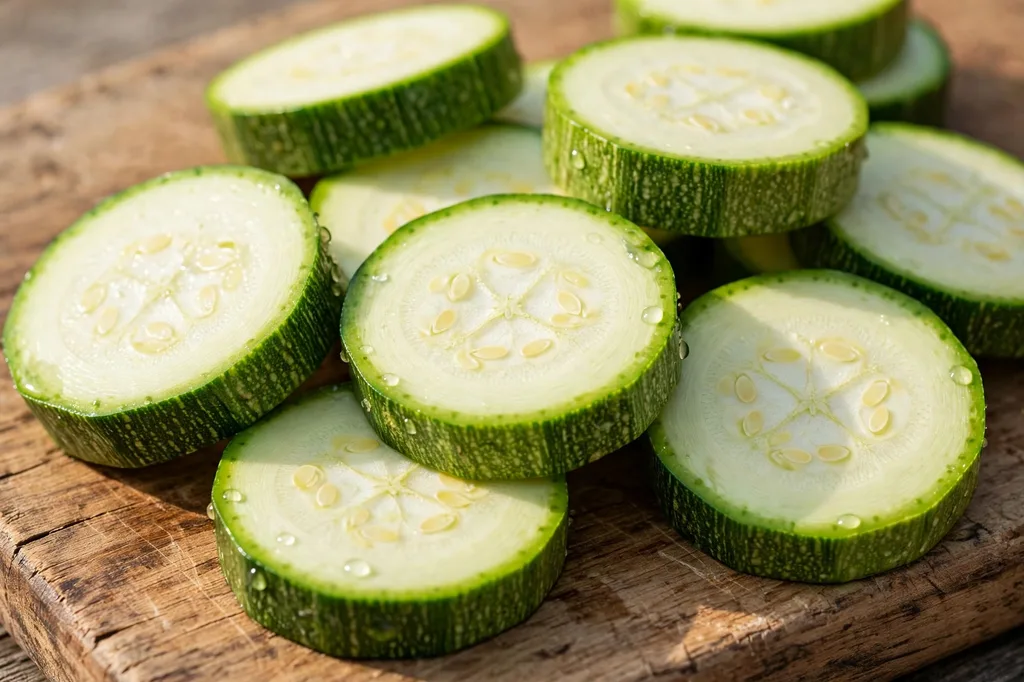
| Nutrient (per 100g) | Amount | Potential Benefit for Dogs |
|---|---|---|
| Calories | 17 kcal | Very low, helps with weight control |
| Carbohydrates | 3.1 g | Low, mostly natural sugars and fiber |
| Fiber | 1.0 g | Gentle support for digestion |
| Protein | 1.2 g | Small amount, not a protein source |
| Fat | 0.3 g | Almost fat-free, easy on the pancreas |
| Vitamin C | 17.9 mg | Antioxidant that supports immunity |
| Potassium | 261 mg | Supports muscles, nerves, and hydration |
| Vitamin B6 | 0.16 mg | Helps metabolism and red blood cell health |
Calories in Zucchini
Zucchini is one of the lowest-calorie vegetables you can offer a dog, with only about 17 calories per 100 grams. A cup of sliced zucchini, roughly 120 grams, contains about 20 calories, which is a tiny fraction of most dogs’ daily needs. That makes it a smart swap for calorie-dense treats like biscuits or cheese. Just remember that treats, even healthy ones, should stay under 10% of your dog’s daily calories.
Benefits of Feeding Zucchini to Dogs
1. Low in Calories, Good for Weight Control
Zucchini is mostly water, so it fills your dog up without adding fat or many calories. For overweight dogs, replacing part of a high-calorie treat with zucchini slices can help with weight control while still giving them something to chew. It also adds volume to meals, so a dog on a reduced-calorie diet feels more satisfied. Ask your vet about a weight plan if your dog needs to lose more than a few pounds.
2. Gentle Fiber for Digestion
Zucchini contains about 1 gram of fiber per 100 grams, which supports healthy digestion and regular bowel movements. The fiber is gentle, so it rarely causes gas the way beans or cabbage can. Dogs with sensitive stomachs often tolerate zucchini well, and a few cooked pieces can help firm up loose stool. Too much fiber at once can still cause soft stool, so introduce it slowly. Green beans are another gentle, fiber-rich vegetable many dogs enjoy.
3. Vitamin C for Immune Support
Zucchini provides vitamin C, an antioxidant that supports the immune system and helps protect cells from damage. Dogs make some vitamin C themselves, but extra from food can still help, especially for older dogs. A few slices of zucchini are an easy way to add this vitamin without adding sugar or fat.
4. Potassium for Muscles and Nerves
With about 261 mg of potassium per 100 grams, zucchini supports normal muscle function, nerve signals, and fluid balance. Potassium works with sodium to keep your dog’s body hydrated and their heart beating steadily. Most complete dog foods already supply enough potassium, but zucchini adds a little extra in a natural form.
5. Hydrating and Easy to Chew
Zucchini is about 94% water, which helps keep your dog hydrated, especially in warm weather. Its soft texture is easy to chew for puppies, seniors, and dogs with dental problems. Raw slices give a satisfying crunch, while steamed pieces turn soft enough for dogs that struggle with hard foods.
Risks of Feeding Zucchini to Dogs
1. Upset Stomach From Too Much at Once
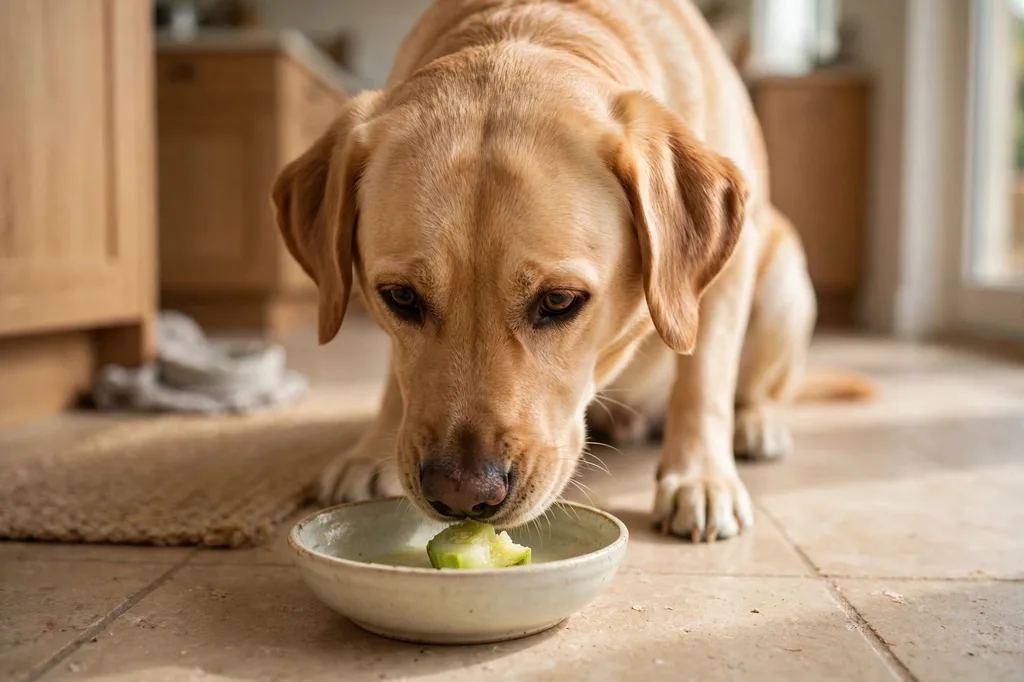
Zucchini is safe, but a large amount at once can cause gas, soft stool, or diarrhea, especially if your dog is not used to vegetables. Introduce it slowly, starting with one or two small pieces, and watch your dog’s stool for a day or two. If the stool stays loose, cut back or pause and try again with a smaller amount.
2. Choking on Large Pieces
Whole zucchini or large chunks can be a choking hazard, particularly for small dogs and dogs that gulp their food. Always cut zucchini into bite-size pieces that suit your dog’s size, and supervise the first few times you offer it. For very small dogs, grate it or dice it finely.
3. Seasonings and Cooking Additives
The biggest risk is not the zucchini itself but what goes on it. Garlic and onion are toxic to dogs, and butter, oil, salt, and spice mixes can cause stomach upset or pancreatitis. Never share zucchini from a seasoned dish. Cook your dog’s portion separately with no added fat or seasoning.
4. Bitter Zucchini (Cucurbitacins)
Very occasionally, a zucchini tastes extremely bitter because it contains high levels of cucurbitacins, natural compounds that can cause stomach cramps, vomiting, and diarrhea. If a zucchini tastes bitter to you, do not feed it to your dog. This is rare in store-bought zucchini but more common in home-grown plants that cross-pollinated with wild squash.
5. Allergies Are Rare but Possible
True zucchini allergy in dogs is uncommon, but any new food can trigger a reaction in a sensitive dog. Watch for itching, ear redness, or stomach upset after the first serving. If you notice these signs, stop feeding zucchini and talk to your vet.
Can Dogs Eat Raw Zucchini?
Yes, dogs can eat raw zucchini. Raw slices are crunchy, hydrating, and keep all their nutrients, since nothing is lost in cooking. Wash the zucchini well, trim the ends, and cut it into pieces your dog can chew safely. Some dogs prefer the softer texture of cooked zucchini, so offer both and see which your dog likes.
Can Dogs Eat Zucchini Skin and Seeds?
Yes, the skin and the small soft seeds inside a young zucchini are safe for dogs. The skin holds fiber and nutrients, so there is no need to peel it. Large, overgrown zucchini can have tougher skin and bigger seeds, so peel those and scoop out the seeds if the texture looks woody.
Can Dogs Eat Cooked Zucchini?
Yes, cooked zucchini is safe and often easier to digest than raw. Steam, boil, or roast it plain with no oil, butter, salt, or seasoning. Cooking softens the texture, which helps puppies and senior dogs. Let it cool completely before serving, and avoid zucchini from casseroles or stir-fries that contain onion, garlic, or sauces.
How Much Zucchini Can a Dog Eat?
Treats should stay under 10% of your dog’s daily calories. The amounts below are daily maximums for plain zucchini, not a target to reach every day.
| Dog Size | Weight | Safe Treat Amount |
|---|---|---|
| Extra small | Under 10 lbs | 1-2 small slices |
| Small | 10-25 lbs | 2-4 slices, about 1/4 cup |
| Medium | 25-60 lbs | 1/2 cup sliced |
| Large | 60-90 lbs | 3/4 cup sliced |
| Giant | Over 90 lbs | 1 cup sliced |
Can Puppies Eat Zucchini?
Yes, puppies can eat zucchini in small amounts once they are weaned and eating solid food, usually from around 8 weeks old. Offer one or two tiny soft pieces, either raw and finely diced or steamed until soft, and watch for any stomach upset. Puppies have small stomachs and sensitive digestion, so keep the portion tiny. Their main food should still be a complete puppy diet, with zucchini only as an occasional treat.
How to Safely Feed Zucchini to Your Dog
Keep it plain and simple. Zucchini needs no seasoning to be appealing to most dogs, and plain preparation keeps it safe.
Ways to Serve Zucchini to Dogs
- Raw slices: Wash and cut into bite-size rounds for a crunchy training treat.
- Steamed pieces: Steam until just soft, cool completely, and mix into kibble for extra volume.
- Grated topping: Grate raw zucchini over your dog’s regular food for picky eaters.
- Frozen coins: Freeze thin slices for a cool, crunchy snack on hot days. Sweet potatoes can be frozen the same way, but cook them first.
- Plain roasted cubes: Roast with no oil or seasoning until tender, then cool before serving.
Zucchini vs. Other Vegetables for Dogs
| Vegetable | Calories per 100g | Best For |
|---|---|---|
| Zucchini | 17 kcal | Low-calorie snacking and hydration |
| Green beans | 31 kcal | Crunchy, fiber-rich treat |
| Cucumber | 15 kcal | Hydration and crunch |
| Sweet potatoes | 86 kcal | Energy and vitamin A |
| Broccoli | 34 kcal | Vitamins, but can cause gas |
Frequently Asked Questions
Is zucchini safe for dogs to eat every day?
Yes, plain zucchini is safe to offer daily in small amounts, as long as treats stay under 10% of daily calories. A few slices a day is fine for most dogs. Variety is still better than the same treat every day, so rotate zucchini with other safe vegetables.
Can dogs eat zucchini leaves or flowers?
No, do not feed zucchini leaves, stems, or flowers to your dog. The fruit is the safe part. Leaves and stems can be tough, bitter, and hard to digest, and garden plants may carry pesticides. Stick to the washed fruit only.
Does zucchini help with dog constipation?
It may help mildly. The fiber and high water content in zucchini can support regular bowel movements in dogs that are slightly constipated. It is not a treatment for serious constipation, so call your vet if your dog has not passed stool for more than a day or seems in pain.
Can dogs eat yellow squash the same way?
Yes, yellow squash is prepared and served the same way as zucchini: plain, raw or cooked, in bite-size pieces. It has a similar nutritional profile and the same safety rules apply, so keep it unseasoned and watch portions.
How do I know if zucchini upset my dog’s stomach?
Watch for soft stool, diarrhea, gas, or vomiting within a day of eating zucchini. Mild upset usually passes on its own if you stop the zucchini for a day. If vomiting or diarrhea lasts more than 24 hours, or your dog seems lethargic, contact your vet.
Can dogs eat zucchini bread or zucchini muffins?
No, zucchini bread and muffins are not safe treats for dogs. They usually contain sugar, butter, oil, and sometimes xylitol, chocolate, raisins, or nuts, which are harmful to dogs. Offer plain zucchini instead and keep baked goods for people.