Can Dogs Eat Basil?

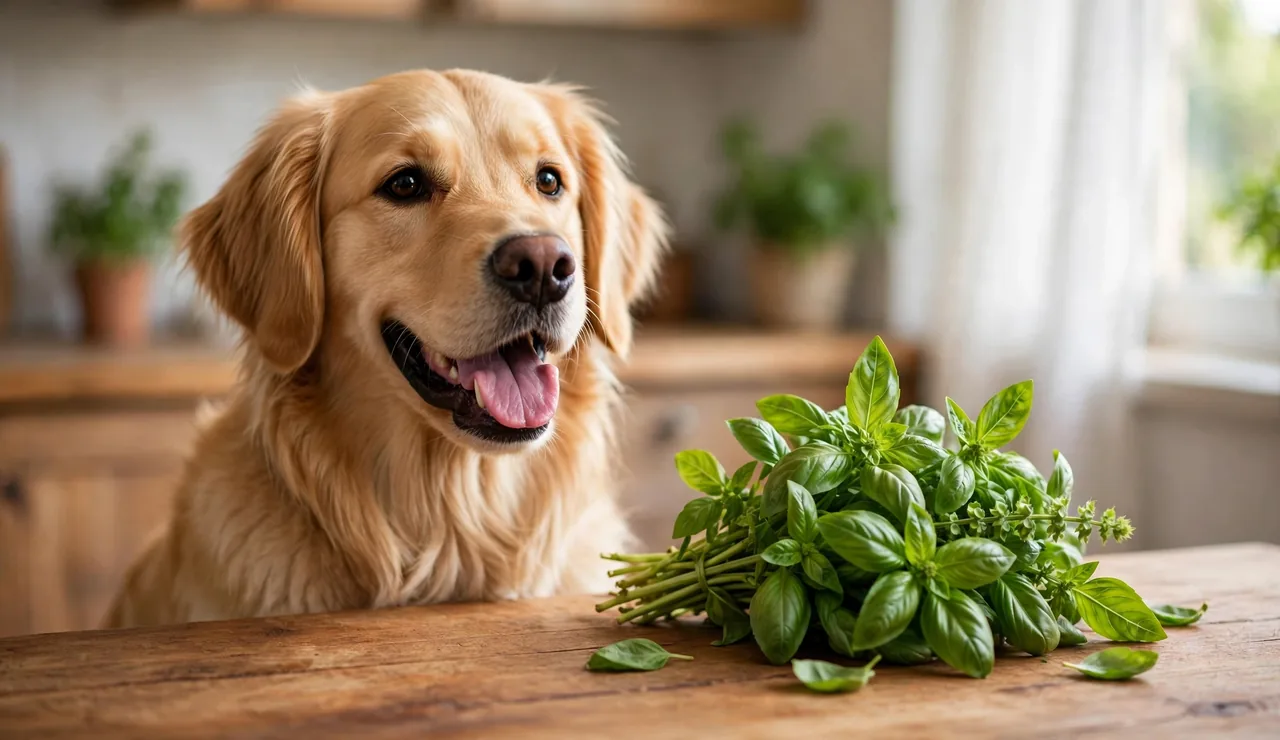
Quick Answer: Yes, dogs can eat fresh basil in small amounts. Basil is a culinary herb that is safe for most dogs when served fresh, washed, and plain, with no added oil, salt, or seasoning. It is low in calories and rich in vitamin K, vitamin A, and antioxidants, and a few leaves sprinkled over food add flavor and nutrients. Offer only a few leaves at a time, since too much can upset the stomach, and skip basil if your dog takes blood-thinning medication without vet approval.
Key Takeaways
- Fresh basil is safe for most dogs in small amounts, served plain and washed.
- Basil is rich in vitamin K, vitamin A, and antioxidants, with very few calories.
- Offer only a few leaves or a small sprinkle at a time.
- Basil is very high in vitamin K, so dogs on blood-thinning medication need vet approval.
- Never feed basil from seasoned dishes with onion, garlic, or chili.
- Wash basil well before serving.
- If your dog dislikes the taste, do not force it, since basil is an optional extra.
Can Dogs Eat Basil?
Basil is a common herb in kitchens around the world, and it is one of the few fresh herbs that dogs can safely enjoy. The leaves are soft, mild, and easy to chew, and they carry a sweet, peppery scent that some dogs love and others ignore completely. A few leaves mixed into your dog’s food add vitamins and a little variety without changing the meal in any meaningful way.
Like spinach for dogs, basil works best as a small garnish rather than a main food. The leaves are the safe part, and the thin stems are fine too when chopped, but the herb should never be served with onion, garlic, chili, or heavy seasoning, which often appear in the same dishes. Wash the leaves well, since herbs can carry soil and pesticide residue, and chop them so they mix easily into food.
Some dogs will not eat basil at all, and that is completely normal. Dogs have their own taste preferences, and a strong herb flavor can put some dogs off their food. If your dog turns away from basil, do not worry, since it adds nothing essential. The biggest warning is pesto: basil pesto usually contains garlic, pine nuts, parmesan, and oil, and garlic is toxic to dogs, so pesto should never be fed.
Nutritional Profile of Basil
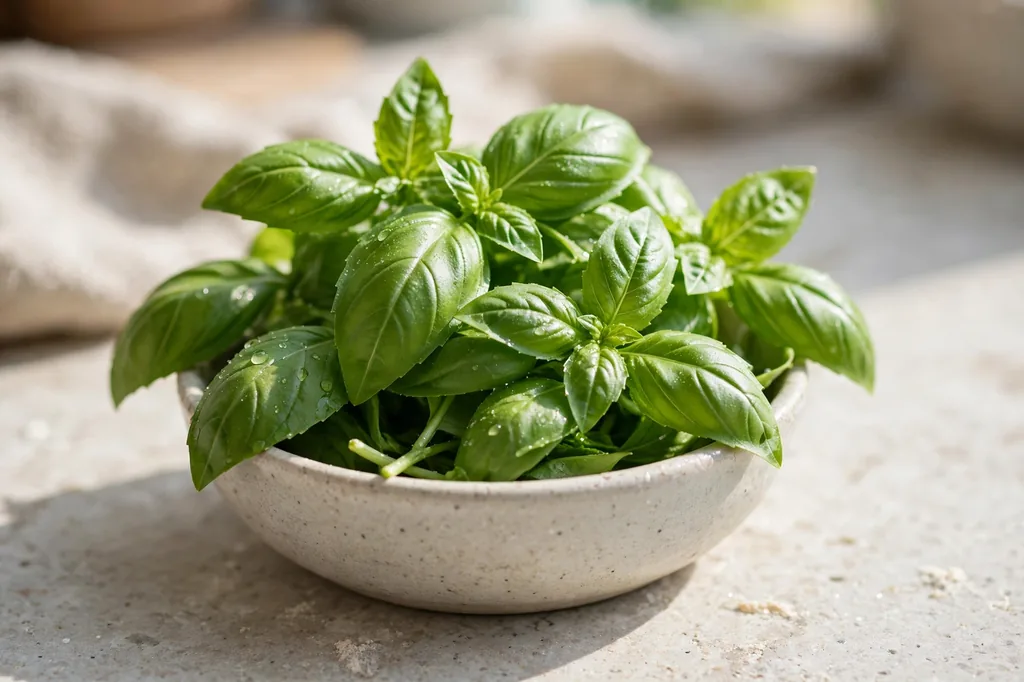
Here is what fresh basil provides per 100 grams. The herb is very low in calories, with a remarkable amount of vitamin K and useful vitamin A.
| Nutrient per 100g | Amount | Benefit for Dogs |
|---|---|---|
| Calories | 23 kcal | Very low in calories, so a sprinkle adds almost no energy |
| Vitamin K | 414.8 mcg | Very high, supports blood clotting, a concern for dogs on blood thinners |
| Vitamin A | 264 mcg | Supports vision, skin, and immune health |
| Vitamin C | 18 mg | Antioxidant that supports the immune system |
| Calcium | 177 mg | Supports bones and teeth |
| Iron | 3.17 mg | Supports healthy red blood cells and oxygen transport |
| Potassium | 295 mg | Supports muscles, nerves, and fluid balance |
| Folate | 68 mcg | Supports cell growth and healthy blood |
Calories in Basil
Basil is very low in calories, with only about 23 per 100 grams, and a typical serving for a dog is just a few grams. A tablespoon of chopped basil contains only about 1 calorie, so calories are never a concern with this herb. The limits on basil come from its vitamin K content and its strong flavor, not from its energy. That makes it a useful garnish for dogs watching their weight, as long as the amount stays small.
Benefits of Feeding Basil to Dogs
1. Rich in Vitamin K
Basil is one of the richest sources of vitamin K, with about 415 mcg per 100 grams. Vitamin K supports normal blood clotting and bone health, and a small sprinkle gives your dog a useful share.
2. Vitamin A for Eyes and Skin
Basil provides vitamin A, which supports healthy vision, skin, and the immune system. The bright green leaves are rich in beta-carotene, which the body turns into vitamin A.
3. Antioxidants
Basil contains antioxidants, including flavonoids and other plant compounds that help protect cells from damage. For another antioxidant rich green, broccoli for dogs offers vitamin C and fiber in small amounts.
4. May Support Fresh Breath
Basil has a fresh, clean scent, and some owners find that a few leaves help freshen their dog’s breath a little. The effect is mild and temporary, and basil is not a treatment for bad breath, which can be a sign of dental disease.
5. Adds Flavor Without Calories
Basil adds flavor and interest to a plain meal without adding fat, sugar, or many calories. That can encourage a picky dog to eat, and it gives owners a safe way to vary the bowl.
6. Calcium and Iron in Small Amounts
Basil contains calcium, which supports bones and teeth, and iron, which supports healthy red blood cells. The amounts in a few leaves are modest, but they add to the nutrients your dog gets from a balanced diet.
Risks of Feeding Basil to Dogs
1. Too Much Can Upset the Stomach
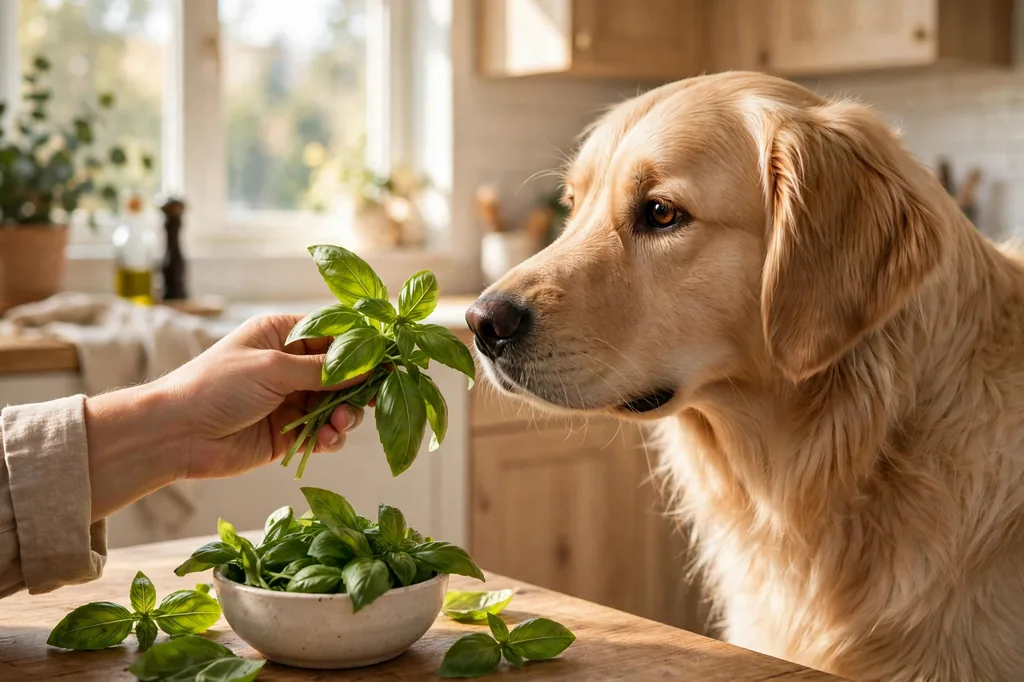
Basil is safe in small amounts, but a large handful can cause gas, soft stools, or vomiting, especially if your dog is not used to herbs. Start with a few leaves, watch your dog’s stools for a day, and keep the amount small. Dogs with sensitive stomachs may do better without it.
2. Very High in Vitamin K
Basil is extremely high in vitamin K, which affects blood clotting. Dogs on blood-thinning medication, such as warfarin, need a stable vitamin K intake, so a sudden large amount of basil could interfere with their treatment.
3. Pesto and Seasoned Dishes Are Not Safe
The biggest risk is not the basil itself but the dishes it comes in. Basil pesto usually contains garlic, pine nuts, parmesan, and oil, and garlic is toxic to dogs. Basil is also served with onion, chili, and heavy seasoning in many dishes. Never share basil from a seasoned dish. Offer only fresh, washed leaves with nothing added.
4. Essential Oils in Large Amounts
Basil contains essential oils, including eugenol, which give it its scent and flavor. In the small amounts found in a few leaves, these oils are harmless, but concentrated basil oil or large amounts of the herb could irritate the stomach.
5. Allergies Are Rare but Possible
True basil allergy in dogs is uncommon, but any new food can trigger a reaction in a sensitive dog. Watch for itching, ear redness, or stomach upset after the first serving.
Can Dogs Eat Dried Basil?
Yes, dried basil is generally safe in tiny amounts, but fresh basil is the better choice. Dried basil is more concentrated in flavor, so a small pinch is enough, and it can be harder for dogs to digest in larger amounts. Avoid dried herb mixes that contain onion or garlic powder. Fresh washed leaves are milder, easier to serve, and the safest form for dogs.
Can Dogs Eat Basil Pesto?
No, dogs should never eat basil pesto. Pesto usually contains garlic, which is toxic to dogs, along with pine nuts, parmesan cheese, olive oil, and salt. Even a small amount of garlic can cause stomach upset and damage red blood cells over time. Keep pesto for people only, and offer your dog plain fresh basil leaves instead.
Can Dogs Eat Thai Basil or Holy Basil?
Thai basil is similar to sweet basil and is generally safe in the same small amounts, as long as it is fresh, washed, and plain. Holy basil, also called tulsi, is a different plant with stronger medicinal compounds, and it is best avoided for dogs unless your vet approves it. Stick to common sweet basil, which is the well known culinary herb.
How Much Basil Can a Dog Eat?
Basil is a garnish, so portions are tiny. The amounts below are daily maximums for fresh, washed basil leaves, not a target to reach every day.
| Dog Size | Weight | Safe Amount |
|---|---|---|
| Extra small | Under 10 lb | 1-2 leaves, chopped |
| Small | 10-25 lb | A small pinch, about 1 teaspoon chopped |
| Medium | 25-50 lb | 1 tablespoon chopped |
| Large | 50-90 lb | 1-2 tablespoons chopped |
| Giant | Over 90 lb | 2 tablespoons chopped at most |
Can Puppies Eat Basil?
Yes, puppies can eat basil in tiny amounts once they are weaned and eating solid food, usually from around 8 weeks old. Offer one or two small chopped leaves mixed into their food, and watch for any stomach upset. Puppies have small stomachs and sensitive digestion, so keep the amount very small. Their main food should still be a complete puppy diet, with basil only as an occasional garnish.
How to Safely Feed Basil to Your Dog
Keep it fresh, washed, and plain. Basil needs no cooking or seasoning to be safe for your dog.
Ways to Serve Basil to Dogs
- Chopped topper: Wash and chop a few leaves, then sprinkle them over your dog’s regular food.
- Mixed into wet food: Stir chopped basil through wet food for a fresh flavor boost.
- Fresh leaves as a treat: Offer two or three clean leaves by hand to see if your dog likes them.
- Basil and rice mix: Mix a small pinch of chopped basil into a spoonful of plain cooked rice for dogs for a fragrant topper.
- Frozen herb cubes: Freeze chopped basil in water in an ice cube tray for a cool summer extra.
- Never pesto or seasoned: Skip pesto, garlic, onion, and chili, since those are the real dangers in basil dishes.
Basil vs. Other Herbs for Dogs
| Herb | Calories per 100g | Vitamin K | Notes |
|---|---|---|---|
| Basil | 23 kcal | 415 mcg | Sweet, mild, safe in small amounts |
| Curly parsley | 36 kcal | 1640 mcg | Safe in small amounts, very high in vitamin K |
| Cilantro | 23 kcal | 310 mcg | Fresh and mild, safe in small amounts |
| Mint | 44 kcal | 0.2 mg | Safe in small amounts, strong flavor |
| Oregano, fresh | 50 kcal | 0.2 mg | Safe in tiny amounts, very strong flavor |
Frequently Asked Questions
Is basil toxic to dogs?
No, fresh basil is not toxic to dogs. It is a safe culinary herb in small amounts. The danger is pesto and seasoned dishes, which often contain garlic, which is toxic to dogs. Offer only fresh, washed, plain basil leaves.
Can dogs eat basil every day?
Yes, a tiny sprinkle of basil a few times a week is fine for most dogs, and daily use in very small amounts is also usually safe. The key is the amount, which should stay at a few leaves or a small pinch. If your dog is on blood-thinning medication, ask your vet first.
Can dogs eat dried basil?
Yes, dried basil is generally safe in tiny amounts, but fresh basil is the better choice. Dried basil is more concentrated in flavor, so a small pinch is enough. Avoid dried herb mixes that contain onion or garlic powder, which are toxic to dogs.
Can dogs eat pesto sauce?
No, dogs should never eat pesto sauce. Pesto usually contains garlic, which is toxic to dogs, along with pine nuts, parmesan, oil, and salt. Even a small amount of garlic can cause stomach upset and damage red blood cells. Keep pesto for people only.
How much basil can a dog eat?
Keep it tiny: one or two leaves for an extra small dog, up to two tablespoons chopped for a giant dog, and only as a garnish. A small pinch is enough for most dogs.
Can puppies eat basil?
Yes, puppies can eat basil in tiny amounts once they are weaned and eating solid food, usually from around 8 weeks old. Offer one or two small chopped leaves mixed into their food, and watch for stomach upset. Their main food should still be a complete puppy diet.