
Can Dogs Eat Kale?

Quick Answer: Yes, dogs can eat kale in small amounts, and cooked kale is the safer choice. Kale is a nutrient-dense leafy green packed with vitamins A, C, and K, plus calcium and antioxidants, but it also contains goitrogens and oxalates that can cause problems in large quantities. Serve it plain, lightly steamed, and chopped, and keep portions small.
Key Takeaways
- Kale is safe for most dogs in small, occasional servings, with cooked kale preferred over raw.
- Light steaming reduces goitrogens, the compounds that can interfere with thyroid function.
- Kale is rich in vitamins A, C, and K, calcium, iron, and antioxidants that support overall health.
- Oxalates in kale can contribute to calcium oxalate bladder stones in dogs prone to them.
- Always serve kale plain, with no butter, salt, garlic, onion, or other seasonings.
- Chop kale finely or steam it soft, since raw stems and tough leaves are hard to digest.
- Dogs with thyroid disease or a history of bladder stones should skip kale unless your vet says otherwise.
Can Dogs Eat Kale?
Yes, dogs can eat kale, but portion size and preparation matter a lot. Kale belongs to the cruciferous vegetable family, the same group as broccoli, a vegetable many dogs enjoy, and it offers a similar payoff: a big vitamin and mineral load for very few calories. A few chopped, steamed leaves mixed into regular food add variety without upsetting the balance of the diet.
The caution around kale comes from two natural compounds it contains. First, kale is a goitrogenic food, which means its glucosinolates can interfere with iodine uptake by the thyroid gland when eaten in large amounts over time. Second, kale contains oxalates, which bind with calcium and can contribute to calcium oxalate bladder stones in dogs already prone to them.
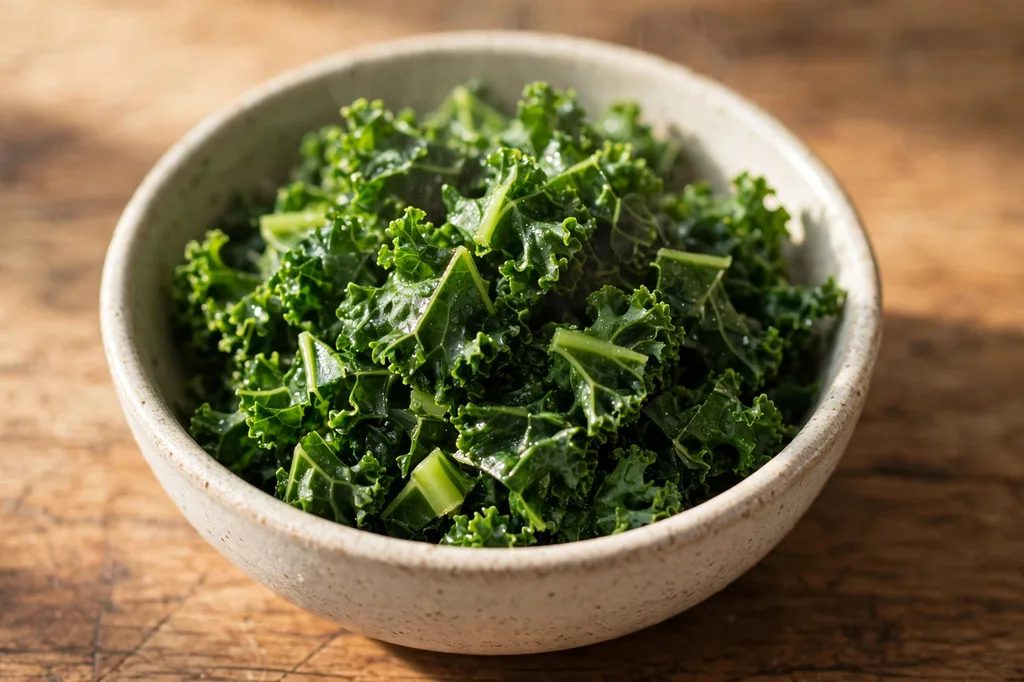
Light steaming breaks down many of the goitrogenic compounds while keeping most vitamins intact, which is why cooked kale is the recommended form. Raw kale is not dangerous in a small amount, but it is tougher to digest and keeps its full goitrogen load. Either way, kale should stay a small side dish, never a main event, and always plain.
Nutritional Profile of Kale
| Nutrient (per 100g raw kale) | Amount | Potential Benefit for Dogs |
|---|---|---|
| Vitamin K | 390 mcg | Blood clotting and bone health |
| Vitamin A | 241 mcg | Vision, skin, and immune function |
| Vitamin C | 120 mg | Antioxidant; immune health and collagen |
| Calcium | 150 mg | Bones, teeth, and muscle function |
| Potassium | 491 mg | Nerve and muscle function |
| Fiber | 3.6 g | Digestion and healthy stools |
| Iron | 1.5 mg | Red blood cells and oxygen transport |
| Folate | 141 mcg | Cell growth and red blood cell formation |
Calories in Kale
Raw kale contains roughly 49 calories per 100 grams, one of the lowest-calorie foods you can share with your dog. A small handful of chopped, steamed kale, about 30 grams, adds only around 15 calories, barely a dent in the daily treat allowance. That makes kale a genuine advantage for overweight dogs, since it adds bulk and nutrients without fat. The limit on kale is about its goitrogens and oxalates, not its calories, so even for a dog watching its weight, keep it to a few leaves a few times a week.
Benefits of Feeding Kale to Dogs
Kale earns its superfood reputation honestly, packing an unusual density of vitamins and plant compounds into very few calories, and most of those nutrients are useful to dogs too.
1. Exceptional Vitamin K Content
Kale is one of the richest natural sources of vitamin K, delivering about 390 micrograms per 100 grams. Vitamin K is essential for normal blood clotting and bone metabolism. Most commercial dog foods already supply enough, so kale is a useful bonus rather than a necessity.
2. Strong Antioxidant Support
Kale contains vitamin C, beta-carotene, lutein, zeaxanthin, and flavonoids such as quercetin and kaempferol. These antioxidants help neutralize free radicals, the unstable molecules linked to aging and chronic disease. Lutein and zeaxanthin are particularly associated with eye health.
3. Supports Bone Health
With 150 mg of calcium per 100 grams, plus vitamin K and magnesium, kale supports bone strength, and its calcium is reasonably well absorbed compared with some other greens. It should never replace the balanced calcium in a complete dog food, but as a topper it contributes to the mineral picture.
4. Fiber for Healthy Digestion
Kale provides about 3.6 grams of fiber per 100 grams, supporting regular bowel movements and feeding beneficial gut bacteria. For dogs that tend toward loose stools, a small amount adds gentle bulk, though too much fiber at once can cause gas.
5. Low Calorie, High Nutrient Density
Few foods deliver as much nutrition per calorie as kale. For overweight dogs, replacing a few high-calorie treats with a little steamed kale keeps them satisfied with far fewer calories.
6. May Support Immune Function
The combination of vitamins A and C, iron, and folate in kale supports normal immune function and healthy red blood cell production. Vitamin A is especially important for skin and mucous membrane health, the body’s first line of defense.
Risks and Disadvantages
1. Goitrogens and Thyroid Function
Kale’s glucosinolates can interfere with the thyroid gland’s ability to use iodine, potentially suppressing thyroid hormone production if large amounts are eaten regularly. This matters most for dogs already taking thyroid medication or diagnosed with hypothyroidism. Light steaming reduces goitrogenic activity, and small occasional servings pose very little risk to a healthy dog.
2. Oxalates and Bladder Stones
Kale contains calcium oxalate, and in dogs prone to calcium oxalate bladder stones, oxalate-rich foods can increase the risk of stone formation. If your dog has a history of bladder stones, urinary crystals, or kidney disease, ask your veterinarian before adding kale or any oxalate-rich green to their diet.
3. Digestive Upset in Large Amounts
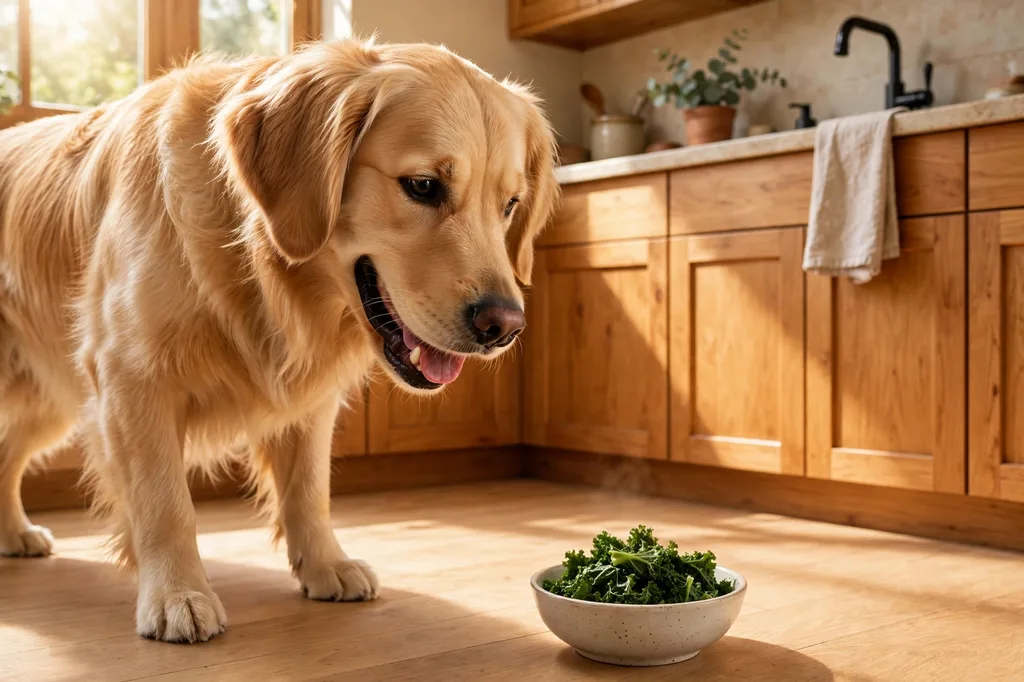
Raw kale is high in fiber and tough to break down, and a large serving can cause gas, bloating, or diarrhea, especially in dogs with sensitive stomachs. Whole raw leaves may pass through partly undigested. Steaming and chopping kale finely solves most of this problem.
4. Tough Stems and Choking Risk
The thick central stem of a kale leaf is fibrous and rigid, and a long strip of raw kale can be a choking hazard, especially for small dogs. Always remove the woody stems, chop the leaves into small pieces, and steam them until soft.
5. Seasonings and Preparation Dangers
Kale itself is safe, but the way humans cook it often is not. Kale sauteed in butter or oil with garlic, onion, salt, or chili flakes is not dog-safe. Spinach is another leafy green with similar oxalate concerns, and like kale it must be served plain.
6. Pesticide Residue on Raw Leaves
Kale regularly appears on lists of produce with higher pesticide residue, so wash leaves thoroughly under running water before cooking. Buying organic kale reduces the concern, but washing is still wise.
Can Dogs Eat Raw Kale?
Yes, dogs can eat raw kale in small amounts, but cooked kale is better. Raw kale keeps its full goitrogen load, is harder to digest, and can cause more gas. If you offer raw kale, use only young, tender leaves, remove the stems, and chop them very finely. For most dogs, lightly steamed kale is better: softer, easier to digest, and lower in goitrogens.
Can Dogs Eat Kale Stems?
It is best to remove kale stems before serving. The stems are tough, fibrous, and difficult for dogs to chew and digest, and they can cause choking in small dogs. Strip the leafy part away from the central stem, discard the stem, and serve only the soft leaves, chopped and preferably steamed.
Can Dogs Eat Kale Chips?
Most store-bought kale chips are not safe for dogs. They are usually baked with oil and salt and flavored with garlic powder, onion powder, cheese powder, or chili. Even plain homemade kale chips can be a problem, since the crisp, dry pieces are easy to gulp. Kale is better served soft and plain.
How Much Kale Can a Dog Eat?
Kale should stay within the 10 percent treat rule, and most dogs do best with far less. A few chopped leaves a few times a week is plenty. Use the amounts below as a ceiling, not a daily target, and start with half to see how your dog’s stomach responds.
| Dog Size | Weight | Occasional Serving (steamed) |
|---|---|---|
| Extra small | Under 5 kg | 1 small leaf, finely chopped |
| Small | 5-10 kg | 1-2 leaves, finely chopped |
| Medium | 10-25 kg | Small handful (about 30 g) |
| Large | 25-40 kg | Handful (about 50 g) |
| Giant | Over 40 kg | Generous handful (about 70 g) |
Can Puppies Eat Kale?
Puppies can have a tiny taste of plain steamed kale once they are eating solid food, but it is not a good food for young dogs. Puppies need carefully balanced nutrition for growth, and their digestive systems are more sensitive to fiber. Stick to complete puppy food and save kale for adulthood.
How to Safely Feed Kale to Your Dog
Preparation is what makes kale safe and useful. Never serve kale straight from a seasoned family dish.
Ways to Serve Kale to Dogs
- Lightly steamed and chopped: Steam leaves for 2-3 minutes until soft, then chop finely and mix a small amount into regular food.
- Blended into a topper: Puree steamed kale with a little plain pumpkin or water.
- Frozen in a treat: Mix finely chopped steamed kale into plain yogurt and freeze it for a cool enrichment treat.
- Stirred into homemade food: If you cook for your dog, add steamed kale to a balanced homemade recipe in the amounts above.
- Always wash first: Rinse leaves thoroughly under running water.
- Always remove stems: Strip leaves from the thick central stem.
- Serve plain only: No salt, butter, oil, garlic, onion, or seasoning.
Kale vs. Other Leafy Greens for Dogs
| Leafy Green | Calories (per 100g) | Key Strength | Main Caution |
|---|---|---|---|
| Kale | 49 kcal | Vitamins K, A, and C | Goitrogens and oxalates |
| Spinach | 23 kcal | Iron and folate | High oxalates |
| Broccoli | 34 kcal | Vitamin C and sulforaphane | Gas; limit to 10 percent of diet |
| Green beans | 31 kcal | Low calorie, high fiber | Few risks when plain |
| Lettuce | 15 kcal | Hydration and crunch | Very low nutrition |
Kale sits in the middle of the pack: more nutritious than lettuce, comparable to spinach but with the added goitrogen concern. For a simple daily green, plain green beans are usually the easiest and safest choice, while kale works best as an occasional nutrient boost. Sweet potatoes are another nutrient-dense option that many dogs prefer, since they are naturally sweet rather than bitter like kale.
Frequently Asked Questions
Is kale toxic to dogs?
No, kale is not toxic to dogs. It is a safe vegetable in small amounts. The concerns are about goitrogens and oxalates in large or daily quantities, not acute poisoning, so a few leaves will not harm a healthy dog.
Can dogs eat kale every day?
Do not feed kale every day. Daily kale increases exposure to goitrogens and oxalates, and variety is healthier than any single vegetable. Offer kale two or three times a week at most.
How should I cook kale for my dog?
Light steaming is the best method. Steam the leaves for 2-3 minutes until soft, let them cool, chop finely, and serve plain. Avoid long boiling, which leaches vitamins into the water, and never add butter, salt, or seasoning.
Can dogs with thyroid problems eat kale?
Dogs with hypothyroidism or on thyroid medication should avoid kale unless your veterinarian approves it. The goitrogens in kale can interfere with thyroid function, a real concern when the thyroid is already underactive.
What if my dog ate a lot of raw kale?
A single large serving of raw kale is unlikely to cause an emergency, but watch for vomiting, diarrhea, gas, or stomach discomfort over the next 24 hours. Offer fresh water and a bland meal if their stomach is upset. If your dog shows lethargy or repeated vomiting, contact your vet.