
Can Dogs Eat Oranges?

Yes, dogs can eat oranges. The peeled, seedless flesh is safe for most healthy dogs when given in small amounts as an occasional treat. Oranges contain vitamin C, potassium, and fiber, but they are also high in natural sugar and citric acid, which can cause digestive upset if overfed. The peel, pith, and seeds should always be removed before offering orange to a dog, and dogs with diabetes, obesity, or sensitive stomachs should avoid citrus fruit altogether unless approved by a veterinarian.
Key Takeaways
- Dogs can safely eat peeled, seedless orange flesh in small, controlled portions.
- Oranges contain vitamin C, potassium, fiber, and antioxidants, though dogs already produce their own vitamin C.
- The peel, pith, and seeds should always be removed before feeding.
- Mandarins, tangerines, and clementines follow the same safety guidelines as regular oranges.
- Dogs with diabetes, obesity, or sensitive stomachs should avoid oranges or only have them with veterinary approval.
- Treats, including oranges, should never make up more than 10 percent of a dog’s daily calories.
Can Dogs Eat Oranges?
Yes, dogs can eat oranges safely when the fruit is prepared correctly. The soft, juicy flesh of the orange is non-toxic and can be offered as an occasional treat, provided the peel, white pith, and seeds are removed first. Oranges are not on any major list of toxic foods for dogs, which makes them a reasonably safe fruit option compared to citrus varieties like lemons, limes, and grapefruits, which are much more acidic and generally best avoided.
That said, oranges should be treated as a sometimes snack rather than a regular addition to a dog’s diet. Their natural sugar and acidity mean portion size and frequency matter just as much as whether the fruit is safe in general.
Nutritional Profile of Oranges
Oranges offer a range of nutrients, though dogs do not depend on this fruit to meet their nutritional needs the way humans might.
| Nutrient | Benefit for Dogs |
|---|---|
| Vitamin C | Acts as an antioxidant, though dogs naturally produce their own |
| Potassium | Supports kidney function, heart health, and muscle function |
| Fibe | Supports digestive health and regular bowel movements |
| Antioxidants | Help reduce inflammation and support overall cellular health |
| Water content | Offers a mild hydration boost |
Because dogs already produce their own vitamin C internally, oranges are viewed more as a flavorful treat than a nutritional necessity. A complete and balanced commercial dog food already provides everything a dog needs.
Calories in Oranges
Oranges carry a moderate calorie count, and their sugar content is worth paying attention to when deciding on portion size.
| Portion | Approximate Calories |
|---|---|
| 1 medium orange (flesh only) | About 60 to 70 calories |
| 1 orange segment | About 5 to 8 calories |
| A small handful of segments (3 to 4) | About 20 to 30 calories |
Because a whole orange can carry a meaningful number of calories relative to a dog’s size, especially for small breeds, only a few segments should typically be offered at a time. The general treat guideline still applies here. Treats, oranges included, should make up no more than 10 percent of a dog’s total daily calorie intake, with the remaining 90 percent coming from a complete and balanced dog food.
Advantages of Feeding Oranges to Dogs
1. Contains Beneficial Vitamins and Minerals
Oranges provide vitamin C, potassium, and fiber, all of which contribute in small ways to immune support, muscle function, and digestive health.
2. Low in Sodium
Plain orange flesh contains virtually no sodium, making it a cleaner option compared to many processed, salty treats.
3. Naturally Hydrating
The high water content in oranges can offer a small hydration boost, particularly when served fresh and chilled.
4. A Novel, Low-Fat Treat Option
Oranges contain no fat, which makes them a lighter alternative to many traditional dog treats for owners looking to diversify their dog’s treat rotation.
5. Some Dogs Enjoy the Novelty
While not every dog likes the taste of citrus, some dogs are drawn to the sweetness, juiciness, or texture of orange segments, making it a fun occasional treat for dogs that do enjoy it.
Disadvantages and Risks of Feeding Oranges to Dogs
1. High in Natural Sugar
Oranges contain a meaningful amount of natural sugar. Frequent or excessive feeding can contribute to weight gain and may worsen blood sugar control in dogs that are diabetic or prediabetic.
2. Acidity Can Upset the Stomach
The citric acid in oranges can cause digestive upset, including vomiting or diarrhea, particularly in dogs with sensitive stomachs.
3. Peel and Pith Are Difficult to Digest
The tough outer peel and the stringy white pith are hard for a dog’s digestive system to break down. Eating these parts can cause digestive upset or, in some cases, an intestinal blockage.
4. Seeds Contain Trace Toxic Compounds
Orange seeds contain small amounts of naturally occurring compounds that are best avoided. While eating a few seeds poses limited risk, it is safest to remove them entirely before feeding.
5. Not Suitable for Every Dog
Dogs with diabetes, obesity, or a history of digestive sensitivity may need to avoid oranges entirely, since the combination of sugar and acidity can aggravate these conditions.
6. Not a Nutritional Requirement
Oranges are a supplemental treat, not a required part of a dog’s diet. Everything a dog needs nutritionally, including vitamin C, is already produced internally or provided through a complete and balanced dog food.
Advantages vs. Disadvantages at a Glance
| Advantages | Disadvantages |
|---|---|
| Contains vitamin C, potassium, and fibe | High in natural suga |
| Low in sodium | Citric acid can upset the stomach |
| Naturally hydrating | Peel and pith are difficult to digest |
| Low-fat treat option | Seeds contain trace toxic compounds |
| Enjoyed by some dogs as a novelty | Not suitable for diabetic or overweight dogs |
| Not nutritionally required |
How Much Orange Can a Dog Eat?
Portion size should scale with a dog’s body weight. Use this chart as a general starting point, and adjust based on the individual dog’s activity level, health status, and any veterinary recommendations.
| Dog Size | Weight Range | Safe Serving | Frequency |
|---|---|---|---|
| Extra small | 2 to 10 lbs | 1 small segment | 1 to 2 times per week |
| Small | 11 to 20 lbs | 1 to 2 segments | 1 to 2 times per week |
| Medium | 21 to 50 lbs | 2 to 3 segments | 1 to 2 times per week |
| Large | 51 to 90 lbs | 3 to 4 segments | 1 to 2 times per week |
| Extra large | 91+ lbs | A small handful of segments | 1 to 2 times per week |
As with any new treat, it is best to start with a very small amount and monitor for any digestive reaction before offering orange again.
Can Dogs Eat Mandarin Oranges, Tangerines, and Clementines?
Yes. Mandarins, tangerines, and clementines all belong to the same citrus family as regular oranges, and the same safety guidelines apply. The peeled, seedless flesh of any of these fruits can be offered to dogs in small amounts as an occasional treat. Like regular oranges, they are high in natural sugar, so portions should remain small, and dogs with diabetes or weight concerns should avoid them or only have them with veterinary approval.
“Cuties” is simply a popular brand name for small, easy-to-peel mandarins and clementines. There is nothing different about the safety of this specific brand compared to any other mandarin or clementine, so the same feeding guidelines apply.
Can Dogs Eat Orange Peels?
No, orange peels should not be fed to dogs. The tough outer peel is difficult to digest and can lead to digestive upset or, in more serious cases, an intestinal blockage. Orange peels also contain concentrated natural oils and compounds that can be too harsh for a dog’s digestive system. If a dog accidentally swallows a small piece of peel, mild digestive upset is possible, but a larger amount or repeated ingestion should be discussed with a veterinarian.
Can Puppies Eat Oranges?
Yes, puppies that are eating solid food can have a small piece of peeled, seedless orange as an occasional treat. Because puppies have more sensitive digestive systems than adult dogs, it is best to start with a very small amount and monitor closely for any signs of digestive upset. Puppies with a history of sensitive digestion may be better off avoiding citrus fruit altogether until they are older.
Oranges and Dogs with Health Conditions
Certain dogs should approach oranges with more caution or avoid them entirely.
| Condition | Consideration |
|---|---|
| Diabetes | Natural sugar content can cause a spike in blood glucose levels |
| Obesity or weight management | Sugar and calorie content mean portions should be very small and infrequent |
| Digestive sensitivities | Citric acid can trigger vomiting, diarrhea, or general stomach upset |
| Dental issues | Frequent sugar exposure can contribute to dental problems over time |
How to Safely Feed Oranges to Your Dog
- Choose a ripe, fresh orange and wash it before handling.
- Peel the orange completely, removing all of the outer rind.
- Remove the white pith as much as possible, since it can be tough to digest in large amounts.
- Remove all seeds.
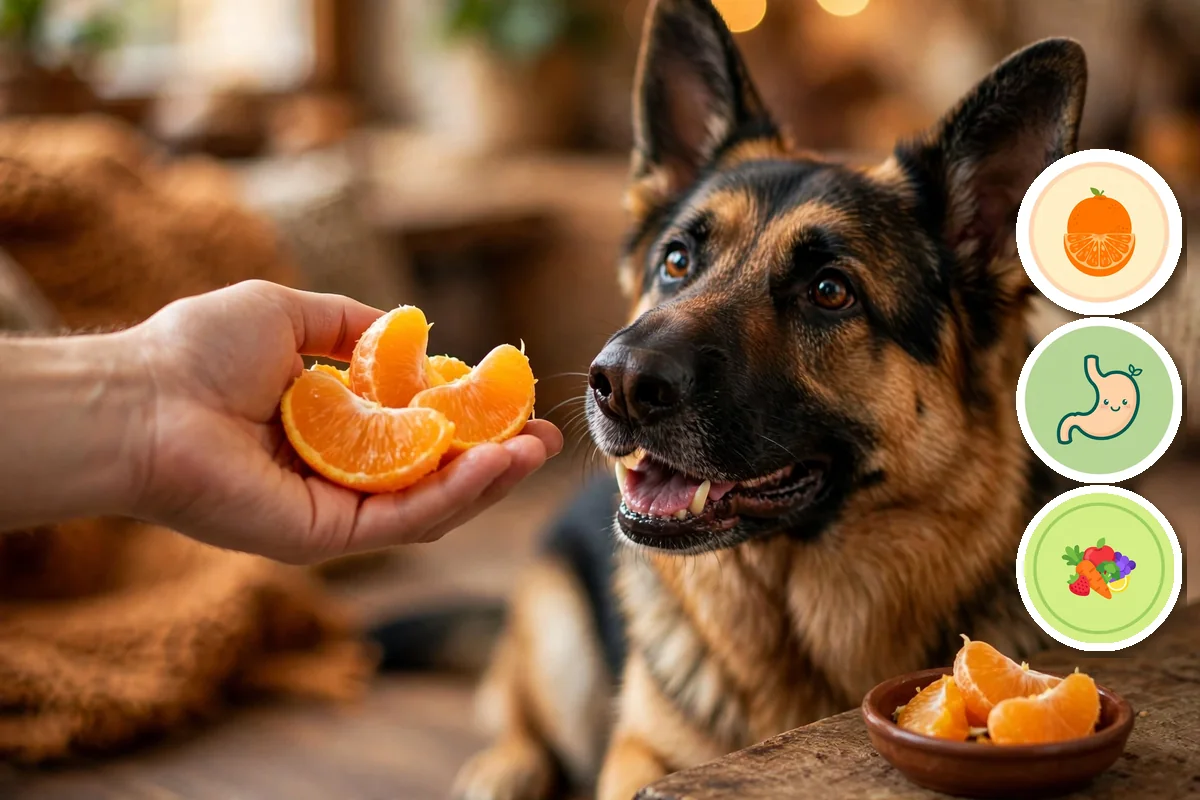
- Break the flesh into small segments appropriate for the dog’s size.
- Offer a small amount first and monitor for any digestive reaction before making it a regular treat.
Ways to Serve Oranges to Dogs
- Fresh segments: Offer a peeled, seedless segment or two as a simple treat.
- Frozen segments: Freeze small orange pieces for a refreshing snack during warm weather.
- Mixed into a fruit blend: Combine small amounts of orange with other dog-safe fruits like banana or blueberries for a treat with variety.
Oranges vs. Other Citrus and Sweet Fruits
| Fruit | Sugar Level | Acidity | Key Benefit | Watch Out For |
|---|---|---|---|---|
| Orange | Medium to High | High | Vitamin C, potassium | Peel, pith, and seeds must be removed |
| Mandarin or Clementine | Medium to High | Moderate | Vitamin C, easy to peel | Same sugar concerns as oranges |
| Lemon or Lime | Low | Very High | Minimal benefit for dogs | Too acidic, generally avoided |
| Grapefruit | Medium | Very High | Vitamin C | Too acidic, generally avoided |
| Watermelon | Low | Low | Hydration, low calorie | Remove seeds and rind |
Compared to lemons, limes, and grapefruits, oranges and mandarins are considered the more dog-friendly citrus options due to their lower acidity, though moderation still matters for all of them.
Signs of Overfeeding or an Adverse Reaction
Watch for the following after introducing orange or increasing the portion size:
- Vomiting
- Diarrhea or loose stool
- Gas or bloating
- Decreased appetite
- Lethargy
- Excessive drooling, which can be a sign of stomach upset from acidity
If any of these symptoms appear, stop feeding orange and consult a veterinarian, particularly if symptoms persist or worsen.
Frequently Asked Questions
Can dogs eat oranges every day?
Oranges are best offered occasionally rather than daily. Their natural sugar and acidity make frequent feeding more likely to cause digestive upset or contribute to weight gain over time.
Can dogs eat orange peels?
No, orange peels are difficult to digest and can cause digestive upset or a blockage. The peel should always be removed before feeding.
Can dogs eat orange seeds?
Orange seeds contain trace amounts of a naturally occurring toxic compound. A few accidentally swallowed seeds pose limited risk, but it is best to remove all seeds before feeding to avoid any concern.
Can dogs eat mandarin oranges?
Yes, mandarin oranges follow the same safety guidelines as regular oranges. The peeled, seedless flesh can be offered in small amounts as an occasional treat.
Can dogs eat oranges or tangerines?
Yes, both are safe in moderation when peeled and seedless. Tangerines are a type of mandarin and carry the same sugar and acidity considerations as regular oranges.
Can dogs eat Cuties oranges?
Yes, Cuties is simply a brand name for small mandarins and clementines. The same feeding guidelines that apply to any mandarin or clementine apply here as well.
Can dogs drink orange juice?
No, orange juice is not recommended. It concentrates the sugar of the fruit without the fiber found in the whole segment, and it offers little nutritional benefit for dogs.
Are oranges safe for dogs with diabetes?
Generally, no. The natural sugar content in oranges can cause a spike in blood glucose levels, so it is best to consult a veterinarian before offering citrus fruit to a diabetic dog.