
Can Dogs Eat Pickles?

Quick Answer: Pickles are not toxic to dogs, but they are not a good snack choice either. Pickles are cucumbers preserved in a brine made mostly of salt, vinegar, and water, and this brining process loads the cucumber with far more sodium than a dog should have in a single treat. A single dill pickle spear can contain 300 to 500 milligrams of sodium, which can be several times a small dog’s entire daily sodium limit. Many pickle varieties also contain garlic, onion, or spicy seasonings, all of which carry their own risks. A small, accidental bite of a plain pickle is unlikely to cause serious harm to a healthy adult dog, but pickles should not be offered as a regular treat, and pickle juice should never be given at all.
Key Takeaways
- Pickles are not classified as toxic, but their high sodium content makes them a poor snack choice for dogs.
- A single pickle spear can contain 300 to 500 milligrams of sodium, far more than a small or medium dog needs in an entire day.
- Many pickle varieties, including garlic pickles, bread-and-butter pickles, and relish, contain garlic or onion, both of which are toxic to dogs.
- Plain dill pickles, without added spices, garlic, or onion, are considered the safer variety if a pickle is shared at all, though still only in a very small amount.
- Pickle juice should never be given to a dog, since it is essentially concentrated salt water and vinegar, and is easy for a dog to overconsume quickly since it is a liquid.
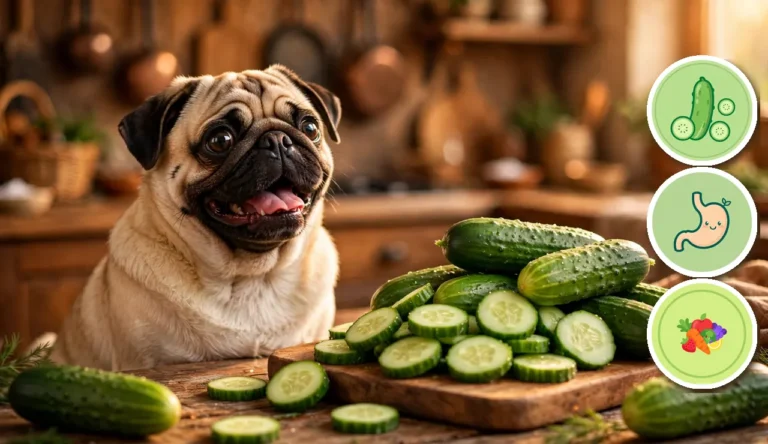
- Plain cucumber, the vegetable pickles start out as, is a much better and genuinely low-sodium alternative.
Can Dogs Eat Pickles?
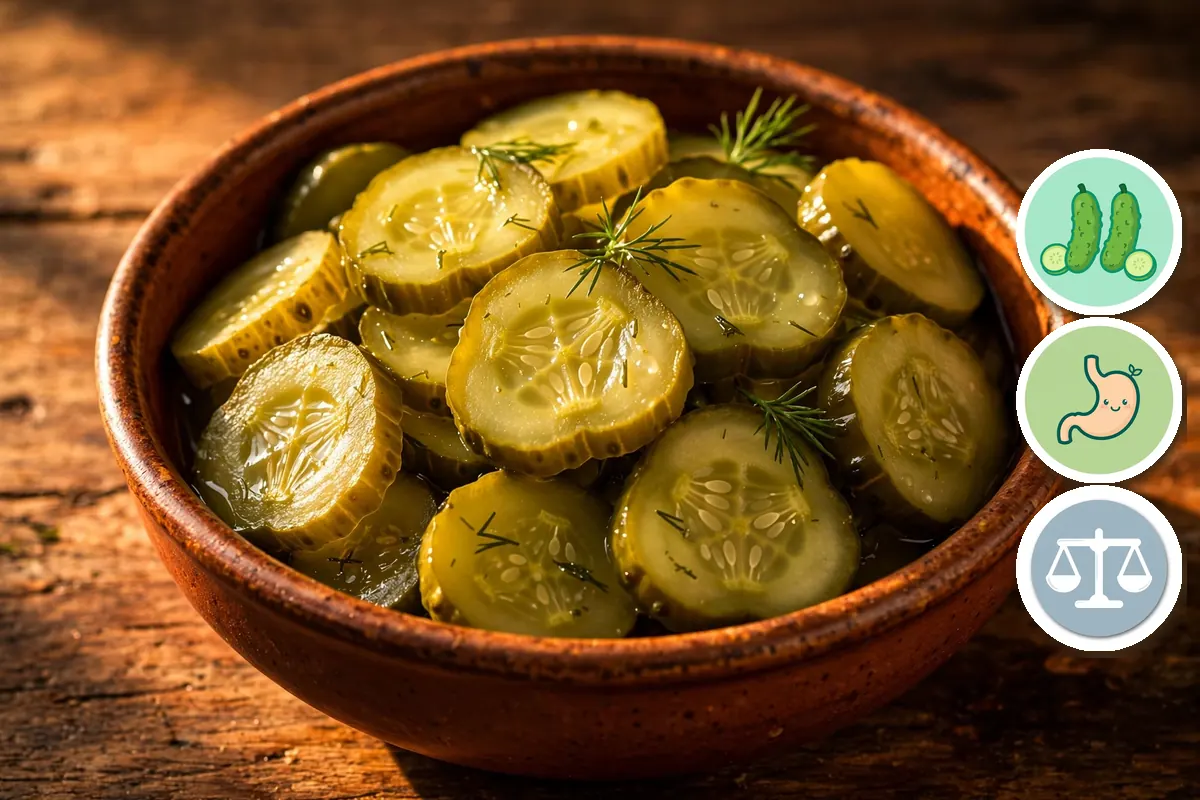
Pickles are not classified as toxic to dogs, but most veterinary sources recommend against making them a regular treat. A pickle starts out as a plain cucumber, which is safe and even a healthy low-calorie snack for dogs, but the pickling process transforms it into something quite different. Cucumbers are soaked in a brine typically made from salt, vinegar, water, and various spices, and this brine is what gives pickles their distinctive tangy flavor while also loading them with a significant amount of sodium. Curious about other foods? See if broccoli is safe for dogs. Curious about other foods? See if celery is safe for dogs.
Whether a specific pickle is a bigger or smaller concern depends heavily on what else is in the jar. A plain dill pickle with no added garlic, onion, or spicy seasoning is the closest thing to a “safer” option, while flavored varieties like garlic pickles, bread-and-butter pickles, or spicy pickles introduce additional risks well beyond the sodium content alone.
Why Sodium Is the Main Concern
Sodium is the single biggest reason pickles are not recommended for dogs, and the numbers make this easy to understand. A standard dill pickle spear can contain roughly 300 to 500 milligrams of sodium. For context, a small dog’s recommended daily sodium intake is generally only around 25 milligrams, and a medium-sized dog’s is roughly 100 milligrams. This means a single pickle spear can contain several times a dog’s entire daily sodium allowance in one bite. Excess sodium intake can cause increased thirst and urination, vomiting, diarrhea, lethargy, and in more severe cases, tremors or seizures from sodium ion toxicity, particularly if a dog does not have adequate access to fresh water after eating a salty food.
Advantages of Feeding Pickles to Dogs
1. Not Classified as Acutely Toxic
Unlike foods such as grapes or chocolate, plain pickles do not carry an inherent poison, which means the primary concerns are sodium and any added ingredients rather than a direct toxin in the cucumber itself.
2. Some Dogs Enjoy the Crunchy Texture and Tang
The distinctive sour flavor and crunch of a pickle can be appealing to some dogs, similar to the appeal of a crunchy vegetable treat.
3. Dill Itself Offers Some Antioxidant Value
Fresh dill, the herb used to flavor dill pickles, contains antioxidants. If the goal is to give a dog the benefit of dill specifically, adding a small amount of fresh dill directly to a dog’s food is a more direct and lower-risk way to do this than offering a dill pickle.
Disadvantages and Risks of Feeding Pickles to Dogs

1. Very High in Sodium
As detailed above, this is the primary concern with pickles, and it applies even to the plainest variety.
2. Garlic and Onion in Many Varieties
Garlic pickles, bread-and-butter pickles, relish, and many other flavored pickle products contain garlic or onion, both of which are toxic to dogs and can damage red blood cells, potentially leading to hemolytic anemia.
3. Vinegar Can Upset a Dog’s Stomach
While not toxic, the vinegar used in pickle brine is acidic and can cause digestive discomfort in some dogs, particularly those with a sensitive stomach.
4. Added Spices Can Irritate the Digestive Tract
Ingredients like mustard seed, chili flakes, black pepper, or other spices used in various pickle recipes can irritate a dog’s gastrointestinal tract.
5. Pickle Juice Is Especially Risky
Pickle juice, or brine, is essentially concentrated salt water and vinegar, sometimes with garlic, onion, or other flavoring dissolved into it as well. Because it is a liquid, a dog can drink a much larger effective “dose” of a jar’s contents quickly compared to eating solid pickle pieces, which makes pickle juice more concerning than the pickle itself.
6. Not a Nutritional Requirement
Pickles offer no nutritional benefit to a dog that a plain cucumber would not provide far more safely, since a complete and balanced commercial dog food already covers a dog’s nutritional needs.
Advantages vs. Disadvantages at a Glance
| Advantages | Disadvantages |
|---|---|
| Not classified as acutely toxic | Very high in sodium |
| Some dogs enjoy the texture and tang | Garlic and onion are common in many varieties |
| Dill itself has some antioxidant value | Vinegar can upset a sensitive stomach |
| Added spices can irritate digestion | |
| Pickle juice is especially concentrated and risky | |
| Not nutritionally required, and cucumber is a safer alternative |
Are Dill Pickles Safer Than Other Varieties?
Yes, relatively speaking. Plain dill pickles, made simply from cucumber, brine, and dill with no additional garlic, onion, or heavy spice blend, are generally considered the least risky pickle variety if one is shared at all. This is still not the same as saying dill pickles are a good treat. They carry the same high sodium content as any other pickle, and the “safer” distinction only applies to the absence of toxic aromatics like garlic and onion, not to sodium, which remains a concern regardless of the flavor profile.
How Much Pickle Can a Dog Eat?
Given the sodium content, pickles are best treated as a rare exception rather than a regular treat, if given at all.
| Dog Size | Weight Range | Maximum Occasional Amount | Frequency |
|---|---|---|---|
| Extra small | 2 to 10 lbs | A very small nibble, no more | Rarely, if at all |
| Small | 11 to 20 lbs | A small piece, well under a full spea | Rarely, if at all |
| Medium | 21 to 50 lbs | A small piece | Rarely, if at all |
| Large | 51 to 90 lbs | A modest piece, still under a full spea | Rarely, if at all |
| Extra large | 91+ lbs | A modest piece | Rarely, if at all |
Given how easily a single spear can exceed a dog’s entire daily sodium allowance, there is little reason to offer pickles regularly, even in these small amounts, when plain cucumber provides a much safer alternative.
Can Dogs Drink Pickle Juice?
No, pickle juice should never be given to a dog. It is essentially brine, meaning concentrated salt water and vinegar, and it may also contain dissolved garlic, onion, dill, or other flavoring from the jar. Because it is a liquid, dogs tend to drink it quickly, which makes it easier to consume a large amount of sodium in one sitting compared to eating solid pickle pieces. Pickle jars should be kept sealed and out of reach, and pickle juice should never be poured over a dog’s food as a flavor enhancer.
What to Do If Your Dog Eats Pickles
- Determine what type of pickle was eaten and whether it contained garlic, onion, chili, or other spices.
- For a plain dill pickle eaten in a small amount by a medium or large dog, offer plenty of fresh water and monitor for vomiting, diarrhea, or excessive thirst over the following several hours.
- For a small dog, a spiced or garlic pickle of any amount, or pickle juice of any amount, contact a veterinarian or the ASPCA Animal Poison Control Center promptly rather than waiting to see how the dog feels.
- If a large quantity of any pickle variety was eaten, such as most of a jar, contact a veterinarian right away.
- When in doubt about what variety was involved, it is always better to call a veterinarian and check than to assume it was safe.
Can Puppies Eat Pickles?
It is best to avoid giving pickles to puppies. Their smaller size makes them considerably more sensitive to sodium intake relative to body weight, and their digestive systems are less equipped to handle the vinegar and spice content found in most pickles. A gentler option like plain cucumber is a far better choice if a puppy is curious about this type of food.
Pickles and Dogs with Health Conditions
Certain dogs should avoid pickles entirely due to their sodium content.
| Condition | Consideration |
|---|---|
| Kidney disease | High sodium content can place significant strain on the kidneys |
| Heart conditions | Excess sodium can contribute to fluid retention and cardiovascular strain |
| Obesity or weight management | Offers no nutritional benefit that would justify the sodium content |
| Digestive sensitivities | Vinegar and spices are more likely to cause upset in these dogs |
Better Alternatives to Pickles for Dogs
If a dog enjoys the crunchy texture of a pickle, plain cucumber offers a much safer way to satisfy that preference.
| Alternative | Why It Is a Better Choice |
|---|---|
| Plain cucumber slices | The same base vegetable as a pickle, without the sodium, vinegar, or spices |
| Carrot sticks | Low calorie with a satisfying crunch and no sodium concern |
| Plain, air-popped popcorn | A different crunchy option with minimal sodium when unsalted |
Signs of an Adverse Reaction or Excess Sodium Intake
Watch for the following after a dog eats pickles or drinks pickle juice:
- Excessive thirst and urination
- Vomiting or diarrhea
- Lethargy
- Tremors, in cases of significant sodium intake
- Pale gums or dark urine, which can indicate garlic or onion-related red blood cell damage
Seek veterinary attention promptly if a dog shows tremors, seizures, or significant distress, or if the pickle or pickle juice involved may have contained garlic, onion, or other spices.
Frequently Asked Questions
Can dogs eat pickles?
Pickles are not toxic, but their high sodium content makes them a poor snack choice. A small, occasional bite of a plain pickle is unlikely to seriously harm a healthy dog, but pickles should not be a regular treat.
Are dill pickles safe for dogs?
Plain dill pickles, without garlic, onion, or added spices, are considered the safer variety, but they still carry a significant amount of sodium and should only be given in a very small amount, if at all.
How much sodium is in a pickle?
A standard pickle spear can contain 300 to 500 milligrams of sodium, which can be several times a small or medium dog’s entire daily sodium allowance.
Can dogs drink pickle juice?
No, pickle juice is concentrated brine, essentially salt water and vinegar, and should never be given to a dog. It is easy for a dog to consume a large amount of sodium quickly since it is a liquid.
What should I do if my dog eats a whole jar of pickles?
Contact a veterinarian immediately, especially if the dog shows signs of distress, vomiting, excessive thirst, or unusual behavior.
Are garlic pickles or bread-and-butter pickles dangerous for dogs?
Yes, these varieties typically contain garlic or onion, both of which are toxic to dogs and can damage red blood cells.
Can puppies eat pickles?
It is best to avoid pickles for puppies, given their smaller size and higher sensitivity to sodium, vinegar, and spices. Plain cucumber is a much better option.
What is a better snack than pickles for my dog?
Plain cucumber slices offer the same base vegetable without the added sodium, vinegar, or spices, making them a much safer crunchy treat.