

Can Dogs Eat Tuna?

Quick Answer: Yes, dogs can eat tuna, but only in small amounts, occasionally, and in the right form. Plain canned light tuna packed in water, well drained and with no added salt, is the safest choice, offering lean protein and omega-3 fatty acids with lower mercury levels than other tuna types. Tuna should never be fed raw, since it can carry parasites, bacteria, and an enzyme that destroys vitamin B1. Tuna is also a higher-mercury fish, which means it should always stay an occasional treat rather than a regular food, since mercury can accumulate in a dog’s body over time with frequent feeding.
Key Takeaways
- Plain canned light tuna in water, drained well, is the safest form of tuna for dogs, given occasionally in small amounts.
- Raw tuna, including sushi or sashimi scraps, should never be fed to a dog due to the risk of parasites, bacteria, and an enzyme called thiaminase.
- Tuna is a higher-mercury fish, and regular or frequent feeding can lead to mercury accumulation over time, which affects the nervous system.
- Tuna packed in oil adds unnecessary fat and calories and can trigger pancreatitis, while tuna in brine is too high in sodium.
- Tuna salad or tuna mixed with mayonnaise should be avoided, since mayo adds unnecessary fat and some recipes include onion or garlic.
- A tablespoon or two of plain tuna once a week is a reasonable guideline for most healthy dogs.
Can Dogs Eat Tuna?
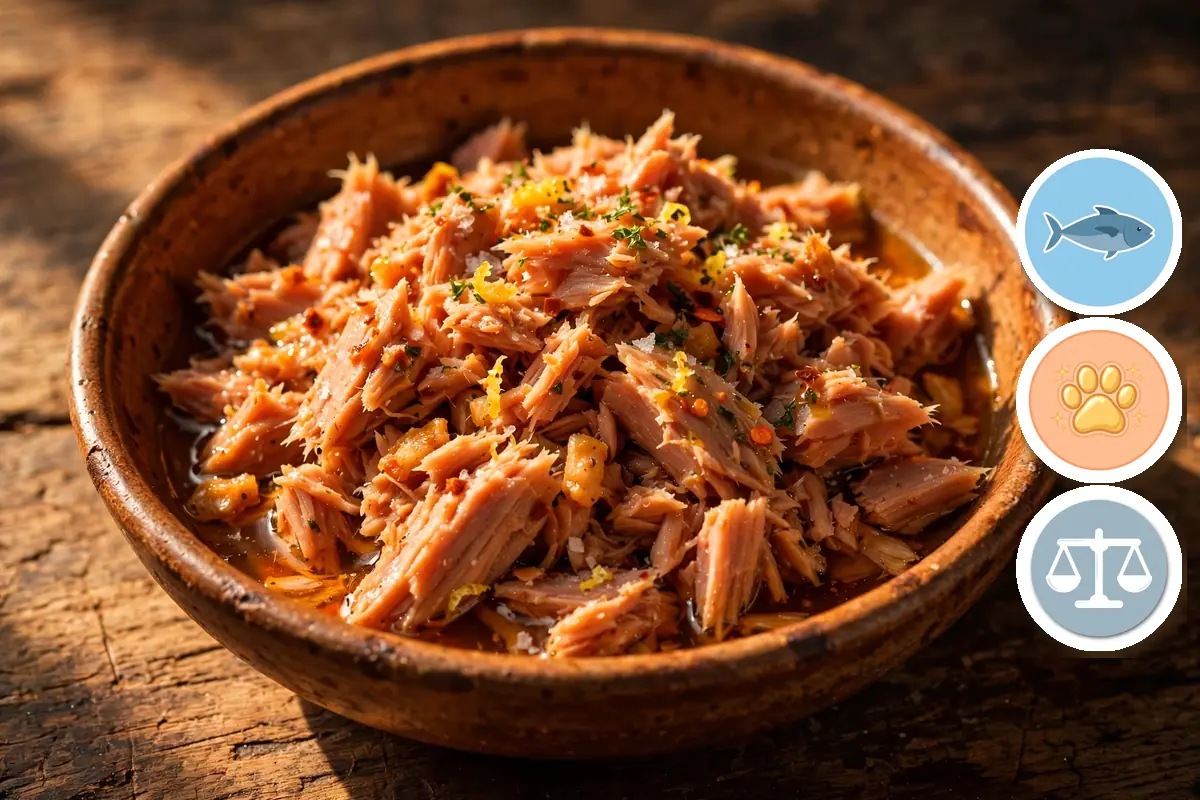
Yes, dogs can eat tuna, though the honest answer is more nuanced than a simple yes or no, which is part of why this question tends to get more conflicting answers online than most other foods. Tuna is not toxic to dogs, and a small amount of properly prepared tuna offers real nutritional value, including lean protein and beneficial omega-3 fatty acids. At the same time, tuna carries genuine risks that scale with how much and how often it is fed, which means the honest framing comes down to dose, frequency, and which form of tuna is involved.
A little bit of plain, properly prepared tuna as an occasional high-value treat is very different from tuna served raw, tuna packed in oil, or tuna fed as a daily food. Understanding these distinctions is what separates a safe treat from a genuine health risk. As you plan dog-friendly treats, find out whether shrimp is safe for dogs. You might also want to know can dogs eat cheese. Curious about other foods? See if cheddar cheese is safe for dogs.
Nutritional Profile of Tuna
Tuna offers real nutritional value when prepared and portioned correctly.
| Nutrient | Benefit for Dogs |
|---|---|
| Protein | Supports muscle maintenance and repai |
| Omega-3 fatty acids | Support skin, coat, and joint health, and have anti-inflammatory properties |
| Vitamin B12 | Supports nervous system function and energy metabolism |
| Selenium | Supports immune function, though also relevant to mercury interactions |
| Potassium | Supports muscle and nerve function |
While tuna offers genuine nutrients, it should never be treated as a meal or a regular protein source. A complete and balanced commercial dog food already meets a dog’s nutritional needs, and tuna is best viewed as an occasional topper or high-value treat rather than a dietary staple.
Calories in Tuna
Calorie content varies depending on whether the tuna is packed in water or oil.
| Portion | Approximate Calories |
|---|---|
| 1 tablespoon, canned in water, drained | About 10 calories |
| 1 tablespoon, canned in oil, drained | About 20 calories |
| ¼ cup, canned in water, drained | About 40 calories |
Tuna canned in oil carries roughly double the calories of the same amount canned in water, on top of the added fat concerns discussed below. The general treat guideline still applies. Treats, including tuna, should make up no more than 10 percent of a dog’s total daily calorie intake.
Why Mercury Is the Biggest Concern With Tuna

Mercury is an industrial pollutant that has made its way into ocean water, where it is absorbed by fish. Because tuna are large, long-living fish, sometimes living up to 40 years, they accumulate mercury in their tissue over their lifetime at higher levels than smaller, shorter-lived fish. This is the central reason tuna is treated differently from many other fish when it comes to feeding dogs.
Mercury exposure is a dose and frequency issue rather than a one-time danger. An occasional small amount of tuna has a low chance of causing mercury-related problems, but daily or frequent tuna feeding is exactly the pattern that allows mercury to build up in a dog’s body over time, potentially leading to mercury poisoning, which can cause serious and even life-threatening health effects. Light tuna, typically made from skipjack, generally has lower mercury levels than albacore tuna, which is part of why light tuna is usually the recommended choice over albacore for dogs.
Signs of Mercury Poisoning
If a dog has eaten a large amount of tuna, or has been fed tuna very frequently over time, watch for the following signs:
- Vomiting or diarrhea, sometimes with blood in the stool
- Loss of coordination or difficulty walking
- Tremors
- Numbness or unusual sensitivity in the limbs
- Behavioral changes or confusion
- Kidney problems in more severe or prolonged cases
If mercury poisoning is suspected, prompt veterinary care matters significantly, since early treatment improves the chances of a full recovery and reduces the risk of long-term effects. Treatment may include hospitalization, intravenous fluids, medications to control vomiting and diarrhea, and in more severe cases, activated charcoal or chelation therapy to help bind and eliminate the mercury from the body.
Why Raw Tuna Should Never Be Fed
Raw tuna, including sushi or sashimi scraps, should never be given to a dog, and this applies even to sushi-grade fish. Raw tuna carries three separate concerns:
1. Parasites and Bacteria
Raw fish can harbor Salmonella, Listeria, and various parasites, all of which cooking or the canning process would normally eliminate. The American Veterinary Medical Association discourages feeding raw or undercooked animal protein specifically because of this risk, and it is worth noting that an infected dog can potentially pass these pathogens on to people in the household as well.
2. Thiaminase
Raw fish contains an enzyme called thiaminase, which breaks down and destroys thiamine, also known as vitamin B1. Over time, feeding raw fish can contribute to a thiamine deficiency, which is a genuine nutritional concern separate from the bacterial and parasite risks. Cooking neutralizes this enzyme, which is one of several reasons tuna should always be cooked or canned rather than served raw.
3. No Meaningful Nutritional Advantage Over Cooked or Canned Tuna
Raw tuna offers no benefit over properly prepared tuna that would justify these added risks, which makes avoiding it an easy decision.
Advantages of Feeding Tuna to Dogs
1. Lean Source of Protein
Tuna provides high-quality protein that can complement a dog’s diet in small, occasional amounts.
2. Rich in Omega-3 Fatty Acids
These fats support skin and coat health and have anti-inflammatory properties that may benefit joints, particularly in senior dogs.
3. Contains Vitamin B12
This vitamin supports nervous system function and helps the body convert food into usable energy.
4. High-Value Treat Many Dogs Love
The strong smell and flavor of tuna make it a highly motivating treat for training or for encouraging a dog to eat when appetite is reduced, always in small amounts.
Disadvantages and Risks of Feeding Tuna to Dogs
1. Mercury Accumulation With Regular Feeding
As detailed above, this is the most significant long-term risk with tuna, and it is entirely dependent on frequency and amount rather than a single feeding.
2. Raw Tuna Carries Parasite, Bacteria, and Thiamine-Destroying Risks
This is addressed in detail above and is why tuna should always be cooked or canned rather than served raw.
3. Tuna in Oil Adds Unnecessary Fat and Calories
The oil used in canned tuna is typically soybean, vegetable, or sunflower oil, none of which offer a coat or skin benefit the way fish oil supplements do. This oil roughly doubles the calorie content compared to tuna packed in water and can trigger pancreatitis, a painful and potentially serious inflammation of the pancreas, particularly if a dog eats a large amount at once.
4. Tuna in Brine or Canned Products Are High in Sodium
A single can of tuna can contain 300 milligrams of sodium or more, which adds up quickly and can be a concern with frequent feeding, particularly for dogs with heart or kidney conditions.
5. Tuna Salad, Mayo, and Seasoned Preparations Introduce Further Risk
Tuna mixed with mayonnaise, sometimes called tuna salad, adds unnecessary fat on top of the tuna itself. Many tuna salad recipes also include onion, garlic, celery salt, or other seasonings, and onion and garlic are toxic to dogs.
6. Choking Hazard From Bones
Fresh or whole tuna preparations may contain small bones that should always be removed before serving, and tuna should be cut into small, appropriately sized pieces.
7. Possible Fish Allergy
Some dogs can be allergic to fish, including tuna. Signs can include itching, skin irritation, or digestive upset, and tuna should be avoided if a fish allergy has been identified.
Advantages vs. Disadvantages at a Glance
| Advantages | Disadvantages |
|---|---|
| Lean source of protein | Mercury can accumulate with regular feeding |
| Rich in omega-3 fatty acids | Raw tuna carries parasite, bacteria, and thiamine risks |
| Contains vitamin B12 | Tuna in oil adds unnecessary fat and pancreatitis risk |
| High-value treat many dogs love | Tuna in brine or canned products are high in sodium |
| Tuna salad and mayo preparations add fat and possible toxic seasonings | |
| Bones in fresh tuna are a choking hazard | |
| Possible fish allergy in some dogs |
How Much Tuna Can a Dog Eat?
Tuna should be treated as an occasional treat rather than a regular food, given the mercury concern.
| Dog Size | Weight Range | Safe Serving | Frequency |
|---|---|---|---|
| Extra small | 2 to 10 lbs | A teaspoon | Once a week or less |
| Small | 11 to 20 lbs | 1 to 2 teaspoons | Once a week |
| Medium | 21 to 50 lbs | 1 tablespoon | Once a week |
| Large | 51 to 90 lbs | 1 to 2 tablespoons | Once a week |
| Extra large | 91+ lbs | 2 tablespoons | Once a week |
A tablespoon or two of plain tuna once a week is a reasonable general guideline for most healthy dogs, though checking with a veterinarian is a good idea, particularly for smaller dogs or dogs with any existing health condition.
Can Dogs Eat Canned Tuna?
Yes, canned tuna is the most practical and generally recommended way to feed tuna to a dog, since the canning process cooks the fish and eliminates the raw fish concerns discussed above. Choosing light tuna over albacore, packed in water rather than oil or brine, and draining it well before serving is the safest approach. Canned tuna should never be treated as a meal, and daily feeding should be avoided given the mercury and sodium content that can accumulate over time.
Can Dogs Eat Canned Tuna in Water?
Yes, canned tuna in water is considered the safest and most recommended form of tuna for dogs. Compared to tuna packed in oil, tuna in water has significantly fewer calories and avoids the added fat that can contribute to pancreatitis. The tuna should still be drained well and given with no added salt or seasoning.
Is Tuna in Oil or Brine Safe for Dogs?
Tuna in oil is not the best choice, since the added oil roughly doubles the calorie content and introduces a fat load that can upset a dog’s stomach or trigger pancreatitis, particularly with a larger portion. Tuna in brine should also be avoided, since brine is essentially a salt solution and adds unnecessary sodium on top of what the tuna itself already contains. If a choice is available, tuna packed in water is always the better option for a dog.
Can Dogs Eat Raw Tuna?
No, raw tuna should never be given to a dog, including sushi or sashimi. As detailed above, raw tuna carries a risk of parasites and bacteria, along with the enzyme thiaminase, which destroys vitamin B1. If fresh tuna is being prepared for a dog, it should always be cooked thoroughly first.
Can Dogs Eat Tuna Mixed With Mayonnaise?
No, tuna salad made with mayonnaise is not a good choice for dogs. Mayonnaise is primarily fat, and adding it to tuna significantly increases the calorie and fat content without any nutritional benefit, raising the same pancreatitis concern associated with tuna packed in oil. Many tuna salad recipes also include onion, garlic, celery salt, or relish, and onion and garlic are toxic to dogs. If sharing tuna with a dog, plain tuna without mayonnaise or other mix-ins is always the safer choice.
Can Puppies Eat Tuna?
It is best to avoid or significantly limit tuna for puppies. Puppies have smaller bodies, which means mercury and sodium represent a larger relative dose, and their digestive systems are more sensitive overall. Tuna should never be used as a meal replacement for a puppy, and if offered at all, it should be an extremely small, occasional taste with veterinary guidance.
Tuna and Dogs with Health Conditions
Certain dogs should approach tuna with more caution or avoid it entirely.
| Condition | Consideration |
|---|---|
| Kidney or heart conditions | Sodium content, especially from canned tuna, should be discussed with a veterinarian |
| Pancreatitis | Tuna in oil or mayo-based preparations should be avoided entirely |
| Fish allergy | Tuna should be avoided if a fish allergy has been identified |
| Small or toy breeds | Mercury and sodium represent a larger relative dose, so extra caution is warranted |
How to Safely Feed Tuna to Your Dog
- Choose canned light tuna in water rather than albacore, oil, or brine.
- Drain the tuna well and add no salt or seasoning.
- If using fresh tuna, cook it thoroughly and remove any bones before serving.
- Cut or flake the tuna into small, appropriately sized pieces.
- Offer only a small amount, no more than once a week, and monitor for any digestive reaction or signs of an allergy.
- Never feed tuna raw or mixed with mayonnaise, onion, or garlic.
Signs of an Adverse Reaction
Watch for the following after a dog eats tuna:
- Vomiting or diarrhea
- Itching or skin irritation, which may suggest a fish allergy
- Excessive thirst, particularly after canned tuna
- Lethargy or abdominal pain, which can indicate pancreatitis if the tuna was packed in oil or mixed with mayo
If a dog eats a large amount of tuna or has been fed tuna frequently and shows signs of tremors, loss of coordination, or behavioral changes, contact a veterinarian promptly, since these can indicate mercury-related effects.
Frequently Asked Questions
Can dogs eat tuna?
Yes, in small amounts and occasionally. Plain canned light tuna in water is the safest choice, while raw tuna and tuna in oil should be avoided.
Can dogs eat canned tuna?
Yes, canned tuna is generally the safest and most practical way to offer tuna to a dog, as long as it is light tuna packed in water, well drained, and given only occasionally.
Can dogs eat canned tuna in water?
Yes, tuna in water is considered the best option, since it has fewer calories and less added fat than tuna packed in oil.
Can dogs eat raw tuna?
No, raw tuna, including sushi or sashimi, should never be given to a dog due to the risk of parasites, bacteria, and an enzyme called thiaminase that destroys vitamin B1.
Why is mercury a concern with tuna?
Tuna are long-living fish that accumulate mercury in their tissue over time. Frequent or regular tuna feeding can allow mercury to build up in a dog’s body, which is why tuna should stay an occasional treat rather than a regular food.
Can dogs eat tuna with mayonnaise?
No, tuna salad made with mayonnaise adds unnecessary fat and often includes onion or garlic, both of which carry additional risks for dogs.
How much tuna can a dog eat?
A tablespoon or two of plain tuna once a week is a reasonable guideline for most healthy dogs, adjusted based on the dog’s size.
What should I do if my dog eats a whole can of tuna?
Monitor for vomiting, diarrhea, or lethargy, especially if the tuna was packed in oil, and contact a veterinarian if symptoms are severe, persistent, or if the dog shows any signs of mercury-related effects like tremors or loss of coordination.