Can Dogs Eat Swiss Cheese?

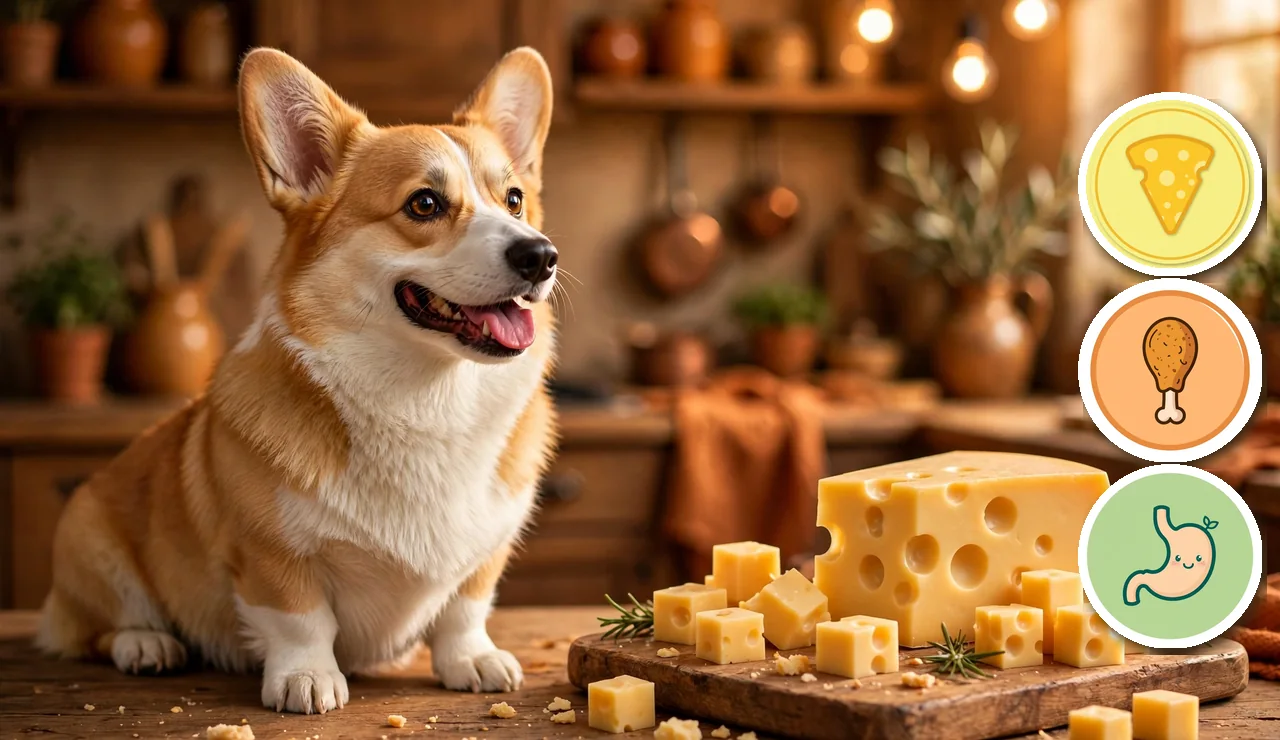
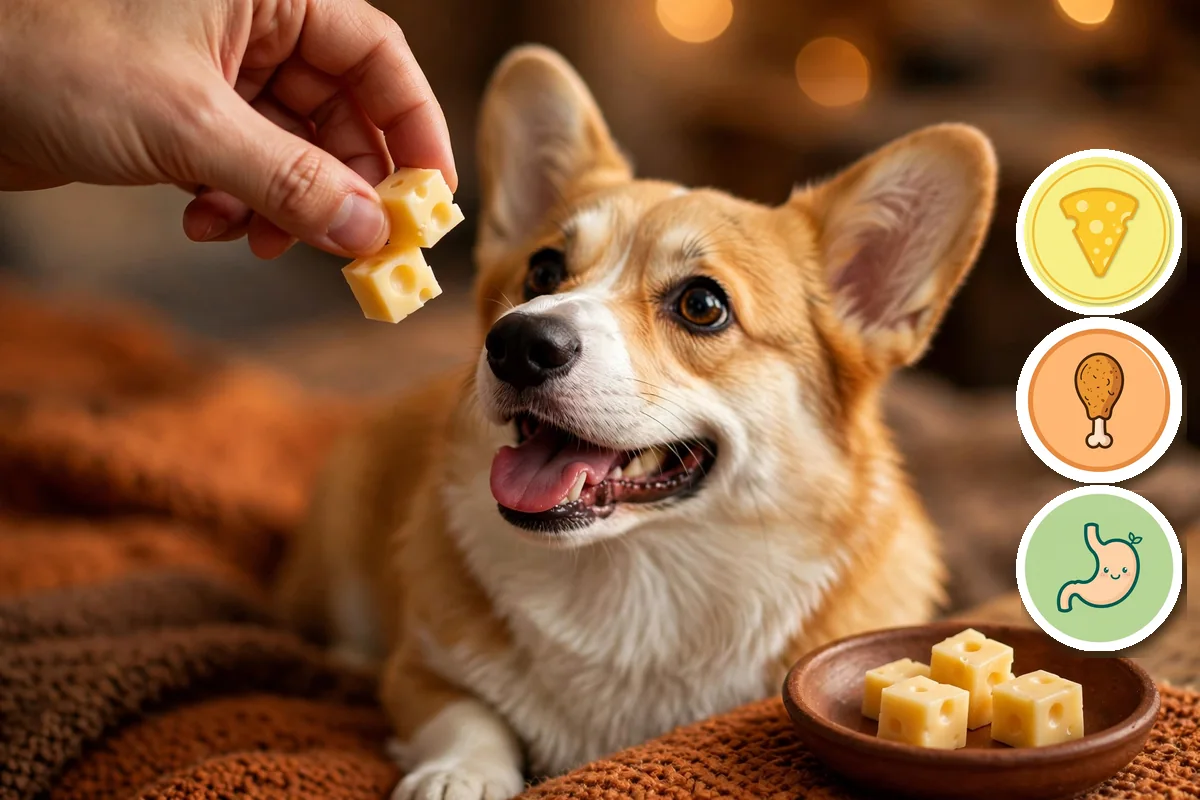
Yes, dogs can eat Swiss cheese, and it is generally considered one of the gentler cheese options available. Swiss is a hard, aged cheese that is naturally low in both lactose and sodium, which makes it easier to digest and lower in salt than many other common cheeses. It is still calorie dense and contains fat, so it should be given in small, occasional amounts, and any dish made with Swiss cheese, such as fondue, should be avoided due to other ingredients that are often included.
Key Takeaways
- Swiss cheese is naturally low in both lactose and sodium, making it one of the gentler cheese choices for dogs.
- It still contains a meaningful amount of fat, so portion size should stay small.
- Plain Swiss cheese is safe, but Swiss cheese dishes like fondue often contain garlic and wine, both of which are unsafe for dogs.
- Even dogs with mild lactose sensitivity often tolerate Swiss cheese reasonably well, though individual reactions vary.
- A small cube or slice is a reasonable occasional treat or training reward for most healthy dogs.
- Dogs with pancreatitis or a history of digestive sensitivity should still limit Swiss cheese due to its fat content.
Can Dogs Eat Swiss Cheese?
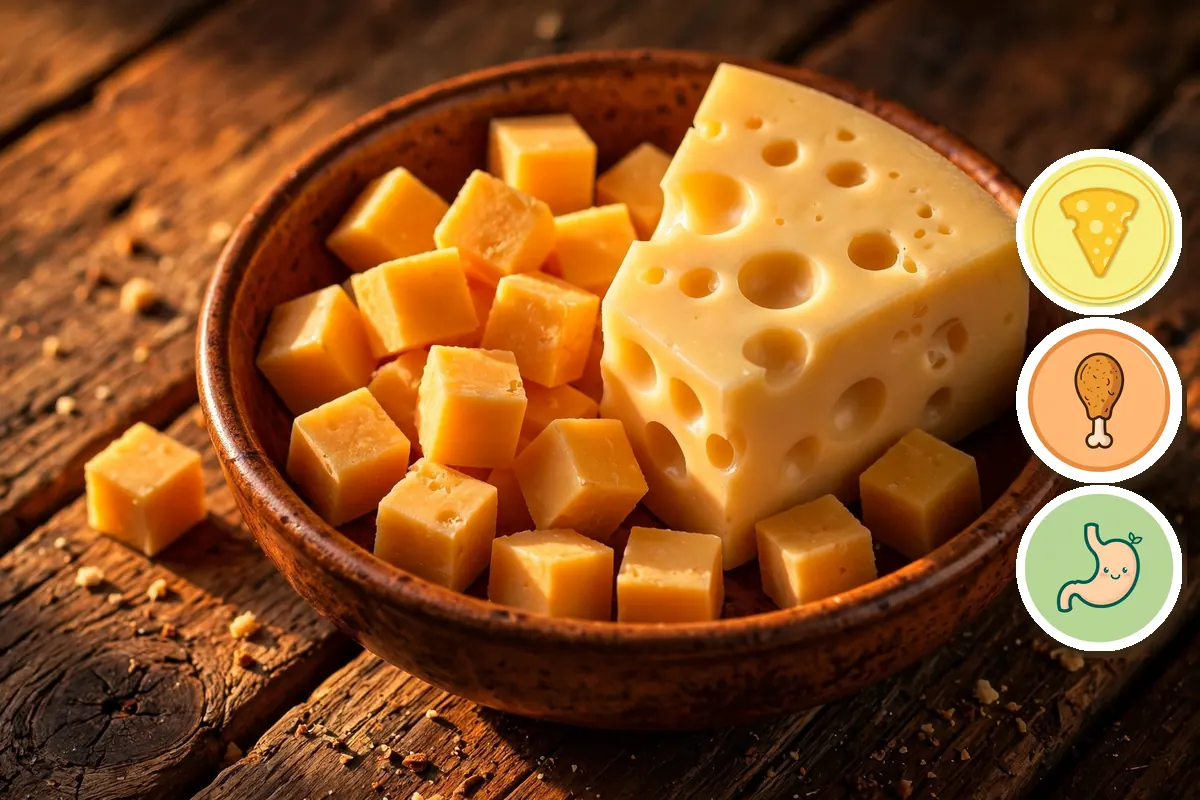
Yes, dogs can eat Swiss cheese, and among common cheese varieties, it stands out as one of the better choices. Swiss cheese is a hard, aged cheese known for its characteristic holes, which form from gas bubbles produced during the fermentation process. This same aging and fermentation process breaks down much of the lactose naturally found in milk, which is why Swiss cheese tends to be easier on the digestive system than fresher, softer cheeses for many dogs.
Swiss cheese is also comparatively lower in sodium than many other cheeses, which adds to its reputation as one of the gentler options. That said, it is still a dairy product with a meaningful fat content, so moderation remains important.
Nutritional Profile of Swiss Cheese
Swiss cheese offers a solid nutritional profile relative to many other cheese types.
| Nutrient | Benefit for Dogs |
|---|---|
| Protein | Supports muscle maintenance and repai |
| Calcium | Supports bone and dental health |
| Vitamin A | Supports vision and immune function |
| Vitamin B12 | Supports nervous system function |
| Phosphorus | Works alongside calcium to support bone strength |
While these nutrients offer real value, a dog already receives everything it needs from a complete and balanced commercial dog food. Swiss cheese should be viewed as an occasional treat rather than a nutritional addition.
Calories in Swiss Cheese
Swiss cheese is moderate in calories, similar to many other hard, aged cheeses.
| Portion | Approximate Calories |
|---|---|
| 1 small cube (about ½ inch) | About 15 to 20 calories |
| 1 ounce (about 28 grams) | About 105 to 110 calories |
| 1 slice (standard deli cut) | About 55 to 80 calories, depending on thickness |
Because even a moderate amount of Swiss cheese carries a meaningful number of calories, portion size should stay modest, particularly for small dogs. The general treat guideline still applies. Treats, including Swiss cheese, should make up no more than 10 percent of a dog’s total daily calorie intake.
Advantages of Feeding Swiss Cheese to Dogs
1. Naturally Low in Lactose
The aging and fermentation process used to make Swiss cheese breaks down much of its lactose, making it one of the more tolerable cheeses for dogs with mild dairy sensitivity.
2. Lower in Sodium Than Many Other Cheeses
Compared to cheeses like feta or parmesan, Swiss cheese generally contains less sodium, which reduces the concern around excess salt intake.
3. Contains Protein and Calcium
These nutrients support muscle and bone health, even though they are already provided through a complete diet.
4. Mild Flavor Many Dogs Enjoy
Swiss cheese has a mild, nutty flavor that many dogs find appealing, making it a reasonable option for training rewards or hiding medication.
Disadvantages and Risks of Feeding Swiss Cheese to Dogs
1. Still High in Fat
Despite its favorable lactose and sodium profile, Swiss cheese still contains a meaningful amount of fat. A large amount, such as a stolen block or a pile of slices, can trigger digestive upset or, in sensitive dogs, pancreatitis.
2. Some Dogs Still React to the Lactose Present
While lower than many other cheeses, Swiss cheese is not completely lactose-free, and dogs with more significant sensitivity can still experience gas, bloating, or diarrhea.
3. Swiss Cheese Dishes Can Introduce Other Risks
Dishes made with Swiss cheese, most notably fondue, often include ingredients that are unsafe for dogs even though the cheese itself is fine. Classic fondue recipes typically include garlic and white wine, and garlic is toxic to dogs while wine contains alcohol, which should never be given to a dog.
4. Possible Dairy Allergy
In addition to lactose intolerance, some dogs can have a true allergic reaction to the proteins in dairy, including Swiss cheese, which is a separate concern from lactose sensitivity.
5. Not a Nutritional Requirement
Swiss cheese is a supplemental treat, not a required part of a dog’s diet. A complete and balanced commercial dog food already provides everything a dog needs.
Advantages vs. Disadvantages at a Glance
| Advantages | Disadvantages |
|---|---|
| Naturally low in lactose | Still contains a meaningful amount of fat |
| Lower in sodium than many other cheeses | Some sensitive dogs still react to its lactose |
| Contains protein and calcium | Fondue and similar dishes introduce garlic and alcohol risks |
| Mild flavor many dogs enjoy | Possible dairy protein allergy in some dogs |
| Not nutritionally required |
How Much Swiss Cheese Can a Dog Eat?
Portion size should scale with a dog’s body weight, and Swiss cheese should be treated as an occasional treat rather than a daily food.
| Dog Size | Weight Range | Safe Serving | Frequency |
|---|---|---|---|
| Extra small | 2 to 10 lbs | A pea-sized piece | A few times a week at most |
| Small | 11 to 20 lbs | A small cube | A few times a week at most |
| Medium | 21 to 50 lbs | 1 to 2 small cubes | A few times a week at most |
| Large | 51 to 90 lbs | 2 to 3 small cubes | A few times a week at most |
| Extra large | 91+ lbs | A small handful of small cubes | A few times a week at most |
As with any new food, it is best to start with a small amount and monitor closely for any signs of digestive upset before offering Swiss cheese again.
Why Cheese Fondue Is a Concern, Even With Swiss Cheese
Plain Swiss cheese on its own is one of the gentler cheese options for dogs, but the same cannot be said for dishes made from it. Classic cheese fondue is prepared by melting Swiss cheese with white wine and typically rubbing the pot with a clove of garlic, sometimes adding more directly to the mixture. Garlic belongs to the allium family and is toxic to dogs, and wine contains alcohol, which dogs should never consume in any amount. If a dog laps up fondue, the concern is not the Swiss cheese itself but the garlic and alcohol combined with the rich fat content, which is a very different situation than a plain slice or cube of the cheese.
Can Puppies Eat Swiss Cheese?
Yes, puppies can have a very small amount of plain Swiss cheese once they are eating solid food, though portions should be smaller than for an adult dog. Puppies have more sensitive digestive systems, so it is best to introduce Swiss cheese gradually and watch closely for any signs of digestive upset.
Swiss Cheese and Dogs with Health Conditions
Certain dogs should approach Swiss cheese with more caution, even though it is one of the gentler cheese options.
| Condition | Consideration |
|---|---|
| Pancreatitis | Fat content, while more moderate than some cheeses, can still trigger a flare-up |
| Obesity or weight management | Calorie content means portions should stay small and infrequent |
| Lactose intolerance | Lower lactose than many cheeses, but sensitive dogs may still react |
| Dairy protein allergy | A true allergy to milk proteins is a separate concern from lactose intolerance and warrants avoiding all dairy |
How to Safely Feed Swiss Cheese to Your Dog
- Choose plain Swiss cheese with no added seasoning or flavoring.
- Cut the cheese into small, appropriately sized pieces for the dog’s size.
- Avoid any dish made with Swiss cheese, such as fondue, that includes garlic, wine, or other unsafe ingredients.
- Offer a small amount first and monitor for digestive reaction before giving it again.
- Keep frequency to a few times a week at most, given the fat content.
Signs of an Adverse Reaction
Watch for the following after a dog eats Swiss cheese:
- Gas or bloating
- Diarrhea or loose stool
- Vomiting
- Itching or skin irritation, which may indicate a dairy protein allergy rather than lactose intolerance
- Lethargy or abdominal pain, particularly after a large amount
If a dog eats a large amount of Swiss cheese, such as a stolen block, monitor for repeated vomiting, a hunched or painful posture, marked lethargy, or a swollen abdomen over the following 24 to 72 hours, and contact a veterinarian if any of these appear.
Frequently Asked Questions
Can dogs eat Swiss cheese every day?
Small amounts can be given occasionally, but Swiss cheese is best kept as a treat rather than a daily food, given its fat and calorie content.
Is Swiss cheese better than other cheeses for dogs?
In terms of lactose and sodium, yes, Swiss cheese is generally considered one of the gentler options. Its fat content is still comparable to many other cheeses, so moderation remains important.
Can dogs eat cheese fondue?
No, cheese fondue typically contains garlic and white wine, both of which are unsafe for dogs, in addition to being very rich in fat. The Swiss cheese itself is not the main concern in this dish.
Can dogs with lactose intolerance eat Swiss cheese?
Many dogs with mild lactose sensitivity tolerate Swiss cheese reasonably well due to its low lactose content, but individual reactions vary, and more sensitive dogs may still experience symptoms.
Can puppies eat Swiss cheese?
Yes, in small amounts once a puppy is eating solid food. It is best to introduce it gradually and watch for any signs of digestive upset.
What happens if my dog eats a lot of Swiss cheese?
A dog that eats a large amount of Swiss cheese may experience digestive upset, and in some cases this can trigger pancreatitis. Monitor closely over the following 24 to 72 hours and contact a veterinarian if symptoms are severe or persistent.
Is Swiss cheese safe for dogs with pancreatitis?
It is best to limit or avoid it. While lower in some concerns than other cheeses, Swiss cheese still contains enough fat that it can trigger a flare-up in dogs with this condition.
How much Swiss cheese can a dog have?
A pea-sized to small cube, depending on the dog’s size, given a few times a week at most, is a reasonable guideline for most healthy dogs.