
Can Dogs Eat American Cheese?

Yes, dogs can eat American cheese, but only in very small amounts. American cheese is a processed cheese product, not a naturally aged cheese, and it tends to be notably high in sodium, sometimes containing over 400 milligrams per slice. It also contains additives like emulsifiers and preservatives that offer no benefit to a dog. An occasional small piece is unlikely to cause harm, but American cheese should not become a regular treat or a daily habit.
Key Takeaways
- American cheese is a processed cheese product, and a single slice can contain more sodium than a small dog needs in an entire day.
- It offers little nutritional benefit compared to natural cheeses due to added emulsifiers, preservatives, and food coloring.
- A single slice can also carry a meaningful number of calories, often more than a small dog’s entire daily treat allowance.
- Only a very small piece, such as a thumbnail-sized amount, should be given at a time.
- Dogs with kidney disease, heart conditions, or a history of pancreatitis should avoid American cheese.
- Natural, lower-sodium cheeses like cottage cheese, mozzarella, or Swiss are better regular alternatives.
Can Dogs Eat American Cheese?
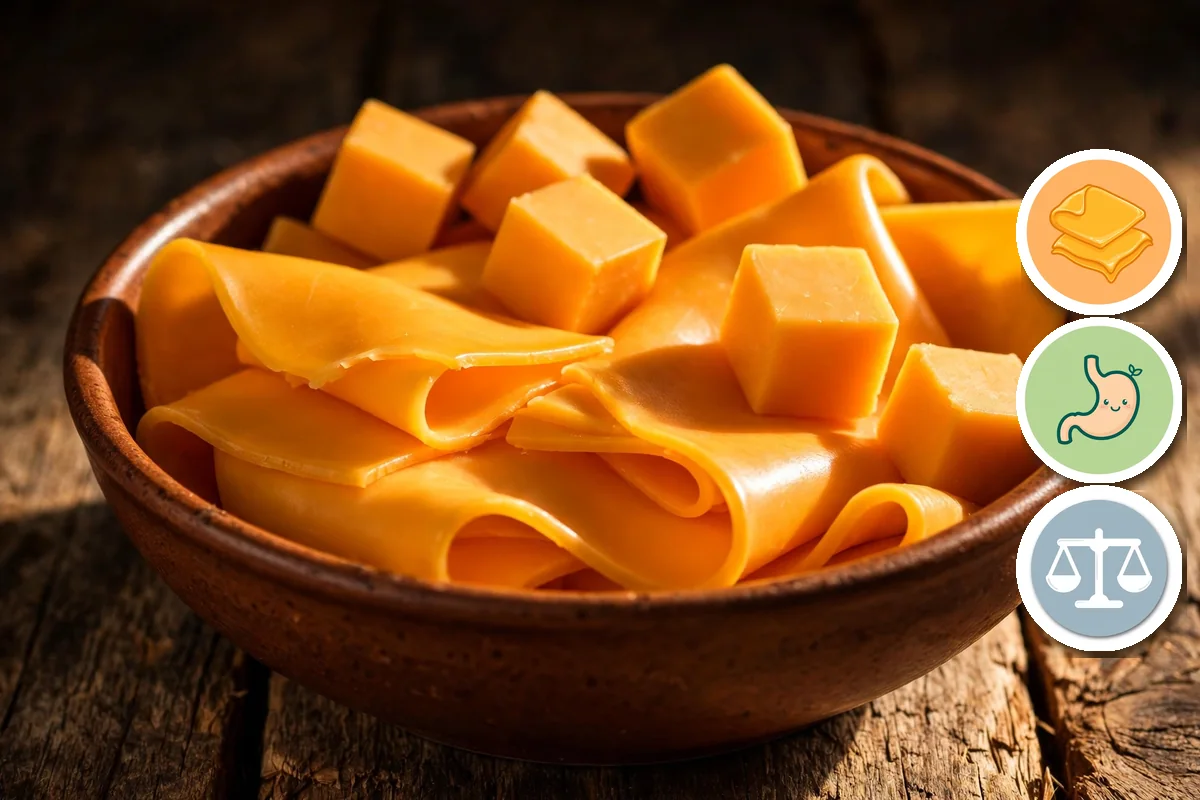
Yes, dogs can technically eat American cheese, and most veterinarians consider a very small, occasional piece to be low risk for a healthy dog. However, American cheese is different from naturally aged cheeses like cheddar or Swiss. It is a processed cheese product made by blending cheese with emulsifiers, preservatives, and often food coloring to create its smooth texture and consistent melt.
Because of this processing, American cheese tends to be higher in sodium than many natural cheeses, and it offers comparatively little nutritional value in exchange. It is best understood as a cheese that is technically safe in tiny amounts, rather than one with any real upside for a dog’s diet.
What Is American Cheese Made Of?
American cheese is typically made by blending a base cheese, such as cheddar or Colby, with emulsifying salts, milk or whey, and often annatto for its characteristic orange-yellow color. This process creates a smooth, consistent texture that melts easily, which is why it is popular for sandwiches and burgers, but it also means American cheese contains several added ingredients that a naturally aged cheese does not.
Sodium and Calories in American Cheese
American cheese stands out among common cheeses for how much sodium a single slice can contain.
| Portion | Approximate Calories | Approximate Sodium |
|---|---|---|
| 1 slice (standard) | About 60 to 70 calories | About 300 to 460 mg |
| 1 ounce | About 90 to 105 calories | About 400 to 450 mg |
For context, a healthy 30-pound dog needs only around 200 milligrams of sodium per day, an amount already covered by a complete and balanced dog food. A single slice of American cheese can exceed that entire daily amount on its own. Likewise, a single slice’s calorie count can already surpass the full daily treat allowance for a small dog under the general 10 percent treat guideline.
Disadvantages and Risks of Feeding American Cheese to Dogs

1. Very High in Sodium
American cheese is notably high in sodium compared to many natural cheeses. Regular or excessive sodium intake can lead to increased thirst and urination, and in more extreme cases, can be dangerous for dogs with existing heart or kidney conditions.
2. Contains Additives With No Nutritional Value
Emulsifying salts, preservatives, and food coloring are common in processed cheese products. These ingredients are not toxic in the amounts typically found in cheese, but they offer no benefit to a dog and add to the case for choosing a natural cheese instead.
3. High in Fat and Calories Relative to Its Size
A single slice can carry a meaningful number of calories, which can easily exceed a small dog’s entire daily treat allowance in one piece.
4. Higher Lactose Content Than Some Natural Cheeses
Because American cheese is a processed blend rather than a naturally aged cheese, it can contain more lactose than harder, aged cheeses like cheddar or Swiss, which may make it more likely to cause digestive upset in lactose-sensitive dogs.
5. Cumulative Effects Over Time
Using American cheese daily as a pill-hiding method or frequent reward can quietly add up to a significant amount of sodium, fat, and calories over weeks and months, even if a dog seems fine after each individual piece.
6. Not a Nutritional Requirement
American cheese is a supplemental treat, not a required part of a dog’s diet. A complete and balanced commercial dog food already provides everything a dog needs.
Advantages vs. Disadvantages at a Glance
| Advantages | Disadvantages |
|---|---|
| Not classified as toxic in small amounts | Very high in sodium |
| Mild flavor many dogs find appealing | Contains additives with no nutritional value |
| Convenient and widely available | High in fat and calories relative to size |
| Higher lactose than many natural aged cheeses | |
| Cumulative sodium and fat intake can add up over time | |
| Not nutritionally required |
How Much American Cheese Can a Dog Eat?
Given its high sodium and calorie content, American cheese should be given in much smaller portions than its size might suggest.
| Dog Size | Weight Range | Safe Serving | Frequency |
|---|---|---|---|
| Extra small | 2 to 10 lbs | A thumbnail-sized piece | Rarely, once a week or less |
| Small | 11 to 20 lbs | A quarter of a slice at most | Once a week or less |
| Medium | 21 to 50 lbs | Up to half a slice | A few times a week at most |
| Large | 51 to 90 lbs | Up to a full slice | A few times a week at most |
| Extra large | 91+ lbs | Up to a full slice | A few times a week at most |
Cutting the cheese into small pieces rather than giving a whole slice at once is a simple way to keep portions in check, particularly for smaller dogs.
What Should I Do If My Dog Steals a Slice of American Cheese?
If a dog manages to snatch a slice or two off a counter or plate, this is unlikely to cause a serious problem for most healthy dogs. Monitor for signs of digestive upset, such as vomiting, diarrhea, or excessive thirst, over the following several hours. If a dog eats several slices at once, or shows persistent symptoms, lethargy, or loss of appetite beyond 24 hours, contact a veterinarian for guidance, since a large amount of processed cheese can occasionally contribute to pancreatitis or, in rare cases, concerning sodium levels.
Better Cheese Alternatives to American Cheese
Since American cheese offers relatively little benefit compared to its sodium and additive content, several natural cheeses make better regular options if a dog enjoys cheese as a treat.
| Cheese Type | Why It Is a Better Choice |
|---|---|
| Cottage cheese | Much lower in sodium, high in protein, minimal processing |
| Mozzarella | Lower in fat and sodium than most processed cheese |
| Swiss | Naturally low in lactose and sodium due to the aging process |
| Cheddar (aged) | Lower in lactose than fresh or processed cheese, though still watch the sodium |
Dedicated guides are available covering each of these options in more detail, including safe portion sizes.
Can Puppies Eat American Cheese?
It is best to avoid giving American cheese to puppies. Their digestive systems are more sensitive to rich, processed foods, and their smaller size makes them more susceptible to the sodium content relative to body weight. A gentler, more natural cheese option is a better choice if a dairy treat is desired for a puppy already eating solid food.
American Cheese and Dogs with Health Conditions
Certain dogs should avoid American cheese entirely due to its sodium and additive content.
| Condition | Consideration |
|---|---|
| Kidney disease | High sodium content can place significant strain on the kidneys |
| Heart conditions | Excess sodium can contribute to fluid retention and cardiovascular strain |
| Pancreatitis | Fat content is a well-documented trigger for flare-ups |
| Obesity or weight management | Calorie and sodium content work against weight management goals |
How to Safely Feed American Cheese to Your Dog
- Choose a small, thumbnail-sized piece rather than a full slice.
- Avoid making American cheese a daily habit, even for pill-hiding purposes.
- Consider a lower-sodium, more natural cheese as a regular alternative.
- Monitor for any signs of digestive upset after the first time it is offered.
- Keep frequency to once or a few times a week at most, depending on the dog’s size.
Signs of an Adverse Reaction or Excess Sodium Intake
Watch for the following after a dog eats American cheese:
- Increased thirst and urination
- Vomiting or diarrhea
- Lethargy
- Abdominal pain or decreased appetite
- Tremors, in cases of significant sodium intake
Seek veterinary attention if a dog eats several slices at once or shows signs of excessive thirst, tremors, or persistent digestive upset.
Frequently Asked Questions
Can dogs eat American cheese every day?
It is not recommended. The high sodium and additive content make it unsuitable for daily feeding, even in small amounts used for pill-hiding. A lower-sodium natural cheese is a better everyday option.
Is American cheese worse for dogs than natural cheese?
Generally, yes. American cheese tends to be higher in sodium and contains additives that natural, aged cheeses do not, while offering comparatively little nutritional benefit.
How much sodium is in a slice of American cheese?
A single slice can contain anywhere from about 300 to 460 milligrams of sodium, which can exceed a small dog’s entire daily sodium needs from food.
What happens if my dog eats a whole slice of American cheese?
A single slice is unlikely to cause serious harm to most healthy adult dogs, though it may exceed a small dog’s daily treat calorie allowance. Monitor for digestive upset and contact a veterinarian if symptoms are severe.
Can puppies eat American cheese?
It is best to avoid it. Puppies have more sensitive digestive systems and are more affected by sodium relative to their smaller size. A natural, lower-sodium cheese is a better choice if needed.
Is American cheese safe for dogs with kidney disease?
No, the high sodium content can place significant strain on the kidneys, so it should be avoided for dogs with kidney disease.
What is a better alternative to American cheese for dogs?
Cottage cheese, mozzarella, and aged Swiss or cheddar are all lower in sodium and additives, making them better regular options if a dog enjoys cheese.
Can American cheese cause pancreatitis in dogs?
It can contribute to it, particularly if a large amount is eaten at once. The fat content, combined with a dog’s individual sensitivity, is the main factor behind this risk.