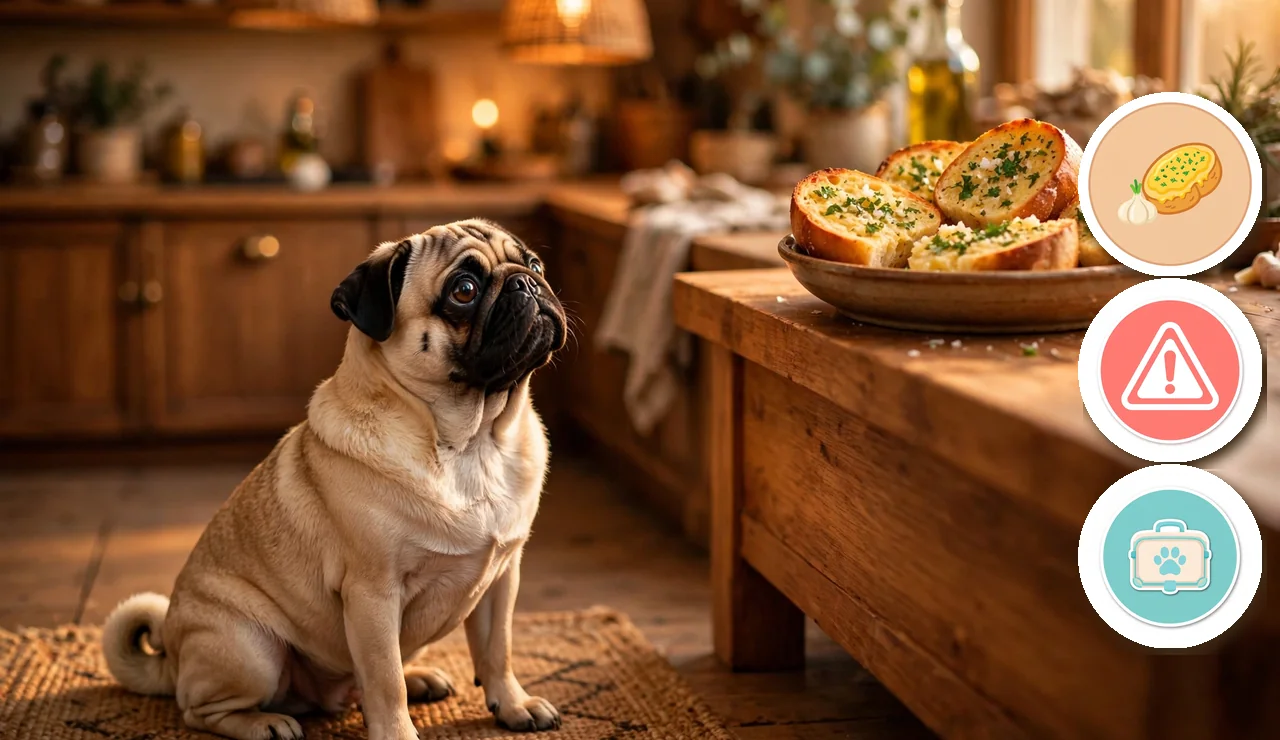
Can Dogs Eat Garlic Bread?

Quick Answer: No, dogs should not eat garlic bread. Garlic belongs to the allium family, the same group that includes onions, chives, and leeks, and every member of that family is toxic to dogs in every form, whether raw, cooked, powdered, or baked into bread. A single stolen bite from a larger, healthy dog is unlikely to cause a severe reaction, but garlic toxicity is dose-dependent and cumulative, and garlic bread adds butter, oil, and salt on top of the garlic itself. There is no safe amount to intentionally offer, and repeated small exposures can add up over time.
Key Takeaways
- Garlic is toxic to dogs in every form, including baked into bread, and cooking does not neutralize the compound responsible.
- The toxic compound, thiosulfate, damages red blood cells and can cause a type of anemia called hemolytic anemia.
- Symptoms of garlic toxicity are often delayed and may not appear for several hours or even a few days after ingestion.
- Garlic toxicity is cumulative, meaning repeated small exposures over time can add up to a dangerous dose even without one large ingestion.
- Garlic bread also typically contains butter, oil, and salt, which add their own risk of stomach upset or pancreatitis on top of the garlic itself.
- A single small bite from an accidental table scrap is unlikely to cause severe harm in most healthy dogs, but repeated feeding should never be allowed.
Can Dogs Eat Garlic Bread?
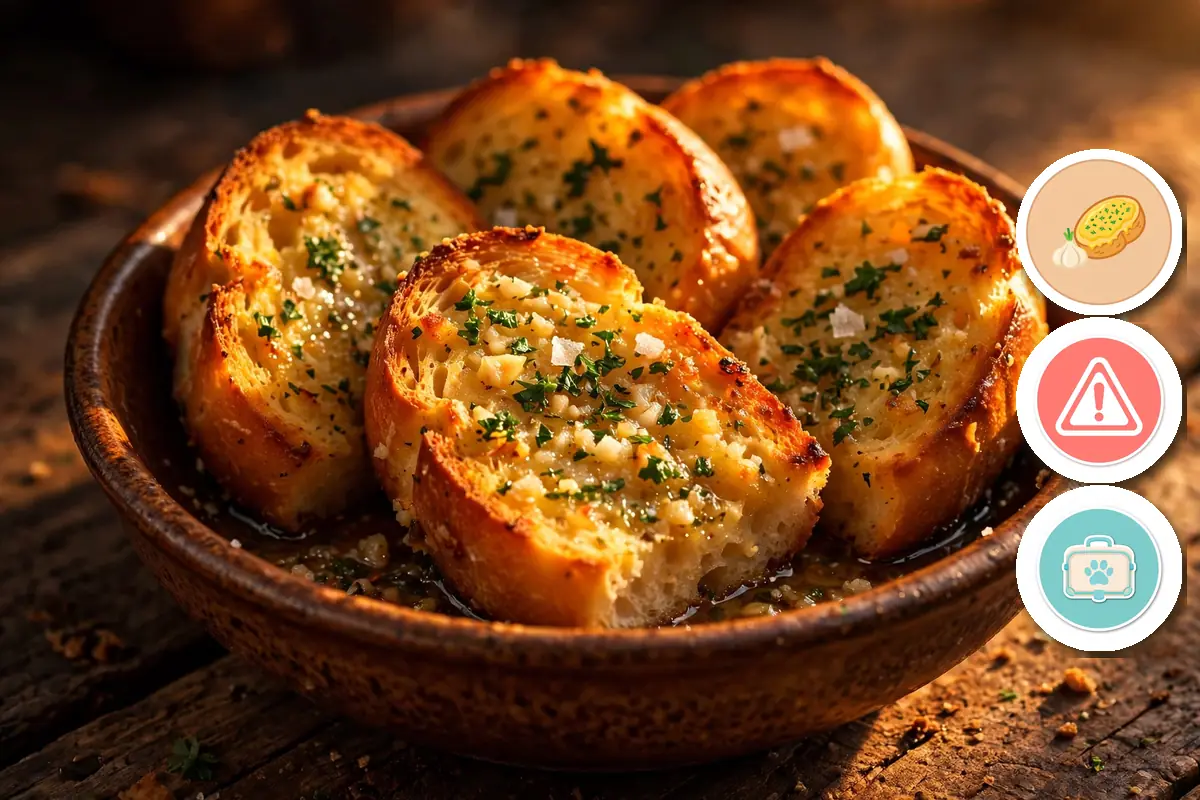
No, garlic bread should never be intentionally given to a dog. Garlic is one of the small number of human foods considered genuinely toxic to dogs, in the same category as onions, chocolate, and grapes, and it does not matter whether the garlic is raw, roasted, powdered, or melted into butter on top of a baguette. The compound responsible for its toxicity survives cooking and baking, so a loaf of garlic bread fresh out of the oven carries the same fundamental risk as a raw clove.
This does not mean every bite of garlic bread sends a dog straight to the emergency room. A single stolen piece, eaten once by a larger, otherwise healthy dog, is often tolerated without a severe reaction. The real danger comes from the fact that garlic toxicity scales with dose and can build up with repeated exposure, so treating an occasional slice as a harmless habit is where the risk actually lies. For more variety in safe snacks, check our guide on whether dogs can eat mozzarella cheese. Many owners also wonder can dogs eat feta cheese before sharing snacks. As you plan dog-friendly treats, find out whether american cheese is safe for dogs.
Why Garlic Is Toxic to Dogs
Garlic and the rest of the allium family contain a compound called thiosulfate. This compound is harmless to people, but dogs lack the enzymes needed to properly break it down. Once absorbed into the bloodstream, thiosulfate causes oxidative damage to red blood cells, which can lead to a condition called hemolytic anemia, where red blood cells break down faster than the body can replace them. Because red blood cells carry oxygen throughout the body, significant damage to them can lead to weakness, pale or yellowish gums, rapid breathing, and in severe cases, organ stress from inadequate oxygen delivery.
Garlic is generally considered more concentrated and more potent than onions on a weight basis, which is part of why even a modest amount baked into a slice of bread is treated seriously rather than dismissed as a trivial seasoning.
Why the Dose and Repetition Matter So Much
Some sources describe a toxic dose of garlic in dogs as being in the range of 15 to 30 grams per kilogram of body weight, though estimates vary and individual sensitivity plays a role as well. The practical takeaway is less about memorizing a specific number and more about understanding two things: smaller dogs reach a dangerous dose with far less garlic than larger dogs, and garlic toxicity is cumulative. A dog that gets a few crumbs of garlic bread once in a while from a well-meaning family member may seem fine every single time, while quietly building toward a problem that eventually shows up as unexplained lethargy or pale gums. This is exactly why veterinary sources consistently frame garlic as something to keep away from dogs entirely, not something to ration carefully.
Symptoms of Garlic Toxicity
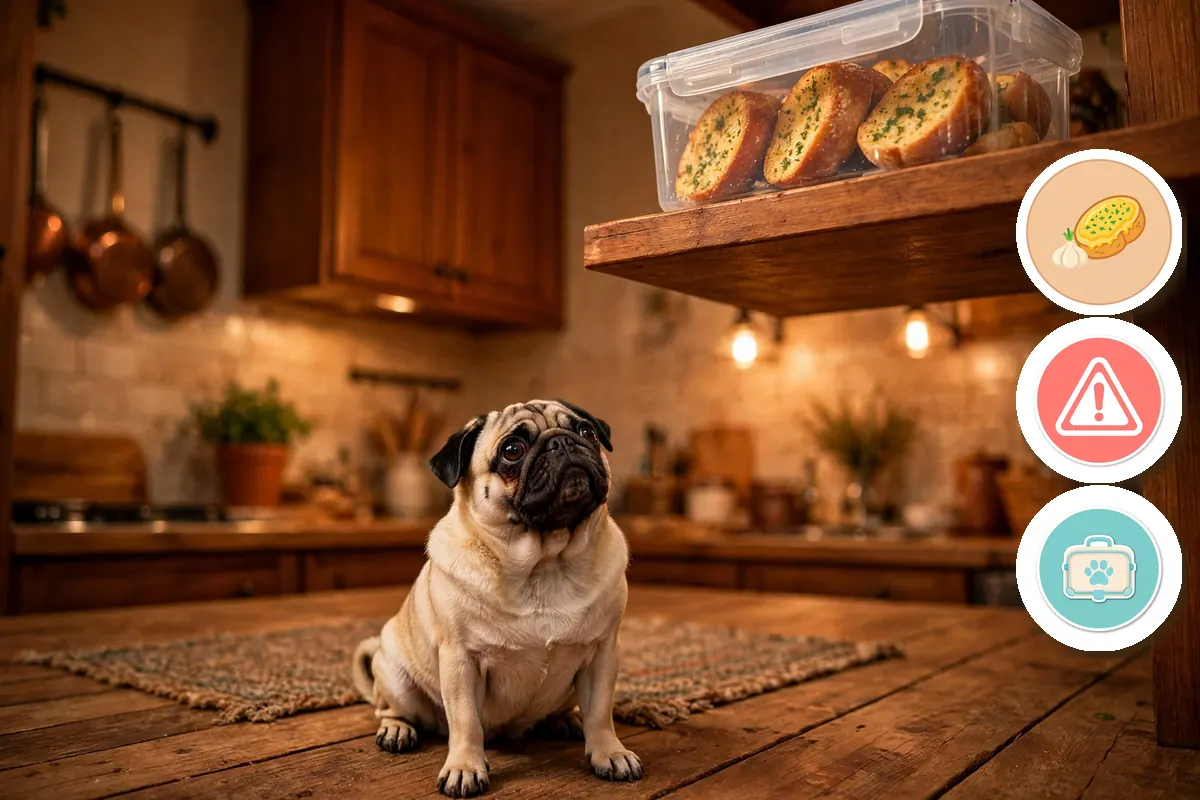
One of the most important things to understand about garlic toxicity is that symptoms are often delayed, sometimes not appearing for several hours, and in some cases not becoming obvious for a few days. Watch for:
- Vomiting and diarrhea, often the first signs to appear
- Lethargy and weakness
- Pale or yellow-tinged gums
- Increased heart rate or rapid, shallow breathing
- Loss of coordination, sometimes described as a stumbling or drunk-like gait
- Dark or discolored urine
- Excessive drooling
- Collapse, in severe cases
Because the serious effects on red blood cells can take time to develop, a dog that seems completely normal the day after eating garlic bread has not necessarily avoided a problem. Monitoring for several days after a known or suspected exposure, rather than just the first few hours, is the safer approach.
Why Garlic Bread Specifically Is a Bigger Concern Than Garlic Alone
Garlic bread rarely involves just garlic. The classic preparation melts a generous amount of butter or oil, mixed with garlic and often salt and herbs, directly into the bread, then toasts or bakes it. This means a dog that eats garlic bread is getting the garlic’s thiosulfate alongside a meaningful dose of fat and sodium. The fat content raises the separate risk of pancreatitis, a painful and potentially serious inflammation of the pancreas, particularly with a larger piece eaten at once, and the added salt contributes its own concerns for dogs with heart or kidney issues. In other words, garlic bread stacks several risks into one food, rather than presenting a single, isolated problem.
Advantages vs. Disadvantages at a Glance
| Advantages | Disadvantages |
|---|---|
| A single small accidental bite rarely causes severe harm in a larger, healthy dog | Garlic’s thiosulfate is toxic in every form, including baked into bread |
| Symptoms are often delayed, sometimes by several days | |
| Toxicity is cumulative, so repeated small exposures can add up | |
| Butter, oil, and salt in garlic bread add fat and sodium concerns | |
| Offers no nutritional benefit that would justify any risk |
What to Do If Your Dog Eats Garlic Bread
- Try to estimate how much was eaten and how much garlic was actually used in that particular piece.
- For a single small bite eaten by a medium or large adult dog, monitor closely over the next several days rather than assuming the absence of immediate symptoms means everything is fine.
- For a small dog, a puppy, or any dog that ate a larger piece or multiple pieces, contact a veterinarian or an animal poison control hotline promptly rather than waiting for symptoms to appear.
- Watch for vomiting, diarrhea, lethargy, pale or yellow gums, rapid breathing, or dark urine over the following days.
- Seek emergency veterinary care immediately if the dog shows weakness, collapse, or visibly labored breathing.
- If symptoms of anemia do develop, veterinary treatment may include intravenous fluids, oxygen therapy, blood transfusions in severe cases, and medications to manage symptoms, depending on how the dog presents.
Can Dogs Eat Garlic Bread Made with Garlic Powder Instead of Fresh Garlic?
No, this does not make a meaningful difference. Garlic powder is simply a concentrated, dehydrated form of garlic, and it contains the same thiosulfate compound as fresh cloves, sometimes in an even more concentrated form relative to volume. Garlic bread made with garlic powder, garlic salt, or a pre-made garlic butter spread carries the same fundamental risk as garlic bread made with fresh minced garlic.
Can Puppies Eat Garlic Bread?
No, garlic bread should be kept away from puppies with even greater caution than adult dogs. A puppy’s smaller body size means a given amount of garlic represents a much larger relative dose, which increases both the likelihood and potential severity of a reaction. If a puppy eats any amount of garlic bread, contacting a veterinarian promptly is the safer choice rather than waiting to see how things develop.
Garlic Bread and Dogs with Health Conditions
| Condition | Consideration |
|---|---|
| Anemia or blood disorders | Garlic’s effect on red blood cells poses an elevated risk |
| Pancreatitis or a predisposed breed | The butter and oil in garlic bread are a well-documented trigger for flare-ups |
| Kidney or heart conditions | Added salt can place additional strain on these organs |
| Small or toy breeds | A much smaller amount of garlic represents a dangerous relative dose |
Better Alternatives to Garlic Bread for Dogs
| Alternative | Why It Is a Better Choice |
|---|---|
| Plain bread with no toppings | No garlic, butter, or added salt |
| A small piece of plain, cooked lean meat | A flavorful treat with none of the allium risk |
| Vet-approved commercial dog treats | Formulated to be safe and appropriately portioned |
How to Prevent Accidental Garlic Bread Exposure
- Keep garlic bread and any dish containing garlic out of reach, including on low tables during meals or gatherings.
- Let family members and guests know that garlic bread, along with any garlic or onion-containing food, should never be shared with a dog.
- Store leftover garlic bread in a sealed container rather than leaving it on a counter or table.
- Be especially cautious at restaurants or takeout meals, where a dog may have easier access to dropped pieces under the table.
- Dispose of garlic bread crusts and crumbs in a secured trash can rather than an open bin.
Frequently Asked Questions
Can dogs eat garlic bread?
No, garlic is toxic to dogs in every form, including baked into bread, so garlic bread should never be intentionally given to a dog.
Will a small bite of garlic bread hurt my dog?
A single small bite is unlikely to cause severe harm in a larger, healthy dog, but it should not be treated as a routine habit, since garlic toxicity can build up with repeated exposure.
How long does it take for garlic toxicity symptoms to appear?
Symptoms can be delayed for several hours and sometimes do not become obvious for a few days, which is why monitoring should continue beyond the first day after a known exposure.
Does cooking garlic make it safe for dogs?
No, cooking or baking does not destroy the thiosulfate compound responsible for garlic’s toxicity, so garlic bread carries the same fundamental risk as raw garlic.
Is garlic powder in garlic bread less dangerous than fresh garlic?
No, garlic powder is a concentrated form of garlic and contains the same toxic compound, sometimes at a higher concentration relative to volume than fresh garlic.
What should I do if my dog eats a lot of garlic bread?
Contact a veterinarian or an animal poison control hotline promptly, and monitor closely for vomiting, lethargy, pale gums, or dark urine over the following several days.
Can puppies eat garlic bread?
No, puppies should never be given garlic bread, since their smaller size makes a given amount of garlic a much larger relative dose.
Why is garlic bread worse than plain garlic alone?
Garlic bread typically adds butter, oil, and salt to the garlic itself, which introduces a separate risk of pancreatitis and excess sodium intake on top of the garlic toxicity concern.