
Can Dogs Eat Brie Cheese?

Brie cheese is not toxic to dogs in the way blue cheese is, but it is generally not recommended due to its very high fat content. Brie is a double cream cheese, often containing 60 to 75 percent butterfat, which makes it one of the richest common cheeses available. A small taste is unlikely to cause serious harm to a healthy dog, but brie’s fat content creates a real risk of digestive upset or pancreatitis, which is why it is best avoided or limited to an extremely small, infrequent amount.
Key Takeaways
- Brie is not toxic like blue cheese, but its very high fat content makes it a poor choice as a regular treat.
- Brie can contain 60 to 75 percent butterfat, among the richest of common cheeses.
- The white rind is made from an edible mold, Penicillium camemberti, that is different from the mold used in blue cheese and is not considered toxic.
- The rind is tougher to digest than the creamy interior and adds sodium, so trimming it away is a reasonable precaution.
- High-fat foods like brie are a well-documented trigger for pancreatitis, particularly in susceptible dogs.
- Cottage cheese, mozzarella, and other lower-fat cheeses are much better regular options for dogs.
Can Dogs Eat Brie Cheese?
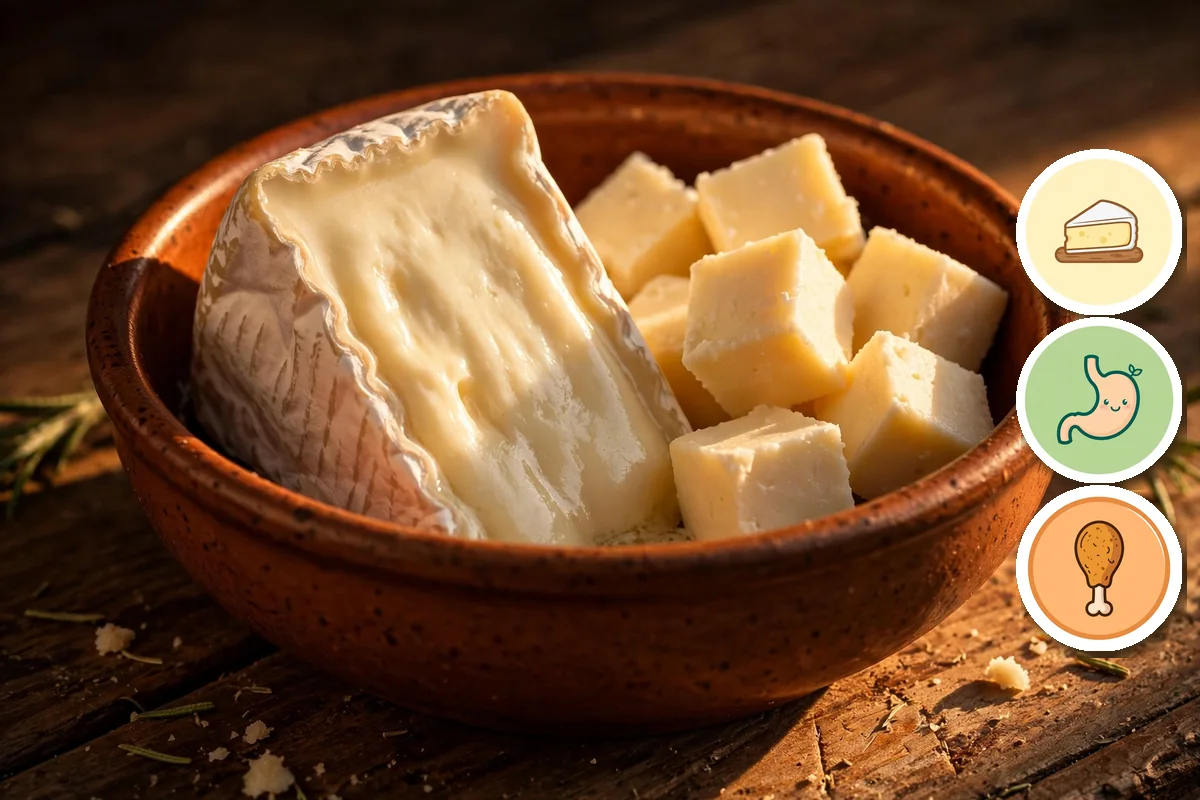
Brie cheese is not classified as toxic to dogs, and an accidental small taste is unlikely to cause serious harm to most healthy dogs. However, most veterinary sources recommend avoiding it or offering it only in an extremely small, occasional amount, since brie’s defining characteristic, its high butterfat content, makes it one of the richer cheeses a dog could encounter.
Brie is a soft, double cream cheese made from cow’s milk, and its rich, buttery texture comes from a fat content that is notably higher than firmer cheeses like cheddar or Swiss. This fat content, rather than any toxin, is the primary reason brie is considered a less suitable treat for dogs.
Nutritional Profile of Brie Cheese
Brie does offer some nutrients, though its fat content is the dominant feature of its profile.
| Nutrient | Consideration for Dogs |
|---|---|
| Protein | Supports muscle maintenance and repai |
| Calcium | Supports bone and dental health |
| Fat | Present in very high amounts, the primary concern with this cheese |
| Sodium | Present in a moderate to high amount, particularly in the rind |
While brie does contain protein and calcium, a dog already receives everything it needs from a complete and balanced commercial dog food, and brie’s fat content makes it a poor trade-off compared to lower-fat cheese options.
Calories and Fat in Brie Cheese
Brie is calorie dense and notably high in fat compared to many other common cheeses.
| Portion | Approximate Calories |
|---|---|
| 1 small wedge (about 1 inch) | About 40 to 50 calories |
| 1 ounce (about 28 grams) | About 95 calories |
Brie’s butterfat content, often 60 to 75 percent, is considerably higher than firmer cheeses, which means even a small piece delivers a disproportionate amount of fat relative to its size. This is the main reason portions should be kept extremely small if brie is offered at all.
Is the Brie Rind Safe for Dogs?
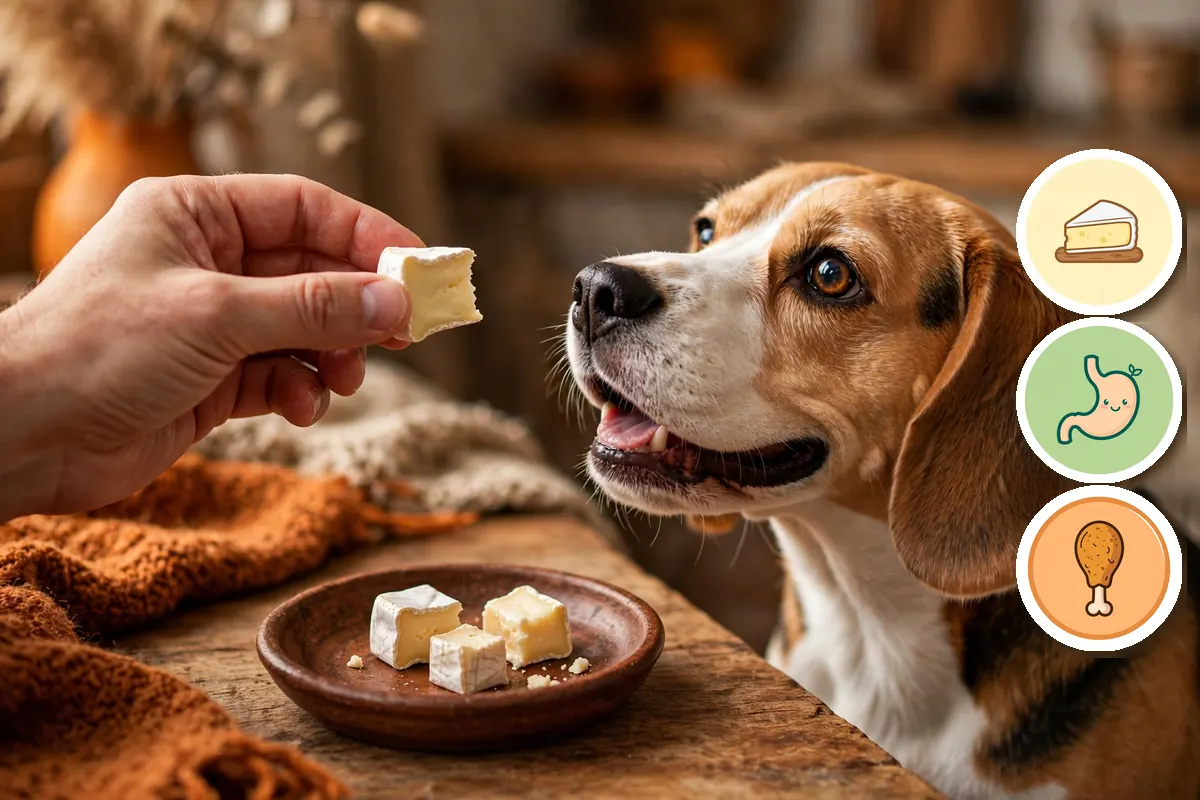
The white, fuzzy rind on a wheel of brie is formed by an edible mold called Penicillium camemberti, sometimes referred to as Penicillium candidum. This is a different mold than the one used to make blue-veined cheeses, and it is not associated with the same roquefortine C toxin, which makes the rind non-toxic in the way blue cheese is. That said, the rind is tougher and more difficult to digest than the creamy interior, and it can carry a higher sodium concentration. For this reason, trimming away as much rind as possible before offering a small piece of brie to a dog is a reasonable precaution, even though the rind itself is not considered toxic.
Disadvantages and Risks of Feeding Brie Cheese to Dogs
1. Very High in Fat
Brie’s defining feature, its rich butterfat content, is also its biggest risk for dogs. A sudden intake of high-fat food is a well-documented trigger for pancreatitis, a painful and potentially serious inflammation of the pancreas, and brie ranks among the higher-fat cheeses a dog might encounter.
2. Lactose Content
Like other dairy products, brie contains lactose, which can cause gas, bloating, or diarrhea in dogs with lactose intolerance.
3. Soft Cheese Bacterial Concerns
Soft, moisture-rich cheeses like brie can be more hospitable to bacterial growth than harder, aged cheeses if not stored or handled properly. While this is a general food safety consideration rather than a dog-specific one, it is worth choosing fresh, properly refrigerated brie if any is offered.
4. The Rind Is Harder to Digest
While not toxic, the tougher texture of the rind compared to the interior can be more difficult for a dog’s digestive system to process and may contribute to mild stomach upset in sensitive dogs.
5. Flavored Varieties Add Further Risk
Some brie is sold with additions like truffle, herbs, or garlic mixed in or served alongside. Garlic in particular is toxic to dogs, which makes flavored or accompanied brie a higher risk than plain brie.
6. Not a Nutritional Requirement
Brie is a supplemental treat, not a required part of a dog’s diet. A complete and balanced commercial dog food already provides everything a dog needs.
Advantages vs. Disadvantages at a Glance
| Advantages | Disadvantages |
|---|---|
| Contains protein and calcium | Very high in fat, a common pancreatitis trigge |
| Not associated with the toxin found in blue cheese | Contains lactose |
| Rind is harder to digest than the interio | |
| Flavored varieties may contain toxic garlic or herbs | |
| Not nutritionally required |
How Much Brie Can a Dog Eat?
Given its very high fat content, brie is best treated as a rare exception rather than a regular treat, if offered at all.
| Dog Size | Weight Range | Maximum Occasional Amount | Frequency |
|---|---|---|---|
| Extra small | 2 to 10 lbs | A tiny sliver, interior only | Rarely, if at all |
| Small | 11 to 20 lbs | A small sliver, interior only | Rarely, if at all |
| Medium | 21 to 50 lbs | A small piece, interior only | Rarely, if at all |
| Large | 51 to 90 lbs | A modest piece, interior only | Rarely, if at all |
| Extra large | 91+ lbs | A modest piece, interior only | Rarely, if at all |
Given how many lower-fat cheese options are available, there is little reason to make brie a regular part of a dog’s treat rotation, even in these small amounts.
What Should I Do If My Dog Eats a Lot of Brie?
If a dog gets into a substantial amount of brie, such as multiple wedges at a party, monitor closely for vomiting, diarrhea, lethargy, or abdominal pain over the following 24 hours, since these can be signs of pancreatitis developing from the sudden fat intake. Offer plenty of fresh water and avoid giving any additional rich or fatty food during this period. Contact a veterinarian if symptoms are severe, persistent, or include repeated vomiting or a painful, hunched posture.
Better Cheese Alternatives to Brie
If a dog enjoys the taste of cheese, several other options offer a much better balance of nutrition to fat content.
| Cheese Type | Why It Is a Better Choice |
|---|---|
| Cottage cheese | Much lower in fat, high in protein |
| Mozzarella | Lower in fat than most soft or aged cheeses |
| Swiss | Naturally low in lactose and moderate in fat |
| Plain, unsweetened yogurt | Low in fat with beneficial probiotics |
Dedicated guides are available covering each of these options in more detail, including safe portion sizes.
Can Puppies Eat Brie Cheese?
It is best to avoid giving brie to puppies. Their digestive systems are still developing, and the very high fat content is more likely to cause digestive upset or contribute to pancreatitis in a puppy than in an adult dog. A lower-fat cheese option is a better choice if a dairy treat is desired for a puppy already eating solid food.
Brie and Dogs with Health Conditions
Certain dogs should avoid brie cheese entirely due to its fat content.
| Condition | Consideration |
|---|---|
| Pancreatitis | Very high fat content is a well-documented trigger for flare-ups and should be avoided |
| Obesity or weight management | Calorie and fat density work directly against weight management goals |
| Lactose intolerance | Even a small amount may cause digestive upset |
| Breeds prone to pancreatitis (such as Miniature Schnauzers) | Extra caution is warranted given the known predisposition |
How to Safely Feed Brie Cheese to Your Dog
- Choose plain brie with no truffle, herb, or garlic additions.
- Trim away as much of the rind as possible, offering only the interior.
- Offer an extremely small amount, no larger than a small sliver.
- Limit feeding to a rare, occasional exception rather than a regular treat.
- Monitor closely for any signs of digestive upset afterward.
Signs of an Adverse Reaction
Watch for the following after a dog eats brie cheese:
- Vomiting or diarrhea
- Lethargy
- Loss of appetite
- Abdominal pain or a hunched posture
- Repeated vomiting or signs of severe discomfort, which can indicate pancreatitis
Seek veterinary attention if a dog eats a substantial amount of brie or shows signs of persistent vomiting, abdominal pain, or lethargy.
Frequently Asked Questions
Is brie cheese toxic to dogs?
No, brie is not toxic in the way blue cheese is. Its main risk is its very high fat content, which can contribute to digestive upset or pancreatitis rather than acting as a direct toxin.
Can dogs eat brie rind?
The rind is made from an edible mold that is different from the toxin-producing mold in blue cheese and is not considered toxic. However, it is tougher to digest and higher in sodium than the interior, so trimming it away is a reasonable precaution.
Why is brie considered risky if it isn’t toxic?
Brie’s very high butterfat content, often 60 to 75 percent, makes it one of the richer common cheeses, and rich, fatty foods are a well-known trigger for pancreatitis in dogs.
Can a small piece of brie hurt my dog?
A very small piece is unlikely to cause serious harm to most healthy dogs, but there is little benefit to offering it regularly given how many lower-fat cheese alternatives exist.
What should I do if my dog eats a lot of brie?
Monitor closely for vomiting, diarrhea, lethargy, or abdominal pain over the following 24 hours, and contact a veterinarian if symptoms are severe or persistent, since this can indicate pancreatitis.
Can dogs eat brie with garlic or herbs?
No, flavored brie varieties containing garlic or certain herbs should be avoided, since garlic is toxic to dogs.
Is brie safe for dogs prone to pancreatitis?
No, brie’s very high fat content makes it a poor choice for dogs with a history of pancreatitis or breeds known to be predisposed to the condition.
What cheese can I give my dog instead of brie?
Cottage cheese, mozzarella, and Swiss cheese are all significantly lower in fat, making them better regular options if a dog enjoys dairy-based treats.