
Can Dogs Eat Blue Cheese?

No, dogs should not eat blue cheese. Unlike most other cheeses, which are simply high in fat or sodium, blue-veined cheeses such as Roquefort, Gorgonzola, Stilton, and Danish Blue are ripened using a specific fungus that can produce a compound called roquefortine C. This compound is genuinely toxic to dogs and can cause vomiting, diarrhea, elevated body temperature, muscle tremors, and in severe cases, seizures. Blue cheese should be kept out of reach at all times, and it should never be intentionally given to a dog.
Key Takeaways
- Blue-veined cheeses are ripened with a fungus that can produce roquefortine C, a compound that is toxic to dogs.
- Symptoms of roquefortine C exposure can include vomiting, diarrhea, fever, tremors, and in severe cases, seizures.
- Risk increases with the amount of blue cheese eaten, though even a moderate amount can cause symptoms in some dogs.
- Blue cheese hides in more places than a cheeseboard, including salad dressings, dips, and sauces.
- If a dog eats blue cheese, contact a veterinarian promptly rather than waiting to see if symptoms appear.
- Many gentler cheese alternatives, such as cottage cheese or mozzarella, are available if a dog enjoys dairy treats.
Can Dogs Eat Blue Cheese?
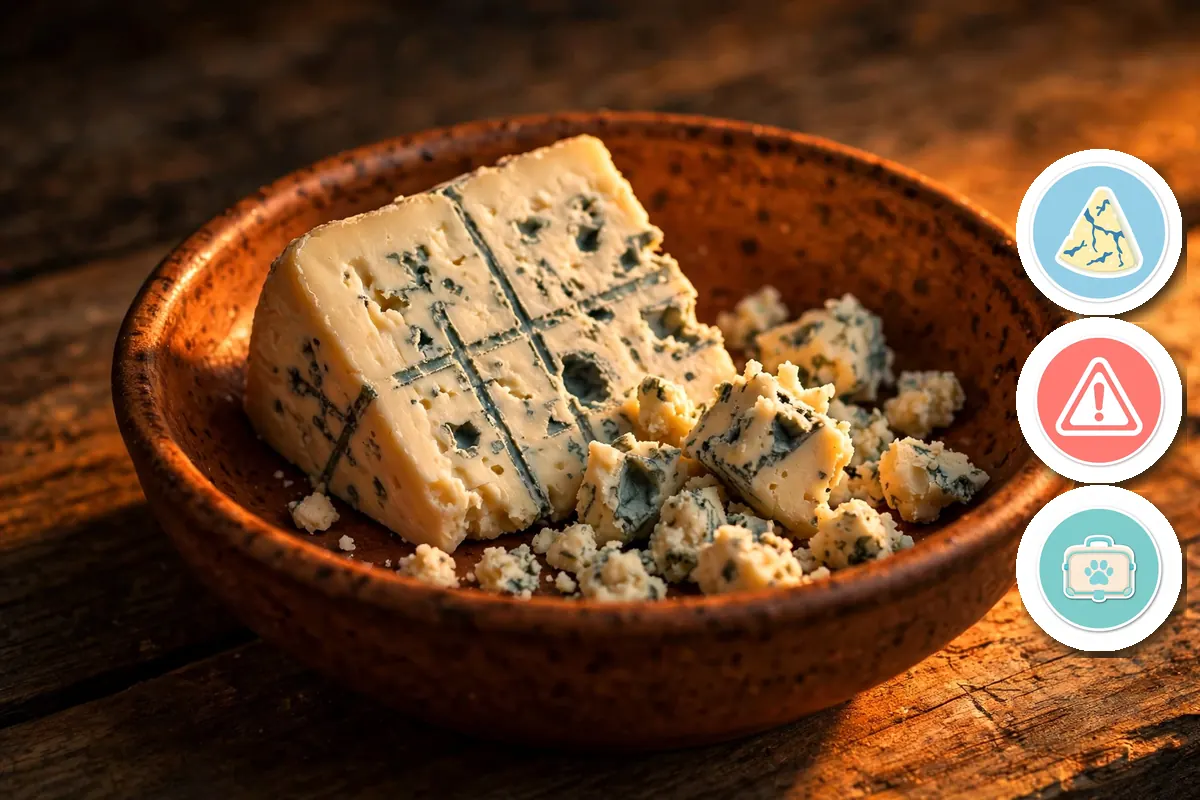
No, dogs should not eat blue cheese. This includes well-known varieties such as Roquefort, Gorgonzola, Stilton, and Danish Blue, all of which are ripened using specific strains of mold that give them their characteristic blue veining and sharp flavor. During this ripening process, the mold can produce a mycotoxin called roquefortine C, which is genuinely toxic to dogs, unlike the general fat and sodium concerns associated with most other cheeses.
This makes blue cheese meaningfully different from cheeses like cheddar, mozzarella, or even feta, which are potential concerns due to their nutritional content but are not associated with an actual toxin. Blue cheese should be treated with the same seriousness as other foods known to be dangerous for dogs, and it should never be intentionally offered as a treat.
What Is Roquefortine C and Why Is It Dangerous?
Roquefortine C is a mycotoxin, a toxic compound produced by certain molds, including the specific mold cultures used to make blue-veined cheeses. While humans can safely eat blue cheese because the human body processes this compound differently and typical serving sizes are well tolerated, dogs are considerably more sensitive to its effects.
When a dog ingests roquefortine C, it can affect the nervous system and lead to a range of symptoms, from mild digestive upset to more serious neurological signs like tremors and seizures. The severity of the reaction generally increases with the amount of blue cheese consumed, though sensitivity can vary between individual dogs.
Symptoms of Blue Cheese Toxicity in Dogs
If a dog eats blue cheese, watch closely for the following signs, which can appear within a few hours of ingestion:
- Vomiting
- Diarrhea
- Elevated body temperature or fever
- Muscle tremors or shaking
- Restlessness or agitation
- Loss of coordination
- Seizures, in more severe cases
Symptoms can range from mild to serious depending on the amount of blue cheese eaten and the individual dog’s sensitivity. Even if early symptoms appear mild, it is important to take the situation seriously rather than assuming it will resolve on its own.
What to Do If Your Dog Eats Blue Cheese
- Determine how much blue cheese was eaten, if possible, and which variety.
- Remove any remaining blue cheese from the dog’s reach immediately.
- Contact a veterinarian promptly, even if the dog is not yet showing symptoms, since signs can take some time to develop.
- Monitor closely for vomiting, diarrhea, elevated temperature, tremors, or any signs of neurological distress.
- Seek emergency veterinary care immediately if tremors, seizures, or significant distress develop.
The amount of blue cheese eaten matters significantly. A dog that licks a small crumb off a countertop faces a different level of risk than a dog that eats a substantial wedge, but any known ingestion is worth contacting a veterinarian about, since individual sensitivity can vary.
Where Blue Cheese Hides Beyond the Cheeseboard
Blue cheese does not only appear as a distinct wedge on a cheese platter. It commonly turns up in less obvious places, including salad dressings, dips, sauces, and dishes served at gatherings where leftovers or scraps might end up in a dog’s bowl. A dog does not need to eat a chunk of blue cheese directly to be affected. A serving of blue cheese dressing on a salad or a dollop of blue cheese dip can carry the same risk. Checking ingredient labels and being mindful of what ends up on a shared plate or in table scraps is worth the extra attention, particularly at parties or holiday gatherings where blue cheese dishes are common.
Why Blue Cheese Is Different From Other “Risky” Cheeses
Many cheeses are discussed in terms of moderation, such as fat content, sodium levels, or lactose intolerance, all of which are dose-dependent concerns that scale with how much is eaten and how sensitive an individual dog is to dairy. Blue cheese is different because the concern is an actual toxin rather than a nutritional consideration. This is the same category of concern as foods like grapes, chocolate, or xylitol, where the goal is complete avoidance rather than portion control. For this reason, blue cheese should never be treated the same way as an occasional small treat of cheddar or mozzarella.
Safer Cheese Alternatives to Blue Cheese
If a dog enjoys cheese as an occasional treat, many other options carry no toxin risk and can be given in appropriate moderation instead.
| Cheese Type | Why It Is a Safer Choice |
|---|---|
| Cottage cheese | Low in fat and lactose, no mold-related toxin risk |
| Mozzarella | Lower in fat and sodium, no mold-related toxin risk |
| Chedda | Lower in lactose due to aging, no mold-related toxin risk |
| Swiss | Naturally low in lactose and sodium, no mold-related toxin risk |
Dedicated guides are available covering each of these options in more detail, including safe portion sizes.
Can Puppies Eat Blue Cheese?
No, puppies should never be given blue cheese. Their smaller size means a given amount of roquefortine C represents a proportionally larger dose relative to body weight, which increases the potential severity of a reaction. If a puppy eats any amount of blue cheese, contact a veterinarian promptly.
Blue Cheese and Dogs with Health Conditions
Blue cheese should be avoided by all dogs regardless of health status, given the toxin risk involved. However, some dogs face additional compounding risk factors.
| Condition | Consideration |
|---|---|
| Smaller dogs and toy breeds | A given amount of blue cheese represents a larger relative dose |
| Existing neurological conditions | Symptoms like tremors may be harder to distinguish from an underlying condition |
| Pancreatitis | Blue cheese’s fat content adds an additional risk on top of the toxin concern |
| Kidney or liver conditions | May be less able to process and clear the toxin efficiently |
How to Prevent Accidental Blue Cheese Exposure
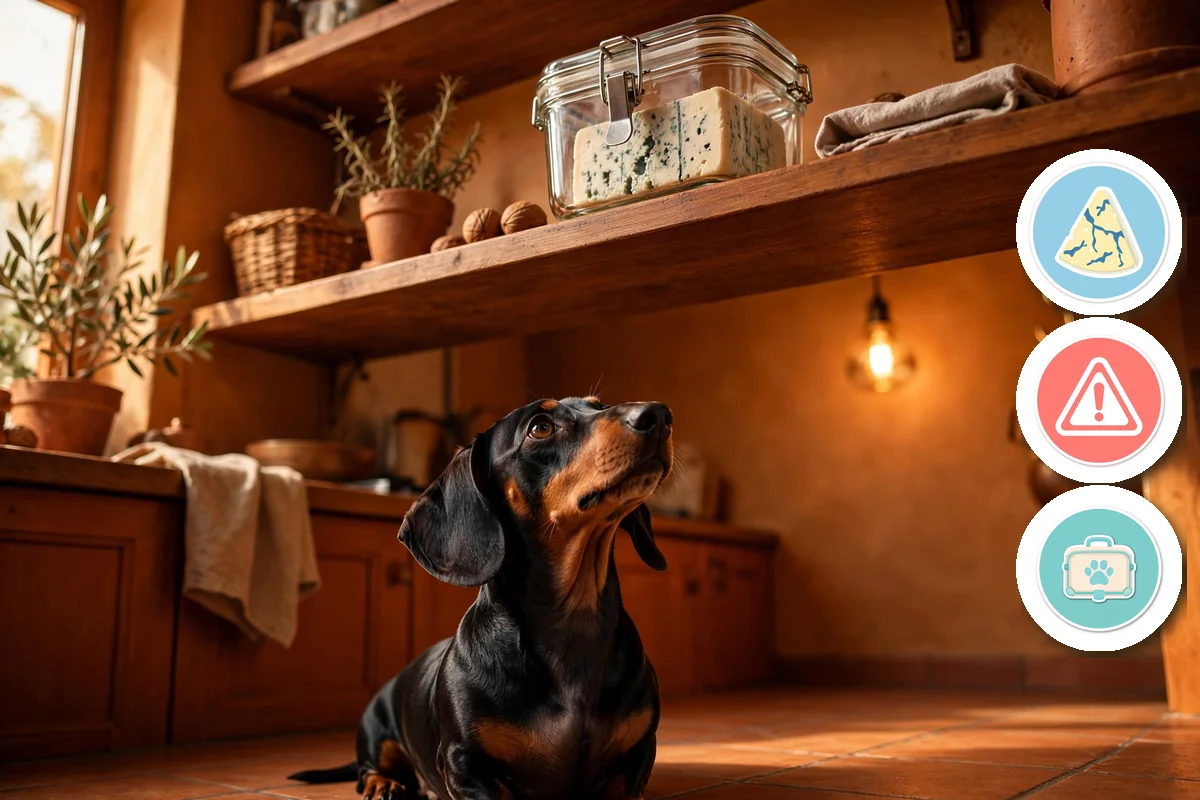
- Keep blue cheese and any dishes containing it out of a dog’s reach at all times, including on countertops and low tables.
- Store blue cheese in a container a dog cannot access rather than leaving it uncovered.
- Be cautious with salad dressings, dips, and sauces at gatherings, since blue cheese is a common hidden ingredient.
- Inform guests or family members not to share table scraps that may contain blue cheese.
- Dispose of blue cheese rinds and leftovers in a secured trash can.
Frequently Asked Questions
Is a small amount of blue cheese dangerous for dogs?
Even a small amount carries some risk, since individual sensitivity to roquefortine C varies between dogs. While a tiny accidental lick may not cause severe symptoms in every dog, it is not something to intentionally allow, and any known ingestion should prompt contact with a veterinarian.
What should I do if my dog licked a blue cheese wrapper or rind?
Contact a veterinarian for guidance, even if the amount seems very small. It is better to check in and be told no action is needed than to wait and see if symptoms develop.
How long does it take for blue cheese toxicity symptoms to appear in dogs?
Symptoms can appear within a few hours of ingestion, though this can vary depending on the amount eaten and the individual dog.
Are all blue-veined cheeses equally risky for dogs?
Roquefort, Gorgonzola, Stilton, and Danish Blue are all made using similar mold-ripening processes and should all be treated with the same level of caution.
Can dogs eat blue cheese dressing or dip?
No, blue cheese dressing and dip carry the same toxin risk as the cheese itself and should be kept away from dogs, along with any dish containing blue cheese as an ingredient.
What is the treatment for blue cheese toxicity in dogs?
A veterinarian may induce vomiting if the ingestion was recent, and treatment for symptoms like tremors or seizures may include supportive care and medication. Treatment approach depends on the amount eaten, timing, and the dog’s symptoms.
Can puppies safely eat any amount of blue cheese?
No, puppies should never be given blue cheese due to their smaller size and higher relative sensitivity. Contact a veterinarian if a puppy eats any amount.
What cheese can I give my dog instead of blue cheese?
Cottage cheese, mozzarella, cheddar, and Swiss are all safer options that carry no mold-related toxin risk and can be given in appropriate small amounts.