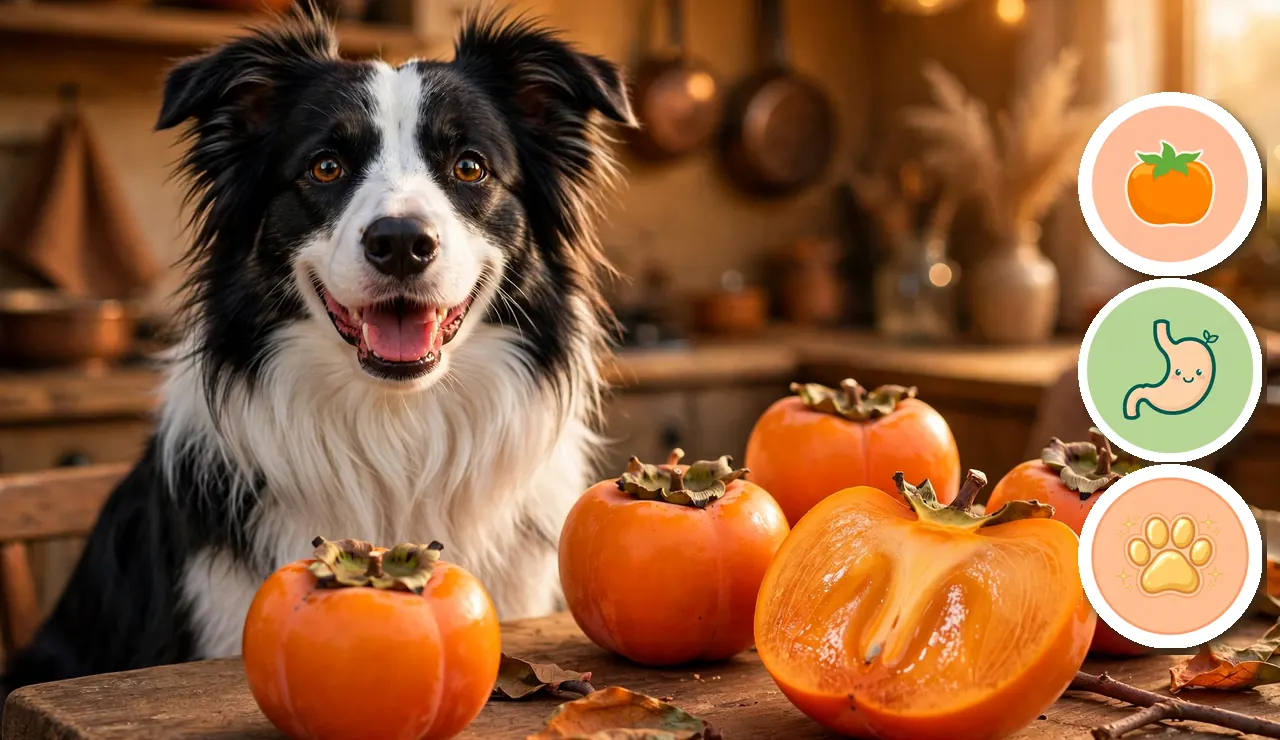
Can Dogs Eat Persimmons?

Quick Answer: Yes, dogs can eat persimmons, but only the ripe, seedless flesh and only in small amounts. Persimmon seeds can cause intestinal inflammation and blockages, so they must always be removed. Unripe persimmons are bitter and can upset your dog’s stomach, so wait until the fruit is fully ripe and soft before sharing.
Key Takeaways
- Ripe persimmon flesh is safe for dogs in small amounts; seeds and unripe fruit are not.
- Persimmon seeds can cause intestinal blockage and inflammation, always remove them.
- Unripe persimmons contain bitter tannins that can cause nausea and digestive upset.
- Persimmons are naturally high in sugar, so keep portions small and occasional.
- Remove the skin, seeds, and stem/calyx before serving.
- Fuyu (flat, non-astringent) persimmons are easier to serve than astringent Hachiya types.
- When in doubt about ripeness, skip it, persimmons must be fully ripe to be dog-safe.
Can Dogs Eat Persimmons?
Yes, with an important condition: the persimmon must be fully ripe, and the seeds must be completely removed. The soft, sweet flesh of a ripe persimmon is not toxic to dogs and offers some fiber, vitamins A and C, and antioxidants. Many dogs enjoy the sweet taste.

The danger lies in the seeds. Persimmon seeds are hard and large enough to cause intestinal blockage, and they can irritate and inflame the intestinal lining. This is the single most important safety rule with persimmons: no seeds, ever. Dogs that steal a whole fallen persimmon from the yard, seeds, skin, and all, are the classic emergency scenario. You might also want to know can dogs eat avocado. Curious about other foods? See if watermelon rind is safe for dogs.
Ripeness matters too. Unripe persimmons are loaded with tannins that make the fruit intensely astringent and bitter. These tannins can cause nausea, drooling, and stomach upset in dogs. A ripe persimmon should be very soft (almost jelly-like for Hachiya varieties) and sweet-smelling. If it is firm or bitter, it is not ready for your dog.
Nutritional Profile of Persimmons
| Nutrient (per 100g) | Amount | Potential Benefit for Dogs |
|---|---|---|
| Dietary fiber | 3.6 g | Supports digestion and healthy stools |
| Vitamin A | 162 mcg | Supports vision, skin, and immune health |
| Vitamin C | 7.5 mg | Antioxidant support for the immune system |
| Manganese | 0.36 mg | Supports bone health and metabolism |
| Potassium | 161 mg | Supports muscle and heart function |
| Antioxidants (beta-carotene, lycopene) | Varies | May help protect cells from oxidative damage |
| Natural sugars | 12.5 g | Energy; keep portions small due to sugar content |
Calories in Persimmons
A raw persimmon contains roughly 70 calories per 100 grams, about the same as a banana. A whole medium persimmon (around 150g) carries just over 100 calories, which is a significant treat for a small dog. Because persimmons are high in natural sugar, they should stay well within the 10% treat allowance. A few small spoonfuls of flesh is plenty for most dogs.
Benefits of Feeding Persimmons to Dogs
1. Rich in Antioxidants
Persimmons are packed with beta-carotene, lycopene, and other carotenoids that give them their deep orange color. These antioxidants may help protect your dog’s cells from everyday oxidative stress.

2. Good Source of Fiber
With about 3.6g of fiber per 100g, persimmons support healthy digestion and regular bowel movements. The soluble fiber can also help firm up loose stools in small amounts.
3. Provides Vitamin A
Persimmons are one of the better fruit sources of vitamin A, which supports vision, skin and coat health, and immune function in dogs.
4. Naturally Hydrating
A ripe persimmon is about 80% water. The juicy flesh can be a refreshing, hydrating treat on warm days, similar to melon.
5. Appealing Sweet Taste
Fully ripe persimmons are naturally very sweet, making them an attractive high-value treat or training reward that requires no added sugar.
6. No Toxic Compounds in the Flesh
The ripe flesh of a persimmon contains nothing toxic to dogs. The risks come entirely from the seeds, skin, and unripe tannins, all of which can be managed with proper preparation.
Risks of Feeding Persimmons to Dogs
1. Seeds Can Cause Blockage and Inflammation
Persimmon seeds are the primary danger. They are hard, smooth, and large enough to lodge in the intestines, causing partial or complete blockage. They can also inflame the intestinal lining. Always remove every seed before serving.
2. Unripe Fruit Causes Digestive Upset
Unripe persimmons are full of astringent tannins that can cause drooling, nausea, vomiting, and abdominal discomfort. Only feed persimmons that are fully ripe and sweet.
3. High Sugar Content
At roughly 12.5g of sugar per 100g, persimmons are one of the sweeter fruits. Too much can contribute to weight gain and is a poor choice for diabetic dogs without vet approval.
4. Skin and Stem Can Irritate
The waxy skin and the leafy calyx (the cap on top) are not digestible and may irritate the digestive tract. Peel the fruit and discard the top before serving.
5. Fallen Yard Fruit Is a Hazard
If you have a persimmon tree, fallen fruit rots quickly and ferments. Dogs that eat fallen, fermenting persimmons, seeds, skin, and all, can develop blockages or alcohol-related issues. Pick up fallen fruit promptly.
6. Overeating Causes Diarrhea
Even ripe, seedless persimmon flesh can cause diarrhea if a dog eats too much, thanks to the combination of fiber and sugar. Stick to small portions.
Can Dogs Eat Persimmon Seeds?
No, never. Persimmon seeds are hard and can cause intestinal blockage or inflame the intestinal lining. If your dog swallows persimmon seeds, monitor for vomiting, loss of appetite, abdominal pain, or straining to defecate, and contact your vet if any symptoms appear. Prevention is simple: remove all seeds before the fruit ever reaches your dog.
Fuyu vs. Hachiya Persimmons for Dogs
There are two main types of persimmons, and the difference matters for your dog. Fuyu persimmons are flat, squat, and non-astringent, they can be eaten while still firm and are easier to slice into seedless pieces. Hachiya persimmons are acorn-shaped and extremely astringent until fully, almost mushy-ripe; an underripe Hachiya is unpleasantly bitter and can cause digestive upset. For dogs, Fuyu varieties are the simpler, safer choice because ripeness is less of a guessing game. Whichever type you use, it must be fully ripe and seedless.
Can Dogs Eat Dried Persimmons?
It is best to avoid them. Dried persimmons (hoshigaki) are concentrated sugar, a small piece can contain as much sugar as a whole fresh fruit. They are often sold with the skin on and may contain preservatives like sulfur dioxide. Fresh ripe persimmon flesh in small amounts is the better option.
How Much Persimmon Can a Dog Eat?
Persimmon is a sugary treat, keep it occasional (once or twice a week) and modest.
| Dog Size | Weight | Safe Treat Amount (ripe, seedless flesh) |
|---|---|---|
| Extra small | Under 5 kg | 1–2 small spoonfuls |
| Small | 5–10 kg | 2–3 tablespoons |
| Medium | 10–25 kg | About 1/4 of a persimmon |
| Large | 25–40 kg | About 1/3 of a persimmon |
| Giant | Over 40 kg | About 1/2 of a persimmon |
Can Puppies Eat Persimmons?
Yes, in very small amounts. A tiny spoonful of ripe, seedless persimmon flesh is fine for a puppy as an occasional treat. But puppies have sensitive digestive systems and precise nutritional needs, so keep portions tiny and make sure their balanced puppy food remains the priority. As with adults, seeds and unripe fruit are off-limits.
How to Safely Feed Persimmons to Your Dog
Ways to Serve Persimmons to Dogs
- Fresh spoonfuls: Choose a fully ripe, soft persimmon, peel it, cut it open, remove every seed, and scoop out small pieces of flesh.
- Fuyu slices: Slice a ripe Fuyu persimmon into thin, seedless wedges for easy portioning.
- Food topper: Mash a tablespoon of seedless flesh and stir it into kibble for a sweet, antioxidant-rich boost.
- Frozen treats: Freeze small seedless pieces for a cool, refreshing summer snack.
Persimmons vs. Other Orange Fruits for Dogs
| Fruit | Sugar (per 100g) | Key Nutrients | Verdict for Dogs |
|---|---|---|---|
| Persimmon | 12.5g | Vitamin A, fiber, antioxidants | Safe ripe & seedless, small amounts |
| Mango | 14g | Vitamin A, vitamin C | Safe without pit, small amounts |
| Apricot | 9g | Vitamin A, potassium | Safe without pit, small amounts |
| Peach | 8g | Vitamin A, vitamin C | Safe without pit, small amounts |
Frequently Asked Questions
Are persimmon seeds poisonous to dogs?
They are not chemically poisonous, but they are physically dangerous, hard seeds can block or inflame the intestines. Always remove them.
What should I do if my dog ate a whole persimmon?
Monitor for vomiting, loss of appetite, abdominal pain, or trouble defecating over the next 24–48 hours. Call your vet promptly if any symptoms appear, as a seed blockage is a genuine emergency risk.
Can dogs eat unripe persimmons?
No. Unripe persimmons are bitter, astringent, and can cause nausea and stomach upset. Wait until the fruit is fully ripe and soft.
Are persimmons good for dogs with constipation?
The fiber in ripe persimmon may help mildly, but it is not a treatment for constipation. If your dog is straining or has not defecated normally, see your vet.
Can dogs eat persimmon skin?
It is best to remove it. The waxy skin is hard to digest and may irritate the digestive tract. Peel before serving.
How do I know if a persimmon is ripe enough for my dog?
A ripe Hachiya should feel almost jelly-soft and smell sweet; a ripe Fuyu should be deep orange and sweet-tasting. If in doubt, taste a piece yourself, if it is bitter or astringent, it is not ready.