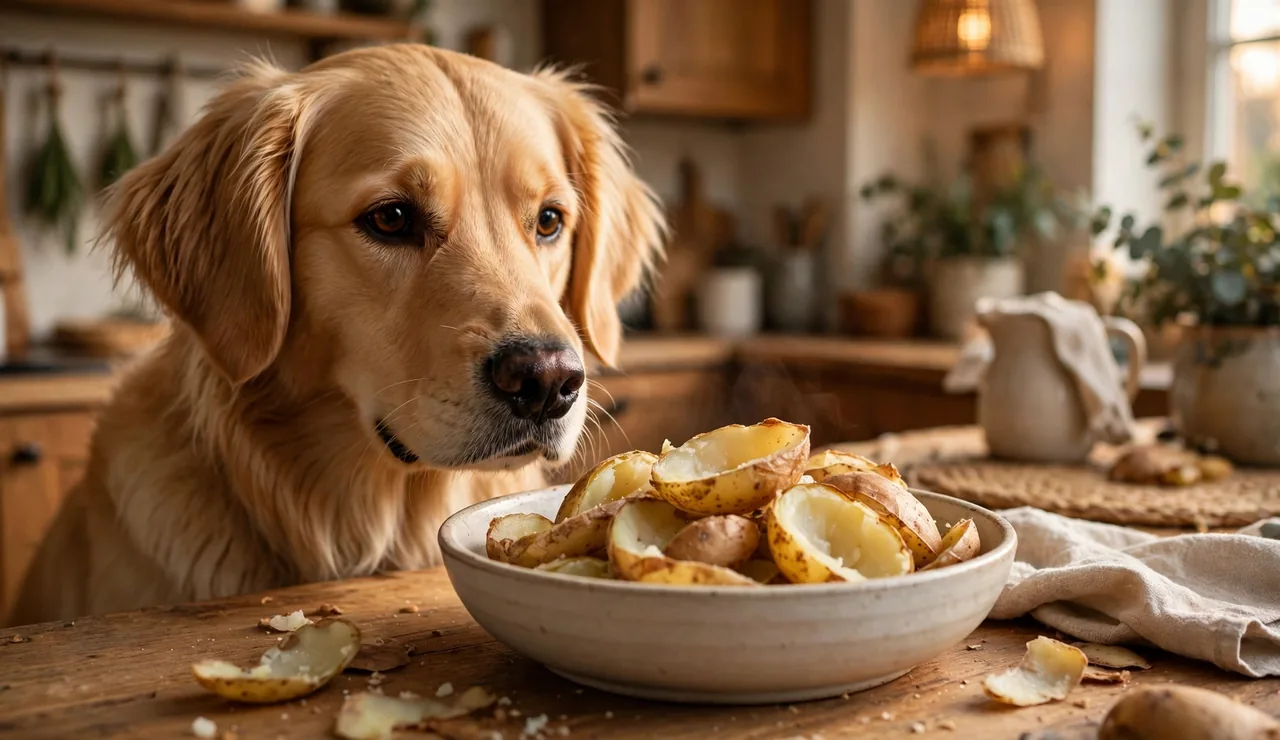
Can Dogs Eat Potato Skins?

Quick Answer: Potato skins are a caution food for dogs, not a clear yes or no. Plain cooked potato skins in tiny amounts are usually safe for a healthy adult dog, but raw or green potato skins contain solanine, a natural toxin that can cause vomiting, diarrhea, and other serious symptoms. Green spots, sprouts, and raw skins carry the highest risk, so they should never be fed. The safest choice is to peel potatoes before cooking, or to offer only a small piece of fully cooked plain skin as an occasional treat.
Key Takeaways
- Cooked plain potato skins are usually safe in tiny amounts for healthy adult dogs.
- Raw and green potato skins contain solanine, a toxin that can make dogs very sick.
- Never feed potato skins with sprouts, green spots, or any sign of spoilage.
- Loaded potato skins with cheese, butter, bacon, or seasoning are not safe for dogs.
- Potato skins are high in fiber and potassium, but the flesh offers the same nutrients more safely.
- If your dog eats raw or green potato skins, watch for vomiting and call your vet.
Can Dogs Eat Potato Skins?
Potato skins sit in a grey area for dogs. The skin of a fully cooked, plain potato is not toxic on its own, and a small piece is unlikely to harm a healthy dog. The problem is that the skin is where the potato stores most of its solanine, a bitter natural chemical that the plant uses to protect itself from pests. Cooking reduces solanine a little, but it does not remove it completely, so the skin always carries more risk than the flesh.
Solanine is the real concern here. It is highest in raw potatoes, green potatoes, sprouted potatoes, and the skin itself. A dog that eats a large amount of raw or green potato skin can develop vomiting, diarrhea, stomach pain, confusion, weakness, or a slow heart rate. These symptoms can appear within hours, and serious cases need vet care. This is why most vets advise peeling potatoes for dogs rather than feeding the skin.
In practice, the safest approach is simple. Peel your potatoes before cooking them for your dog, and only offer the plain cooked flesh. If you do give a little cooked skin, make sure the potato was fresh, fully cooked, and free of any green color or sprouts. Cooked sweet potatoes for dogs are a safer alternative, since they offer similar nutrients without the solanine worry.
Nutritional Profile of Potato Skins
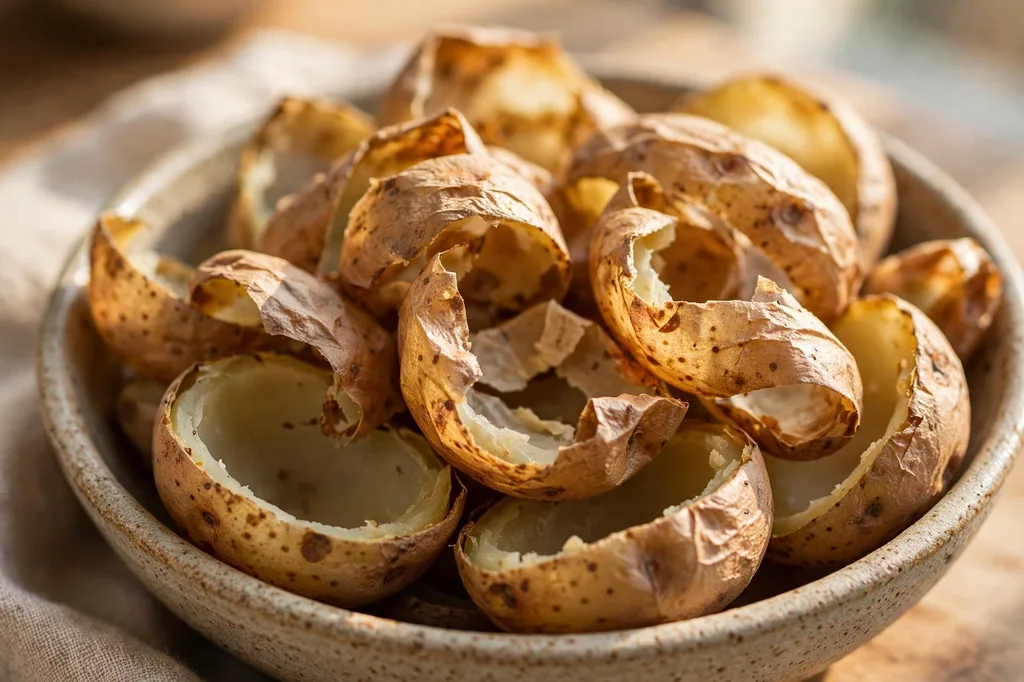
The values below are for potato skin per 100 grams. The skin is richer in fiber, potassium, and iron than the flesh, but it also carries more solanine, so the nutrients come with a risk.
| Nutrient per 100g | Amount | Benefit for Dogs |
|---|---|---|
| Fiber | 2.5 g | Supports digestion and healthy stools |
| Potassium | 535 mg | Supports muscle function and healthy blood pressure |
| Vitamin C | 9.7 mg | Supports the immune system and tissue health |
| Iron | 1.3 mg | Supports healthy red blood cells and energy |
| Vitamin B6 | 0.3 mg | Supports brain health and metabolism |
| Magnesium | 30 mg | Supports muscle, nerve, and bone health |
| Calcium | 15 mg | Supports strong bones and teeth |
Calories in Potato Skins
Potato skins are fairly low in calories, with about 58 calories per 100 grams, but calories are not the reason to feed them. The skin adds fiber and potassium, yet the same nutrients are available in the flesh with far less risk. A small piece of cooked skin adds almost no calories to a meal, so it will not affect your dog’s weight. The real question is never about calories with potato skins, it is about solanine, and that is why most owners are better off skipping the skin entirely.
Benefits of Feeding Potato Skins to Dogs
1. Good Source of Fiber
Potato skins contain more fiber than the flesh, and fiber from vegetables like broccoli supports healthy digestion and regular stools. A little fiber helps food move through the gut and feeds the good bacteria there.
2. Rich in Potassium
Potato skins are a good source of potassium, which supports muscle function, nerve signals, and healthy blood pressure. Dogs that eat a balanced diet usually get enough potassium already, but the skin adds a useful amount.
3. Provides Iron and Vitamin C
The skin contains iron and vitamin C, which support red blood cells, energy, and the immune system. These nutrients are helpful, but they are also present in many safer foods.
4. Adds Texture and Interest
Some dogs enjoy the chewy texture of a cooked potato skin, and it can add variety to a plain meal. A small piece can make a boring bowl of kibble more interesting. Keep the piece tiny and fully cooked, and never let texture be a reason to offer a risky food.
5. Low in Fat
Plain potato skins are naturally low in fat, so a small piece will not add grease or calories to your dog’s diet. This makes them better than many fatty treats, though the solanine risk still outweighs the low fat benefit. Plain cooked potato flesh is the better low fat choice.
Risks and Disadvantages of Potato Skins for Dogs

1. Solanine Poisoning
Solanine is a natural toxin found in potatoes, and it is concentrated in the skin, especially in raw, green, or sprouted potatoes. Eating too much solanine can cause vomiting, diarrhea, stomach pain, weakness, confusion, and a slow heart rate.
2. Green Potatoes Are Dangerous
Potatoes that have turned green have produced extra solanine and chlorophyll from light exposure, and they are not safe for dogs or people. Cut away all green parts generously, and throw the potato away if the green color runs deep.
3. Sprouts and Eyes Carry Toxins
The sprouts and eyes of a potato contain high levels of solanine and related compounds. Always remove sprouts and eyes completely before cooking, and throw away potatoes that have sprouted heavily. A sprouted potato is a sign that the solanine level is rising.
4. Loaded Skins Are Unsafe
Restaurant style potato skins are loaded with cheese, butter, sour cream, bacon, and seasoning, and none of these toppings are good for dogs. Fatty toppings can trigger stomach upset or pancreatitis, and seasonings like onion and garlic powder are toxic. Only plain skins, with nothing added, should ever be considered.
5. Choking and Blockage Risk
Raw potato skins are tough and hard to chew, and large pieces can be a choking hazard or cause a blockage. Cooked skins are softer, but they can still be chewed into large pieces by dogs that gulp food. Always cut skins into small pieces and supervise your dog.
Can Dogs Eat Raw Potato Skins?
No, dogs should not eat raw potato skins. Raw skins are hard, difficult to digest, and carry the highest levels of solanine. A dog that eats raw potato skin is more likely to vomit or develop diarrhea than one that eats a small piece of cooked skin. If your dog eats raw potato skins, watch closely for stomach upset and call your vet if symptoms appear.
Can Dogs Eat Green Potato Skins?
No, dogs must never eat green potato skins. The green color means the potato has produced extra solanine, and the skin holds the highest concentration. Even a small amount of green potato skin can make a dog sick. Throw green potatoes away, and keep them out of your dog’s reach at all times.
Can Dogs Eat Baked Potato Skins?
A small piece of a plain baked potato skin is usually safe for a healthy adult dog, as long as the potato was fresh, fully baked, and free of green spots or sprouts. The skin should be served plain, with no butter, cheese, sour cream, or seasoning. Many owners still choose to peel the potato first, since the flesh gives the same nutrients without the solanine risk. Plain rice for dogs is another gentle starchy option if you want a safe side dish.
How Much Potato Skins Can a Dog Eat?
Potato skins should only ever be a tiny occasional extra, and many vets suggest skipping them completely. If you do offer cooked plain skin, keep the amounts below in mind and never feed skins daily.
| Dog Size | Weight | Suggested Amount |
|---|---|---|
| Extra small | Under 5 kg | Avoid, or a pea-sized piece |
| Small | 5 to 10 kg | Half a teaspoon |
| Medium | 11 to 25 kg | 1 teaspoon |
| Large | 26 to 45 kg | 1 tablespoon |
| Giant | Over 45 kg | 1 to 2 tablespoons |
Can Puppies Eat Potato Skins?
No, puppies should not eat potato skins. Puppies are smaller, their digestive systems are still developing, and they are more sensitive to solanine than adult dogs. A small amount of solanine that an adult dog might handle could make a puppy quite sick. Wait until your puppy is fully grown, and even then offer only plain cooked potato flesh, not the skin. If your puppy eats potato skin by accident, watch for vomiting or diarrhea and call your vet for advice.
How to Safely Feed Potato Skins to Your Dog
If you choose to offer potato skin at all, the only safe way is plain and fully cooked. Choose a fresh potato with no green color and no sprouts, peel away any eyes, and bake or boil it until it is completely soft. Let it cool, then offer a tiny piece with nothing added.
Ways to Serve Potato Skins
- Bake a fresh potato until soft, then offer a tiny piece of plain skin with no toppings.
- Boil peeled potato flesh instead of the skin for a safer starchy treat.
- Mash plain cooked potato flesh with a little water for a soft, gentle topper.
- Cut any cooked skin into small pieces so your dog cannot swallow a large chunk.
- Throw away green, sprouted, or raw potato skins where your dog cannot reach them.
Potato Skins vs Other Vegetables
Potato skins are the riskiest item in this comparison because of solanine. Other starchy vegetables give your dog similar nutrients with far less worry.
| Food | Safe for Dogs? | Notes |
|---|---|---|
| Potato skins | Caution | Solanine risk, only tiny cooked amounts |
| Sweet potatoes | Yes | Cooked, rich in vitamin A and fiber |
| Rice | Yes | Cooked plain, gentle and easy to digest |
| Broccoli | Yes, in moderation | Nutritious but can cause gas in large amounts |
Frequently Asked Questions
Are potato skins poisonous to dogs?
Potato skins are not always poisonous, but they carry solanine, which can be toxic in larger amounts. Raw, green, or sprouted skins are the most dangerous, while a tiny piece of plain cooked skin is usually safe for a healthy adult dog.
What should I do if my dog eats raw potato skins?
Watch your dog closely for vomiting, diarrhea, stomach pain, or weakness over the next 12 to 24 hours. Call your vet for advice, especially if your dog ate a large amount or is a puppy or small dog.
Can dogs eat mashed potato skins?
Dogs can eat mashed potato flesh, but the skins should still be peeled off first for safety. Plain mashed potato with no butter, milk, salt, or seasoning is a safe treat in small amounts.
Are sweet potato skins safer than potato skins?
Yes, sweet potato skins are safer than regular potato skins because sweet potatoes do not contain solanine. Cooked sweet potato skins are still fibrous, so offer them in small amounts and watch for stomach upset.
Can dogs eat potato skin chips?
No, dogs should not eat potato skin chips or crisps. They are usually fried in oil and covered in salt and seasoning, which can upset a dog’s stomach and add too much fat and sodium.
Why are green potatoes dangerous for dogs?
Green potatoes have produced extra solanine after exposure to light, and solanine is toxic to dogs. Even a small amount can cause vomiting, diarrhea, and other serious symptoms, so green potatoes should always be thrown away.