Can Dogs Eat Beef Jerky?

Quick Answer: No, dogs should not eat store-bought beef jerky. It is very high in salt and usually contains garlic powder, onion powder, and preservatives that are harmful to dogs. Plain homemade dehydrated beef made with no seasoning is the only safe form, and even that should be given only in tiny amounts as an occasional treat.
Key Takeaways
- Store-bought beef jerky is not safe for dogs because of high salt, garlic, and onion powder.
- Garlic and onion are toxic to dogs and can damage red blood cells over time.
- Many jerky brands add sugar, soy sauce, and preservatives that dogs do not need.
- Plain homemade dehydrated beef with no seasoning is the only safe version.
- Jerky is very tough and chewy, so it can be a choking hazard for small dogs.
- High-salt snacks can cause vomiting, diarrhea, and excessive thirst in dogs.
Can Dogs Eat Beef Jerky?
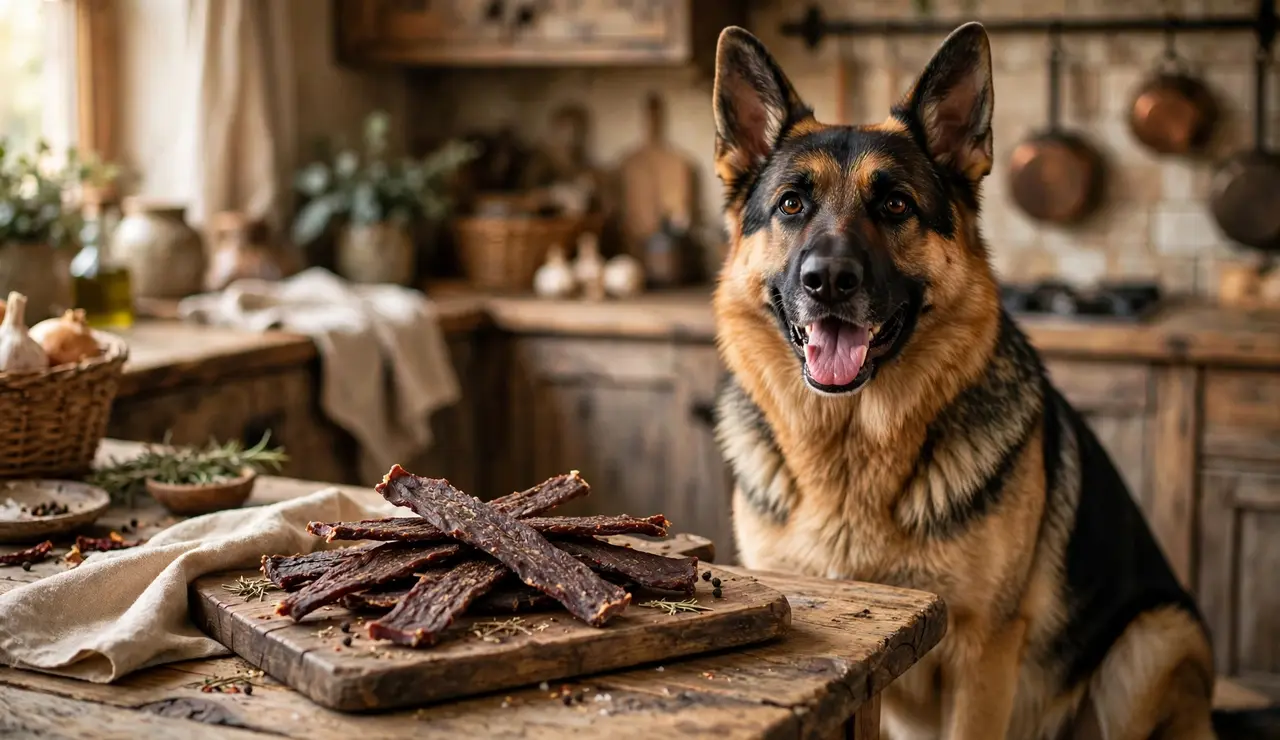
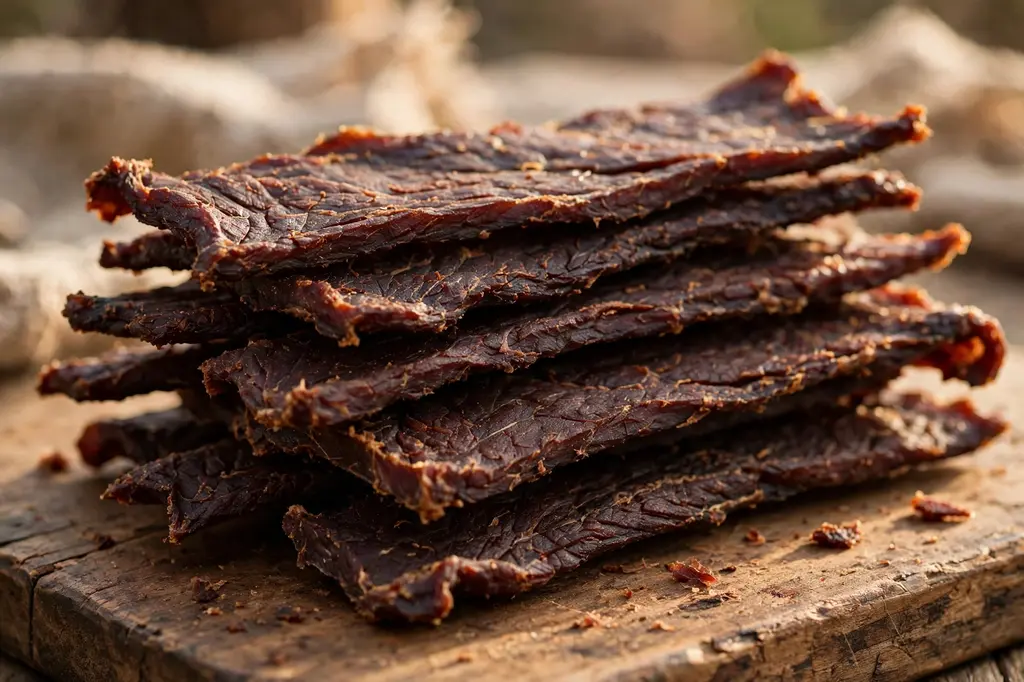
No, dogs should not eat the beef jerky sold in shops and petrol stations. Beef itself is a healthy food for dogs, but jerky is not plain beef. It is dried meat that has been soaked in a salty marinade, flavored with garlic and onion powder, and preserved with chemicals to give it a long shelf life. Each of those steps adds something that a dog should not eat, and together they turn a healthy protein into a risky snack.
Salt is the first problem. A single serving of shop-bought jerky can contain more salt than a dog should eat in a whole day. Too much salt causes thirst, vomiting, and diarrhea, and in severe cases it can lead to salt poisoning, with symptoms such as tremors and seizures. Dogs with kidney or heart problems are at even greater risk from salty foods.
Garlic and onion powder are the second problem, and they are found in almost every flavored jerky. Both belong to the allium family and are toxic to dogs, damaging red blood cells and causing anemia with repeated exposure. Many owners assume a little seasoning is harmless, but the powders are concentrated, so even a small strip can carry a meaningful dose. If you want a meaty treat, offer plain cooked chicken breast as a safe lean protein instead.
Nutritional Profile of Beef Jerky
| Nutrient per 100g | Amount | Benefit for Dogs |
|---|---|---|
| Calories | 410 kcal | Very energy dense, so portions must stay tiny |
| Protein | 33 g | Supports muscle maintenance and repair |
| Fat | 25 g | High fat can upset the stomach and cause weight gain |
| Sodium | 2,080 mg | Far too salty for dogs in any regular amount |
| Iron | 5.1 mg | Helps carry oxygen in the blood |
| Zinc | 6.3 mg | Supports the immune system and skin health |
| Vitamin B12 | 5.1 mcg | Supports nerve function and red blood cell health |
| Phosphorus | 290 mg | Supports bone and teeth health |
Calories in Beef Jerky
Beef jerky contains about 410 calories per 100 grams, and a single strip can hold 70 to 100 calories. That is a huge amount for a dog treat, especially for a small dog eating only 400 calories a day. One strip can use up a quarter of the daily calories, and treats should stay under 10 percent in total. Plain homemade dehydrated beef is just as calorie dense, so it must also be portioned carefully.
Benefits of Feeding Plain Dehydrated Beef to Dogs
1. High in Protein
Beef is one of the richest sources of protein, with about 33 grams per 100 grams in dried form. Protein supports muscle growth, repair, and maintenance, which matters for active dogs and growing puppies. A small piece of plain dehydrated beef can be a useful protein boost during training.
2. Rich in Iron
Beef provides iron in a form that dogs absorb easily, and iron helps carry oxygen around the body. Dogs that are low in iron can become tired and weak, so a protein-rich treat like plain beef can help top up their levels. This is especially useful for very active dogs that burn a lot of energy.
3. Good Source of Zinc
Beef is a strong source of zinc, a mineral that supports the immune system and keeps the skin and coat healthy. Zinc also helps wounds heal and supports a dog’s sense of taste and smell. A small amount of plain beef can help meet this need naturally.
4. Provides Vitamin B12
Vitamin B12 is found almost only in animal foods, and beef is one of the best sources. It supports nerve function and the production of healthy red blood cells. Dogs that eat a meat-based diet usually get enough B12, but a plain beef treat can add a useful top-up.
5. Long-Lasting Chew for Enrichment
The tough, chewy texture of plain dehydrated beef keeps dogs busy for longer than soft treats, and chewing helps reduce stress and boredom. Always supervise your dog with chewy treats and take the last small piece away to prevent choking.
Risks and Disadvantages of Beef Jerky for Dogs

1. Garlic and Onion Toxicity
Garlic and onion powder are standard in shop-bought jerky, and both are toxic to dogs. They damage red blood cells and can cause anemia, with symptoms such as weakness, pale gums, and lethargy. The risk grows with repeated exposure, so even small strips eaten often can become a problem over time.
2. Dangerously High Salt
Jerky is one of the saltiest foods you can buy, with over 2,000 milligrams of sodium per 100 grams. Too much salt can cause vomiting, diarrhea, and excessive thirst, and in severe cases it can lead to salt poisoning.
3. Preservatives and Additives
Shop-bought jerky contains preservatives such as sodium nitrite, along with flavor enhancers and smoke flavoring. These chemicals are used to keep jerky safe on the shelf for months, but they add no benefit for your dog and can irritate a sensitive stomach. Some dogs develop diarrhea or vomiting after eating preserved meats.
4. Choking and Blockage Risk
Jerky is tough and chewy, and dogs often swallow large pieces without chewing them properly. A swallowed chunk can lodge in the throat or cause a blockage in the gut, especially in small dogs. Always cut any dried meat into small pieces and supervise your dog while they eat it.
5. High Fat and Pancreatitis Risk
Many jerky products are made from fatty cuts of beef, and the fat content can reach 25 grams per 100 grams. Eating fatty foods often can lead to weight gain, and in some dogs it can trigger pancreatitis, a painful inflammation of the pancreas. Dogs that have had pancreatitis before should avoid jerky completely.
Can Dogs Eat Teriyaki Beef Jerky?
No, teriyaki beef jerky is one of the worst kinds for dogs. Teriyaki sauce is made with soy sauce, sugar, and often garlic, which adds even more salt and seasoning to an already salty snack. The sugar content is also high, which adds extra calories. Plain homemade dehydrated beef is the only safe version, and flavored jerky should never be shared.
Can Dogs Eat Beef Jerky Treats Made for Dogs?
Jerky treats made for dogs are safer than human jerky, because they are made without garlic, onion, and excess salt. However, they are still high in calories and often contain preservatives, so they should be given in moderation. Check the label for the salt content and avoid treats with added sugar or artificial flavors. Even dog jerky should be an occasional reward, not a daily snack, and plain cooked salmon is a healthier protein treat for most dogs.
Can Dogs Eat Slim Jim Beef Jerky?
No, dogs should not eat Slim Jim or similar processed meat sticks. These products are highly processed and contain large amounts of salt, fat, and preservatives, along with garlic and onion powder. A Slim Jim is one of the least healthy snacks a dog could eat, so keep it well away from them.
How Much Beef Jerky Can a Dog Eat?
Only plain homemade dehydrated beef with no seasoning should ever be offered, and only in the tiny amounts shown below. Store-bought jerky should not be fed at any size, because the salt, garlic, and onion it contains are not safe in any portion. Treats should stay under 10 percent of daily calories.
| Dog Size | Weight | Plain Dehydrated Beef per Day |
|---|---|---|
| Extra small | Under 5 kg | 1 small piece |
| Small | 5 to 10 kg | 2 small pieces |
| Medium | 10 to 25 kg | 3 small pieces |
| Large | 25 to 45 kg | 1 small strip |
| Giant | Over 45 kg | 2 small strips |
Can Puppies Eat Beef Jerky?
No, puppies should not eat beef jerky. Their digestive systems are still developing, and they are more sensitive to salt, fat, and seasonings than adult dogs. Puppies also need carefully balanced food to support growth, and salty snacks can upset that balance. Wait until your puppy is fully grown, and even then offer only tiny pieces of plain dehydrated beef, never shop-bought jerky.
How to Safely Feed Plain Dehydrated Beef to Your Dog
To make safe jerky at home, use lean beef with all visible fat trimmed off, slice it thinly, and dry it in a dehydrator or a low oven with no salt, garlic, onion, or marinade. The result is a plain, chewy treat that your dog can enjoy safely. Start with a tiny piece and watch your dog for a day to check for any stomach upset before offering it again.
Ways to Serve
- Cut plain dehydrated beef into small pieces for training rewards.
- Break a strip into a snuffle mat for slow foraging fun.
- Mix small pieces into your dog’s regular kibble as a topper.
- Use a strip as a long-lasting chew under supervision.
- Soak a piece in water to soften it for older dogs.
Beef Jerky vs. Other Meat Treats for Dogs
| Food | Safe for Dogs | Main Concern |
|---|---|---|
| Plain dehydrated beef | Yes, in tiny amounts | Very high in calories |
| Store-bought beef jerky | No | Salt, garlic, and onion powder |
| Plain cooked chicken | Yes | Very little risk when plain |
| Plain cooked salmon | Yes | Bones must be removed |
| Plain cooked tuna | Yes, in small amounts | Mercury in large amounts |
Frequently Asked Questions
Can dogs eat beef jerky from the store?
No, dogs should not eat store-bought beef jerky. It is very high in salt and usually contains garlic powder, onion powder, and preservatives. Make plain dehydrated beef at home instead if you want to share a similar treat.
Is beef jerky toxic to dogs?
Beef jerky itself is not toxic, but its ingredients can be. Garlic and onion powder are toxic to dogs, and the extreme salt content can cause salt poisoning. Some jerky also contains xylitol in sugar-free versions, which is extremely dangerous.
Can dogs eat beef jerky sticks?
Beef jerky sticks made for humans are not safe for dogs, because they contain the same salt and seasonings as regular jerky. Jerky sticks made for dogs are safer, but they should still be given in moderation and cut into small pieces.
What should I do if my dog ate beef jerky?
Stay calm and check how much your dog ate and whether it contained garlic or onion. A small piece is unlikely to cause serious harm, but watch for vomiting, diarrhea, or excessive thirst over the next 24 hours. Call your vet if your dog ate a large amount or shows any worrying symptoms.
Can dogs eat homemade beef jerky?
Yes, dogs can eat homemade beef jerky if it is made from lean beef with no salt, garlic, onion, or marinade. Dry it in a dehydrator or low oven and cut it into small pieces. Keep the portions tiny, because dried beef is very calorie dense.
Can dogs eat turkey jerky instead?
Turkey jerky sold for humans carries the same risks as beef jerky, because it is seasoned in the same way. Plain homemade dehydrated turkey is a safer alternative, and plain cooked tuna in small amounts is another lean protein your dog may enjoy.