Can Dogs Eat Turkey Bones?

Quick Answer: No, dogs should not eat turkey bones. Cooked turkey bones become brittle and splinter into sharp fragments that can cut your dog’s mouth, throat, and intestines, or cause life-threatening blockages. Raw turkey bones carry their own risks too, including bacterial contamination and broken teeth. Keep all turkey bones away from your dog.
Key Takeaways
- Cooked turkey bones are dangerous: they splinter into sharp shards that can puncture the digestive tract.
- Even raw turkey bones can crack teeth, cause choking, or introduce harmful bacteria like Salmonella.
- Turkey leg and thigh bones are especially risky due to their size and density.
- If your dog swallows a turkey bone, watch for choking, vomiting, lethargy, or bloody stool, and call your vet.
- Safe alternatives include raw meaty bones given under supervision (with vet approval) or vet-approved chew toys.
- Secure trash cans and dinner plates during holidays, most bone emergencies happen at Thanksgiving and Christmas.
Can Dogs Eat Turkey Bones?
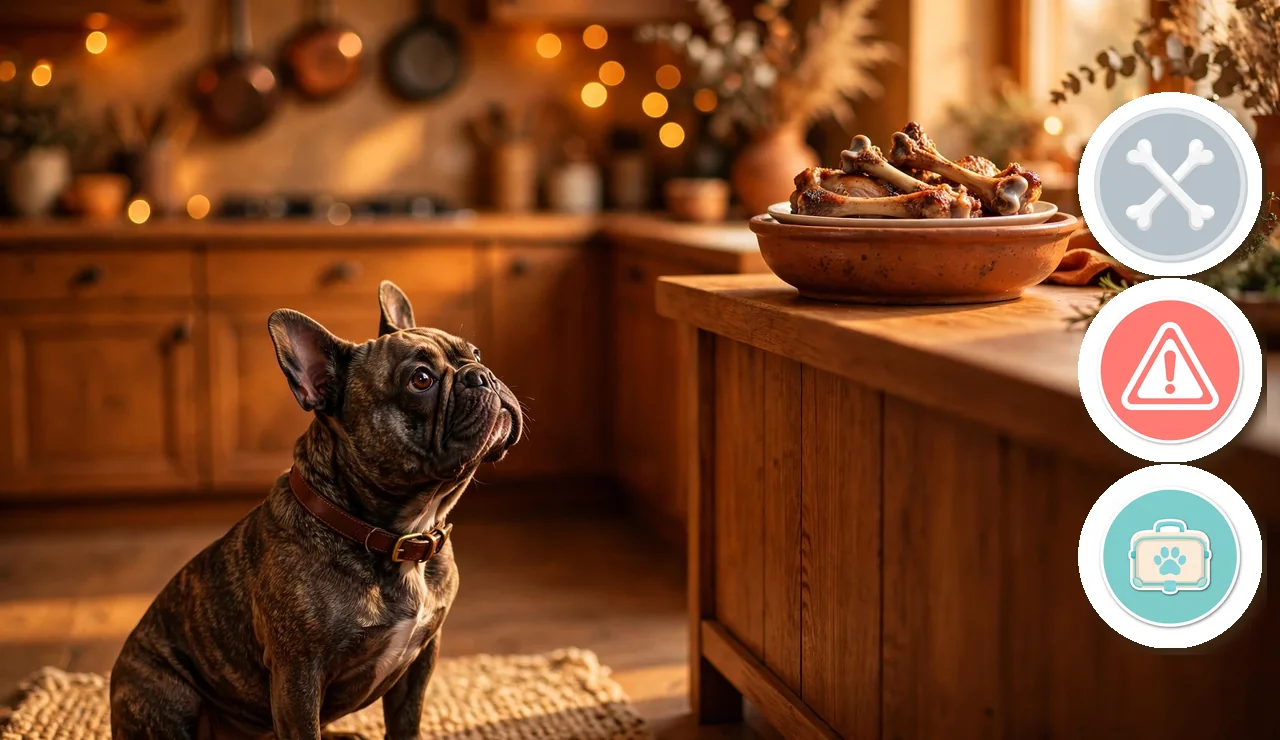
No. Turkey bones, whether cooked or raw, are not safe for dogs to eat. This is one of the clearest “no” answers in canine nutrition, and veterinarians are unanimous on it. Cooked turkey bones are the most dangerous: heat makes bones brittle, so they shatter into needle-like splinters when chewed. These fragments can lacerate your dog’s gums, tongue, and esophagus on the way down, and can perforate the stomach or intestines, causing peritonitis, a life-threatening abdominal infection that requires emergency surgery. If you are exploring other safe treats, learn whether dogs can eat shrimp. Many owners also wonder can dogs eat feta cheese before sharing snacks. Many owners also wonder can dogs eat cheese before sharing snacks.
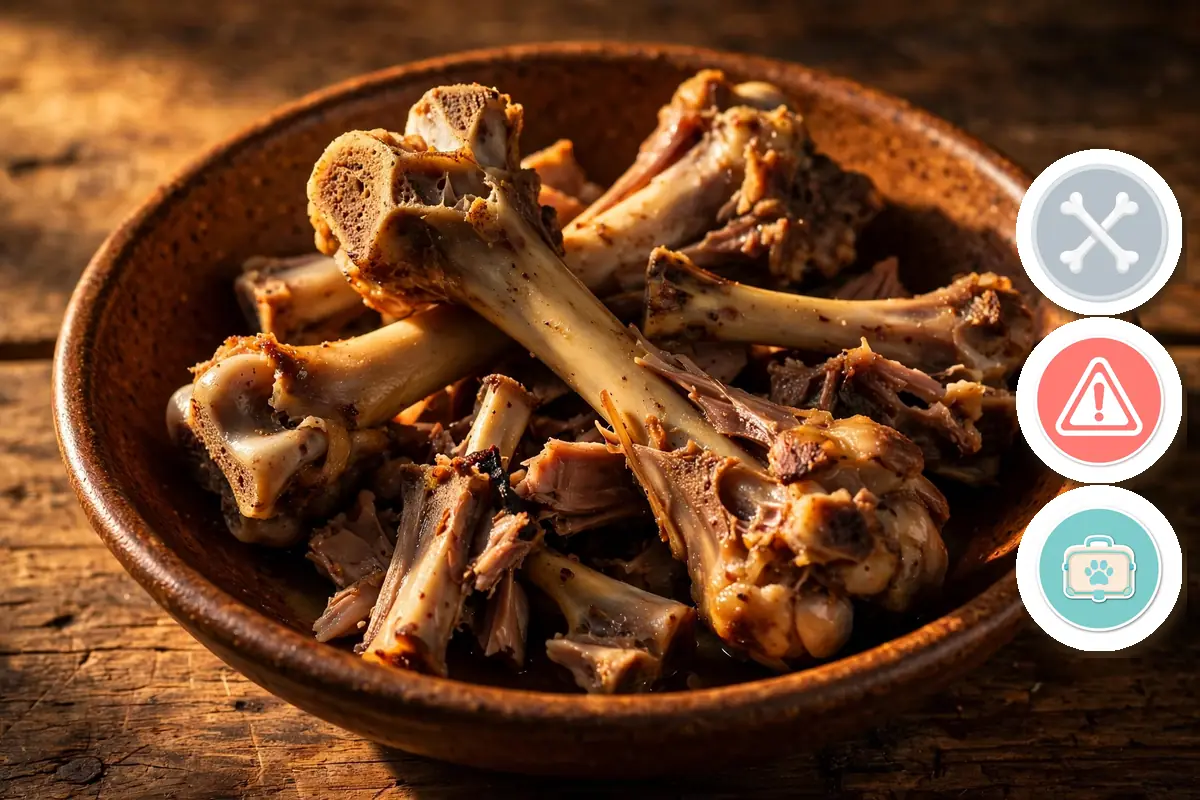
Raw turkey bones are sometimes promoted by raw-feeding advocates as softer and safer, but they are not risk-free. Raw poultry bones can still splinter, can crack or fracture teeth (especially the dense leg bones), and carry a real risk of bacterial contamination with Salmonella or Campylobacter, dangerous for both your dog and your household. The marrow inside large bones is also extremely rich and fatty, which can trigger digestive upset or pancreatitis.
The bottom line: the small nutritional benefit of a bone is never worth the risk. If you want to give your dog something to chew, choose a vet-approved dental chew, a rubber chew toy, or ask your veterinarian about safe bone alternatives sized for your dog.
Nutritional Profile of Turkey Bones
Turkey bones themselves offer very little nutrition, they are mostly mineralized collagen and calcium phosphate. The marrow contains fat and some nutrients, but the risks far outweigh any benefit.
| Component | Approximate Content | Note for Dogs |
|---|---|---|
| Calcium | High (in bone matrix) | Not safely accessible; splinters before digestion |
| Phosphorus | High | Same issue, locked in an indigestible, dangerous form |
| Marrow fat | Very high in calories | Can cause pancreatitis or severe digestive upset |
| Collagen | Moderate | Safer obtained from cooked, deboned broth or joint supplements |
Calories in Turkey Bones
Bones themselves are not meaningfully caloric, but the marrow and attached meat scraps are calorie-dense. A single turkey leg bone with marrow can contain a surprising amount of fat. More importantly, counting calories misses the point: turkey bones are a safety hazard, not a food. Never feed them as treats or meal components regardless of calorie content.
Dangers of Feeding Turkey Bones to Dogs
1. Splintering and Internal Lacerations
Cooked turkey bones break into sharp, jagged pieces. These can cut the mouth, throat, and esophagus, and perforate the stomach or intestinal walls. A perforated intestine leaks bacteria into the abdomen, causing peritonitis, a surgical emergency with a guarded prognosis.
2. Choking Hazard
Turkey bones, especially the smaller wing bones, wishbone, and neck vertebrae, are exactly the right size to lodge in a dog’s throat. Dogs that gulp rather than chew are at highest risk, but any dog can choke on a bone fragment.
3. Intestinal Blockage
Bone fragments that make it to the stomach may not pass. They can compact in the intestines, causing a partial or complete obstruction. Signs include repeated vomiting, abdominal pain, loss of appetite, and no stool production. Blockages often require surgery.
4. Broken and Fractured Teeth
Turkey leg and thigh bones are dense and hard. Dogs that chew aggressively can slab-fracture their carnassial teeth (the large upper premolars), which is painful and usually requires extraction or root canal by a veterinary dentist.
5. Bacterial Contamination (Raw Bones)
Raw turkey bones can harbor Salmonella and Campylobacter. Dogs can become ill themselves, and can shed the bacteria in their saliva and stool, putting children, elderly, and immunocompromised family members at risk.
6. Pancreatitis from Marrow
The fatty marrow inside large turkey bones is extremely rich. In susceptible dogs, a single fatty meal can trigger pancreatitis: severe abdominal pain, vomiting, and potentially fatal inflammation of the pancreas.
Are Cooked Turkey Bones Worse Than Raw?
Yes, cooked bones are significantly more dangerous than raw ones. Cooking changes the bone’s structure, making it dry, brittle, and prone to shattering into sharp splinters. A raw turkey bone is softer and more flexible, so it is less likely to splinter, but it can still break teeth, cause obstructions, and carry bacteria. Neither is recommended. If you ever see advice claiming any cooked bone is safe for dogs, disregard it.
What About Turkey Necks, Wings, and Giblets?
Turkey necks and wings contain many small bones and are choking hazards, especially when cooked. Giblets (heart, liver, gizzard) are a different story: these are organ meats, not bones, and plain cooked giblets are safe and nutritious for dogs in moderation. Just be sure to remove them from the bone-containing neck before cooking and serving.
What Should I Do If My Dog Ate a Turkey Bone?
Stay calm but act promptly. Do not try to induce vomiting unless your veterinarian specifically instructs you to, sharp fragments coming back up can cause more damage. Call your vet or an emergency animal hospital right away and describe what happened: the size of the bone, whether it was cooked or raw, and your dog’s size.
Your vet may advise monitoring at home if your dog is large and swallowed a small fragment without choking. Feed soft, bulky foods (like plain canned pumpkin or bread) only if your vet recommends it, the idea is to cushion sharp edges, but this is not a substitute for professional advice. Watch closely for 48–72 hours for warning signs.
Warning Signs After Eating a Bone
Seek emergency veterinary care immediately if you notice any of the following: gagging, drooling, or pawing at the mouth (possible choking or throat injury); repeated vomiting or retching; abdominal swelling, tenderness, or a hunched posture; lethargy, restlessness, or refusal to eat; bloody stool or black, tarry stool; straining to defecate with no result; or difficulty breathing. These can indicate obstruction, perforation, or internal bleeding.
Can Puppies Eat Turkey Bones?
Absolutely not. Puppies are even more vulnerable than adult dogs: their teeth are softer and more easily damaged, their airways and intestines are smaller (so blockages happen more easily), and they tend to gulp food. Never give a puppy any turkey bones, cooked or raw. Provide age-appropriate puppy chew toys instead.
How to Keep Your Dog Safe Around Turkey Bones
Ways to Prevent Access
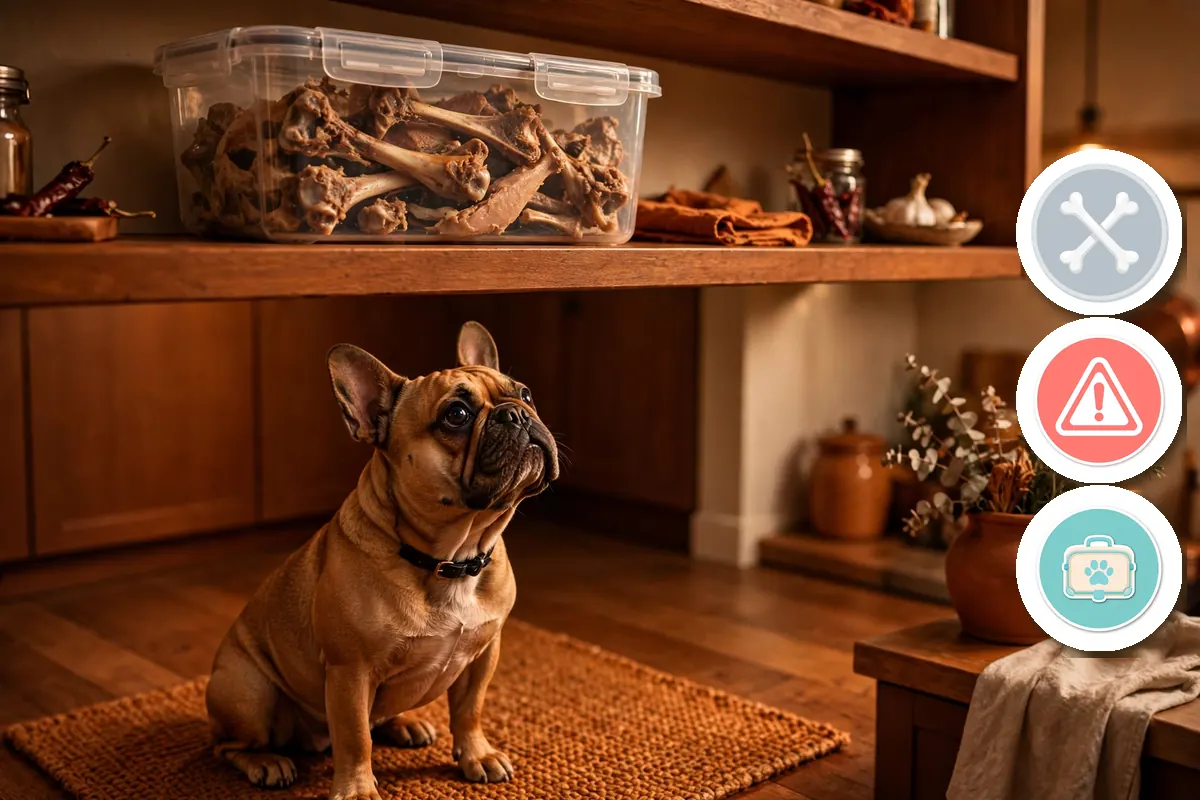
- Clear plates immediately after meals, never leave a turkey carcass unattended.
- Use trash cans with locking lids; holiday carcasses are the #1 source of bone emergencies.
- Keep dogs out of the kitchen during meal prep and carving.
- Tell guests (especially children) never to feed the dog bones or table scraps.
- After outdoor cooking or picnics, check the yard for discarded bones.
- Store leftovers in sealed containers, not open plates in the fridge at nose height.
Turkey Bones vs. Safe Chew Alternatives
| Option | Safety | Notes |
|---|---|---|
| Cooked turkey bones | Dangerous | Splinter; never feed |
| Raw turkey bones | Risky | Teeth, bacteria, obstruction risks |
| Rubber chew toys (e.g., Kong) | Safe | Size-appropriate; stuff with plain turkey meat |
| Vet-approved dental chews | Safe | Look for VOHC acceptance |
| Bully sticks | Generally safe | Supervise; remove small pieces |
| Plain cooked turkey meat (boneless) | Safe | Excellent treat, no skin, no seasoning |
Frequently Asked Questions
Can dogs eat turkey leg bones?
No. Turkey leg bones are large, dense, and especially likely to crack teeth. When cooked, they splinter dangerously. Never give them to your dog.
Can dogs eat smoked turkey bones?
No, smoked bones are cooked bones, with all the same splintering risks, plus excess sodium and seasonings that are unhealthy for dogs.
Can dogs eat turkey bone broth?
Yes, with conditions. Properly strained bone broth (no bone fragments, no onion, no garlic, low sodium) is safe and can be a tasty topper. Strain it thoroughly through a fine mesh sieve.
My dog swallowed a small turkey bone and seems fine. Should I still worry?
Yes, monitor closely for 48–72 hours. Many dogs pass small fragments without issue, but complications like obstruction can develop a day or two later. Call your vet for guidance.
Are raw turkey necks safe for dogs?
Raw turkey necks are sometimes fed by raw-feeding enthusiasts, but they still carry choking, bacterial, and obstruction risks. Discuss with your veterinarian before offering any raw bones.
What bones CAN dogs safely chew?
Most veterinarians recommend avoiding real bones altogether in favor of manufactured chews designed for dogs. If you want a natural option, ask your vet about appropriately sized raw meaty bones and always supervise.