

Can Dogs Eat Ginger?

Quick Answer: Yes, dogs can eat ginger in small amounts, and fresh ginger is the safest form. A little finely grated or minced fresh ginger, mixed into your dog’s food, is generally well tolerated and may help with nausea and mild stomach upset. The dose matters, since too much ginger can irritate the stomach, cause heartburn, or lead to diarrhea. Ginger cookies, gingerbread, ginger ale, and pickled ginger are not safe for dogs, because they contain sugar, salt, or other ingredients dogs should not eat.
Key Takeaways
- Fresh ginger in small amounts is safe for most dogs and may help with nausea.
- The safe dose is small: a quarter teaspoon of grated ginger for a small dog, up to a teaspoon for a large dog.
- Too much ginger can cause stomach upset, heartburn, gas, or diarrhea.
- Ginger cookies, gingerbread, ginger snaps, ginger ale, and pickled ginger are not safe for dogs.
- Ginger may interact with blood-thinning medication and can affect blood sugar, so ask your veterinarian first if your dog takes medicine.
- Dogs that are pregnant, have a bleeding disorder, or are about to have surgery should not eat ginger without veterinary approval.
- Always introduce ginger slowly, and stop if your dog shows any stomach upset.
Can Dogs Eat Ginger?
Ginger is one of the oldest remedies for nausea in people, and it turns out that dogs can benefit from it too, in small amounts. The active compounds in ginger, called gingerols, have anti-inflammatory and anti-nausea effects that may help a dog with car sickness, mild stomach upset, or the queasiness that sometimes follows a change in food.
Fresh ginger is the form to use. Peel a small piece of fresh ginger root, grate or mince it finely, and mix it into your dog’s regular food so the strong taste is diluted. Dried ground ginger is more concentrated, so use even less, about a pinch for a small dog. Ginger in human foods is a different matter: ginger cookies and gingerbread contain sugar, fat, and sometimes nutmeg, which is toxic to dogs, while ginger ale is a sugary drink and pickled ginger is loaded with salt and vinegar. For a gentle food that also supports digestion, plain watermelon for dogs is a mild, fiber-rich choice.
Ginger is not for every dog. It can thin the blood slightly, which matters for dogs on blood-thinning medication, dogs with a bleeding disorder, and dogs about to have surgery. It can also lower blood sugar, which matters for diabetic dogs.
Nutritional Profile of Ginger
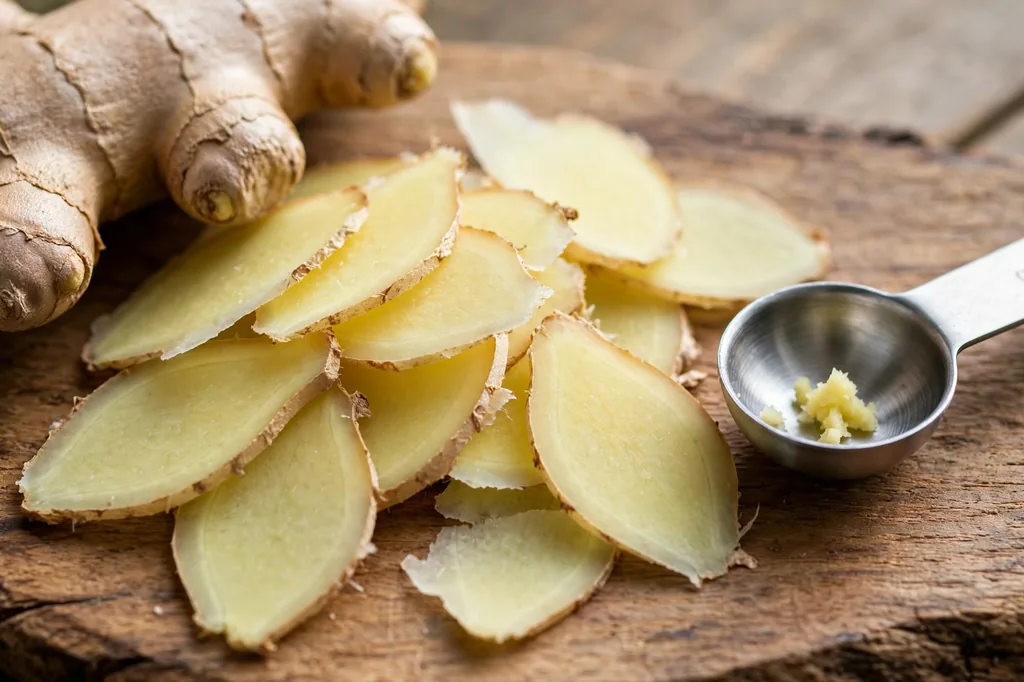
Ginger is used in such small amounts that its nutrients are a bonus rather than a source. The values below are approximate for fresh ginger root per 100 grams.
| Nutrient | Amount per 100g | Benefit for Dogs |
|---|---|---|
| Calories | 80 kcal | Low in calories, and servings are tiny anyway |
| Gingerols | Present | The active compounds linked to anti-nausea effects |
| Vitamin C | 5 mg | Supports immune health in small amounts |
| Magnesium | 43 mg | Supports muscle and nerve function |
| Potassium | 415 mg | Supports normal muscle and heart function |
| Manganese | 0.2 mg | Supports bone health and metabolism |
| Fiber | 2 g | A small amount that supports digestion |
| Iron | 0.6 mg | Supports healthy red blood cells |
Calories in Ginger
Fresh ginger has about 80 calories per 100 grams, but a dog-sized serving is only a gram or two, so the calories are negligible. A quarter teaspoon of grated ginger has about 1 calorie, and a full teaspoon has about 4 calories. Calories are not the concern with ginger; the concern is the strength of its active compounds, which is why the dose must stay small even though the food is low in calories.
| Amount | Approximate calories |
|---|---|
| Quarter teaspoon grated | About 1 kcal |
| Half teaspoon grated | About 2 kcal |
| 1 teaspoon grated | About 4 kcal |
Benefits of Feeding Ginger to Dogs
Ginger offers a few real benefits for dogs, mostly around nausea and digestion, when the dose is small.
1. May Help with Nausea
Ginger is best known for easing nausea, and it may help dogs that feel sick in the car or after eating something unusual. The gingerols in fresh ginger appear to calm the stomach and reduce the feeling of sickness.
2. Supports Healthy Digestion
Ginger may help food move through the stomach more smoothly and reduce gas and bloating in some dogs. Its warm, stimulating effect on digestion is one reason it has been used for centuries as a digestive aid. A small amount mixed into food is enough, and more is not better.
3. Has Natural Anti-Inflammatory Properties
The gingerols and shogaols in ginger have anti-inflammatory effects, which may help dogs with mild joint stiffness or general discomfort. The evidence in dogs is limited, and ginger is not a treatment for arthritis, but it may offer a small amount of support alongside proper veterinary care. For a food with stronger evidence for joint support, plain cooked salmon for dogs provides omega-3 fats.
4. May Support the Immune System
Ginger contains antioxidants that may help protect cells from everyday damage and support normal immune function. The amounts in a dog-sized serving are small, so this is a possible bonus rather than a proven benefit, but it adds to the case for ginger as a healthy extra.
5. Adds Flavor Without Salt or Sugar
A little grated ginger adds a warm, aromatic flavor to your dog’s food without salt, sugar, or fat. That makes it a useful way to tempt a picky eater or a dog that has gone off its food, especially when mixed into a bland meal.
Risks and Disadvantages of Ginger for Dogs

Ginger is safe in small amounts, but the risks below show why the dose must stay tiny and why some dogs should skip it.
1. Stomach Upset from Too Much
Ginger is a strong, warming spice, and too much can irritate the stomach, causing heartburn, nausea, vomiting, or diarrhea. The line between a helpful dose and too much is small, so measure carefully and start with less than you think you need.
2. Blood-Thinning Effects
Ginger can slow blood clotting slightly, which is a concern for dogs on blood-thinning medication, dogs with a bleeding disorder, and dogs about to have surgery. Tell your veterinarian about any ginger you give, and stop offering it at least a week before a planned surgery unless your veterinarian says otherwise.
3. Blood Sugar Effects
Ginger may lower blood sugar, which can be a problem for diabetic dogs or dogs on medication that affects blood sugar. If your dog has diabetes, ask your veterinarian before offering ginger, and watch for signs of low blood sugar such as weakness or confusion.
4. Unsafe Ginger Foods
Ginger cookies, gingerbread, ginger snaps, and ginger cake contain sugar, fat, and sometimes nutmeg, chocolate, or raisins, all of which are unsafe for dogs. Ginger ale is a sugary, carbonated drink with almost no real ginger. Pickled ginger is high in salt and vinegar. None of these are a safe way to give your dog ginger.
5. Pregnancy and Young Puppies
Ginger has not been well studied in pregnant dogs or very young puppies, so it is best to avoid it for them unless your veterinarian approves it. Pregnant dogs and puppies have more sensitive systems, and there is no need to take a chance on an optional extra.
Can Dogs Eat Ginger for Car Sickness?
Ginger may help some dogs with mild car sickness, and it is a common home remedy for travel nausea. Offer a small amount of grated ginger mixed into a light meal about 30 minutes before travel, and keep the car cool and well ventilated.
Can Dogs Drink Ginger Tea?
A small amount of weak, unsweetened ginger tea, cooled to room temperature, is generally safe for dogs, but fresh grated ginger mixed into food is simpler and easier to dose. Never give ginger tea with sugar, honey, milk, or other additives, and offer only a few laps, not a whole bowl.
Can Dogs Eat Dried or Ground Ginger?
Yes, dried ground ginger is safe in very small amounts, but it is more concentrated than fresh ginger, so use about a third of the fresh amount. A pinch for a small dog and a quarter teaspoon for a large dog is plenty. Fresh ginger is usually the better choice, since it is easier to judge the dose.
How Much Ginger Can a Dog Eat?
Ginger is a spice, so portions are measured in fractions of a teaspoon. The table below is a guide for fresh grated ginger, offered a few times a week at most.
| Dog size | Weight range | Suggested amount |
|---|---|---|
| Extra small (Chihuahua, Yorkie) | Under 10 lbs | A pinch, about an eighth of a teaspoon |
| Small (Beagle, French Bulldog) | 10-25 lbs | About a quarter teaspoon |
| Medium (Border Collie, Bulldog) | 25-50 lbs | About half a teaspoon |
| Large (Labrador, German Shepherd) | 50-90 lbs | About three quarters of a teaspoon |
| Giant (Great Dane, Mastiff) | Over 90 lbs | About 1 teaspoon at most |
Can Puppies Eat Ginger?
Puppies should not eat ginger unless your veterinarian approves it. Their digestive systems are still developing, and ginger is a strong spice that can upset a young stomach. There is also little research on ginger safety in very young dogs. If a puppy has nausea or stomach upset, your veterinarian can suggest a safer option, and plain food is usually the best first step.
How to Safely Feed Ginger to Your Dog
Safe ginger is fresh ginger, peeled, grated fine, and mixed into food in a tiny measured amount. That is the whole method.
Ways to Serve
- Peel a small piece of fresh ginger root and grate or mince it very finely.
- Mix the grated ginger into your dog’s regular food so the strong taste is diluted.
- Start with half the suggested amount, watch your dog for a day, and increase only if it is tolerated.
- Use ginger only a few times a week, never every day, and skip it if your dog takes blood-thinning or diabetes medication.
- Never offer ginger cookies, gingerbread, ginger ale, or pickled ginger. A gentle partner food is fresh blueberries for dogs, which add antioxidants without any spice.
Ginger vs Other Foods for Dogs
Ginger is a medicinal spice, so compare it with other gentle digestive extras rather than with staple foods.
| Food | Main benefit | Strength | Safe for dogs? |
|---|---|---|---|
| Fresh ginger | Anti-nausea | Strong spice | Yes, tiny amounts |
| Plain pumpkin | Fiber, digestion | Gentle | Yes, in moderation |
| Plain yogurt | Probiotics | Gentle | Yes, small amounts |
| Ginger cookies | Flavor only | Strong, plus sugar | No, avoid |
| Pickled ginger | Flavor only | Strong, plus salt | No, avoid |
Frequently Asked Questions
How much ginger can I give my dog?
A quarter teaspoon of grated fresh ginger is enough for a small dog, and a teaspoon is the upper limit for a giant dog. Use less for dried ground ginger, and offer ginger only a few times a week. When in doubt, use less.
Is ginger safe for dogs with arthritis?
Ginger may offer mild anti-inflammatory support, but it is not a treatment for arthritis, and it can interact with medication. Ask your veterinarian before giving ginger to a dog with arthritis, especially if the dog takes pain relief.
Can ginger help my dog’s upset stomach?
It may help with mild nausea or gas, but it will not fix vomiting, diarrhea, or a serious stomach problem. Offer a small amount with a bland meal, and call your veterinarian if symptoms continue for more than a day.
Can dogs eat ginger snaps?
No, ginger snaps and ginger cookies contain sugar, fat, and sometimes nutmeg, which is toxic to dogs. They are not a safe way to give your dog ginger, even in a small amount.
Can dogs eat fresh ginger root?
Yes, fresh ginger root is the safest form, as long as it is peeled, grated fine, and served in a tiny amount. Do not give your dog a whole chunk of ginger root to chew, since it is strong and hard to digest in a large piece.