
Can Dogs Eat Hot Dogs?

Quick Answer: Hot dogs are not acutely toxic to dogs the way chocolate or grapes are, but they are a genuinely unhealthy food that dogs should not eat. A typical hot dog packs enormous amounts of sodium, saturated fat, and preservatives like nitrites into a small package, and many contain onion or garlic powder, which are toxic to dogs. An occasional tiny piece is unlikely to cause an emergency in a healthy dog, but hot dogs should never be a treat or meal, and there are far better protein options to share instead. If you are exploring other safe treats, learn whether dogs can eat feta cheese. Curious about other foods? See if avocado is safe for dogs. Many owners also wonder can dogs eat celery before sharing snacks.
Key Takeaways
- Hot dogs are not immediately poisonous, but they are one of the unhealthiest human foods you can give a dog.
- A single hot dog can contain 500–700 mg of sodium, a huge portion of a dog’s entire daily allowance.
- They are high in saturated fat, which can trigger digestive upset and pancreatitis, especially in susceptible dogs.
- Nitrites, nitrates, and other preservatives in processed meats are linked to long-term health concerns.
- Many hot dog brands contain onion powder or garlic powder, both of which are toxic to dogs.
- An occasional pea-sized piece is unlikely to harm a healthy dog, but hot dogs should never be a regular treat.
- Plain cooked chicken, turkey, or lean beef are far better protein treats to share with your dog.
Can Dogs Eat Hot Dogs?
Technically, yes, a dog that snatches a dropped piece of hot dog will almost certainly be fine. But “not an emergency” is a very different thing from “okay to feed,” and hot dogs fall firmly on the wrong side of that line. They are among the most heavily processed meats in the human diet: emulsified meat trimmings, salt, fat, sugar, flavorings, and preservatives, stuffed into a casing. Nothing in that ingredient list serves your dog.
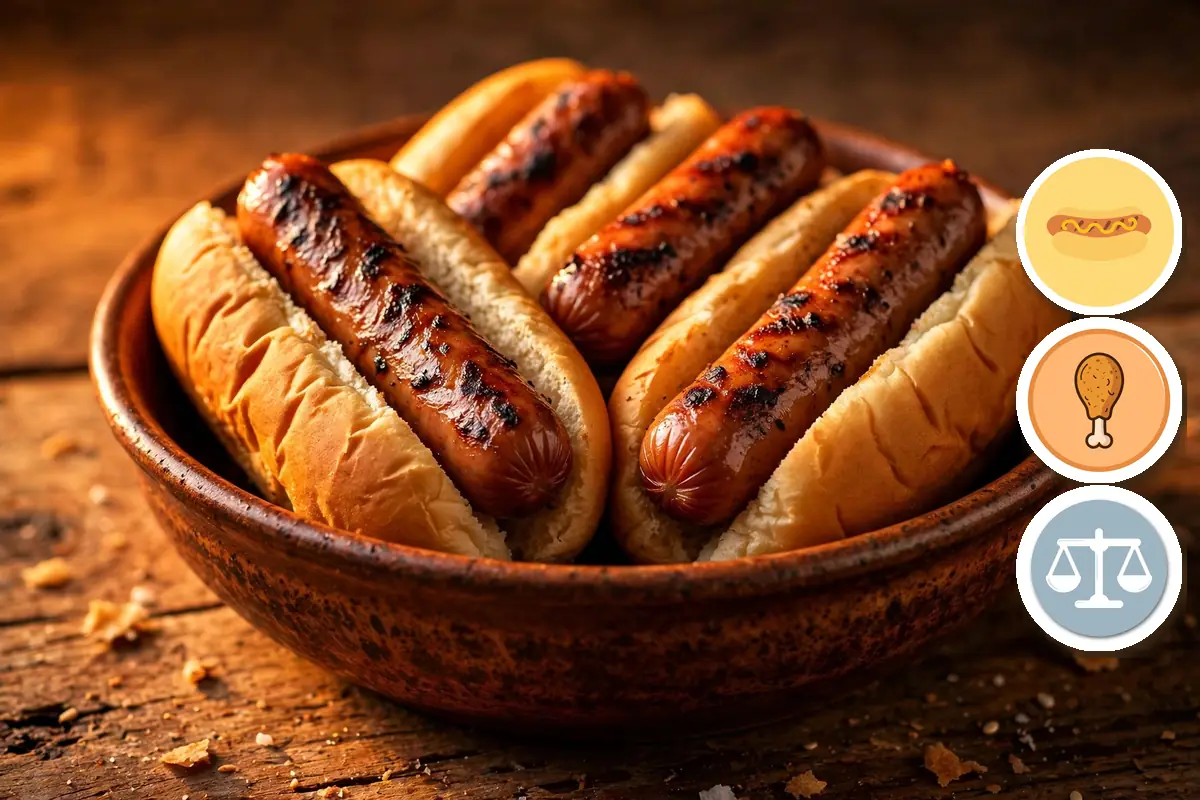
The biggest single problem is sodium. A standard pork-and-beef frankfurter contains roughly 500–700 mg of sodium, and “jumbo” dogs can exceed 800 mg. A 10 kg dog’s entire daily sodium requirement is only around 200 mg. That means one hot dog can deliver three to four times a small dog’s daily sodium in a few bites. Occasional excess salt mostly causes thirst and mild stomach upset, but in large amounts it can lead to salt poisoning, and dogs with heart or kidney conditions are far more vulnerable.
Then there is the fat. Hot dogs typically contain 10–15 grams of fat each, much of it saturated. Rich, fatty foods are a known trigger for pancreatitis, a painful and potentially life-threatening inflammation of the pancreas. Certain breeds, Miniature Schnauzers, Yorkshire Terriers, and Cocker Spaniels among them, are especially prone. Add in nitrites and nitrates, artificial smoke flavoring, and frequently onion or garlic powder, and you have a product with no redeeming nutritional qualities for a dog. The honest guidance: do not feed hot dogs to your dog on purpose, and reach for real meat instead.
Nutritional Profile of Hot Dogs
| Nutrient (per 100g pork/beef frankfurter) | Amount | Potential Benefit for Dogs |
|---|---|---|
| Calories | 290 kcal | None, excessive, empty calories |
| Protein | 10g | Low quality; heavily processed meat trimmings |
| Fat | 25g | Negative, mostly saturated fat; pancreatitis risk |
| Sodium | 900 mg | Negative, far exceeds safe levels for dogs |
| Nitrites/Nitrates | Present as preservatives | Negative, long-term health concerns |
| Sugar/dextrose | 3g | None, unnecessary added sugar |
| Onion/garlic powder | Often present | Toxic to dogs, damages red blood cells |
| B vitamins, iron, zinc | Trace amounts | Negligible; vastly better sources exist |
Calories in Hot Dogs
A standard frankfurter (about 45–57g) contains roughly 130–180 calories, almost entirely from fat and processed meat, while jumbo dogs can top 250 calories. For a 10 kg dog needing 400 calories daily, one regular hot dog can supply a third of the day’s energy with virtually no useful nutrition. Because hot dogs are small and dogs eat them in seconds, it is also easy to overfeed, two or three “just a bite” pieces at a barbecue add up fast. All treats combined should stay under 10% of daily calories, a budget a single hot dog shatters on its own.
Benefits of Feeding Hot Dogs to Dogs
Let us be direct: hot dogs have no meaningful nutritional benefits for dogs. The only “benefits” are practical conveniences for the owner, and each comes with a healthier substitute. Here is the complete honest picture:

1. High-Value Training Reward (Convenience Only)
Trainers historically used hot dog pieces because most dogs find them irresistible and they are cheap and easy to cut. The motivation factor is real, but small pieces of plain boiled chicken or commercial training treats motivate just as well without the sodium and preservatives.
2. Pill Concealment
The soft, moldable texture makes hot dogs handy for hiding medication. This is a legitimate short-term use, though pill pockets or a dab of peanut butter (xylitol-free) work equally well and are healthier.
3. Protein Content
Hot dogs do contain protein, but it is low-quality, heavily processed protein from meat trimmings, delivering far less usable nutrition per gram than plain cooked meat, with a heavy load of fat and salt attached.
4. Easy to Portion
They slice into tiny training-size pieces easily. So does plain cooked chicken breast, string cheese in moderation, or freeze-dried meat treats.
5. Dogs Love the Taste
Dogs love the taste of many things that are bad for them, that is not a nutritional argument. Palatability tells you nothing about suitability.
Risks of Feeding Hot Dogs to Dogs
1. Extreme Sodium Load
The standout danger. One hot dog can contain 500–800 mg of sodium, multiples of a small dog’s daily requirement. Symptoms of excess salt intake include extreme thirst, vomiting, diarrhea, and in severe cases, salt poisoning (tremors, seizures). Dogs with heart disease or kidney issues are at particular risk even from smaller amounts.
2. Pancreatitis from High Fat
With around 25% fat content, hot dogs are exactly the kind of rich food that triggers pancreatitis in susceptible dogs. Symptoms, severe abdominal pain, repeated vomiting, hunched posture, lethargy, require emergency veterinary care.
3. Nitrites, Nitrates, and Preservatives
Most commercial hot dogs are preserved with sodium nitrite, which prevents botulism but forms nitrosamines, compounds classified as probable carcinogens in humans. While canine-specific cancer data is limited, there is no reason to expose your dog to these chemicals when plain meat is available.
4. Onion and Garlic Powder Toxicity
Many hot dog seasonings include onion powder, garlic powder, or both. These damage dogs’ red blood cells and can cause hemolytic anemia, with symptoms (weakness, pale gums, dark urine) sometimes delayed by several days. Because the amounts vary by brand and are never labeled precisely for pet safety, this is an invisible risk in every bite.
5. Choking Hazard, Especially for Small Dogs
The cylindrical shape and rubbery texture make hot dog rounds a classic choking hazard, particularly the coin-shaped slices toddlers and small dogs can lodge in the throat. Any hot dog piece given to a dog should be cut lengthwise into small bits, though ideally not given at all.
6. Obesity and Long-Term Health Effects
Regular hot dog treats contribute empty calories, excess sodium, and saturated fat to the diet, a recipe for weight gain, and with it higher risks of joint disease, diabetes, and shortened lifespan.
Can Dogs Eat Raw Hot Dogs?
Hot dogs are pre-cooked during manufacturing, so “raw” (unheated) hot dogs are not raw meat in the bacterial sense, but they can still harbor Listeria if contaminated after processing, which is why food safety guidance says to heat them for humans. For dogs, the question is moot: whether heated or cold from the package, hot dogs carry the same sodium, fat, and preservative load. Heating does not make them any healthier.
Are Turkey or Chicken Hot Dogs Better for Dogs?
Slightly leaner, but not meaningfully better. Poultry-based hot dogs usually contain less saturated fat, yet they carry the same heavy sodium load, the same nitrite preservatives, and often the same onion/garlic seasoning. “Lower fat” on the label refers to human dieting concerns, not canine safety. Do not treat poultry hot dogs as a dog-safe alternative.
Can Dogs Eat Hot Dog Buns?
Plain white hot dog buns are not toxic, they are just refined flour, sugar, and salt with no nutritional value. A small piece is harmless, but buns add empty calories and the salt adds to the overall load. Whole-wheat buns are marginally better but still pointless as a dog treat. If your dog steals a bite of bun at a barbecue, do not worry; just do not make a habit of it.
What About Cocktail Wieners and Sausages?
Cocktail wieners, Vienna sausages, bratwurst, kielbasa, and breakfast sausages are all in the same category, or worse. Many sausages contain even more fat and seasoning than standard hot dogs, and some (like Italian sausage or chorizo) contain significant garlic. Canned Vienna sausages are among the saltiest of all. None of these should be fed to dogs deliberately.
How Much Hot Dog Can a Dog Eat?
The recommended amount is none, hot dogs should not be part of a dog’s diet at any size. If your dog manages to snatch a piece anyway, the table below gives a rough sense of when to simply monitor versus when to call the vet. These are not serving suggestions.
| Dog Size | Weight | A Tiny Taste (likely fine, monitor) | Call Your Vet |
|---|---|---|---|
| Extra small | Under 5 kg | A pea-sized piece | Half a hot dog or more |
| Small | 5–10 kg | One small coin-sized piece | One whole hot dog or more |
| Medium | 10–25 kg | A bite or two | Two or more hot dogs |
| Large | 25–40 kg | A bite or two | Three or more hot dogs |
| Giant | Over 40 kg | A small piece | Four or more hot dogs |
Watch for vomiting, diarrhea, excessive thirst, or abdominal pain in the hours after ingestion. Dogs with heart, kidney, or pancreatic conditions warrant a vet call at lower amounts, when in doubt, call.
Can Puppies Eat Hot Dogs?
No, puppies should not have hot dogs. Their kidneys are still maturing and handle excess sodium poorly, their small body weight means even a little goes a long way, and rich fatty foods are more likely to cause severe diarrhea in young digestive systems. Just as importantly, puppyhood is when food habits form: teaching a young dog that human processed food is on the menu creates a persistent beggar. Use tiny pieces of plain cooked meat or puppy training treats instead.
How to Safely Feed Your Dog at a Barbecue
You do not have to leave your dog out of cookout fun, just share the right things. Plain, unseasoned items from the grill make excellent dog treats when prepared with them in mind.
Ways to Serve Barbecue-Safe Treats to Dogs
- Plain grilled chicken breast: Cook a small unseasoned piece alongside the rest; dice it once cool. The best hot dog substitute there is.
- Plain burger patty (no bun, no seasoning): A small plain beef patty, cooked through with no onion, garlic, or salt, is a great occasional treat.
- Grilled vegetable pieces: Plain zucchini, bell pepper, or sweet potato slices from the grill (no oil or seasoning) work for veggie-inclined dogs.
- Frozen treats: Keep a frozen Kong or watermelon cubes ready so your dog has their own “cookout snack” while everyone else eats.
- Secure the food: Keep plates, trash, skewers, and corn cobs out of reach, stolen barbecue food causes more vet visits than deliberate sharing.
Hot Dogs vs. Other Protein Treats for Dogs
| Treat | Sodium (per 100g) | Fat | Preservatives | Verdict for Dogs |
|---|---|---|---|---|
| Hot dog | 900 mg | 25g | Nitrites, flavorings | Avoid |
| Plain boiled chicken breast | 70 mg | 3.5g | None | Excellent |
| Plain cooked turkey | 70 mg | 7g | None | Excellent |
| Lean beef (plain, cooked) | 70 mg | 10g | None | Very good |
| Commercial meat training treats | Varies (usually low) | Varies | Minimal | Good |
| Deli ham/turkey slices | 1000 mg | Varies | Nitrites often | Avoid as regular treats |
Frequently Asked Questions
My dog ate a hot dog, should I worry?
Probably not, if it was a single hot dog and your dog is a healthy adult. Offer fresh water, watch for vomiting, diarrhea, or unusual thirst over the next 12–24 hours, and skip rich foods for a day. Call your vet if your dog is very small, elderly, has heart/kidney disease or a pancreatitis history, ate multiple hot dogs, or shows concerning symptoms.
Can hot dogs kill a dog?
A single hot dog will not kill a healthy dog. The genuine life-threatening scenarios involve very large quantities (salt poisoning), a dog with pre-existing heart or kidney disease, xylitol (not in hot dogs, but worth knowing), or severe pancreatitis triggered by the fat load. These are uncommon but real, another reason to keep hot dogs away from dogs.
Are hot dogs good for hiding pills?
They work mechanically, soft, smelly, moldable, and many owners use them for short courses of medication. For long-term daily medication, switch to a healthier vehicle like a small piece of banana, xylitol-free peanut butter, or commercial pill pockets, so the “treat” does not become a dietary problem of its own.
Can dogs eat corn dogs?
No, corn dogs are hot dogs plus a deep-fried sugary batter, adding even more fat and calories to an already unhealthy food. The stick is also a hazard if swallowed. Keep them away from dogs entirely.
What human meats CAN dogs eat?
Plain cooked chicken, turkey, lean beef, and pork (all boneless, skinless, unseasoned) are excellent. Plain cooked fish like salmon is great too. The rule is simple: real, plain, cooked meat is fine; processed, seasoned, or cured meats (hot dogs, bacon, salami, pepperoni) are not.
Do hot dogs cause worms in dogs?
No, this is a myth. Hot dogs do not cause worms. Intestinal parasites come from contaminated soil, feces, fleas, or raw meat, not from cooked processed meat. That said, hot dogs cause plenty of other problems, so the myth’s conclusion (don’t feed them) is accidentally correct.