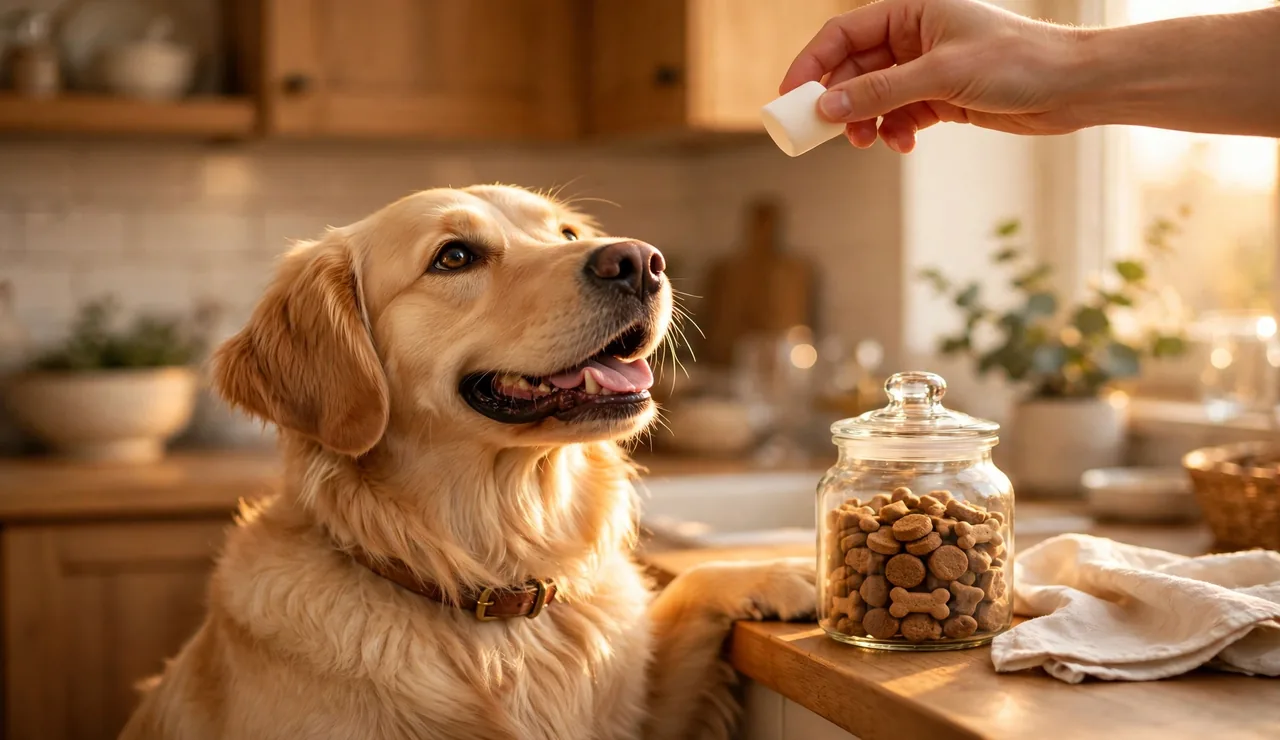
Can Dogs Eat Marshmallows?

A plain marshmallow is not toxic to dogs, but it is an unhealthy treat that you should avoid or keep very rare. Marshmallows are almost pure sugar with no nutritional value. Sugar-free marshmallows are far more dangerous, because many are sweetened with xylitol, also called birch sugar, which is highly toxic to dogs and can be life-threatening even in small amounts.
Key Takeaways
- Plain marshmallows are not poisonous, but they are empty calories.
- Sugar-free marshmallows can be deadly, because they may contain xylitol (birch sugar), a sweetener highly toxic to dogs.
- Sugar can contribute to obesity, dental decay, and stomach upset.
- Marshmallows are a choking hazard, especially for small dogs: soft, sticky, and able to swell with moisture.
- Dogs have no nutritional need for marshmallows or added sugar.
- Better sweet treats: banana slices, blueberries, and baby carrots.
- If your dog eats sugar-free marshmallows or a large amount, contact your vet promptly.
Can Dogs Eat Marshmallows?
A healthy adult dog can eat a plain marshmallow without being poisoned, but that does not make it a good treat. A marshmallow is sugar or corn syrup, water, and gelatin whipped into a spongy foam, sometimes with corn starch and vanilla flavoring. Nothing in it is something your dog needs, and the sugar works against their health when treats like this become a habit.
The real danger is the sugar-free version. Many sugar-free marshmallows are sweetened with xylitol, also listed as birch sugar or E967. In dogs, xylitol can trigger a rapid release of insulin, causing a dangerous drop in blood sugar, and in larger amounts it may lead to liver failure. Signs can appear quickly and may include vomiting, weakness, collapse, or seizures. Always check the ingredients of any sweet product first.
Think of marshmallows like other rich, sugary desserts such as cheesecake: an accidental bite is rarely a crisis for a healthy dog, but it should never become a planned snack. Treats are best chosen from foods that add something positive.
Nutritional Profile of Marshmallows
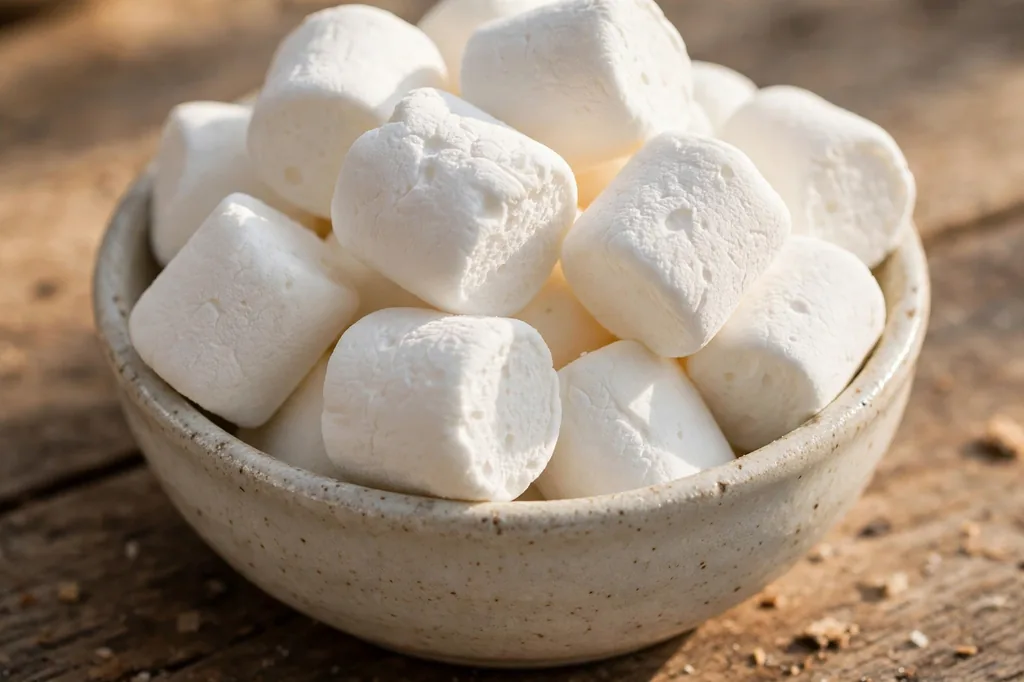
The numbers below show why marshmallows count as junk food for dogs.
| Nutrient | Amount per 100g | What It Means for Dogs |
|---|---|---|
| Calories | 318 kcal | Energy dense for a light food, easy to overfeed |
| Sugar | 58 g | The main ingredient; feeds obesity and dental decay |
| Total carbohydrates | 81 g | Almost entirely sugar and starch |
| Protein | 1.8 g | From gelatin and incomplete, so it adds little value |
| Fat | 0.2 g | Very low, the one harmless point in this profile |
| Fiber | 0.1 g | Effectively none, so no digestive benefit |
Notice what is missing: no meaningful vitamins, minerals, or healthy fats. The protein comes from gelatin, which lacks some essential amino acids dogs need, so it cannot support muscle or coat health like real protein can.
Calories in Marshmallows
One regular marshmallow weighs about 7 grams and contains roughly 23 calories, nearly all from sugar. Mini marshmallows contain about 2 calories each, which sounds harmless until you realize how easy it is to toss a handful without thinking.
Treats should make up no more than about 10 percent of your dog’s daily calories. A small dog eating roughly 400 calories a day has a treat budget of about 40 calories, so two regular marshmallows would spend it all on pure sugar, crowding out treats that could actually help.
Benefits of Feeding Marshmallows to Dogs
Honestly, marshmallows have no real nutritional benefits for dogs. The points below are the only practical upsides owners mention, and each has a better alternative.
1. Not toxic in plain form
If your dog sneaks one plain marshmallow, you can relax. It contains no ingredient that poisons dogs, so one accidental piece is unlikely to do more than pass through.
2. Very low in fat
Marshmallows contain almost no fat, so a rare piece will not load your dog with fatty calories like many baked treats. The trade-off is that the calories come from sugar instead.
3. Soft texture for sensitive mouths
The spongy texture is easy to chew, which can help senior dogs or dogs with sore mouths. Soft fruits like banana or watermelon do the same job with real nutrition.
4. Can hide a small pill in a pinch
A marshmallow is sticky and moldable, so a small piece can wrap around a tablet and help it go down, if your vet approves. Use the plain kind only.
5. High-value flavor for rare training moments
Most dogs love the sweet taste, so a pea-size piece can work as a rare high-value reward in tough training moments. Use healthier rewards day to day.
Risks and Disadvantages of Marshmallows for Dogs

1. Sugar, empty calories, obesity, and dental decay
The biggest everyday risk is the sugar. Regular sugary treats can contribute to weight gain, and excess weight is linked to joint strain and a higher risk of conditions such as diabetes. Sugar also feeds the bacteria behind plaque and tooth decay.
2. Xylitol in sugar-free marshmallows
Sugar-free marshmallows may be sweetened with xylitol, also called birch sugar. Xylitol is highly toxic to dogs: even a small amount can cause a dangerous drop in blood sugar, and larger amounts may damage the liver. Never feed a sugar-free product unless you have checked the ingredients yourself.
3. Choking and expansion hazard
Marshmallows are soft, sticky, and spongy, and they absorb moisture and swell as a dog chews. A whole marshmallow can lodge in the throat of a small dog or a gulper, and pieces can stick to the roof of the mouth. Toy breeds, puppies, and fast eaters are at highest risk.
4. Stomach upset
A sudden load of sugar can upset your dog’s stomach, leading to gas, loose stools, or vomiting. A dog that raids a whole bag faces a far bigger surge than their system can handle.
5. Dangerous pairings like s’mores
At a campfire, marshmallows are melted over chocolate to make s’mores, and chocolate contains theobromine, which is toxic to dogs, while graham crackers add more sugar. Keep the whole s’mores setup, dropped pieces and skewers included, away from your dog.
Marshmallow-Specific Questions
Can Dogs Eat Sugar-Free Marshmallows?
No, never feed sugar-free marshmallows to a dog. They are commonly sweetened with xylitol, also called birch sugar, which is highly toxic to dogs and can cause a sudden drop in blood sugar, seizures, and liver damage. If your dog has eaten some, call your vet right away.
Can Dogs Eat Mini Marshmallows?
Mini marshmallows are the same sugary food in a smaller, riskier shape, so they are no healthier than regular ones. They are easy to overfeed by the handful, and a mini is just the right size to be gulped whole and lodge in a small dog’s throat.
Can Dogs Eat Roasted or Toasted Marshmallows?
A roasted marshmallow is no safer than a raw one, and in some ways it is worse. The melted center can burn your dog’s mouth, the caramelized sugar is just as tooth-unfriendly, and the goo sticks to teeth and the roof of the mouth. With skewers and chocolate nearby, your dog is better off with a dog-safe treat.
Can Dogs Eat Marshmallow Fluff?
No, marshmallow fluff should stay off your dog’s menu. Fluff is the same whipped sugar in spreadable form, with the same empty calories and dental risks, and it coats teeth thoroughly. Some sugar-free spreads may also contain xylitol. Pumpkin puree or mashed banana gives a soft, sweet taste with fiber and nutrients.
How Much Marshmallow Can a Dog Eat?
Your dog needs none at all, and the less the better. If you do offer one on a rare occasion, for example to hide a pill, the table below shows a sensible maximum for a healthy adult dog. These are ceilings for rare occasions, not daily allowances.
| Dog Size | Weight | Maximum on a Rare Occasion |
|---|---|---|
| Extra small | Under 5 kg (11 lb) | Skip it, or a pea-size piece |
| Small | 5 to 10 kg (11 to 22 lb) | Half a regular marshmallow |
| Medium | 10 to 25 kg (22 to 55 lb) | One regular marshmallow |
| Large | 25 to 40 kg (55 to 88 lb) | One to two marshmallows |
| Extra large | Over 40 kg (88 lb) | Two marshmallows at most |
Dogs with diabetes, obesity, pancreatitis, or dental disease should not be given marshmallows at all. For every dog, cutting a marshmallow into small pieces is safer than handing over a whole one, and staying nearby lets you step in if a piece sticks.
Can Puppies Eat Marshmallows?
No, puppies should not eat marshmallows. A puppy’s digestive system is still developing and is easily upset by a sudden load of sugar, and the choking risk is higher because puppies gulp first and chew later. Puppies are also forming lifelong taste habits, and junk treats teach them to beg for foods that do them no good. For training, use pieces of their regular kibble or a puppy-safe treat.
How to Safely Feed Marshmallows to Your Dog
If you offer a plain marshmallow as a rare one-off, a few steps keep the risk low.
Ways to Serve
- Check the ingredients first: no xylitol, birch sugar, or E967.
- Choose plain white marshmallows only: no coatings, colors, or fillings.
- Cut a regular marshmallow into pea-size pieces instead of handing over a whole one.
- Serve at room temperature, never hot or melted straight off a skewer.
- Offer pieces one at a time and stay close, especially with small dogs.
- Count the calories as part of the day’s treat budget.
For everyday treating, you have far better options. If your dog enjoys light, low-calorie snacks, plain air-popped popcorn gives a fun crunch without the sugar, and soft fruit treats such as bananas satisfy a sweet tooth while adding fiber, potassium, and vitamins.
Marshmallows vs. Healthier Dog Treats
Side by side, the difference from a whole-food treat is easy to see.
| Treat | Calories | Sugar | Safety Notes |
|---|---|---|---|
| Marshmallow (1 regular, 7 g) | 23 kcal | 4 g | Not toxic when plain, but empty calories; sugar-free types may contain xylitol |
| Banana slice (10 g) | 9 kcal | 1.2 g | Natural sugars with fiber and potassium |
| Blueberries (5 berries) | 4 kcal | 0.7 g | Low calorie and rich in antioxidants; a training favorite |
| Baby carrot (1 medium) | 4 kcal | 0.5 g | Crunchy and low in sugar |
| Plain air-popped popcorn (1 cup) | 31 kcal | 0.1 g | Light and filling; serve plain, no salt or butter |
Frequently Asked Questions
What should I do if my dog ate a marshmallow?
Stay calm: one plain marshmallow is not an emergency for most healthy dogs. Check the packet to confirm it was not a sugar-free product containing xylitol or birch sugar, then watch for stomach upset. If the marshmallows were sugar-free, your dog ate a lot, or your dog is very small, call your vet right away.
Can marshmallows kill a dog?
Plain marshmallows are very unlikely to kill a healthy dog, but sugar-free marshmallows containing xylitol can be fatal. Xylitol can cause a rapid drop in blood sugar and may lead to liver failure, and choking is a genuine risk for small dogs.
Are marshmallows a good way to hide pills?
Yes, a small piece of plain marshmallow can work as an occasional pill wrapper, because it is soft, sticky, and easy to mold around a tablet. Only use the plain kind, never sugar-free, and use the smallest piece that covers the pill. Ask your vet first if your dog has diabetes.
Can dogs eat marshmallow root?
Yes, marshmallow root is a completely different thing from the candy, despite the shared name. It comes from the Althaea officinalis plant, from which the original confection was made, and it sometimes appears in herbal supplements for dogs. Talk to your vet before giving any herbal supplement.
Can diabetic dogs eat marshmallows?
No, dogs with diabetes should never be given marshmallows. A marshmallow is a small dose of fast sugar, which can push blood glucose up quickly and work against insulin management. Ask your vet for a safe pill-hiding alternative.