Can Dogs Eat Hummus?

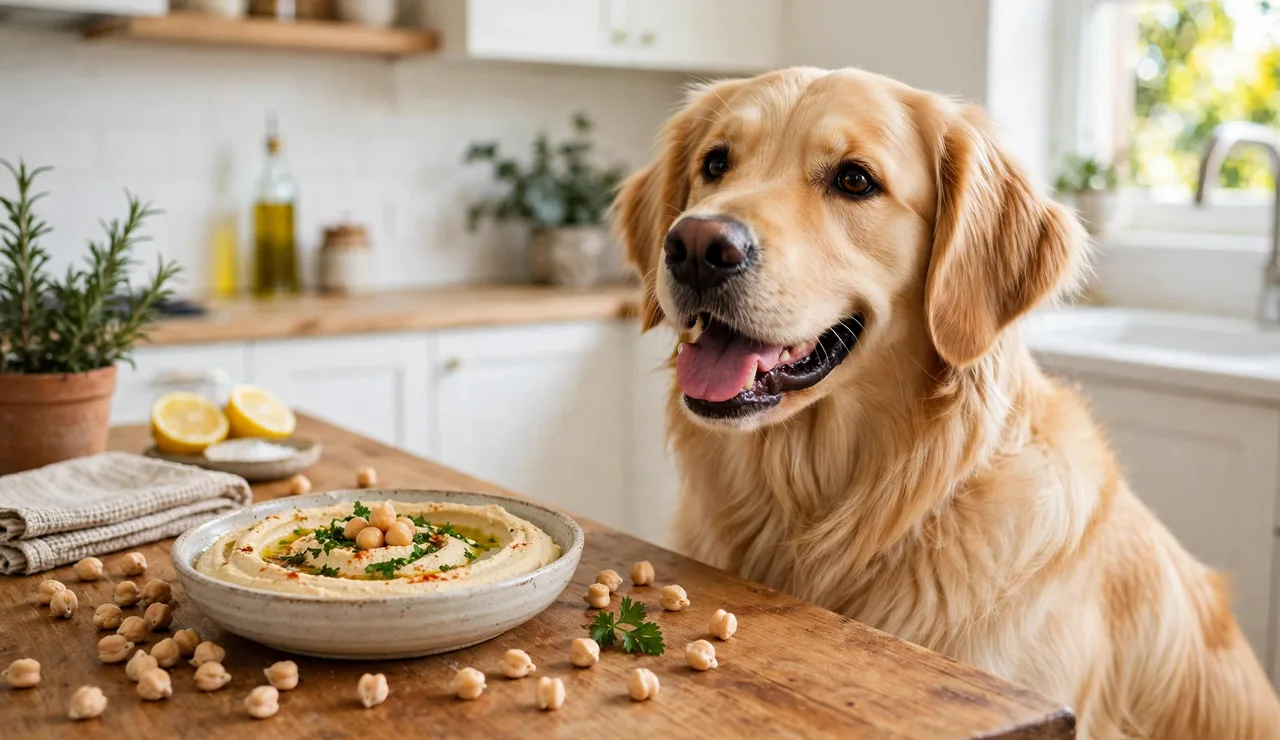
Quick Answer: No, dogs should not eat store-bought hummus. Most hummus sold in shops contains garlic, lemon juice, and a lot of salt, and garlic is toxic to dogs. A plain homemade chickpea mash made without garlic, lemon, salt, or tahini seasoning is the only safe form, and even that should be given only in tiny amounts as an occasional treat.
Key Takeaways
- Store-bought hummus is not recommended for dogs because it usually contains garlic, lemon, and salt.
- Garlic is toxic to dogs and can damage red blood cells, even in small amounts over time.
- Plain chickpeas are safe for dogs when cooked and mashed without seasoning.
- A homemade chickpea mash without garlic, lemon, or salt is the only safe version of hummus.
- Hummus is high in calories and fat, so large amounts can lead to weight gain and stomach upset.
- Always remove the chickpea skins and serve only a small spoonful to avoid choking and gas.
Can Dogs Eat Hummus?
No, dogs should not eat the hummus you buy from a shop. The problem is not the chickpeas themselves, which are a healthy food for dogs when served plain, but everything else that goes into a typical tub of hummus. Garlic is the biggest concern, because it belongs to the allium family and is toxic to dogs. Lemon juice adds sharp acidity that can upset a sensitive stomach, and the salt content is far higher than a dog needs. Many brands also add extra oils, cumin, paprika, and preservatives that add no benefit for your dog.
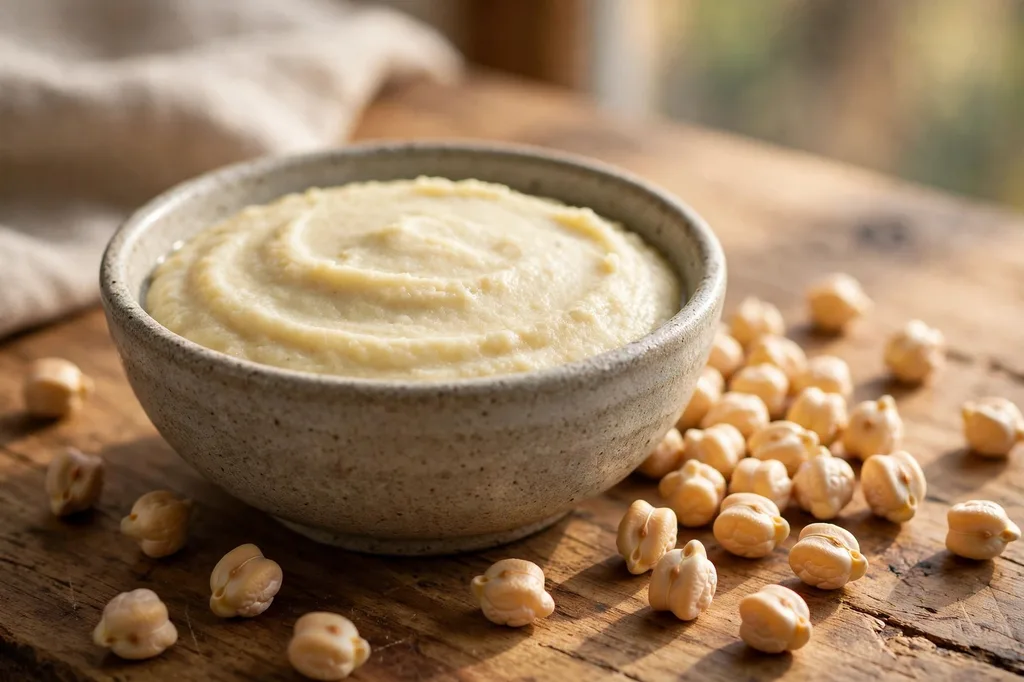
The safest way to think about hummus is to separate the base from the recipe. Plain cooked chickpeas, mashed with a little water and nothing else, are perfectly fine for most dogs in small amounts. That simple mash gives your dog fiber, plant protein, and minerals without any of the risky extras. If you want to share a dip with your dog, make a separate small bowl of plain chickpea mash for them and keep the shop-bought tub for yourself.
Some owners wonder whether a tiny lick of hummus will cause harm. A single lick is unlikely to make a healthy adult dog seriously ill, but it is still not a good idea to make it a habit. Garlic can build up in the body over repeated small exposures, and dogs with sensitive stomachs may vomit or develop diarrhea after eating seasoned dips. Offer a plain alternative instead, such as steamed green beans as a crunchy low-calorie snack, and keep hummus off your dog’s menu.
Nutritional Profile of Hummus
| Nutrient per 100g | Amount | Benefit for Dogs |
|---|---|---|
| Calories | 166 kcal | Provides energy but adds up fast in small dogs |
| Protein | 7.9 g | Supports muscle maintenance and repair |
| Fiber | 6 g | Supports digestion and healthy bowel movements |
| Fat | 9.6 g | Supplies energy but can upset the stomach in excess |
| Iron | 2.4 mg | Helps carry oxygen in the blood |
| Folate | 59 mcg | Supports cell growth and healthy blood |
| Manganese | 0.6 mg | Supports bone health and metabolism |
| Vitamin B6 | 0.2 mg | Supports brain function and red blood cell health |
Calories in Hummus
Hummus contains about 166 calories per 100 grams, which is quite dense for a dog treat. A single tablespoon holds around 25 calories, and that may not sound like much, but treats should make up no more than 10 percent of your dog’s daily calories. For a small dog eating 400 calories a day, that means only 40 calories from treats in total. Two tablespoons of hummus can use up that whole allowance, so portion control matters even with a plain homemade version.
Benefits of Feeding Plain Chickpea Mash to Dogs
1. Good Source of Plant Protein
Chickpeas provide about 8 grams of protein per 100 grams, which helps your dog maintain strong muscles and recover after exercise. Plant protein is not a replacement for meat in a dog’s diet, but it can add variety to meals when served in small amounts alongside their regular food.
2. Rich in Fiber for Digestion
The fiber in chickpeas supports smooth digestion and regular bowel movements. Fiber also feeds the friendly bacteria in your dog’s gut, which helps keep the digestive system balanced. Dogs that struggle with mild constipation may benefit from a small spoonful of plain chickpea mash mixed into their food.
3. Provides Iron and Folate
Chickpeas are a useful source of iron and folate, two nutrients that support healthy red blood cells. Iron helps carry oxygen around the body, while folate supports cell growth. These nutrients are especially helpful for active dogs that need steady energy throughout the day.
4. Contains Manganese for Bone Health
Manganese plays a role in bone development and metabolism, and chickpeas provide a meaningful amount of it. A small serving of plain chickpea mash can help top up this mineral, which works alongside calcium and phosphorus to keep your dog’s bones strong.
5. Keeps Dogs Full Between Meals
The mix of protein and fiber in chickpeas helps your dog feel full for longer after eating. This can be useful for dogs that always seem hungry between meals, because a small spoonful of plain mash can satisfy them without the sugar and fat found in many shop-bought treats.
Risks and Disadvantages of Hummus for Dogs
1. Garlic Toxicity
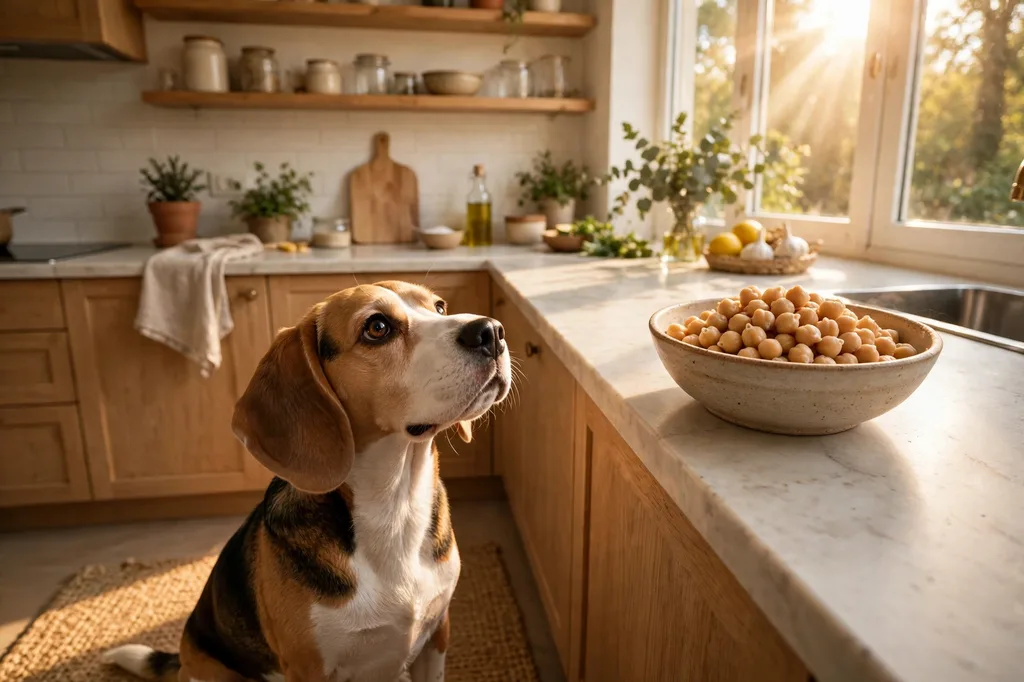
Garlic is the most serious risk in shop-bought hummus. It contains compounds that can damage a dog’s red blood cells and lead to anemia, with symptoms such as weakness, pale gums, and lethargy. The risk grows with repeated exposure, so even small amounts eaten often can become a problem over time.
2. High Salt Content
Shop-bought hummus is seasoned for human taste, and its salt level is far above what a dog should eat. Too much salt can cause thirst, vomiting, and diarrhea, and in severe cases it can lead to salt poisoning. Dogs with kidney or heart problems are at even greater risk from salty foods.
3. Lemon Juice and Stomach Upset
Lemon juice is a standard ingredient in hummus, and its acidity can irritate a dog’s stomach lining. Dogs that eat hummus with lemon may drool, vomit, or refuse food afterwards. Citric acid offers no benefit to dogs, so there is no reason to include it in anything they eat.
4. High Fat and Calories
Hummus is made with tahini and olive oil, which push its fat and calorie content up. Eating fatty foods regularly can lead to weight gain, and in some dogs it can trigger pancreatitis, a painful inflammation of the pancreas. Overweight dogs should avoid hummus completely, even the homemade kind.
5. Gas and Digestive Discomfort
Chickpeas contain complex sugars that dogs cannot fully digest, which often leads to gas and bloating. Some dogs also get loose stools after eating chickpeas, especially when the skins are left on. Serving only a small amount with the skins removed keeps this problem to a minimum.
Can Dogs Eat Chickpeas?
Yes, dogs can eat chickpeas when they are cooked, plain, and served in moderation. Canned chickpeas are fine as long as you rinse them well to remove extra salt, and dried chickpeas should be soaked and boiled until soft. Never feed your dog raw or dried chickpeas, because they are hard to digest and can cause choking or stomach pain.
Can Dogs Eat Hummus With Garlic?
No, dogs should never eat hummus with garlic in it. Garlic is toxic to dogs in all forms, whether raw, cooked, or powdered, and it is one of the most common ingredients in shop-bought hummus. If your dog eats a spoonful of garlic hummus by accident, watch them closely for vomiting, diarrhea, weakness, or pale gums, and call your vet if any of these signs appear.
Can Dogs Eat Red Pepper Hummus?
No, red pepper hummus is not safe for dogs either. Flavored hummus usually contains even more seasoning than the plain kind, including garlic, onion powder, chili, and extra salt. Stick to a plain chickpea mash if you want to share something similar, and offer plain steamed broccoli florets for a safer crunchy treat instead.
How Much Hummus Can a Dog Eat?
Only plain homemade chickpea mash should be offered, and only in the small amounts shown below. Store-bought hummus should not be fed at any size, because the garlic and salt it contains are not safe in any portion. Treats, including chickpea mash, should stay under 10 percent of daily calories.
| Dog Size | Weight | Plain Chickpea Mash per Day |
|---|---|---|
| Extra small | Under 5 kg | Half a teaspoon |
| Small | 5 to 10 kg | 1 teaspoon |
| Medium | 10 to 25 kg | 1 tablespoon |
| Large | 25 to 45 kg | 2 tablespoons |
| Giant | Over 45 kg | 3 tablespoons |
Can Puppies Eat Hummus?
No, puppies should not eat hummus. Their digestive systems are still developing, and they are more sensitive to garlic, salt, and fatty foods than adult dogs. Wait until your puppy is an adult, and even then offer only a tiny amount of plain chickpea mash, never shop-bought hummus.
How to Safely Feed Chickpea Mash to Your Dog
The safe version of hummus for dogs is very simple: cooked chickpeas mashed with water and nothing else. Skip the tahini, garlic, lemon, salt, and oil completely. Start with a tiny amount and watch your dog for a day to check for gas or loose stools before offering it again.
Ways to Serve
- Mash cooked chickpeas with a fork and a splash of water until smooth.
- Spread a thin layer on a lick mat as a calming enrichment treat.
- Mix a small spoonful into your dog’s regular kibble for extra fiber.
- Freeze small dollops in a silicone tray for a cool summer snack.
- Use it as a soft filling inside a hollow chew toy.
Hummus vs. Other Dog-Friendly Dips
| Food | Safe for Dogs | Main Concern |
|---|---|---|
| Plain chickpea mash | Yes, in small amounts | Gas if served in large portions |
| Store-bought hummus | No | Garlic, lemon, and salt |
| Plain yogurt | Yes, in small amounts | Lactose in sensitive dogs |
| Peanut butter (xylitol-free) | Yes, in small amounts | High fat and calories |
| Mashed pumpkin | Yes | Very little risk when plain |
Frequently Asked Questions
Can dogs eat hummus from the store?
No, dogs should not eat store-bought hummus. It almost always contains garlic, lemon juice, and salt, and garlic is toxic to dogs. Make a plain chickpea mash at home instead if you want to share a similar food.
Is garlic hummus poisonous to dogs?
Yes, garlic hummus can be harmful to dogs. Garlic can damage red blood cells and cause anemia, especially when eaten repeatedly. If your dog eats garlic hummus, watch for weakness, pale gums, or vomiting and contact your vet.
Can dogs eat chickpeas every day?
Dogs can eat small amounts of plain chickpeas a few times a week, but daily feeding is not needed. Chickpeas are high in fiber, and too much can cause gas and loose stools. Keep portions small and treat them as an occasional extra, not a staple.
Can dogs eat hummus with tahini?
Tahini itself is not toxic, but it is very high in fat and calories, so it is best avoided. A plain chickpea mash made with water is a lighter and safer choice for your dog than any version made with tahini.
What should I do if my dog ate hummus?
Stay calm and check how much your dog ate and whether it contained garlic. A small lick is unlikely to cause serious harm, but watch for vomiting, diarrhea, or lethargy over the next 24 hours. Call your vet if your dog ate a large amount or shows any worrying symptoms, and ask about plain yogurt as a gentle food only if your vet approves it.
Can dogs eat pita bread with hummus?
Plain pita bread is not toxic to dogs, but it adds extra calories and refined carbs with little nutrition. It is better to skip the bread and the hummus together and offer a healthier treat instead.
