
Can Dogs Eat Jicama?

Quick Answer: Yes, dogs can eat jicama, but only the peeled white flesh, and only in small amounts. Jicama flesh is crunchy, hydrating, and low in calories, with fiber, vitamin C, and potassium. The seeds, leaves, stems, and skin of the jicama plant are toxic and must never be fed to a dog, since they contain rotenone, a natural insecticide. Always peel jicama fully, cut away any skin, and throw the peel and seeds away where your dog cannot reach them. A few sticks of peeled jicama make a refreshing treat for most healthy dogs.
Key Takeaways
- Jicama flesh is safe for most dogs in small amounts when fully peeled.
- Jicama seeds, leaves, stems, and skin are toxic and must never be fed.
- Jicama is crunchy, hydrating, and low in calories, with fiber and vitamin C.
- Peel jicama completely and cut it into sticks or cubes that suit your dog’s size.
- Introduce jicama slowly, since too much fiber at once can cause gas or loose stools.
- Keep jicama within the 10 percent treat rule and wash it before peeling.
Can Dogs Eat Jicama?
Yes, jicama flesh is safe for dogs, and it is a refreshing treat that many dogs enjoy. Jicama is a root vegetable with a crisp, juicy texture and a mildly sweet taste, a little like a cross between an apple and a water chestnut. The flesh is mostly water, so it is hydrating and low in calories, and it adds fiber and vitamin C to your dog’s diet. It is a good choice for a hot day when your dog needs something cool and crunchy.
The safety rules for jicama are strict and simple. Only the peeled white flesh is safe, and every other part of the plant is toxic. The seeds, leaves, stems, and skin contain rotenone, a natural compound that the plant uses to protect itself from insects. Rotenone can cause vomiting, diarrhea, weakness, and other serious symptoms in dogs. Crisp vegetables like cucumbers are a simpler alternative if you want a hydrating crunch without the peeling and safety checks.
Preparation matters as much as the food itself. Wash the jicama, peel it completely with a vegetable peeler, and cut the flesh into sticks or cubes that your dog can chew safely. Throw the peel away in a closed bin, and never let your dog play with a whole unpeeled jicama. If your dog ever eats jicama seeds or skin, call your vet right away, even if your dog seems fine.
Nutritional Profile of Jicama
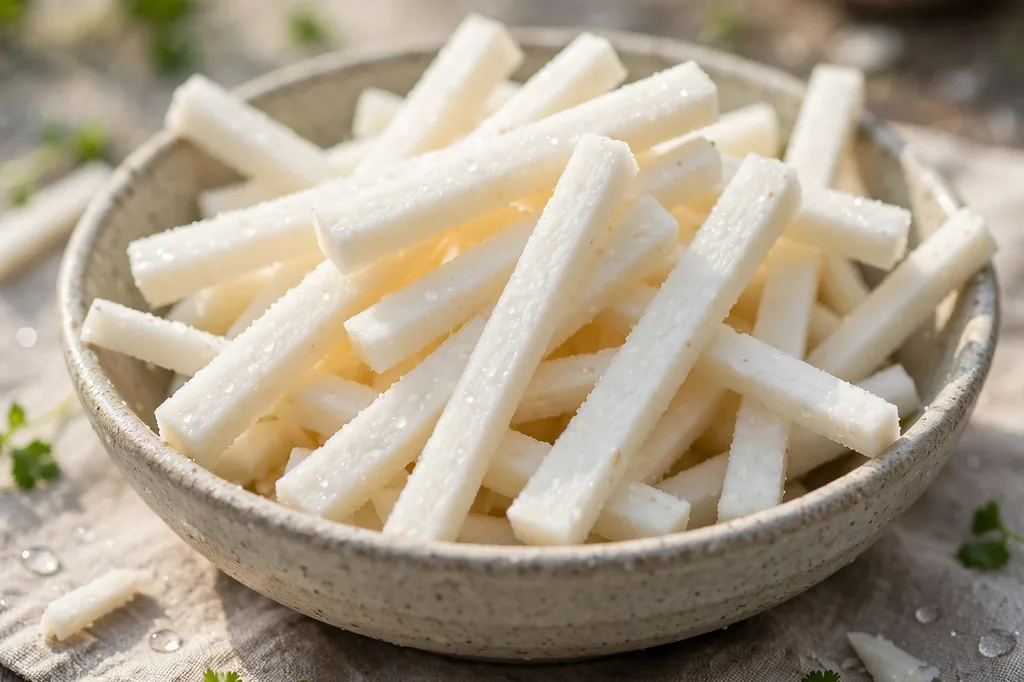
The values below are for raw jicama flesh per 100 grams. Jicama is mostly water, so it is very low in calories, yet it still offers fiber, vitamin C, and potassium.
| Nutrient per 100g | Amount | Benefit for Dogs |
|---|---|---|
| Vitamin C | 20 mg | Supports the immune system and tissue health |
| Fiber | 4.9 g | Supports digestion and healthy stools |
| Potassium | 150 mg | Supports muscle function and healthy blood pressure |
| Folate | 12 mcg | Supports cell growth and red blood cell health |
| Magnesium | 12 mg | Supports muscle, nerve, and bone health |
| Iron | 0.6 mg | Supports healthy red blood cells and energy |
| Vitamin B6 | 0.1 mg | Supports brain health and metabolism |
Calories in Jicama
Jicama is very low in calories, with about 38 calories per 100 grams, and most of its weight is water. This makes it an excellent treat for dogs that need to watch their weight, since a generous handful of jicama sticks adds crunch and fiber without many calories. The natural sweetness is mild, and the high water content helps with hydration on warm days. Like all treats, jicama should still stay within 10 percent of daily calories, but it is one of the lightest options you can offer.
Benefits of Feeding Jicama to Dogs
1. Supports Hydration
Jicama is about 85 percent water, so it helps keep your dog hydrated, especially on hot days or after exercise. The crunch also encourages chewing, which is good for the mouth.
2. Good Source of Fiber
Jicama is rich in fiber, including inulin, a type of fiber that feeds the good bacteria in the gut. Healthy gut bacteria support digestion, immune function, and regular stools.
3. Supports the Immune System
Vitamin C in jicama supports the immune system and helps the body repair tissues. Dogs make their own vitamin C, but extra from food still helps during stress or illness. Jicama is a simple whole food source of this vitamin.
4. Helps With Weight Control
Because jicama is low in calories and high in water and fiber, it helps a dog feel full without eating extra calories. Swapping a fatty treat for jicama sticks is an easy way to cut calories while keeping your dog happy. This makes jicama a smart choice for dogs on a weight plan.
5. Supports Bone Health
Jicama contains magnesium, potassium, and small amounts of calcium, which all support bone health. The inulin fiber in jicama may also help the body absorb calcium from food. These are small benefits, but they add up as part of a balanced diet.
6. Crunchy and Fun to Eat
Many dogs love the crisp, juicy crunch of jicama, and it gives them a satisfying chew without being hard like a bone. The texture is gentle on teeth, so it is a good choice for older dogs that cannot handle very hard chews. Green beans for dogs offer a similar crunch with even fewer calories. Cut it into sticks for easy chewing.
Risks and Disadvantages of Jicama for Dogs
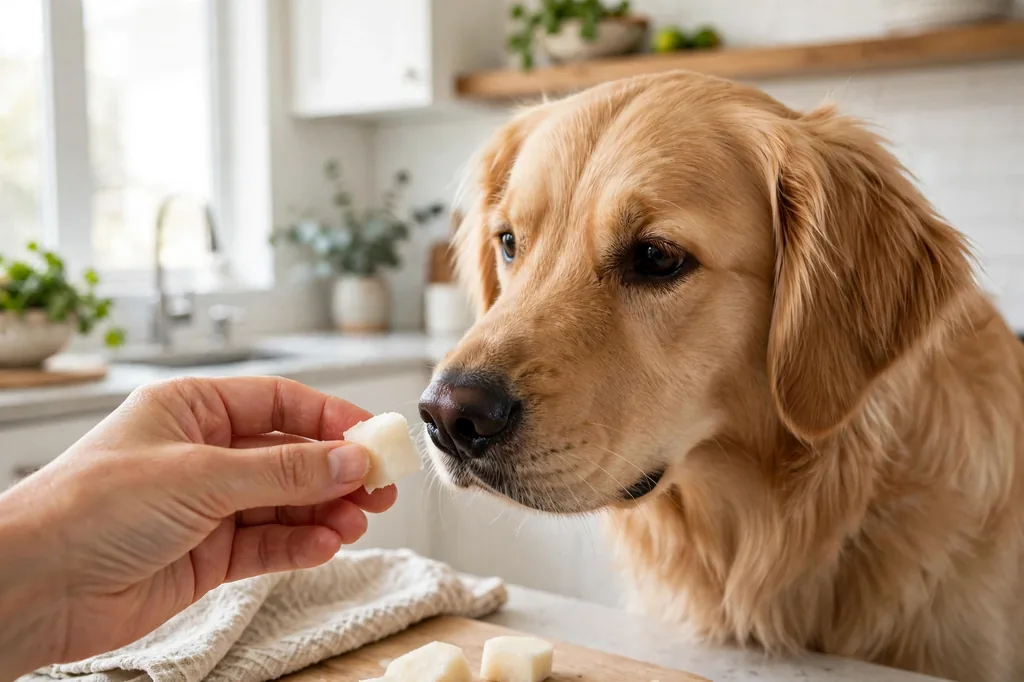
1. Toxic Seeds, Leaves, and Skin
The seeds, leaves, stems, and skin of the jicama plant contain rotenone, a natural insecticide that is toxic to dogs. Eating these parts can cause vomiting, diarrhea, weakness, tremors, and breathing problems.
2. Too Much Fiber Causes Gas
Jicama is high in fiber, and eating a large amount at once can cause gas, bloating, or loose stools. This is more likely if your dog is not used to high fiber foods. Start with a few small sticks and increase slowly over several days.
3. Choking Risk From Large Pieces
Hard chunks of jicama can be a choking hazard for small dogs and puppies, and for dogs that gulp their food. Cut jicama into thin sticks or small cubes, and supervise your dog while they eat. Grated jicama is a safe choice for very small dogs.
4. Pesticide Residue on Skin
Jicama skin can carry soil and pesticide residue, which is another reason to peel it completely. Wash the jicama before peeling, and use a clean peeler so the flesh stays clean. Organic jicama is a good choice if you want to reduce residue further.
5. Not for Dogs With Sensitive Stomachs
Dogs with sensitive stomachs or digestive conditions may find the high fiber in jicama hard to handle. If your dog has a history of stomach problems, offer only a tiny piece first and watch for a reaction. Ask your vet before making jicama a regular treat.
Can Dogs Eat Jicama Skin?
No, dogs must never eat jicama skin. The skin contains rotenone, the same toxic compound found in the seeds and leaves, and it can make a dog seriously ill. Always peel jicama completely, and make sure no skin is left on the flesh. Throw the peel away in a closed bin where your dog cannot reach it.
Can Dogs Eat Jicama Seeds?
No, dogs must never eat jicama seeds. The seeds contain the highest levels of rotenone in the plant, and even a small number can be dangerous. Jicama sold in shops usually has no seeds inside the root itself, but the plant produces seed pods that must be kept away from dogs. If your dog eats jicama seeds, call your vet immediately.
Is Jicama Better Than Carrots for Dogs?
Jicama and carrots are both healthy treats, but they serve different purposes. Jicama is more hydrating and lower in sugar, while carrots are richer in vitamin A and better for teeth. Both are safe in sensible amounts, so you can offer them on different days for variety. Celery for dogs is another crunchy, hydrating option that pairs well with jicama in a veggie snack bowl.
How Much Jicama Can a Dog Eat?
Jicama is a treat, so keep it within 10 percent of your dog’s daily calories. The amounts below are for peeled jicama flesh only, cut into sticks or cubes, and they assume your dog has no stomach sensitivities.
| Dog Size | Weight | Suggested Amount |
|---|---|---|
| Extra small | Under 5 kg | 1 to 2 small cubes |
| Small | 5 to 10 kg | 2 to 3 sticks |
| Medium | 11 to 25 kg | 3 to 4 sticks |
| Large | 26 to 45 kg | 4 to 6 sticks |
| Giant | Over 45 kg | Up to 1 cup |
Can Puppies Eat Jicama?
Yes, puppies can eat peeled jicama flesh in very small amounts once they are weaned and eating solid food, usually from about eight weeks of age. Jicama is gentle and hydrating, so it can be a nice first vegetable for a puppy. Cut it into tiny cubes or grate it for very young puppies, and always supervise. Never let a puppy near jicama skin, seeds, or leaves, since puppies are more sensitive to rotenone than adult dogs. Start with a single small piece and watch for any stomach upset.
How to Safely Feed Jicama to Your Dog
The only safe way to serve jicama is fully peeled and cut into safe pieces. Wash it, peel it completely with a vegetable peeler, and cut the white flesh into sticks or cubes. Serve it raw and plain, with no dip, salt, or seasoning.
Ways to Serve Jicama
- Wash the jicama, peel it completely, and cut the flesh into sticks or cubes.
- Offer jicama sticks raw and plain as a crunchy, hydrating snack.
- Grate jicama over kibble to add fiber, moisture, and a mild sweet flavor.
- Chill jicama sticks in the fridge for a cool treat on a hot day.
- Mix jicama sticks with cucumber slices for a refreshing veggie snack bowl.
Jicama vs Other Vegetables
Jicama is a light, hydrating vegetable that compares well with other crunchy choices, but it needs more care in preparation than most. Here is how it stacks up.
| Food | Safe for Dogs? | Notes |
|---|---|---|
| Jicama flesh | Yes | Hydrating, low calorie, peel fully first |
| Cucumbers | Yes | Very hydrating, very low calorie, easy to serve |
| Celery | Yes | Crunchy, very low calorie, good for breath |
| Green beans | Yes | Low calorie, high fiber, easy to digest |
Frequently Asked Questions
Is jicama safe for dogs?
Yes, peeled jicama flesh is safe for dogs in small amounts.
What happens if a dog eats jicama skin?
Jicama skin contains rotenone, which can cause vomiting, diarrhea, weakness, and other serious symptoms. If your dog eats jicama skin or seeds, call your vet right away, even if your dog seems fine.
How much jicama can a dog eat?
Most dogs do well with a few sticks of peeled jicama a day, depending on their size. Start with a small amount, watch for gas or loose stools, and keep treats within 10 percent of daily calories.
Can dogs eat jicama every day?
Yes, most dogs can eat a small amount of peeled jicama every day, as long as it is fully peeled and the portion stays small. Rotate it with other vegetables for variety and to avoid too much fiber at once.
Is jicama good for dogs with diabetes?
Jicama is low in sugar and calories, so it can be a good treat for diabetic dogs in small amounts. Ask your vet for a safe daily amount for your dog before making it a regular treat.
Can puppies eat jicama?
Yes, puppies can eat tiny pieces of peeled jicama once they are eating solid food. Cut it into small cubes, supervise your puppy, and keep jicama skin, seeds, and leaves far away from them.