
Can Dogs Eat Nectarines?

Quick Answer: Yes, dogs can eat nectarines, but only the flesh, and only in small amounts. The soft, sweet flesh of a ripe nectarine is safe and provides vitamin C, potassium, and fiber. The pit, however, is toxic: it contains amygdalin, which can release cyanide, and it is also a serious choking and intestinal blockage hazard. Always remove the pit, cut the flesh into small pieces, and keep the portion small because of the natural sugar.
Key Takeaways
- Nectarine flesh is safe for dogs in small amounts; the pit is toxic and must always be removed.
- A nectarine pit can cause choking or a dangerous intestinal blockage, especially in small dogs.
- Nectarines are sweet, so keep portions small to avoid weight gain and stomach upset.
- Always wash the fruit and cut the flesh into small, bite-sized pieces.
- Never feed canned nectarines in syrup, which are loaded with added sugar.
- Introduce nectarine slowly, since the fiber and sugar can cause loose stools.
- If your dog swallows a pit, contact your vet immediately, even if they seem fine.
Can Dogs Eat Nectarines?
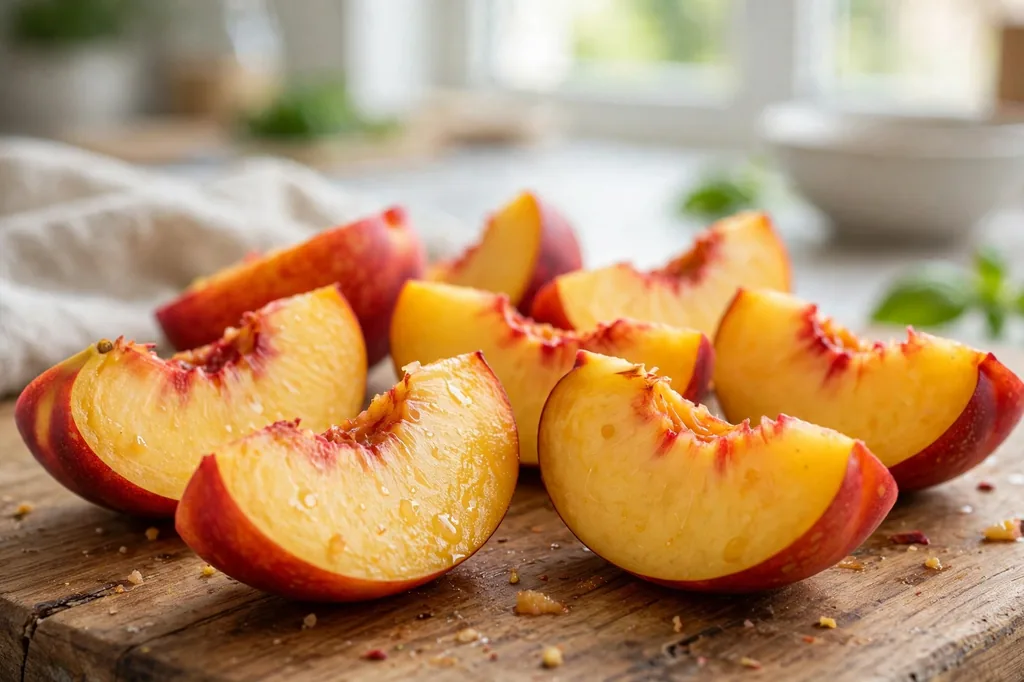
Yes, dogs can eat nectarines, and many dogs love them. A nectarine is essentially a smooth-skinned peach, and its flesh is soft, juicy, and sweet. Ripe nectarine flesh is easy to chew and digest, and it provides vitamin C, vitamin A, potassium, and fiber in a low-calorie package. A few small slices make a refreshing summer treat, and the natural sweetness makes nectarines a good high-value reward for training.
Sugar is the other thing to manage. Nectarines contain about 8 grams of natural sugar per 100 grams, which is moderate for a fruit but still enough to matter for a dog’s weight and blood sugar. A few slices are fine, but half a nectarine every day is too much for a small dog. Diabetic dogs should only eat nectarine if their vet approves it. Mango is a similar stone fruit treat with the same pit rule, and it is worth learning the same safe preparation for both fruits.
Nutritional Profile of Nectarines
| Nutrient (per 100g fresh nectarine) | Amount | Potential Benefit for Dogs |
|---|---|---|
| Vitamin C | 5 mg | Supports immune function and healthy skin |
| Potassium | 201 mg | Supports nerve and muscle function |
| Fiber | 1.7 g | Supports digestion and healthy stools |
| Vitamin A | 17 mcg | Supports vision and immune health |
| Niacin (B3) | 1 mg | Supports energy metabolism |
| Vitamin E | 0.8 mg | Antioxidant that supports cell health |
| Calcium | 6 mg | Supports bones and teeth in small amounts |
| Natural sugars | 8 g | Quick energy, but a reason to keep portions small |
Calories in Nectarines
A fresh nectarine contains roughly 44 calories per 100 grams, and a medium nectarine (about 140 grams) holds around 60 calories. A few slices, about 30 grams, contain only 13 calories, which fits easily inside the 10 percent treat rule. The calorie count is low enough for most dogs, but the sugar content means the portion still matters, especially for small or overweight dogs. Dried nectarines are a different story: they are far more concentrated in sugar and calories, so they should be avoided or offered only in a tiny amount.
Benefits of Feeding Nectarines to Dogs
Nectarines are a pleasant, hydrating fruit with several real benefits when served correctly, and their soft texture makes them easy for most dogs to enjoy.
1. Good Source of Vitamin C
Nectarines provide vitamin C, which supports immune function, healthy skin, and wound healing. Dogs make their own vitamin C, so they do not depend on fruit for it, but the extra amount in a nectarine slice is still a small bonus, especially for older dogs.
2. Hydrating Summer Treat
Nectarines are about 88 percent water, so they help keep a dog hydrated on a hot day. A few cool slices from the fridge make a refreshing treat after a walk, and the water content helps keep the calorie count low. Frozen nectarine slices can also be offered as a cooling chew in summer.
3. Fiber Supports Healthy Digestion
The fiber in nectarine flesh supports regular bowel movements and feeds beneficial gut bacteria. In small amounts this is a genuine benefit, although too much fruit fiber can loosen stools. Start with a couple of small pieces and see how your dog’s digestion responds.
4. Rich in Potassium
With 201 mg of potassium per 100 grams, nectarines are a good source of this mineral, which supports normal muscle and nerve function and helps regulate fluid balance. The amount in a few slices is modest, but it contributes to an overall varied diet.
5. Antioxidants Support Long-Term Health
Nectarines contain beta-carotene, lutein, and other plant antioxidants that help protect cells from damage. These compounds support eye health and immune function over the long term. The bright orange-yellow flesh is a visible sign of the carotenoids inside. Watermelon is another hydrating summer fruit that pairs well with nectarine in a seasonal fruit rotation for dogs.
Risks and Disadvantages

1. The Pit Is Toxic and a Blockage Risk
The pit is the most serious danger. It contains amygdalin, which can release cyanide when chewed, and its size and shape make it a choking hazard and a common cause of intestinal obstruction. A blocked intestine is a surgical emergency with symptoms including vomiting, loss of appetite, abdominal pain, and lethargy. Never give your dog a whole nectarine, and dispose of pits where your dog cannot reach them.
2. Too Much Sugar for Diabetic and Overweight Dogs
Nectarines are sweet, and regular large servings can contribute to weight gain and blood sugar spikes. Diabetic dogs should only eat nectarine with veterinary approval, and overweight dogs should get the smallest portions. Fruit sugar is natural, but it is still sugar, and a dog’s diet does not need it.
3. Upset Stomach From Too Much Fruit
The combination of fiber, sugar, and water in nectarines can cause gas, loose stools, or diarrhea if a dog eats too much, especially a dog that is not used to fruit. Introduce nectarine slowly, starting with one or two small pieces, and wait a day before offering more.
4. Pesticide Residue on the Skin
Nectarines are often sprayed, and their thin skin can carry pesticide residue. Always wash nectarines thoroughly under running water before serving. Peeling is another option, and it also removes the skin, which some dogs find hard to digest, although the skin itself is safe and contains fiber.
5. Canned Nectarines in Syrup Are Unsafe
Canned nectarines are usually packed in heavy syrup with a large amount of added sugar, and some contain preservatives. They are far too sweet for dogs and can cause stomach upset and weight gain. Only fresh nectarines, or nectarines canned in their own juice with no added sugar, are acceptable, and fresh is always better.
Can Dogs Eat Nectarine Pits?
No, never feed a nectarine pit to a dog. The pit contains amygdalin, which can release cyanide, and it is large enough to choke a dog or block the intestines. If your dog swallows a pit, do not wait for symptoms: contact your veterinarian immediately, since a blockage can become an emergency within hours. Your vet may advise monitoring, an X-ray, or inducing vomiting, depending on the size of the dog and the time since it was swallowed.
Can Dogs Eat Dried Nectarines?
Dried nectarines are best avoided. Drying concentrates the sugar and calories, so a small handful can contain as much sugar as several fresh nectarines. Many dried fruits also contain sulfites as preservatives, which can upset a dog’s stomach, and the chewy texture can stick to teeth. If you do offer a piece, make it a tiny one, and check the label for added sugar and sulfites first.
Can Dogs Eat Nectarine Skin?
Yes, the skin is safe as long as the fruit is washed well. Nectarine skin contains fiber and antioxidants, and most dogs digest it without trouble. Some dogs prefer the fruit peeled, because the skin can be slightly bitter or tough. If your dog has a sensitive stomach, peel the nectarine before serving. Either way, wash the fruit first to remove dirt and pesticide residue.
How Much Nectarine Can a Dog Eat?
Nectarine should be an occasional treat, offered a few times a week at most. These amounts are for fresh, ripe, pitted nectarine flesh, cut into small pieces.
| Dog Size | Weight | Maximum per Serving |
|---|---|---|
| Extra small | Under 5 kg | 1 small piece |
| Small | 5 to 10 kg | 2 to 3 small pieces |
| Medium | 10 to 25 kg | Quarter of a nectarine |
| Large | 25 to 40 kg | Half a nectarine |
| Giant | Over 40 kg | Half to three-quarters of a nectarine |
Can Puppies Eat Nectarines?
Yes, puppies can eat a tiny amount of ripe nectarine flesh once they are weaned and eating solid food. Offer one small piece, with the pit removed and the flesh cut into a soft, bite-sized chunk. The sugar and fiber can upset a puppy’s sensitive stomach, so start small and watch for loose stools. Never give a puppy a whole nectarine or a pit, since the choking risk is higher for small mouths.
How to Safely Feed Nectarines to Your Dog
Preparing a nectarine for a dog takes less than a minute, but removing the pit is the step that must never be skipped.
Ways to Serve Nectarines
- Fresh slices: Wash the fruit, cut the flesh away from the pit, and slice it into small bite-sized pieces.
- Peeled for sensitive stomachs: Peel the skin off if your dog has a delicate stomach or dislikes the texture.
- Frozen pieces: Freeze small pieces of flesh for a cool, refreshing summer treat.
- Mixed with plain yogurt: Stir a few pieces into plain unsweetened yogurt for a creamy treat, if your dog tolerates dairy.
- As a training reward: Use small cubes of ripe nectarine as a high-value reward during training sessions.
- Mashed into food: Mash a little ripe flesh and mix it into kibble to encourage a picky eater.
Nectarines vs. Other Stone Fruits for Dogs
| Fruit | Calories (per 100g) | Sugar (per 100g) | Verdict for Dogs |
|---|---|---|---|
| Nectarine | 44 | 8 g | Safe flesh only, pit removed |
| Peach | 39 | 8 g | Safe flesh only, pit removed |
| Plum | 46 | 10 g | Safe flesh only, pit removed |
| Mango | 60 | 14 g | Safe flesh only, pit removed |
| Cherries | 63 | 13 g | Risky; pits and stems toxic, avoid |
Nectarines sit comfortably in the middle of the stone fruit range, with less sugar than mango and cherries and a similar profile to peaches. Blueberries are a simpler fruit treat if you want to skip the pit problem entirely, since they have no pit to remove and are ready to serve as they are.
Frequently Asked Questions
Can dogs eat nectarines every day?
No, nectarines should not be an everyday food. They are sweet, and daily fruit can add unnecessary sugar and upset the balance of a complete dog food diet. Offer them a few times a week at most, in the small portions above.
What should I do if my dog ate a nectarine pit?
Contact your veterinarian immediately, even if your dog seems fine. A pit can cause choking, cyanide poisoning if chewed, or an intestinal blockage that may need surgery. Do not try to induce vomiting yourself unless your vet tells you to.
Are nectarines toxic to dogs?
The flesh is not toxic, but the pit contains amygdalin, which can release cyanide, and the leaves and stems of the tree are also toxic. Only the washed, pitted flesh should ever be fed to a dog.
Can dogs eat nectarines with diabetes?
Dogs with diabetes should only eat nectarines if their veterinarian approves. The natural sugar can raise blood sugar, so the portion must be very small and counted in the dog’s daily carbohydrate allowance.
Can dogs eat canned nectarines?
Only nectarines canned in their own juice with no added sugar are acceptable, and fresh is always better. Avoid nectarines in heavy syrup, which contain far too much added sugar for a dog.