

Can Dogs Eat Raisins?

No, dogs cannot eat raisins because raisins are toxic to dogs. Raisins are dried grapes, and both can trigger sudden kidney failure in dogs. Even a small handful has harmed some dogs, there is no known safe amount, and any dog that eats raisins needs veterinary care right away.
Key Takeaways
- Raisins are toxic to dogs, exactly like grapes, and no dog should ever be fed them on purpose.
- The poison can cause acute kidney failure, which can develop within 24 to 72 hours of eating raisins.
- There is no known safe dose, since some dogs fall ill after a few raisins while others eat more without obvious harm.
- Early warning signs include repeated vomiting, loss of appetite, and unusual tiredness within the first day.
- Golden raisins, sultanas, currants, raisin bread, trail mix, and oatmeal raisin cookies carry the same danger.
- If your dog eats any amount of raisins, call your veterinarian or an animal poison control service immediately, since fast treatment improves the outcome.
Can Dogs Eat Raisins?
No, dogs cannot eat raisins in any amount. Raisins are simply grapes with the water removed, and every form of grape is toxic to dogs. Published veterinary case reports in the early 2000s established this firmly, after dozens of dogs developed kidney failure from eating grapes or raisins.
The exact toxic substance has never been conclusively identified, although tartaric acid is currently considered a leading suspect. What veterinarians do know is that susceptibility varies wildly between individual dogs: some have eaten large amounts with no visible effect, while others have developed life threatening kidney injury after just a few raisins. Because no one can predict which group a particular dog falls into, there is no amount that can be considered safe.
Raisins deserve a place alongside the most serious food hazards for dogs. They are not a mild stomach upset risk like rich table scraps, but a potential kidney failure emergency. Our guide on whether dogs can eat onions explains how another common kitchen food becomes a toxin in a dog’s body.
Nutritional Profile of Raisins
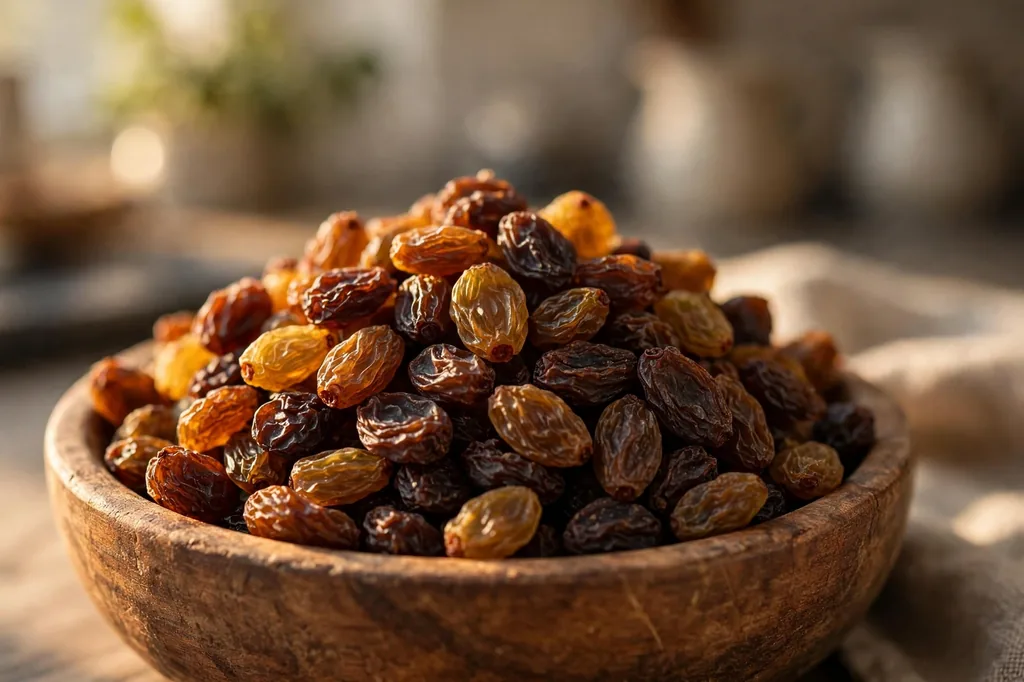
Raisins contain nutrients people value, but for dogs they are irrelevant, because the toxic effect comes along with them. Here is what raisins provide per 100 grams:
| Nutrient | Amount per 100g | Note for Dogs |
|---|---|---|
| Calories | 299 kcal | Dense energy, but never a safe energy source for a dog |
| Sugar | 59 g | Very high sugar that can upset a dog’s stomach and blood sugar |
| Fiber | 3.7 g | Dogs get fiber more safely from vegetables and complete dog food |
| Iron | 1.9 mg | Present in balanced amounts in any complete dog food |
| Potassium | 749 mg | High potassium can matter when kidneys are already struggling |
| Antioxidants (polyphenols) | Present | Human health claims do not apply when toxicity is involved |
| Unknown toxic compound | Present in every raisin | The dangerous part: it can trigger kidney failure |
Calories in Raisins
Raisins are calorie dense, with about 299 calories per 100 grams and roughly 20 calories per small snack box. Because drying removes water, raisins are more concentrated than fresh grapes, so a small handful carries a bigger dose of both sugar and the unknown toxic compound than the same number of fresh grapes.
Why Raisins Are So Dangerous for Dogs
Raisin poisoning combines a hidden toxin, an unpredictable dose, and damage to an organ the body cannot do without.
1. The Toxin Is Still a Mystery
Unlike chocolate, where theobromine is the known culprit, grapes and raisins poison dogs through a compound that has never been fully confirmed. Research has ruled out pesticides, heavy metals, and seeds as the explanation, and a 2021 study proposed tartaric acid, naturally abundant in grapes, as the leading theory. Because the toxin is unidentified, no variety of raisin can be called safe.
2. The Dangerous Dose Cannot Be Predicted
This is the most important fact about raisins. Published case reports describe dogs becoming seriously ill after eating only a few grapes or raisins, while other dogs have eaten much larger amounts without developing symptoms. Sensitivity does not follow a tidy rule based on breed, age, or weight, so every ingestion is treated as potentially dangerous.
3. The Kidneys Take the Damage
In affected dogs, the toxin damages the kidney’s filtering tubules, a condition called acute tubular necrosis. Once the kidneys can no longer filter waste from the blood, the dog can progress from producing less urine to producing none at all. Kidney failure can be fatal and is far harder to reverse than the stomach upset that comes first.
4. All Raisin Products Are Included
Drying, baking, and cooking do not make raisins safe. Golden raisins, sultanas, currants, raisin bran, oatmeal raisin cookies, raisin bread, and trail mix all carry the same risk, often with extra hazards such as chocolate, xylitol sweetener, or macadamia nuts mixed in. Nothing derived from the grape plant should be offered to a dog.
Signs of Raisin Poisoning in Dogs

Symptoms typically begin within 6 to 24 hours and can progress over one to three days. Early treatment is much more effective, so watch for this sequence.
1. Repeated Vomiting and Diarrhea
The first sign is usually repeated vomiting, sometimes containing pieces of raisins, followed by diarrhea and abdominal pain. If you know or suspect your dog ate raisins, do not write this off as a passing tummy ache, because these early signs are the window when decontamination treatment works best.
2. Loss of Appetite, Lethargy, and Weakness
As the hours pass, the dog often stops eating and drinking and becomes unusually tired, weak, or unsteady. A dog that was playful in the morning and flat by the evening after a suspected raisin exposure needs urgent assessment, not a wait and see approach.
3. Reduced or Absent Urination
The most serious stage shows when the dog produces much less urine than normal, or stops urinating entirely, while becoming dehydrated. At this point the kidneys are failing, and the situation is an emergency. Dogs that reach this stage may need days of intensive hospital care.
What to Do If Your Dog Eats Raisins
Act immediately, even if your dog looks fine and even if the amount seems small. Early action gives your veterinarian the best chance of preventing kidney damage.
1. Call Your Vet or Poison Control Right Away
Phone your veterinarian or an animal poison control service as soon as you discover the ingestion, and have this information ready: your dog’s weight, what was eaten, roughly how much, and when. Do not wait for symptoms, since vomiting usually means the toxin is already being absorbed. Our article on whether dogs can eat avocado walks through the same call the vet first logic for a different food hazard.
2. Do Not Induce Vomiting Unless Told To
Inducing vomiting at home is not always safe: it is risky if too much time has passed, if the dog is already lethargic, or if the product contained other ingredients. Your veterinarian may induce vomiting at the clinic within the first couple of hours, or use activated charcoal to limit absorption. Let a professional decide.
3. Expect Hospital Monitoring and Bloodwork
Your vet will typically check kidney values such as BUN and creatinine, and may start intravenous fluids for 48 hours or more while urine output is monitored. Bloodwork may be repeated for several days because kidney values can keep rising before they improve. With prompt, aggressive care, many dogs recover fully, which is why speed matters so much.
Are Raisin Bread, Oatmeal Raisin Cookies, and Trail Mix Safe for Dogs?
No, none of these are safe for dogs. Baking does not destroy the grape toxin, so a slice of raisin bread or an oatmeal raisin cookie carries the same risk as plain raisins. Trail mix is even more worrying, because it often combines raisins with other dog hazards such as chocolate chips or macadamia nuts. If your dog steals one of these snacks, report the whole product to your vet, not just the raisins.
Are Currants and Sultanas Dangerous Too?
Yes, currants and sultanas are just as dangerous as raisins. True currants are dried small grapes, and sultanas are dried seedless grapes, so they belong to the same toxic plant family. Any dried grape product, whatever the label calls it, should be kept away from dogs.
How Many Raisins Can a Dog Eat Safely?
Zero. There is no safe number of raisins for any dog, because no reliable safe dose has ever been established. The table below shows why guessing is so risky, using amounts that have appeared in published poisoning reports as context, not as safe thresholds:
| Dog Size | Example Weight | Why Amount Does Not Matter |
|---|---|---|
| Small (under 10 kg) | Chihuahua, Yorkie | Reports describe illness after just a handful of grapes or raisins |
| Medium (10-25 kg) | Beagle, Cocker Spaniel | Some medium dogs fell ill while larger ones stayed well |
| Large (over 25 kg) | Labrador, German Shepherd | Even large dogs have developed kidney failure after raisin exposure |
If a treat rule helps you remember it, think of raisins like medications: the dose that is harmless in one individual can hospitalize another, so the only safe policy is none at all.
Can Puppies Eat Raisins?
No, puppies cannot eat raisins, and they may be at even greater risk than adult dogs. A puppy’s kidneys are still developing, and its small body weight means a few raisins represent a larger exposure than the same amount in an adult dog. Keep lunchboxes, snack drawers, and baking supplies with raisins well out of a puppy’s reach.
How to Keep Your Dog Safe Around Raisins
There is no safe way to feed raisins to a dog, so safety means prevention:
- Store raisins, trail mix, and raisin baked goods in sealed containers on high shelves, never in low bowls or open bags.
- Check ingredient labels on granola bars and baked goods before sharing any human snack with your dog.
- Warn children and guests never to toss raisins to the dog.
- Clean up dropped raisins immediately after baking or snacking.
- For a sweet fruit treat instead, choose a genuinely safe fruit like banana: our guide on whether dogs can eat bananas covers safe portions and preparation.
Raisins vs. Other Dried Fruits for Dogs
Not all dried fruits share the raisin risk:
| Dried Fruit | Safe for Dogs? | Notes |
|---|---|---|
| Raisins | No, toxic | Can cause kidney failure; no safe amount |
| Grapes | No, toxic | Same plant, same danger as raisins |
| Currants and sultanas | No, toxic | Dried grape products with the same risk |
| Dried cranberries | Usually okay in tiny amounts | Plain only; avoid sweetened versions |
| Banana chips | Okay in moderation | Choose unsweetened, and watch the calorie count |
Frequently Asked Questions
Will one raisin kill my dog?
One raisin is unlikely to be fatal, but it is still a poisoning risk that deserves a call to your vet. The dangerous dose is unpredictable, so veterinarians treat even a single raisin as worth assessing, especially in a small dog.
How long after eating raisins will a dog get sick?
Vomiting and diarrhea often start within 6 to 24 hours, and signs of kidney trouble such as reduced urination can follow within 24 to 72 hours. Do not wait for symptoms before calling your vet, since treatment works best when it starts early.
My dog ate raisins yesterday and seems fine. Is he okay?
Not necessarily, since kidney damage can develop quietly over days. Call your veterinarian, explain the timing and amount, and let them decide whether bloodwork or monitoring is needed.
Can dogs eat cooked raisins in bread or cookies?
No, cooking and baking do not destroy the toxin in raisins. Raisin bread, oatmeal raisin cookies, and similar baked goods are just as dangerous as plain raisins.
Do dogs recover from raisin poisoning?
Many dogs recover fully when treatment starts quickly, typically with induced vomiting, activated charcoal, and intravenous fluids while kidney values are monitored. Dogs that already show signs of kidney failure have a less certain outcome, which is why speed matters.