Can Dogs Eat Raw Bacon?

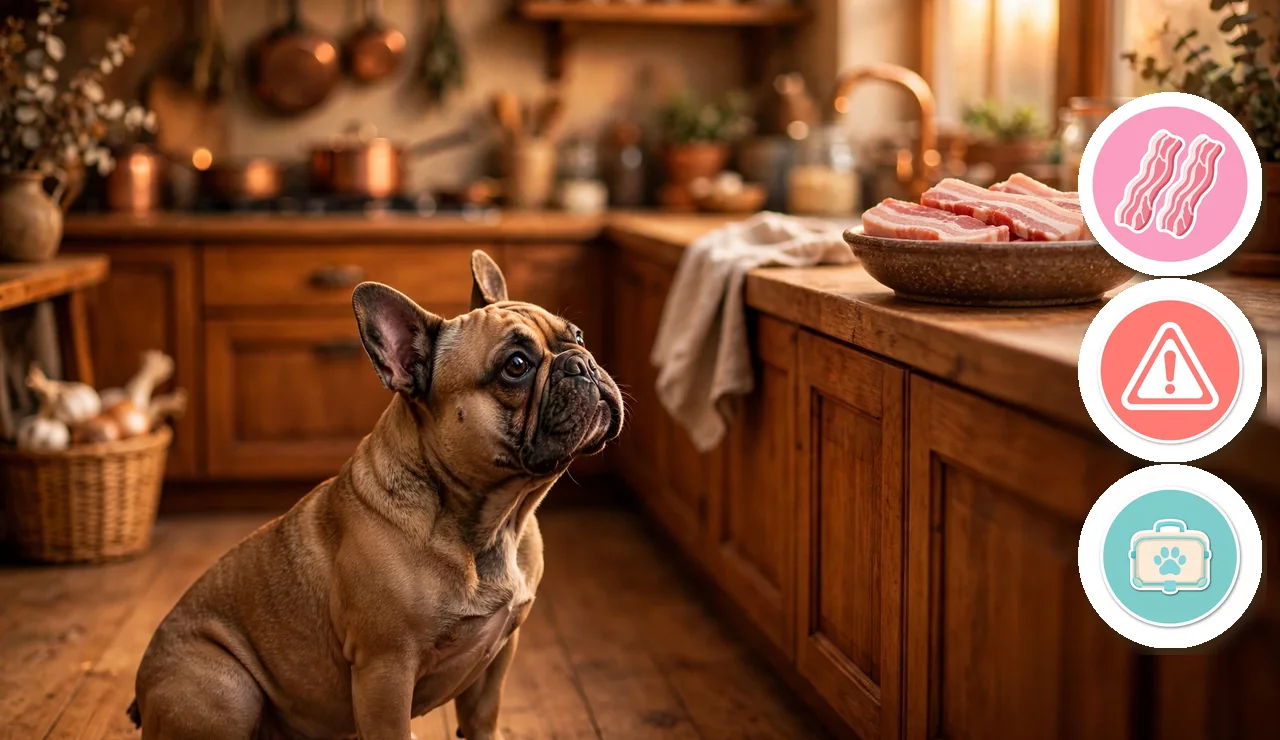
Quick Answer: No, dogs should never eat raw bacon. Raw pork carries risks of bacterial contamination (Salmonella, Listeria, Yersinia) and parasites including Trichinella. On top of that, bacon’s extreme fat and sodium content can trigger pancreatitis and salt-related illness even when cooked. Bacon, raw or cooked, has no place in a dog’s diet.
Key Takeaways
- Raw bacon is unsafe: bacterial contamination and parasite risks (including trichinosis).
- Bacon is 40–50% fat, rich fatty foods can trigger pancreatitis, a painful and potentially fatal condition.
- Bacon is extremely high in sodium; excess salt can cause sodium ion poisoning.
- Cooked bacon is not a safe alternative, the fat and salt dangers remain after cooking.
- Cured bacon may contain nitrates/nitrites and seasonings (garlic, pepper) harmful to dogs.
- If your dog eats raw bacon, monitor for vomiting, diarrhea, and lethargy, and call your vet.
Can Dogs Eat Raw Bacon?
No. Raw bacon combines two separate categories of danger. First, it is raw pork, which can harbor Salmonella, Listeria, Yersinia enterocolitica, and the Trichinella parasite that causes trichinosis, a painful muscle infection. Modern commercial pork has lower trichinosis rates than in the past, but the risk is not zero, and bacterial contamination of raw pork remains common.
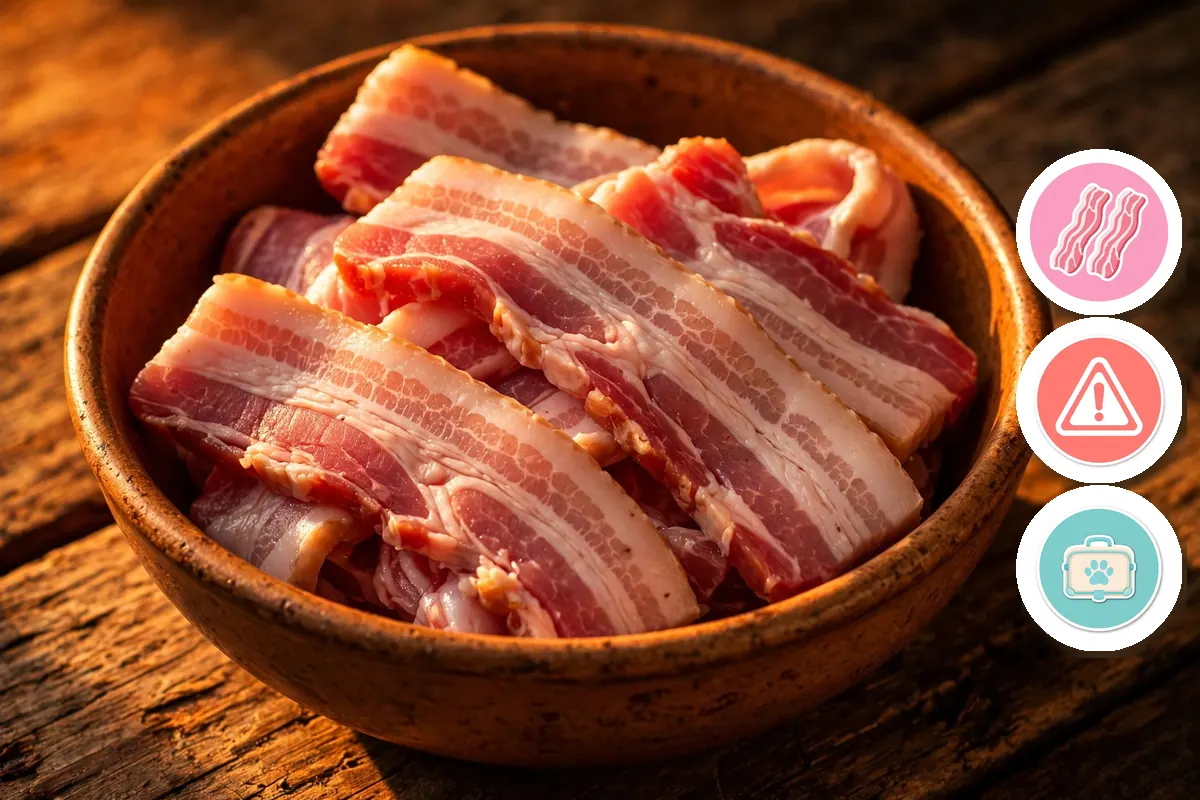
Second, bacon is bacon: even ignoring the “raw” problem, bacon is one of the fattiest, saltiest foods in the human diet. A single strip can contain 3–4 grams of fat and 150–200 mg of sodium. In dogs, a sudden load of rich fat can trigger pancreatitis, inflammation of the pancreas causing severe abdominal pain, vomiting, and potentially death. Small dogs are especially vulnerable; a single strip of bacon is a massive fat dose for a 10-pound dog.
Cooking the bacon eliminates the bacterial and parasite risks but does nothing about the fat and sodium. That is why the answer is “no” to bacon in general, with raw bacon being the worst version of an already bad idea.
Nutritional Profile of Bacon
| Nutrient (per 100g raw bacon) | Approximate Amount | Note for Dogs |
|---|---|---|
| Fat | 40–50 g | Extreme, pancreatitis risk |
| Sodium | 1,700 mg | Dangerously high |
| Protein | 12 g | Not worth the fat/salt load |
| Nitrates/nitrites | Varies (cured bacon) | Can be harmful in quantity |
Calories in Bacon
Bacon contains roughly 400–540 calories per 100g, extraordinarily calorie-dense. A single strip (about 8g) is 35–45 calories of almost pure fat and salt. For a small dog needing 300–400 calories per day, one strip can exceed 10% of daily calories in the worst possible nutritional form.
Risks of Raw Bacon for Dogs
1. Bacterial Contamination
Raw pork frequently carries Salmonella, Listeria, and Yersinia. Dogs can develop vomiting, diarrhea, and fever, and can shed bacteria to the household.
2. Trichinosis
The Trichinella parasite in undercooked pork causes muscle pain, swelling, fever, and digestive upset. Rare in commercial pork today, but the consequence is severe.
3. Pancreatitis
The headline risk. High-fat foods trigger pancreatic inflammation: severe abdominal pain (often a “praying” hunched posture), repeated vomiting, lethargy, and loss of appetite. Severe cases are fatal.
4. Sodium Ion Poisoning
Bacon’s salt load can cause excessive thirst, vomiting, tremors, and in extreme cases seizures, especially in small dogs.
5. Nitrates and Seasonings
Cured bacon contains nitrates/nitrites; flavored bacons may include garlic, black pepper, maple sugar, or chili, all inappropriate for dogs.
6. Gastrointestinal Upset
Even without the severe outcomes, rich fatty bacon commonly causes vomiting and diarrhea.
Is Cooked Bacon Safe for Dogs?
Not really. Cooking kills the bacteria and parasites, but a cooked strip is still a concentrated dose of fat and salt. Many owners share “just one small piece”, but for a small dog, that piece is proportionally enormous, and pancreatitis has been triggered by single strips. If you want to share pork, offer a small piece of plain cooked pork loin (a lean cut) instead.
What About Turkey Bacon?
Turkey bacon is leaner but still highly processed, salty, and seasoned. It is not a safe alternative. The same applies to “dog bacon” flavored treats, those are fine because they are formulated for dogs, but actual turkey bacon is not. As you plan dog-friendly treats, find out whether shrimp is safe for dogs. You might also want to know can dogs eat swiss cheese. Many owners also wonder can dogs eat cheddar cheese before sharing snacks.
How Much Bacon Is Dangerous?
There is no safe serving to recommend. Pancreatitis risk depends on the individual dog, some dogs tolerate a strip without obvious issue, while others develop pancreatitis from a single piece. Because you cannot predict which dog will react, the only safe amount is none. If your dog eats raw bacon, the bacterial risk adds urgency: call your vet, especially for puppies, seniors, or small dogs.
Can Puppies Eat Bacon?
No. Puppies are more vulnerable to both the bacterial risks of raw pork and the pancreatitis risk from fat. Never feed bacon to puppies.
How to Safely Share Pork With Your Dog
Ways to Serve (Lean Pork Only, Never Bacon)
- Choose lean cuts: pork loin or tenderloin, trimmed of all visible fat.
- Cook to 145°F internal temperature with a rest time; no seasoning, oil, or marinades.
- Cut into small bite-sized pieces appropriate for your dog’s size.
- Serve as an occasional topper, not a dietary staple.
- Never feed raw pork, bacon, ham, sausage, or pepperoni.
Bacon vs. Safer Protein Treats
| Option | Safety | Notes |
|---|---|---|
| Raw bacon | Dangerous | Bacteria, parasites, fat, salt |
| Cooked bacon | Avoid | Fat and sodium remain dangerous |
| Plain cooked pork loin | Safe in moderation | Lean cut, fully cooked, unseasoned |
| Plain cooked chicken breast | Safe | Lean, gentle, widely tolerated |
| Commercial dog treats | Safe | Formulated for canine nutrition |
Frequently Asked Questions
Can dogs eat bacon grease?
No, bacon grease is concentrated fat and salt, essentially the worst part of bacon. It is a classic pancreatitis trigger. Never pour it over dog food.
My dog ate raw bacon. What should I do?
Call your veterinarian. Monitor for vomiting, diarrhea, abdominal pain, and lethargy over the next 24–72 hours. Your vet may recommend monitoring or an exam depending on the amount and your dog’s size.
Can dogs eat bacon bits?
No. Commercial bacon bits are extremely salty and often contain onion/garlic powder and artificial flavors.
Is pancetta or prosciutto safe for dogs?
No. These are cured, salty pork products with the same fat and sodium problems as bacon, prosciutto is even saltier.
Can dogs eat ham instead?
Ham is also very high in sodium and fat and is not recommended. Plain cooked lean pork is the only pork worth sharing.
Why do so many people feed dogs bacon without problems?
Many dogs tolerate small amounts without visible illness, but pancreatitis is unpredictable and can be triggered by a single fatty meal. “Seemed fine” is not the same as safe.