

Can Dogs Eat Raw Chicken?

No, dogs should not eat raw chicken. Raw chicken frequently carries Salmonella and Campylobacter bacteria, which can make your dog seriously ill and can spread to people through handling, bowls, and licking. Cooked boneless skinless chicken keeps all the protein with none of the bacterial risk. If your dog already grabbed raw chicken, watch for vomiting, diarrhea, or fever and call your vet.
Key Takeaways
- Raw chicken is not recommended for dogs because of Salmonella and Campylobacter contamination.
- Cooked boneless skinless chicken is the safe way to feed chicken to dogs.
- Raw chicken bones splinter less than cooked bones but still carry bacterial and obstruction risks.
- Raw feeding also puts children, seniors, and immunocompromised people in the household at risk.
- The AVMA and FDA advise against raw meat diets for pets.
- If your dog eats raw chicken, monitor for digestive upset and contact your vet.
- Never feed chicken cooked with garlic, onion, or heavy seasoning to dogs.
Can Dogs Eat Raw Chicken?
Raw chicken is one of the most asked about proteins and one of the clearest answers: no, your dog should not eat it. Chicken is one of the healthiest meats a dog can eat when cooked, but raw poultry is a well documented source of bacterial contamination. Studies of retail chicken routinely find Salmonella or Campylobacter on a significant share of samples, and those bacteria sicken dogs as well as people.
Dogs resist some foodborne bacteria better than people, but that resistance is partial, not absolute. Puppies, seniors, sick dogs, and dogs on certain medications have weaker defenses, and even healthy dogs can shed Salmonella in stool and saliva without obvious symptoms. The guidance from the American Veterinary Medical Association (AVMA) and the U.S. Food and Drug Administration (FDA) is consistent: both advise against feeding raw meat diets to pets. Feed chicken cooked, plain, boneless, and skinless, and your dog gets the nutrition without the gamble.
Nutritional Profile of Raw Chicken
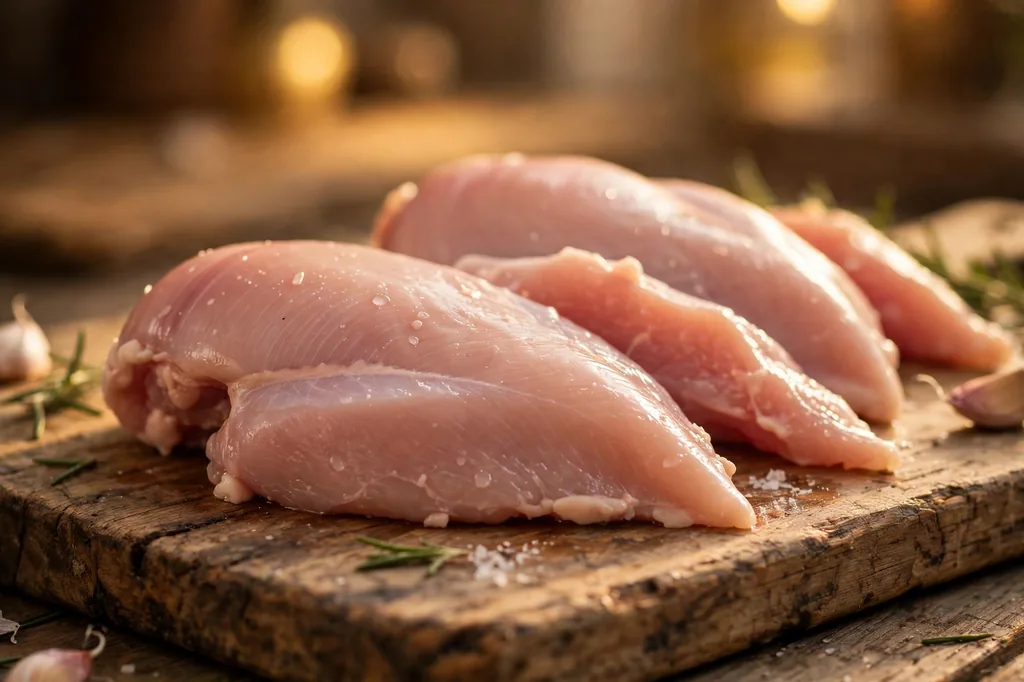
Chicken breast is lean and protein rich. The good news is that cooking preserves most of these nutrients, so your dog gets the same benefits from cooked chicken without the bacterial risk. Values below are per 100 grams of raw skinless chicken breast, based on USDA data.
| Nutrient | Amount per 100g | Benefit for Dogs |
|---|---|---|
| Protein | 23.1 g | Builds and repairs muscle, skin, and coat |
| Fat | 2.6 g | Low fat content suits most dogs |
| Niacin (B3) | 13.7 mg | Supports energy metabolism and skin health |
| Vitamin B6 | 0.6 mg | Helps protein metabolism and immune function |
| Phosphorus | 228 mg | Works with calcium to maintain bones and teeth |
| Potassium | 334 mg | Supports heart and muscle function |
| Selenium | 24.2 mcg | Antioxidant that supports thyroid function |
| Sodium | 73 mg | Naturally low, safe for most dogs |
Calories in Raw Chicken
Raw skinless chicken breast has about 120 calories per 100 grams (3.5 ounces), making it one of the leaner animal proteins. Thighs with skin run closer to 180 to 200 calories per 100 grams, so breast is the better pick for most dogs. Keep chicken under 10 percent of daily calories: for a medium dog eating about 800 calories a day, that is roughly 65 grams of cooked chicken breast. Cooking barely changes the calorie count, so switching from raw to cooked costs your dog nothing nutritionally.
Benefits of Feeding Chicken to Dogs
Chicken itself is excellent for dogs, and every benefit below applies to cooked chicken, which is why serving it raw is never necessary.
1. High Quality Complete Protein
Chicken provides all the essential amino acids dogs need for muscle maintenance, tissue repair, and a healthy coat. It is highly digestible, so most dogs, including those with sensitive stomachs, handle plain cooked chicken well.
2. Low in Fat
Skinless chicken breast has only about 2.6 grams of fat per 100 grams, making it a smart protein for overweight dogs or dogs prone to pancreatitis, where fatty meals can trigger dangerous flare ups.
3. Rich in Niacin and B Vitamins
Chicken supplies niacin (vitamin B3) and vitamin B6, which support energy metabolism, healthy skin, protein metabolism, and immune function.
4. Selenium and Phosphorus
Selenium acts as an antioxidant that supports immune defense and thyroid function, while phosphorus works with calcium to keep bones and teeth strong.
5. Gentle on Digestion
Plain cooked chicken with white rice is the classic veterinary bland diet for settling upset stomachs. Cooked chicken is already easy to digest, which removes any argument for feeding it raw.
Risks and Disadvantages of Raw Chicken
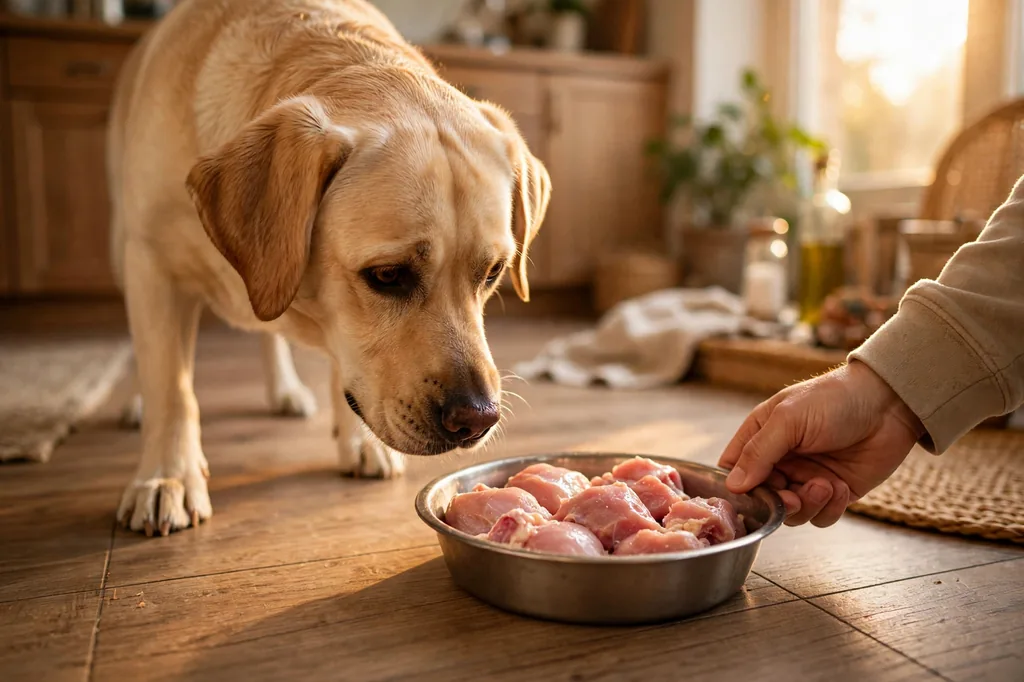
1. Salmonella Infection
Salmonella can cause fever, vomiting, diarrhea (sometimes bloody), lethargy, and appetite loss in dogs. Some infected dogs show no symptoms yet shed the bacteria in their stool, exposing the whole household. The standard your own meals get should apply here too: cooking destroys these pathogens, which is why only cooked shrimp is safe to share with your dog.
2. Campylobacter Infection
Campylobacter is even more common on retail chicken than Salmonella and is a leading cause of bacterial diarrhea in dogs and people. Symptoms include watery or bloody diarrhea, cramping, and fever, and it hits puppies and older dogs hardest.
3. Raw Bone Hazards
Raw chicken bones are softer and less likely to splinter than cooked bones, but they are not safe. They still carry bacterial contamination and can cause choking, tooth fractures, or intestinal blockages, especially in dogs that gulp.
4. Cross Contamination in Your Home
Raw feeding spreads bacteria to cutting boards, bowls, floors, your dog’s fur, and saliva. Children, elderly family members, and anyone with a weakened immune system face real risk from this indirect exposure.
5. Nutritional Imbalance in Raw Diets
Homemade raw chicken diets often deliver imbalanced calcium to phosphorus ratios and missing micronutrients, because plain muscle meat is not a complete diet. Raw foods of all kinds deserve the same caution, which also applies to ingredients with their own hidden hazards, such as wild mushrooms.
6. High Fat Parts and Spoilage
Raw skin and dark meat add excess fat that can trigger pancreatitis in susceptible dogs, and raw meat can harbor parasites and spoilage organisms that cooking destroys. Cooked chicken avoids all of these problems at once.
Can Dogs Eat Raw Chicken Bones?
No, raw chicken bones are not safe for dogs, even though they are less likely to splinter than cooked bones. Cooking makes bones brittle and prone to sharp splinters, while raw bones are softer, but softer does not mean safe: they still carry Salmonella and Campylobacter, can break teeth, and a gulped piece can lodge in the throat or block the intestines. If you want your dog to enjoy chewing, choose a size appropriate chew under direct supervision instead.
Can Dogs Eat Raw Chicken Skin?
No, dogs should not eat raw chicken skin. Skin is the fattiest part of the chicken, and a fatty meal can trigger pancreatitis, a painful and potentially life threatening inflammation of the pancreas. Raw skin carries the same bacterial load as raw meat. Always remove the skin before serving chicken to your dog.
Can Dogs Eat Raw Chicken Necks or Feet?
Raw chicken necks and feet are not recommended for dogs, despite their popularity in raw feeding circles. The bacterial contamination risk, choking hazard, and obstruction risk apply to these parts just as they do to any raw chicken. If joint support is your goal, ask your vet about a proven joint supplement instead.
How Much Chicken Can a Dog Eat?
These portions refer to cooked, plain, boneless, skinless chicken, the only form you should feed. Raw chicken has no safe serving size, because the risk comes from contamination, not quantity. Highly processed meats bring their own problems too, which is why a food like corned beef is a poor choice compared with plain cooked chicken.
| Dog Size | Weight | Daily Chicken Treat Amount |
|---|---|---|
| Extra small | Under 10 lbs | 1 to 2 tablespoons, finely chopped |
| Small | 10 to 25 lbs | 2 to 4 tablespoons |
| Medium | 25 to 60 lbs | 1/4 to 1/2 cup, diced |
| Large | 60 to 90 lbs | 1/2 to 3/4 cup, diced |
| Giant | Over 90 lbs | 3/4 to 1 cup, diced |
Can Puppies Eat Raw Chicken?
No, puppies should never eat raw chicken. Puppies have immature immune systems and are more vulnerable to Salmonella and Campylobacter than adult dogs, so an infection an adult might shake off can hospitalize a puppy. Small amounts of plain cooked chicken are fine as training treats, but raw chicken is off the table. If your puppy grabs raw chicken, call your vet right away.
How to Safely Feed Chicken to Your Dog
The safe version of chicken takes almost no effort: cook it plain and serve it simply.
Ways to Serve
- Boil, bake, or grill boneless skinless chicken breast with no oil, butter, or seasoning.
- Cook to an internal temperature of 165°F (74°C) to kill Salmonella and Campylobacter.
- Remove all skin and bones before serving.
- Dice or shred the meat into bite size pieces for your dog’s size.
- Never use garlic, onion, salt blends, or marinades, which are unsafe for dogs.
- Wash your hands, utensils, and bowls after handling any raw chicken.
Raw Chicken vs. Cooked Chicken vs. Other Proteins
| Option | Safety for Dogs | Key Downside |
|---|---|---|
| Raw chicken | Not recommended | Salmonella and Campylobacter risk |
| Cooked chicken (plain) | Safe | None when boneless and skinless |
| Cooked turkey breast | Safe | Must be plain, no seasoned skin |
| Cooked salmon | Safe in moderation | Bones must be removed carefully |
Frequently Asked Questions
What should I do if my dog ate raw chicken?
Watch your dog closely for 24 to 48 hours. Most healthy adult dogs that eat a small amount show no symptoms, but call your vet if you see vomiting, diarrhea, bloody stool, fever, lethargy, or appetite loss. Wash the bowl, any surfaces the chicken touched, and your hands after handling your dog.
Can dogs eat raw chicken thighs?
No, raw chicken thighs are not safe for dogs. Thighs carry the same Salmonella and Campylobacter risk as any raw chicken, plus more fat than breast meat. Cooked, deboned, skinless thigh meat is acceptable in moderation, but raw is not recommended.
Does freezing raw chicken kill Salmonella?
No, freezing does not kill Salmonella or Campylobacter. Freezing pauses bacterial growth, but the bacteria survive and become active again after thawing. Only cooking to 165°F (74°C) reliably destroys these pathogens. This is a common myth in raw feeding discussions.
Can dogs eat cooked chicken bones?
No, never give your dog cooked chicken bones. Cooking makes bones brittle, so they splinter into sharp fragments that can cut the mouth, throat, or intestines. If your dog swallows a cooked bone, call your vet and watch for choking, vomiting, or abdominal pain.
Is a raw chicken based diet healthy for dogs?
No, a raw chicken based diet is not considered safe or complete by veterinary authorities. Beyond the bacterial risk, homemade raw diets are frequently nutritionally imbalanced. The AVMA and FDA advise against raw meat diets for pets. A quality commercial food with occasional cooked chicken as a topper gives safer, better nutrition.
Can dogs eat raw chicken liver?
Raw chicken liver is not recommended, for the same bacterial reasons as raw chicken meat. Liver is nutritious when cooked, rich in vitamin A, iron, and B vitamins, but vitamin A can build up to toxic levels, so keep liver under 5 percent of the diet. Serve it cooked, plain, and in small amounts.