Can Dogs Eat Refried Beans?

Quick Answer: No, dogs should not eat refried beans. While the base bean, usually pinto or black beans, is not the problem, refried beans as a dish are almost always prepared with lard or oil, garlic, onion, and a significant amount of salt and spices such as cumin or chili powder. This combination introduces genuinely toxic ingredients along with a high fat and sodium load, neither of which is good for a dog. A small, accidental bite from a plate is unlikely to cause serious harm to most healthy adult dogs, but refried beans should never be intentionally shared.
Key Takeaways
- Refried beans are not safe for dogs due to the garlic, onion, lard or oil, and salt typically used in their preparation.
- Garlic and onion can damage red blood cells and cause a condition called hemolytic anemia, with effects that can be cumulative over repeated exposure.
- The high fat content in refried beans, especially versions made with lard, can trigger pancreatitis.
- Symptoms of different concerns appear on different timelines: digestive upset within 4 to 12 hours, onion or garlic toxicity within 1 to 3 days, and pancreatitis within 24 to 48 hours.
- Canned refried beans generally contain fewer of these risky ingredients than a homemade or restaurant version, but they are still high in sodium and not a safe regular food.
- If a dog eats a significant amount of refried beans, contact a veterinarian promptly rather than waiting for symptoms to appear.
Can Dogs Eat Refried Beans?
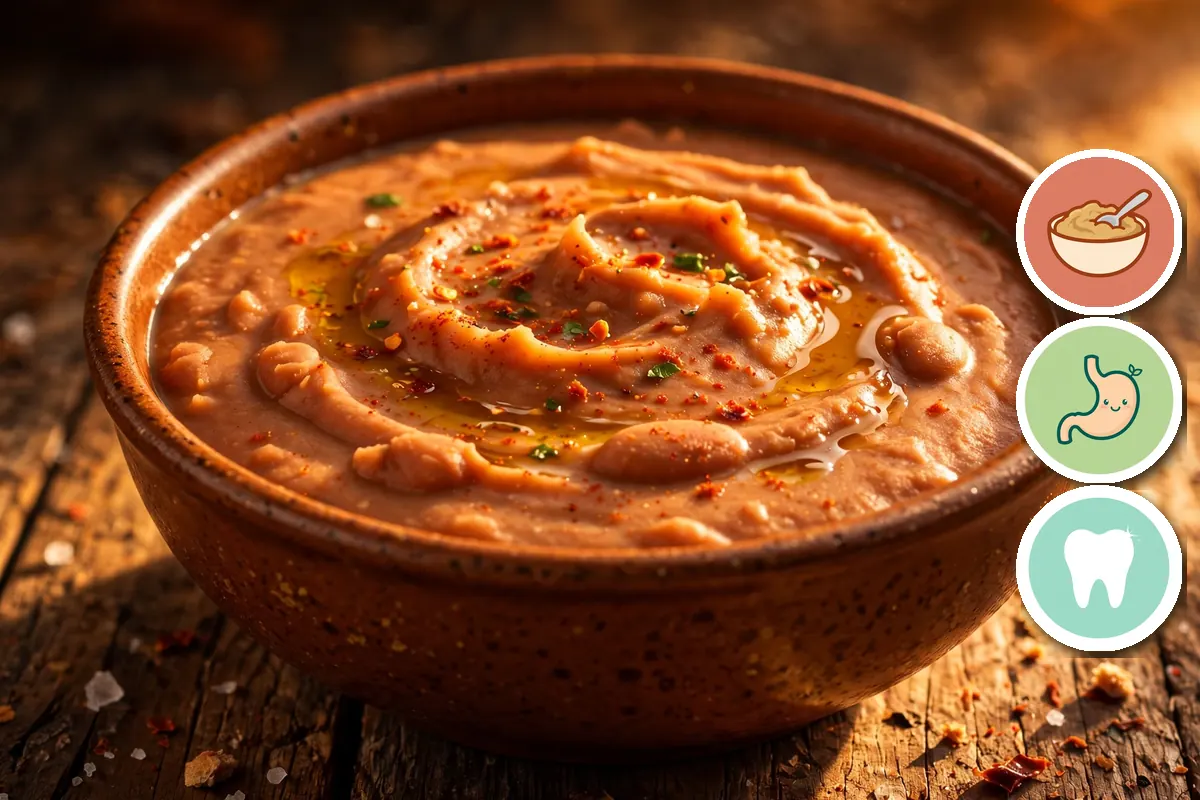
No, refried beans are not a food that should be shared with a dog. This can be a little confusing, since plain, properly cooked beans like pinto or black beans are actually fine for dogs in small amounts. The issue with refried beans has nothing to do with the base legume and everything to do with how the dish is prepared. Refried beans are made by mashing cooked beans and cooking them a second time with fat, traditionally lard, along with garlic, onion, and seasonings like cumin, chili powder, or paprika.
This preparation transforms a genuinely dog-friendly ingredient into a dish that combines several separate risks at once: toxic allium vegetables, a high fat load, and often a significant amount of sodium. A dog that steals a small spoonful off a plate is unlikely to be seriously harmed by that single incident, but refried beans offer no benefit that would make this worth doing intentionally.
Why Refried Beans Are Risky: Breaking Down Each Ingredient
1. Garlic and Onion
Most refried bean recipes include garlic, onion, or both. These vegetables contain thiosulfate compounds that a dog’s body cannot properly metabolize, and these compounds can damage red blood cells, potentially leading to a condition called hemolytic anemia. The effects of allium toxicity can be cumulative, meaning repeated small exposures over time can add up, and symptoms may not appear immediately, sometimes taking a few days to become apparent.
2. Lard or Cooking Oil
Refried beans are typically fried in lard or a significant amount of oil to achieve their rich, creamy texture. This high fat content is a well-documented trigger for pancreatitis, a painful and potentially life-threatening inflammation of the pancreas, particularly when a dog eats a meaningful amount in one sitting.
3. Salt and Sodium
Refried beans, especially canned versions, often contain a notable amount of added salt. Excess sodium intake can lead to increased thirst and urination, and in more severe cases, can contribute to dehydration or, with a large enough amount, sodium poisoning.
4. Spices Like Cumin, Chili Powder, and Paprika
While generally less dangerous than garlic or onion, these spices can still irritate a dog’s digestive system and are not necessary or beneficial in any way for a dog’s diet.
5. Preservatives in Canned Versions
Canned refried beans may contain preservatives or artificial additives that, while not acutely toxic, offer no benefit and can be harder for a dog to digest than a simple, plain bean.
Advantages vs. Disadvantages at a Glance
| Advantages | Disadvantages |
|---|---|
| Made from a base bean that is otherwise dog-friendly when plain | Garlic and onion can cause hemolytic anemia |
| High fat content from lard or oil is a pancreatitis risk | |
| High sodium content, especially in canned versions | |
| Spices like cumin and chili powder can irritate digestion | |
| Preservatives in canned versions offer no benefit | |
| Offers no meaningful advantage over plain, home-cooked beans |
Symptom Timeline: What to Expect and When
One of the more important things to understand about refried beans is that different ingredients cause problems on different timelines, which is part of why monitoring for a couple of days matters more than it might for a simpler food.
| Concern | Typical Onset |
|---|---|
| General digestive upset (vomiting, diarrhea) | About 4 to 12 hours after eating |
| Onion or garlic toxicity | Can take 1 to 3 days to become apparent |
| Pancreatitis symptoms | Often emerge within 24 to 48 hours |
Because onion and garlic toxicity in particular can be delayed, a dog that seems fine the day after eating refried beans is not necessarily in the clear, which is why monitoring for two to three days after a significant ingestion is a reasonable precaution.
What to Do If Your Dog Eats Refried Beans
- Determine roughly how much was eaten and whether the recipe or product contained garlic, onion, or a large amount of fat.
- For a very small amount, such as a single bite from a plate, monitor the dog closely and offer plenty of fresh water.
- For a larger amount, or if garlic or onion was clearly used in the recipe, contact a veterinarian or an emergency animal hospital promptly rather than waiting for symptoms to appear.
- Do not attempt to induce vomiting unless specifically instructed by a veterinarian, since this is generally only effective within one to two hours of ingestion and is not appropriate in every situation.
- Watch for vomiting, diarrhea, lethargy, or abdominal pain over the following 24 to 48 hours, and continue monitoring for a few days given the potential delay in onion or garlic-related symptoms.
- Seek emergency care immediately if the dog shows difficulty breathing, tremors, collapse, pale gums, or repeated vomiting that will not stop.
Are Canned Refried Beans Any Safer Than Homemade or Restaurant Versions?
Somewhat, but not enough to make them a safe regular choice. Canned refried beans, particularly plain or “vegetarian” varieties, often contain lower levels of garlic and onion than a homemade or restaurant preparation, and some are made without lard. However, canned versions still typically carry a significant amount of sodium, and “fat-free” or vegetarian labeling does not guarantee the product is free of every ingredient of concern. If a dog has accidentally eaten a small amount of plain canned refried beans, this is generally considered less concerning than a homemade or restaurant version made with lard, garlic, and onion, but neither should be treated as a food to share intentionally. If you are exploring other safe treats, learn whether dogs can eat broccoli. For more variety in safe snacks, check our guide on whether dogs can eat cucumbers. You might also want to know can dogs eat celery.
Can Puppies Eat Refried Beans?
No, refried beans should be kept away from puppies with the same or greater caution as adult dogs. A puppy’s smaller size means the fat, sodium, and any garlic or onion content represent a larger relative dose, increasing both the likelihood and potential severity of a reaction.
Refried Beans and Dogs with Health Conditions
Certain dogs face a higher risk from refried beans and should be kept away from them with particular care.
| Condition | Consideration |
|---|---|
| Pancreatitis or a predisposed breed | High fat content is a well-documented trigger for flare-ups |
| Kidney or heart conditions | High sodium content can place additional strain on these organs |
| Anemia or blood disorders | Garlic and onion content poses an added risk to red blood cell health |
| Obesity or weight management | High fat and calorie content work against weight management goals |
Better Alternatives to Refried Beans for Dogs
If a dog enjoys the taste or texture of beans, plain preparation is what makes the difference between a healthy treat and a risky dish.
| Alternative | Why It Is a Better Choice |
|---|---|
| Plain, cooked pinto or black beans | No garlic, onion, lard, or added salt |
| Plain, cooked green beans | Very low in calories with no seasoning concerns |
| Plain boiled chicken and rice | A gentle, balanced option for a bland treat or meal toppe |
Signs of an Adverse Reaction
Watch for the following after a dog eats refried beans:
- Vomiting or diarrhea
- Lethargy or weakness
- Abdominal pain or a hunched posture
- Excessive thirst or urination
- Pale gums, rapid breathing, or dark urine, which can indicate onion or garlic-related red blood cell damage
- Difficulty breathing, tremors, or collapse, which require immediate emergency care
Frequently Asked Questions
Can dogs eat refried beans?
No, refried beans typically contain garlic, onion, lard or oil, and a significant amount of salt, all of which make them unsafe, even though the base bean is fine when plain and cooked.
What happens if my dog eats a small amount of refried beans?
A small, accidental bite is unlikely to cause serious harm to most healthy adult dogs, though it may cause mild digestive upset. Monitor closely and offer fresh water.
How long does it take for symptoms to appear after a dog eats refried beans?
General digestive upset can appear within 4 to 12 hours, pancreatitis symptoms often within 24 to 48 hours, and onion or garlic toxicity can take 1 to 3 days to become apparent.
Are canned refried beans safer than homemade ones?
Somewhat. Canned versions, especially plain or vegetarian varieties, often contain less garlic and onion, but they still typically carry a significant amount of sodium and are not a safe regular choice.
Can refried beans cause pancreatitis in dogs?
Yes, the high fat content from lard or oil used to prepare refried beans is a well-documented trigger for pancreatitis, particularly with a larger amount eaten at once.
What should I do if my dog ate refried beans with garlic or onion?
Contact a veterinarian promptly, even if the dog is not yet showing symptoms, since onion and garlic toxicity can take a few days to become apparent and can damage red blood cells.
Can puppies eat refried beans?
No, it is best to keep refried beans away from puppies entirely, given their smaller size and higher relative sensitivity to fat, sodium, and any garlic or onion content.
What can I give my dog instead of refried beans?
Plain, cooked pinto or black beans, plain green beans, or plain boiled chicken and rice are all safer options if a dog enjoys a similar taste or texture.