
Can Dogs Eat Pepperoni?

Quick Answer: No, pepperoni is not a good food for dogs. It does not contain an acutely deadly ingredient like chocolate or xylitol, and a single small piece is rarely an emergency for a healthy medium or large dog. But pepperoni packs several problems into one tempting slice: a lot of sodium, a lot of fat, curing preservatives such as nitrates and nitrites, and a seasoning mix that almost always includes garlic powder, and often onion powder, both of which are toxic to dogs. Pepperoni should never be offered as a treat, and if a dog eats more than a piece or two, it is worth watching closely or calling a veterinarian.
Key Takeaways
- Pepperoni is high in sodium, and a few slices can exceed the sodium a small dog needs in an entire day.
- It is very high in fat, which can upset the stomach and raise the risk of pancreatitis.
- The seasoning usually includes garlic powder, and sometimes onion powder, both of which can damage red blood cells.
- Pepperoni is typically preserved with nitrates and nitrites, which are not appropriate for regular dog consumption.
- Turkey pepperoni and other lighter versions carry similar sodium and seasoning concerns.
- Pepperoni usually reaches dogs through pizza or a charcuterie board, where the cheese, sauce, and other foods add further risk.
Can Dogs Eat Pepperoni?
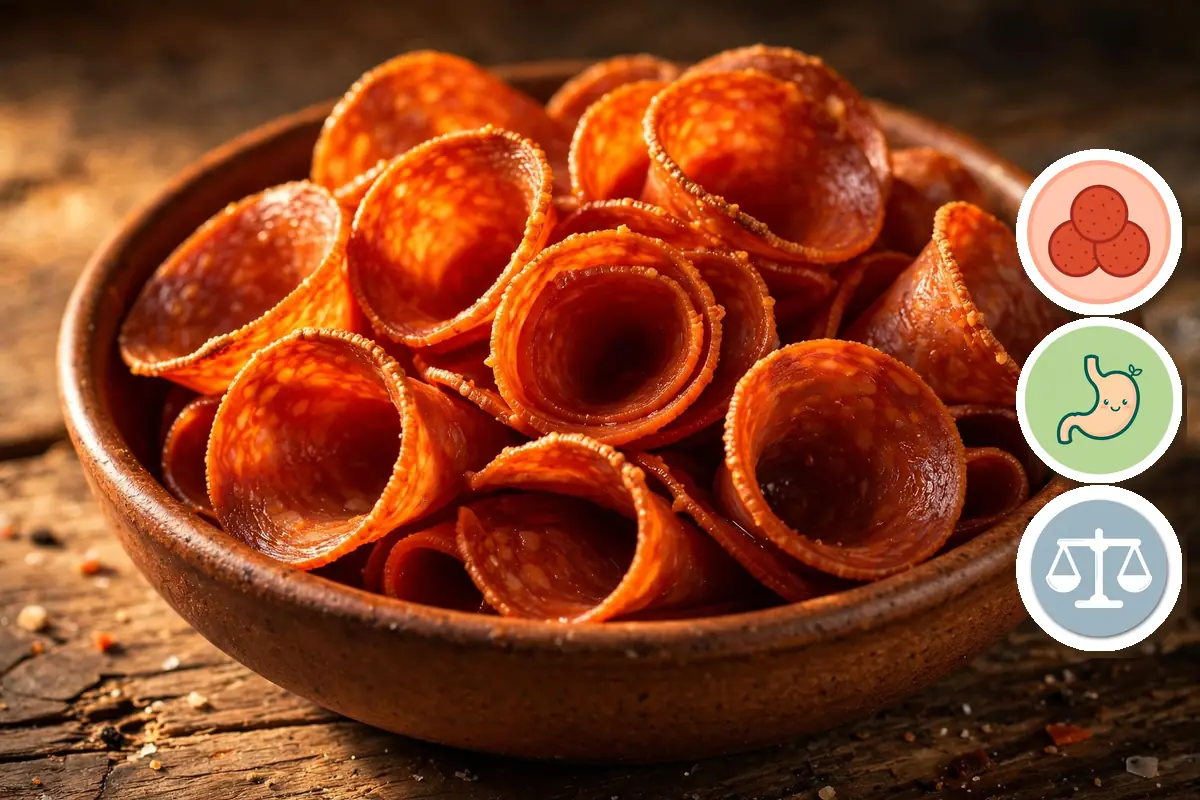
No, pepperoni is best kept away from dogs. It is a cured, spiced sausage, and almost everything about how it is made works against a dog’s needs. The meat is heavily salted for flavor and shelf life, it is high in fat, and it is seasoned with a blend that commonly includes paprika, black pepper, fennel, and garlic powder.
The good news is that pepperoni does not contain an acutely toxic ingredient of the kind that turns a single bite into an emergency. The bad news is that not life-threatening does not mean fine. Pepperoni reliably causes stomach upset in many dogs, and in small dogs that eat several slices, it can contribute to sodium poisoning or pancreatitis. It is a food with real downsides and no upside, which is why it is best skipped.
Why Pepperoni Is Risky: Breaking Down Each Ingredient
1. Sodium
Pepperoni is heavily salted. The exact amount varies by brand and slice size, but a few slices can contain more sodium than a small dog needs in a whole day. Too much salt can cause excessive thirst, vomiting, diarrhea, and in severe cases sodium ion poisoning, which can involve tremors and seizures. Symptoms of excess sodium can also include little to no urination, dry gums, and loss of appetite.
2. Fat
Pepperoni is a fatty food, and a sudden intake of fat is a well-known trigger for pancreatitis, a painful and potentially serious inflammation of the pancreas. This risk is higher in small dogs and in breeds that are prone to the condition.
3. Garlic and Onion Powder
Garlic powder is a standard ingredient in most American pepperoni, and onion powder is common too. Both belong to the allium family and can damage a dog’s red blood cells, potentially leading to anemia. Because these are seasonings mixed into the meat, they are invisible, and the concern applies to every variety regardless of how spicy it tastes. If you are exploring other safe treats, learn whether dogs can eat shrimp. Many owners also wonder can dogs eat parmesan cheese before sharing snacks. You might also want to know can dogs eat cream cheese.
4. Nitrates and Nitrites
These curing agents preserve the color and shelf life of pepperoni. They are not something a dog needs, and large or regular amounts are a concern, particularly for a small body.
5. Spices and Paprika
Paprika, chili, black pepper, and fennel can irritate a dog’s digestive system, causing stomach upset, discomfort, and lethargy in sensitive dogs.
Advantages vs. Disadvantages at a Glance
| Advantages | Disadvantages |
|---|---|
| Does not contain an acutely deadly toxin like chocolate or xylitol | Very high in sodium, with a risk of sodium ion poisoning |
| A single small piece is rarely an emergency for a healthy larger dog | Very high in fat, a pancreatitis trigge |
| Garlic and onion powder can damage red blood cells | |
| Nitrate and nitrite preservatives offer no benefit | |
| Spices can irritate the digestive system | |
| Provides no nutritional value that plain cooked meat would not provide more safely |
What to Do If Your Dog Eats Pepperoni
- Work out how much was eaten, and whether it was plain pepperoni or came from pizza or a charcuterie board.
- For a single piece eaten by a medium or large adult dog, offer fresh water and monitor for vomiting, diarrhea, or excessive thirst.
- For a small dog, a puppy, a dog with a history of pancreatitis, or any dog that ate several slices, contact a veterinarian or a pet poison helpline promptly rather than waiting for symptoms.
- If a large amount was eaten, do not wait for symptoms to appear before calling.
- Watch over the next one to two days for vomiting, diarrhea, lethargy, abdominal pain, a hunched posture, or a loss of appetite, which can point to pancreatitis, and for pale gums or dark urine, which can point to garlic or onion effects that may take a few days to show.
- Seek emergency care immediately for tremors, seizures, collapse, repeated vomiting that will not stop, or a swollen, painful abdomen.
Pepperoni Pizza: A Bigger Problem Than the Pepperoni Alone
Most dogs meet pepperoni on a pizza, and a slice of pizza adds several more issues on top of the sausage itself. The cheese adds fat and lactose, the tomato sauce is often seasoned with garlic and onion, and the dough adds more salt and empty calories. That combination is worse than pepperoni alone, so a dog that steals a slice deserves closer monitoring than one that snatches a single piece of pepperoni. If the pizza had other toppings, such as onions, olives, or peppers cooked with garlic, it is worth reviewing every ingredient.
Charcuterie Boards and Party Trays
Pepperoni also shows up on charcuterie boards, which are risky for another reason. These boards often include grapes, blue cheese, nuts, and sometimes chocolate, several of which can be far more dangerous to a dog than the pepperoni. If a dog gets into a board, the sensible move is to identify everything that was on it before deciding how worried to be, because the pepperoni may be the least of the concerns.
What About Turkey Pepperoni, Pepperoni Sticks, and Jerky?
Turkey pepperoni is lower in fat than the pork and beef version, but it is still cured, salty, and seasoned with the same kinds of spices, so it carries much of the same sodium and seasoning concern. Pepperoni sticks and dried sausage snacks are often even more concentrated in salt and spices, and are more convenient for a dog to grab. None of these is a safe treat, and jerky-style products marketed for people should not be confused with treats made specifically for dogs.
A Small Fun Fact About the Name
The word pepperoni comes from the Italian word peperoni, which actually means bell peppers rather than the cured meat, and the spicy salami sold as pepperoni in the United States is largely an American creation. It is a reminder that the name has nothing to do with the sweet bell peppers that are generally safe for dogs, and a dedicated guide on bell peppers covers that vegetable separately.
Can Puppies Eat Pepperoni?
No, pepperoni should be kept away from puppies. A puppy’s small size means a given amount of sodium, fat, and garlic represents a much larger relative dose, and a puppy’s digestive system is more sensitive. If a puppy eats any pepperoni, monitor closely and contact a veterinarian, especially if more than a small piece was eaten.
Pepperoni and Dogs with Health Conditions
| Condition | Consideration |
|---|---|
| Pancreatitis or a predisposed breed | Very high fat content is a well-known trigger for flare-ups |
| Kidney or heart conditions | High sodium can place significant strain on these organs |
| Anemia or blood disorders | Garlic and onion powder add to the risk of red blood cell damage |
| Obesity or weight management | High fat and calorie content work against weight goals |
Better Alternatives to Pepperoni for Dogs
| Alternative | Why It Is a Better Choice |
|---|---|
| Plain cooked chicken or turkey, unseasoned | Lean protein with no added salt, garlic, or nitrates |
| Small pieces of plain cooked lean beef | A meaty flavor without the cure and seasoning |
| Vet-approved commercial dog treats | Formulated to be safe and appropriately portioned for dogs |
How to Prevent Accidental Pepperoni Exposure
- Keep pizza boxes, party trays, and charcuterie boards out of reach, including on low tables and countertops.
- Tell guests not to share pizza or deli meat with a dog.
- Store pepperoni and dried sausage sticks in the fridge or a closed cabinet.
- Dispose of pizza boxes and leftover crusts in a secured trash can.
- Keep a plain, dog-safe treat handy so a dog has an acceptable option at gatherings.
Signs of an Adverse Reaction
Watch for the following after a dog eats pepperoni:
- Vomiting or diarrhea
- Excessive thirst and urination, or the opposite, very little urination
- Lethargy or weakness
- Abdominal pain or a hunched posture
- Pale gums or dark urine, which can indicate garlic or onion-related red blood cell damage
- Tremors, seizures, or collapse, which require emergency care
Frequently Asked Questions
Can dogs eat pepperoni?
It is not recommended. Pepperoni is high in sodium and fat, and it usually contains garlic powder and nitrate preservatives. A single small piece is rarely an emergency for a healthy larger dog, but it should not be offered.
What happens if my dog eats a slice of pepperoni?
Most healthy medium and large dogs experience nothing worse than mild stomach upset from one slice. A small dog, a puppy, or a dog that ate several slices is at higher risk of sodium problems or pancreatitis.
Is pepperoni toxic to dogs?
Pepperoni does not contain an acutely deadly ingredient, but its garlic and onion seasoning is toxic to dogs, and its sodium and fat content can cause serious problems in larger amounts.
Can dogs eat pepperoni pizza?
No, pizza adds cheese, garlic-laced sauce, and dough on top of the pepperoni, making the combined risk higher than pepperoni alone.
Can dogs eat turkey pepperoni?
Turkey pepperoni is lower in fat, but it is still cured, salty, and seasoned with similar spices, so it carries much of the same risk.
How long after eating pepperoni will a dog show symptoms?
Stomach upset can appear within hours, pancreatitis signs often within one to two days, and garlic or onion effects on red blood cells can take a few days to become apparent.
Can puppies eat pepperoni?
No, pepperoni should be kept away from puppies, since their small size and sensitive digestion make the sodium, fat, and garlic more dangerous.
What can I give my dog instead of pepperoni?
Plain cooked chicken or turkey, or vet-approved commercial dog treats, give a meaty reward without the salt, fat, and toxic seasonings.