
Can Dogs Eat Cheese?

Yes, most dogs can eat cheese in small amounts, but it should always be treated as an occasional treat rather than a regular part of the diet. Cheese is high in fat, calories, and sodium, and many dogs have some degree of lactose intolerance, which can lead to digestive upset. Some cheeses, particularly blue-veined varieties like Roquefort and Gorgonzola, contain a mold byproduct that is genuinely toxic to dogs and should never be fed. Plain, low-fat, low-lactose cheeses like cottage cheese and mozzarella are generally considered the safer choices.
Key Takeaways
- Most dogs can have small amounts of plain cheese as an occasional treat.
- Cheese is high in fat, calories, and sodium, so portion size matters.
- Many adult dogs are lactose intolerant to some degree, which can cause gas, bloating, or diarrhea.
- Blue-veined cheeses like Roquefort, Gorgonzola, and Stilton contain a mold byproduct that is toxic to dogs and should never be given.
- Cheese with garlic, onion, or chives should always be avoided, since these ingredients are toxic to dogs.
- Dogs with pancreatitis, obesity, or kidney disease should avoid cheese or only have it with veterinary approval.
Can Dogs Eat Cheese?
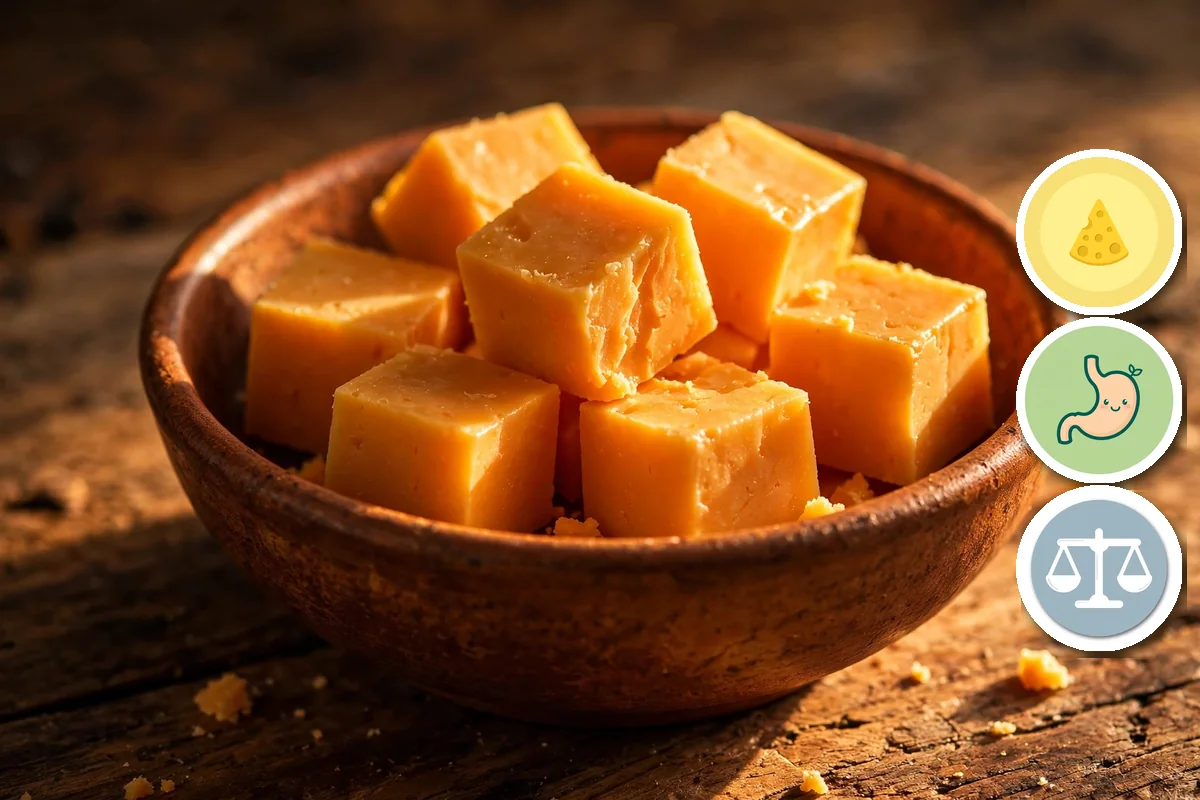
Yes, most dogs can eat small amounts of plain cheese without any immediate problems. Cheese is not toxic in general, and many pet owners use small cheese pieces as a high-value training reward or as a way to hide medication. That said, cheese is not a health food for dogs. It is calorie dense, high in fat and sodium, and made from dairy, which many adult dogs struggle to digest well.
Whether cheese is a good fit for an individual dog depends on the type of cheese, the amount given, and the dog’s personal tolerance for dairy. A small piece of plain, low-fat cheese is a very different situation than a large serving of a rich, salty, or mold-ripened variety.
Why Are Dogs Often Lactose Intolerant?
Puppies produce an enzyme called lactase, which allows them to digest the lactose in their mother’s milk. As dogs mature and are weaned off milk, lactase production naturally decreases, which means many adult dogs lose much of their ability to properly digest dairy products, including cheese.
When a lactose intolerant dog eats cheese, the undigested lactose passes into the colon, where bacteria ferment it. This process can produce gas, bloating, and loose stool. The severity varies significantly between individual dogs. Some tolerate small amounts of cheese without any issue, while others react to even a small piece.
Nutritional Profile of Cheese
Cheese does contain some nutrients that are relevant to a dog’s health, though these are already provided by a complete and balanced dog food.
Nutrient| Consideration for Dogs | |
|---|---|
| Protein | Supports muscle maintenance, though already sufficiently provided by dog food |
| Calcium | Supports bone health, though already balanced in a complete diet |
| Vitamin A | Supports vision and immune function |
| B-complex vitamins | Support energy metabolism |
| Fat | Provides energy but is easy to overfeed and a common trigger for pancreatitis |
| Sodium | Necessary in small amounts but easy to overfeed through cheese |
Because a dog’s nutritional needs are already met by a complete and balanced commercial dog food, cheese offers no essential benefit. It is best viewed purely as an occasional flavor treat rather than a nutritional addition.
Advantages of Feeding Cheese to Dogs
1. High-Value Training Reward
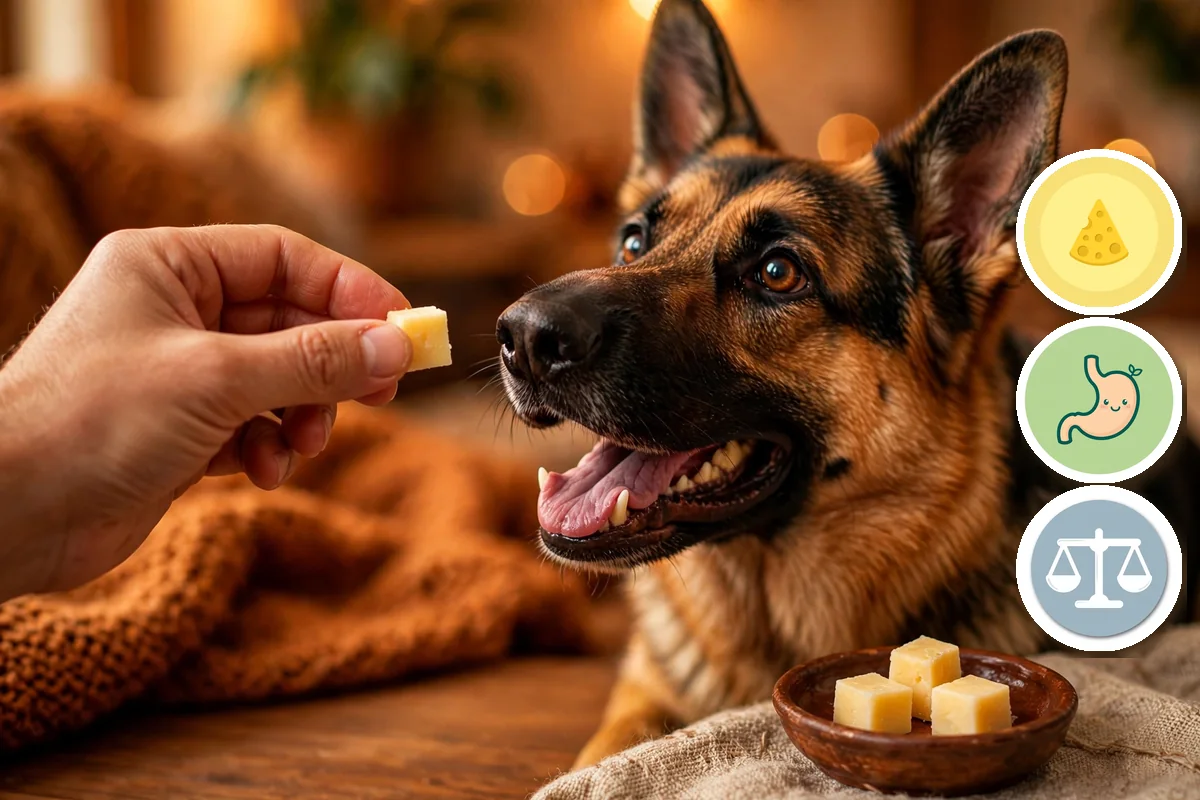
Many dogs find cheese highly motivating, which makes small pieces useful for training sessions where a strong reward is needed.
2. Useful for Hiding Medication
A small piece of soft cheese is commonly used to help a dog take a pill or tablet, since the strong flavor and texture can mask the taste of medication.
3. Contains Protein and Calcium
While not necessary given a complete diet, the protein and calcium in cheese do offer some nutritional value in small amounts.
4. Some Varieties Are Lower Risk
Certain cheeses, such as cottage cheese and fresh mozzarella, are lower in fat and lactose than many other types, making them a comparatively gentler option when cheese is desired.
Disadvantages and Risks of Feeding Cheese to Dogs
1. High in Fat and Calories
Cheese is calorie dense and high in fat. Regular feeding can contribute to weight gain, and rich, fatty foods are one of the more common triggers for pancreatitis, a painful and potentially serious inflammation of the pancreas.
2. Lactose Intolerance
Many adult dogs have reduced ability to digest lactose, which can lead to gas, bloating, diarrhea, or vomiting after eating cheese, even in relatively small amounts.
3. High Sodium Content
Many cheeses, especially processed varieties, are high in sodium. This can be a particular concern for dogs with kidney disease or heart conditions.
4. Some Cheeses Contain Toxic Ingredients
Cheese blended with garlic, onion, or chives should never be given to dogs, since these ingredients are toxic and can damage red blood cells, regardless of how small the amount seems.
5. Blue-Veined Cheese Can Be Genuinely Toxic
Blue-veined cheeses such as Roquefort, Gorgonzola, Stilton, and Danish Blue are ripened using a fungus that produces a compound called roquefortine C. This compound is toxic to dogs and can cause vomiting, tremors, and in severe cases, seizures. These cheeses should never be intentionally fed to a dog.
6. Not Suitable for Certain Health Conditions
Dogs with pancreatitis, obesity, kidney disease, or a history of digestive sensitivity are at higher risk of complications from cheese and should avoid it or only have it with veterinary approval.
7. Not a Nutritional Requirement
Cheese offers no essential nutrition that a dog does not already receive from a complete and balanced commercial dog food.
Advantages vs. Disadvantages at a Glance
Advantages| Disadvantages | |
|---|---|
| High-value training reward | High in fat and calories |
| Useful for hiding medication | Many dogs are lactose intolerant to some degree |
| Contains protein and calcium | High sodium content in many varieties |
| Some varieties are lower in fat and lactose | Cheese with garlic, onion, or chives is toxic |
| Blue-veined cheese contains a genuine toxin | |
| Unsuitable for certain health conditions | |
| Not nutritionally required |
Which Cheeses Are Generally Considered Safer for Dogs?
Not all cheese carries the same level of risk. The following are generally considered better choices when cheese is given as an occasional treat, since they tend to be lower in fat, sodium, or lactose compared to other varieties.
Cheese Type| Why It Is Considered Safer | |
|---|---|
| Cottage cheese | Low in fat and lactose relative to most cheeses, high in protein |
| Mozzarella | Lower in fat and sodium compared to many aged cheeses |
| Chedda | Lower in lactose than fresh cheeses due to the aging process, though higher in fat |
| Swiss | Naturally lower in lactose due to the aging and fermentation process |
| Cottage cheese and ricotta | Softer, milder cheeses that tend to be easier for sensitive stomachs |
A dedicated guide is available for each of these cheese types, covering serving size and preparation in more detail.
Which Cheeses Should Be Avoided?
Certain cheeses carry a higher level of risk and are generally best avoided or given only with extra caution.
Cheese Type| Why It Is a Concern | |
|---|---|
| Blue-veined cheese (Roquefort, Gorgonzola, Stilton) | Contains roquefortine C, a genuine toxin that can cause vomiting, tremors, and seizures |
| Cheese with garlic, onion, or chives | These ingredients are toxic to dogs regardless of the cheese base |
| Feta | High in sodium, fat, and lactose all at once |
| Brie and other soft, rich cheeses | High fat content increases pancreatitis risk |
| Highly processed cheese products | Often high in sodium and additives with little nutritional value |
A dedicated guide is available for many of these specific cheese types as well, covering the details of each one’s individual risk profile.
Watch for Cheese Hiding in Other Foods
Blue cheese and other risky ingredients do not only appear as a wedge on a cheeseboard. They commonly turn up in salad dressings, dips, sauces, and leftovers scraped into a dog’s bowl as a well-meaning treat. A dog does not need to eat a block of blue cheese directly to be affected. A spoonful of blue cheese dressing or a dollop of a garlic-and-cheese dip can carry the same risks. It is worth checking ingredient labels and being mindful of what ends up on a shared plate or in table scraps, not just the cheese itself.
Which Dogs Should Avoid Cheese Entirely?
Even among the safer cheese types, some dogs are better off avoiding cheese altogether rather than having it occasionally.
Dog Type| Why Cheese Should Be Avoided | |
|---|---|
| Overweight dogs | Cheese is calorie and fat dense, which works directly against weight loss or maintenance goals |
| Dogs with a known dairy allergy or intolerance | Any amount of cheese can trigger digestive upset or an allergic reaction |
| Dogs with sensitive stomachs | Even small amounts of rich, fatty cheese can be enough to cause vomiting or diarrhea |
| Dogs with a history of pancreatitis | Fat content is a well-documented trigger for flare-ups |
Some veterinary sources take a more conservative position on cheese overall, recommending it be reserved only for specific situations, such as a high-value training reward in a distracting environment or a way to help a dog swallow a pill, rather than treating it as a routine snack. This is a reasonable approach for any dog, and an especially sensible one for the dog types listed above.
How Much Cheese Can a Dog Eat?
Portion size should scale with a dog’s body weight, and cheese should always be treated as an occasional treat rather than a daily food.
Dog Size| Weight Range | Safe Serving | Frequency | |
|---|---|---|---|
| Extra small | 2 to 10 lbs | A pea-sized piece | Occasionally, a few times a week at most |
| Small | 11 to 20 lbs | A small cube | Occasionally, a few times a week at most |
| Medium | 21 to 50 lbs | 1 to 2 small cubes | Occasionally, a few times a week at most |
| Large | 51 to 90 lbs | 2 to 3 small cubes | Occasionally, a few times a week at most |
| Extra large | 91+ lbs | A small handful of small cubes | Occasionally, a few times a week at most |
As with any new food, it is best to start with a very small amount and monitor closely for any signs of digestive upset before offering cheese again.
Signs of Lactose Intolerance or an Adverse Reaction
Watch for the following after a dog eats cheese for the first time or after an increased portion:
- Gas or noticeable bloating
- Diarrhea or loose stool, often within 30 minutes to two hours
- Vomiting
- Decreased appetite
- Lethargy
If mild symptoms appear and resolve within a day, the dog likely has some degree of lactose sensitivity, and cheese should be avoided or significantly reduced going forward. If symptoms are severe, persist beyond 24 hours, or include repeated vomiting, contact a veterinarian promptly, since this could indicate pancreatitis or another more serious issue.
Can Puppies Eat Cheese?
Puppies technically have more lactase activity than adult dogs, since they need it to digest their mother’s milk, but this does not mean cheese is recommended for puppies. Their digestive systems are still developing, and introducing rich, fatty foods too early can cause digestive upset. If offering cheese to a puppy that is already eating solid food, it is best to consult a veterinarian first and, if approved, start with a very small amount.
Cheese and Dogs with Health Conditions
Certain dogs should approach cheese with significant caution or avoid it entirely.
Condition| Consideration | |
|---|---|
| Pancreatitis | High fat content is a common trigger for flare-ups and should generally be avoided |
| Obesity or weight management | Calorie and fat content work against weight management goals |
| Kidney disease | Sodium content can be a concern, so veterinary guidance is recommended |
| Lactose intolerance | Even small amounts of cheese may cause digestive upset |
How to Safely Feed Cheese to Your Dog
- Choose a plain, low-fat, low-lactose variety such as cottage cheese or mozzarella when possible.
- Avoid any cheese blended with garlic, onion, chives, or other seasonings.
- Never offer blue-veined cheeses such as Roquefort, Gorgonzola, or Stilton.
- Cut cheese into small, appropriately sized pieces for the dog’s size.
- Offer a very small amount first and monitor closely for digestive reaction before giving cheese again.
Frequently Asked Questions
Can dogs eat cheese every day?
It is not recommended. Cheese is high in fat, calories, and sodium, and daily feeding increases the risk of weight gain, pancreatitis, or digestive upset. It is best kept as an occasional treat.
Is all cheese bad for dogs?
No, not all cheese carries the same risk. Plain, low-fat, low-lactose cheeses like cottage cheese and mozzarella are generally considered safer, while blue-veined cheeses and anything containing garlic or onion should be avoided entirely.
What happens if a dog eats too much cheese?
A dog that eats too much cheese may experience gas, bloating, diarrhea, or vomiting due to fat content or lactose intolerance. Large amounts of high-fat cheese can also increase the risk of pancreatitis.
Can dogs be allergic to cheese?
True dairy allergies are less common than lactose intolerance, but they are possible. Signs can include itching, skin irritation, or digestive upset. If a reaction is suspected, stop feeding cheese and consult a veterinarian.
Why is blue cheese dangerous for dogs?
Blue-veined cheeses like Roquefort, Gorgonzola, and Stilton are ripened using a fungus that produces roquefortine C, a compound that is toxic to dogs and can cause vomiting, tremors, and in severe cases, seizures.
Is cheese safe for dogs with pancreatitis?
Generally, no. The high fat content in most cheeses can trigger a pancreatitis flare-up, so it is best to avoid cheese entirely for dogs with this condition unless a veterinarian says otherwise.
Which cheese is the safest for dogs?
Cottage cheese is widely considered one of the safest options, since it is lower in fat and lactose than many other cheeses and offers a good amount of protein.
Can puppies eat cheese?
Puppies can technically digest lactose more easily than adult dogs, but cheese is still not an ideal treat due to its fat content. If offering it, consult a veterinarian first and use only a very small amount.