
Can Dogs Eat Bread?

Quick Answer: Yes, dogs can eat small amounts of plain bread. Plain white, whole wheat, and seedless rye bread are generally safe for dogs that do not have a grain allergy, and a small piece now and then is unlikely to cause harm. Bread has almost no nutritional value for a dog and is high in carbohydrates, so it should only ever be an occasional treat, never a meal. The one genuinely dangerous form of bread is raw, unbaked dough. Because it still contains live yeast, raw dough can keep rising inside a dog’s warm stomach and ferment into alcohol, which is a real emergency and a completely different situation from a slice of baked bread.
Key Takeaways
- Plain white, whole wheat, and seedless rye bread are safe for dogs without a grain allergy, in small amounts.
- Bread offers dogs little to no real nutrition and is mostly carbohydrates, so it should stay an occasional treat.
- Raw, unbaked yeast dough is genuinely dangerous. It can keep rising in a dog’s stomach and produce alcohol as a byproduct, leading to bloat and alcohol poisoning.
- Bread baked with raisins, garlic, onion, chocolate, or xylitol is unsafe regardless of the base bread type.
- Dogs can develop a wheat or grain allergy, so a small test piece is worth watching the first time.
- Eating bread regularly, rather than occasionally, can contribute to weight gain and, over time, diabetes.
Can Dogs Eat Bread?
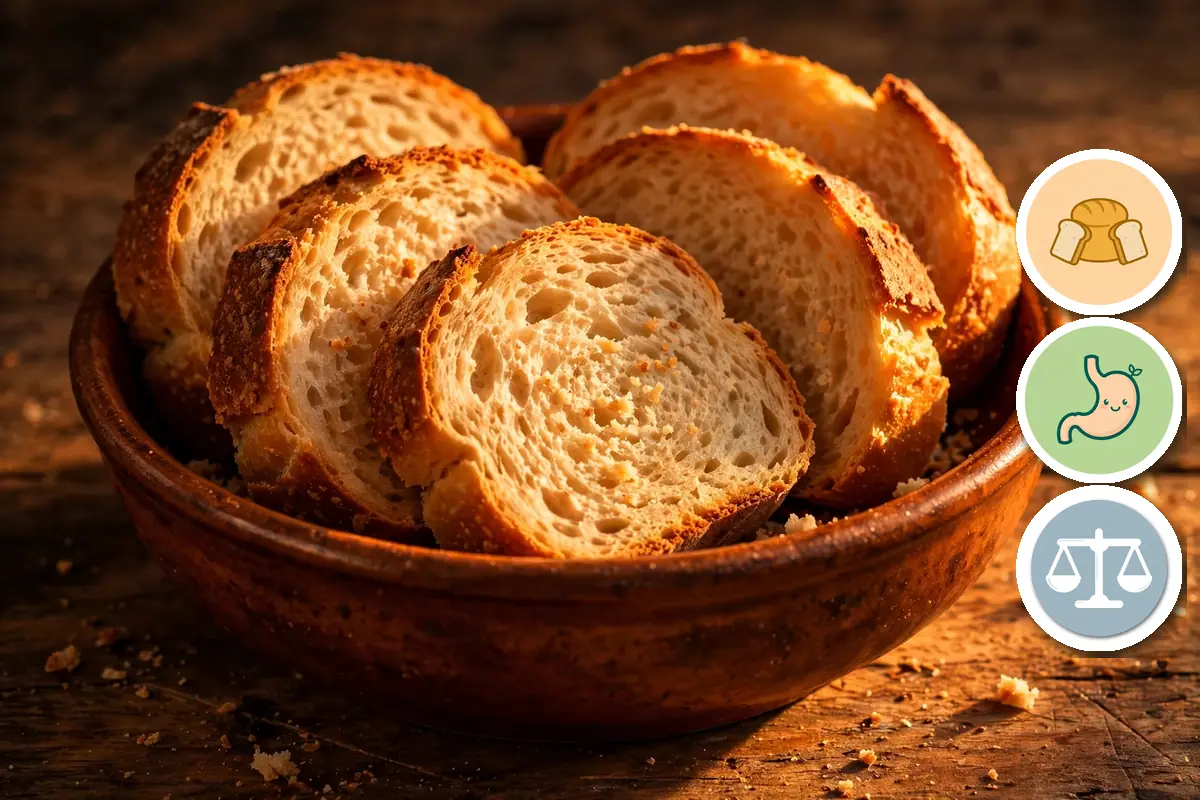
Yes, in a limited way. Bread is primarily flour, water, and yeast, and a baked slice of plain white, wheat, or rye bread is not toxic to a dog that tolerates grains. Many pet owners already know this instinctively, which is part of why bread is such a common human food that ends up shared with a dog, whether as a crust, a bite of toast, or part of a sandwich dropped on the floor.
That said, bread is not a food dogs need, and it is worth being clear-eyed about what it actually offers. It has very little protein, vitamins, or minerals relevant to a dog, and it is dense in carbohydrates. A slice here and there is a low-risk treat for most healthy dogs, but bread should never be used as a filler or a meal substitute, and the type of bread and what is baked into it both matter. As you plan dog-friendly treats, find out whether cheddar cheese is safe for dogs. As you plan dog-friendly treats, find out whether feta cheese is safe for dogs. As you plan dog-friendly treats, find out whether american cheese is safe for dogs.
Nutritional Profile of Bread
Plain bread offers very little of real value to a dog.
| Nutrient | Consideration for Dogs |
|---|---|
| Carbohydrates | The dominant component, providing calories with little other benefit |
| Protein | Present only in small amounts, far less than a dog gets from its regular food |
| Fibe | Whole wheat and rye versions offer somewhat more fiber than white bread |
| B vitamins | Present in small amounts, though not a meaningful source compared to a complete dog food |
Because a complete and balanced commercial dog food already provides everything a dog needs, bread should be treated purely as an occasional, low-value snack rather than something that contributes meaningfully to a dog’s diet.
Calories in Bread
Bread is calorie dense for its size, which is easy to overlook given how light and airy a slice looks.
| Portion | Approximate Calories |
|---|---|
| 1 slice of plain white bread | About 70 to 80 calories |
| 1 slice of plain whole wheat bread | About 70 to 90 calories |
| 1 slice of plain rye bread | About 80 to 90 calories |
A single slice can represent a meaningful share of a small dog’s daily treat allowance. The general treat guideline still applies. Treats, including bread, should make up no more than 10 percent of a dog’s total daily calorie intake, and regular bread feeding over time has been linked to unwanted weight gain and, in some cases, a higher risk of diabetes.
Advantages of Feeding Bread to Dogs

1. Generally Low Risk in Small Amounts
Plain, baked bread without problematic add-ins is one of the lower-risk human foods to share occasionally, assuming no grain allergy is present.
2. Can Help Hide Medication
A small piece of soft bread is sometimes used to help a dog swallow a pill, similar to how cheese or peanut butter is used for the same purpose.
3. Bland and Gentle in Small Amounts
Some veterinarians have used a small amount of plain white bread as part of a short-term bland diet approach for a dog with a mild upset stomach, though this should be guided by a veterinarian rather than assumed as a default remedy.
4. Easy to Portion and Widely Available
Because bread is already sliced, it is simple to break off a small, consistent piece for an occasional treat.
Disadvantages and Risks of Feeding Bread to Dogs
1. Raw Yeast Dough Is a True Emergency
This is covered in detail in its own section below, but it is the single most important risk associated with bread and deserves top billing. Raw dough is not simply a less appealing version of baked bread. It is a distinct and serious hazard.
2. Very Little Nutritional Value
Bread is mostly empty carbohydrates, offering a dog calories without the protein, vitamins, or minerals that a complete diet provides.
3. Weight Gain With Regular Feeding
Because bread is calorie dense and easy to overfeed without noticing, regular bread treats can contribute to obesity over time, and some veterinary sources note a link between frequent carbohydrate-heavy treats and an increased risk of diabetes.
4. Rye Bread Can Be Harder to Digest
Rye bread is denser than white or wheat bread, and some dogs have more difficulty digesting it. Rye bread recipes sometimes include caraway seeds or are paired with onion or garlic as a topping or ingredient, both of which are unsafe for dogs.
5. Toxic Add-Ins Are Common in Specialty Breads
Many breads are not plain. Raisin bread, bread containing nuts, garlic or onion-flavored bread, and bread sweetened with xylitol all introduce ingredients that range from mildly risky to genuinely toxic, independent of the base bread itself.
6. Possible Wheat or Grain Allergy
Though less common than many people assume, some dogs are allergic or sensitive to wheat or other grains. Symptoms can include itching, skin irritation, ear infections, or digestive upset, and these may not appear the very first time bread is given.
7. Not a Nutritional Requirement
Bread is a low-value treat, not a required part of a dog’s diet, since a complete and balanced commercial dog food already provides everything a dog needs.
Advantages vs. Disadvantages at a Glance
| Advantages | Disadvantages |
|---|---|
| Generally low risk in small, plain amounts | Raw yeast dough is a true medical emergency |
| Can help hide medication | Offers very little real nutritional value |
| Sometimes used in a short-term bland diet under veterinary guidance | Regular feeding can contribute to weight gain and diabetes risk |
| Easy to portion and widely available | Rye bread can be harder to digest and may include caraway seeds |
| Specialty breads often contain toxic add-ins like raisins or garlic | |
| Possible wheat or grain allergy in some dogs | |
| Not nutritionally required |
Why Raw Bread Dough Is Genuinely Dangerous
This is worth separating out from the rest of the article because it is a fundamentally different risk from baked bread, and it is one of the more serious food-related emergencies a dog can encounter in an ordinary kitchen. Raw, unbaked dough made with yeast is still biologically active. Once swallowed, the warm, moist environment of a dog’s stomach is an ideal place for that yeast to keep working.
Two separate problems follow from this. First, the dough continues to rise and expand inside the stomach, which can cause severe bloating and distention. This physical expansion can contribute to or mimic gastric dilatation volvulus, commonly known as bloat, a life-threatening condition in which a swollen stomach can twist on itself. Second, as the yeast ferments, it produces ethanol as a byproduct, which is absorbed into the bloodstream and can cause alcohol poisoning. A dog does not need to eat an enormous amount of dough for this to become dangerous, since both the mechanical expansion and the alcohol production happen inside the body after the dough is swallowed, not just from however much was eaten.
Signs of Bread Dough Toxicosis
Watch for the following if a dog eats any amount of raw, unbaked yeast dough:
- A visibly swollen or distended abdomen
- Unproductive retching or attempts to vomit without bringing anything up
- Disorientation, stumbling, or loss of coordination, consistent with alcohol intoxication
- Low body temperature
- Weakness or collapse
- Slowed breathing
If a dog eats raw bread dough, this should be treated as an emergency. Contact a veterinarian or an emergency animal hospital immediately rather than waiting to see if symptoms develop, since both the bloat risk and the alcohol toxicity can escalate quickly. Do not attempt to induce vomiting without direct veterinary guidance.
How Much Bread Can a Dog Eat?
Portion size should scale with a dog’s body weight, and bread should always be treated as an occasional treat.
| Dog Size | Weight Range | Safe Serving | Frequency |
|---|---|---|---|
| Extra small | 2 to 10 lbs | A small bite or corner of a slice | Occasionally, a few times a week at most |
| Small | 11 to 20 lbs | About a quarter slice | Occasionally, a few times a week at most |
| Medium | 21 to 50 lbs | About half a slice | Occasionally, a few times a week at most |
| Large | 51 to 90 lbs | About a full slice | Occasionally, a few times a week at most |
| Extra large | 91+ lbs | About a full slice | Occasionally, a few times a week at most |
As with any new food, it is best to start with a small piece the first time and watch for any signs of digestive upset or an allergic reaction before offering bread again.
Can Dogs Eat White Bread?
Yes, plain white bread is generally considered safe for dogs without a wheat allergy, though it offers essentially no nutritional benefit. It is sometimes the gentlest option for a dog with a sensitive stomach, since it is lower in fiber than whole grain varieties, but it should still only be an occasional treat rather than a regular food.
Can Dogs Eat Whole Wheat or Whole Grain Bread?
Yes, plain whole wheat or whole grain bread is safe for dogs without a wheat or grain allergy, and it generally offers slightly more fiber and nutritional value than white bread. As with any bread, it should be served plain, with no butter, jam, or other toppings, and only in a small, occasional amount.
Can Dogs Eat Rye Bread?
Plain rye bread is generally considered acceptable for dogs in small amounts, but it comes with a couple of extra considerations. Rye bread is denser than white or wheat bread and can be a bit harder for some dogs to digest. Some rye bread recipes include caraway seeds, and pumpernickel, a bread in the rye family, is sometimes made with raisins, which are toxic to dogs. Checking the full ingredient list before sharing any rye-based bread is an important step.
Can Dogs Eat Toast or Bread Crusts?
Yes, plain toast and bread crusts follow the same guidelines as a regular slice of bread. Toasting does not change the basic safety profile, as long as nothing has been added, such as butter, margarine, or a sweet spread. Crusts are simply the edge of the same bread and carry no additional risk on their own.
What About Specialty and Flavored Breads?
A number of popular bread varieties deserve their own dedicated discussion, since the concerns go well beyond the base bread itself. Garlic bread, banana bread, and gingerbread each introduce specific risks worth understanding in more detail, from toxic garlic and onion to nutmeg, raisins, or chocolate, and dedicated guides are available covering each of these separately.
Can Puppies Eat Bread?
Puppies can have a very small amount of plain bread once they are eating solid food, but it is not a recommended regular treat given their need for a nutrient-dense diet to support healthy growth. Raw dough is just as dangerous, if not more so, for a puppy’s smaller body, so the same strict avoidance applies.
Bread and Dogs with Health Conditions
Certain dogs should approach bread with more caution.
| Condition | Consideration |
|---|---|
| Diabetes | High carbohydrate content can affect blood sugar management |
| Obesity or weight management | Calorie-dense, low-nutrition treat that works against weight goals |
| Wheat or grain allergy | Bread should be avoided entirely if a sensitivity has been identified |
| Digestive sensitivities | Plain white bread in a very small amount is often gentler than whole grain or rye |
How to Safely Feed Bread to Your Dog
- Choose plain white, whole wheat, or seedless rye bread with no toppings or mix-ins.
- Check any specialty bread’s full ingredient list for raisins, garlic, onion, nuts, chocolate, or xylitol before sharing.
- Offer only a small piece, appropriate for the dog’s size.
- Never allow access to raw, unbaked dough of any kind, including pizza dough or dough set out to rise.
- Watch for any signs of digestive upset or allergic reaction the first few times bread is offered.
Signs of an Adverse Reaction
Watch for the following after a dog eats baked bread:
- Gas or bloating
- Diarrhea or loose stool
- Vomiting
- Itching or skin irritation, which may suggest a wheat or grain sensitivity
These signs are different from the emergency symptoms of raw dough ingestion described above, which include a visibly swollen abdomen, disorientation, and weakness, and which require immediate veterinary attention rather than routine monitoring.
Frequently Asked Questions
Can dogs eat bread?
Yes, in small amounts. Plain white, whole wheat, and seedless rye bread are generally safe for dogs without a grain allergy, though bread offers little nutritional benefit and should only be an occasional treat.
Is bread bad for dogs?
Baked bread is not inherently bad in small amounts, but it is calorie dense with little nutrition, so regular feeding can contribute to weight gain. Raw yeast dough, by contrast, is genuinely dangerous.
Can dogs eat raw bread dough?
No, raw dough containing live yeast can continue to expand in a dog’s stomach and ferment into alcohol, leading to bloat and alcohol poisoning. This is a medical emergency.
What happens if my dog eats a whole loaf of bread?
Most dogs experience mild gastrointestinal upset, such as decreased appetite, vomiting, or diarrhea, from eating a large amount of baked bread. Contact a veterinarian if symptoms are severe or persistent.
Can dogs eat white bread?
Yes, plain white bread is generally safe for dogs without a wheat allergy, though it has essentially no nutritional value.
Can dogs eat whole wheat bread?
Yes, plain whole wheat bread is safe for dogs without a grain allergy and offers slightly more fiber than white bread.
Can dogs eat rye bread?
Plain, seedless rye bread is generally considered acceptable in small amounts, though it can be denser and harder to digest, and some recipes include caraway seeds or raisins that should be checked for first.
Can dogs be allergic to bread?
Yes, some dogs can be allergic or sensitive to wheat or other grains. Signs can include itching, skin irritation, ear infections, or digestive upset.