
Can Dogs Eat Blackberries?

Quick Answer: Yes, dogs can eat blackberries. They are not on the ASPCA’s list of toxic foods for dogs and are considered a healthy, low-calorie treat when given fresh and in moderation. Blackberries are rich in fiber, vitamins, and antioxidants that can support a dog’s immune system, skin, and coat. Blackberries do contain a naturally occurring trace amount of xylitol, but this is a common source of confusion, since the tiny, naturally occurring amount in fresh fruit is not dangerous at normal serving sizes, unlike the concentrated xylitol used as an artificial sweetener in processed foods.
Key Takeaways
- Blackberries are not toxic and are considered a healthy treat for dogs in moderation.
- They are rich in fiber, vitamins A, B, C, E, and K, and antioxidants like anthocyanins and ellagic acid.
- Blackberries contain trace amounts of naturally occurring xylitol, which is not dangerous at normal serving sizes, unlike concentrated artificial xylitol.
- Blackberry jam, jelly, and baked goods should be avoided due to added sugar and the possibility of concentrated xylitol.
- Wild blackberries are safe as long as they can be identified with certainty and have not been treated with pesticides or herbicides.
- Overfeeding can cause loose stool, gas, or vomiting due to the fruit’s high fiber content.
Can Dogs Eat Blackberries?
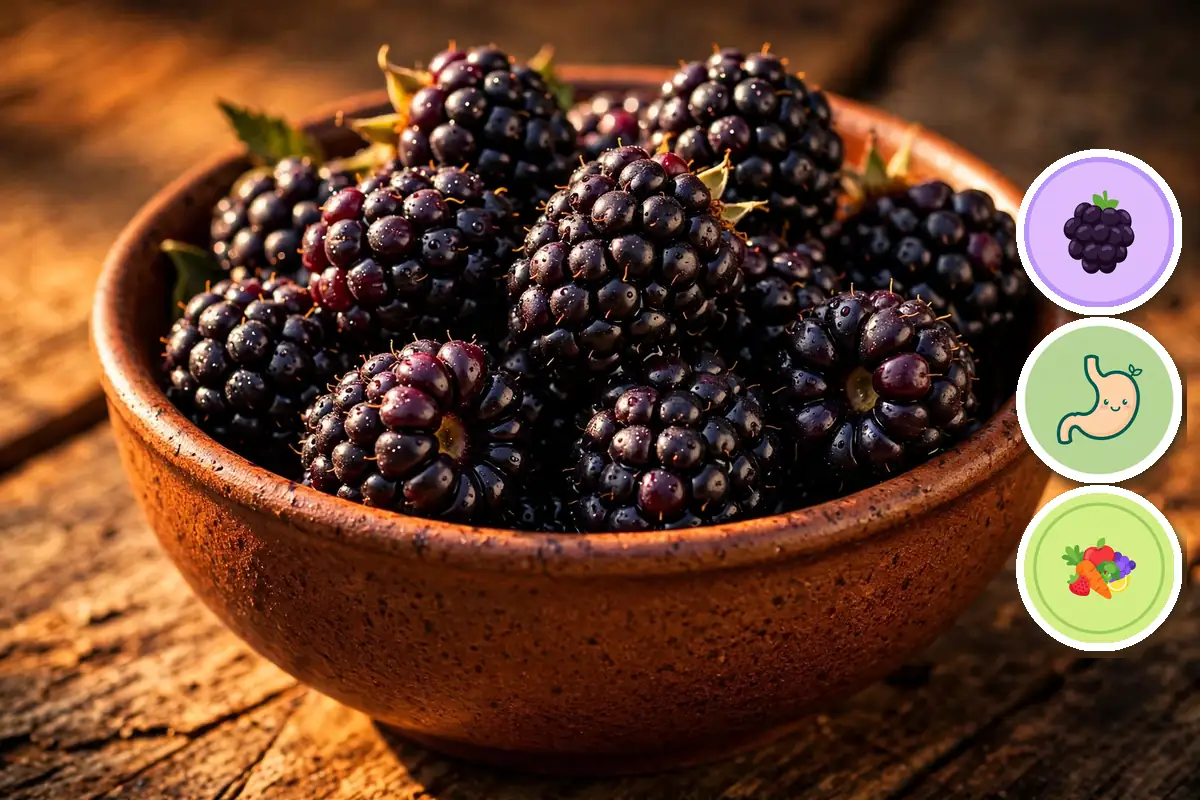
Yes, dogs can eat blackberries safely. They are not included on the ASPCA’s list of toxic plants or foods for dogs, and many veterinarians consider them one of the better fruit treats available due to their relatively low sugar content and high nutrient density compared to many other fruits. Fresh, plain blackberries, washed and served whole or mashed depending on the dog’s size, make a reasonable low-calorie treat or food topper. Many owners also wonder can dogs eat oranges before sharing snacks. Many owners also wonder can dogs eat blueberries before sharing snacks.
As with most fruits, moderation and preparation matter. Blackberries should be given plain, without any added sugar, and any processed blackberry product, such as jam or a baked dessert, should be treated very differently from the fresh fruit itself.
Nutritional Profile of Blackberries
Blackberries offer an impressive range of nutrients for such a low-calorie fruit.
| Nutrient | Benefit for Dogs |
|---|---|
| Vitamin A | Supports vision, skin health, and immune function |
| Vitamin C | Acts as an antioxidant and supports immune health |
| Vitamin E | Supports skin and coat health |
| Vitamin K | Supports healthy blood clotting |
| Fiber (soluble and insoluble) | Supports digestive regularity in moderation |
| Anthocyanins and ellagic acid | Antioxidants that help reduce oxidative stress |
| Manganese, magnesium, coppe | Trace minerals supporting metabolism and bone health |
While blackberries offer genuine nutritional value, a dog already receives everything it needs from a complete and balanced commercial dog food. Blackberries should be treated as a beneficial extra rather than a dietary requirement.
Calories in Blackberries
Blackberries are one of the lower-calorie fruits a dog can eat, which is part of why they are such a popular treat choice.
| Portion | Approximate Calories |
|---|---|
| 1 blackberry | About 1 calorie |
| 10 blackberries | About 6 to 7 calories |
| 1 cup of blackberries | About 60 to 65 calories |
Because a single blackberry carries such a small calorie load, it is easy to offer a generous handful without significantly affecting a dog’s daily calorie budget. The general treat guideline still applies. Treats, including blackberries, should make up no more than 10 percent of a dog’s total daily calorie intake.
Do Blackberries Contain Xylitol? Clearing Up the Confusion
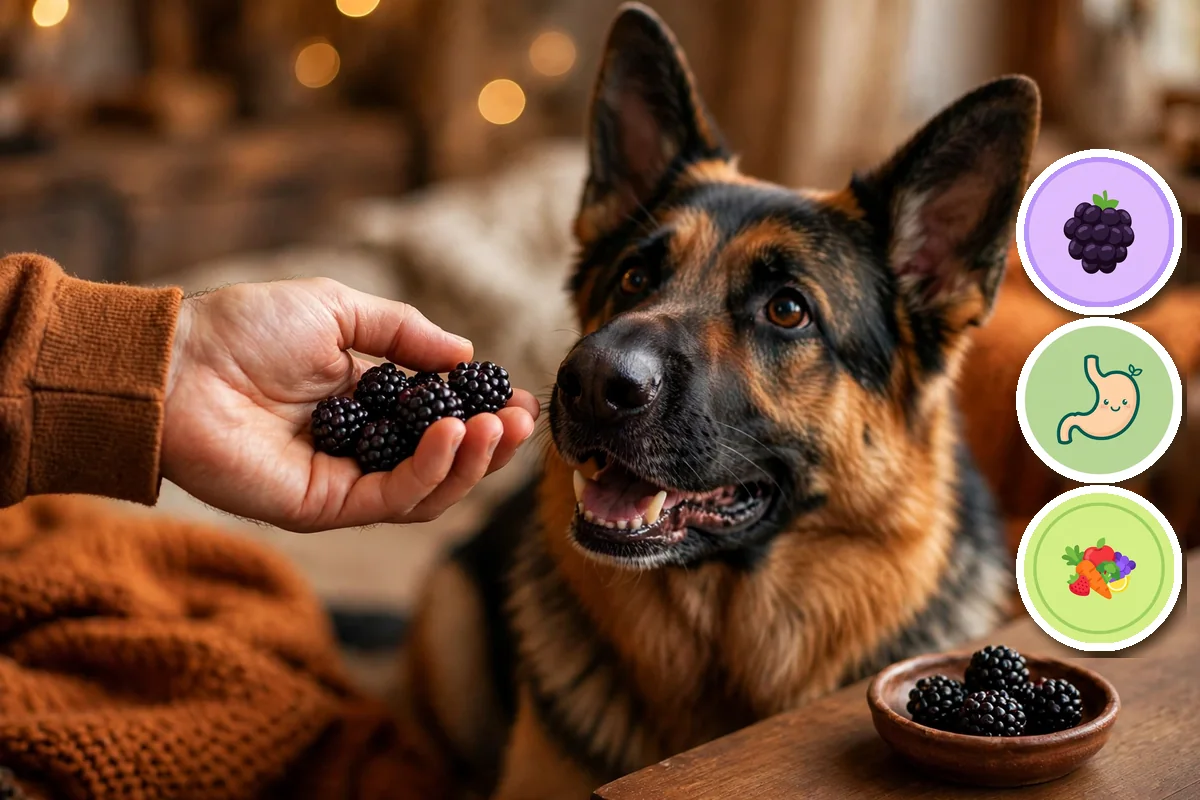
This is one of the most commonly misunderstood points about blackberries, so it deserves a clear explanation. Blackberries, like many fruits and vegetables, contain a naturally occurring trace amount of xylitol as part of their normal composition. Xylitol itself is genuinely toxic to dogs, since it triggers a rapid release of insulin that can cause a dangerous drop in blood sugar. However, the amount of xylitol naturally present in fresh blackberries is extremely small, far too small to cause harm at any normal serving size.
The real danger comes from concentrated, manufactured xylitol, which is added intentionally to products like sugar-free gum, sugar-free peanut butter, and some sugar-free baked goods at levels many times higher than what occurs naturally in fruit. In other words, a dog eating a bowl of fresh blackberries has nothing to worry about from xylitol, while a dog eating a stick of sugar-free gum faces a genuine emergency. The confusion happens because both situations technically involve the same compound, just at vastly different concentrations.
Advantages of Feeding Blackberries to Dogs
1. Very Low in Calories
Blackberries allow for a generous treat portion without significantly affecting a dog’s daily calorie intake, making them a strong choice for dogs on a weight management plan.
2. Rich in Antioxidants
Anthocyanins, ellagic acid, and other antioxidant compounds help reduce oxidative stress, which becomes increasingly relevant as dogs age.
3. High in Fiber
The fiber content supports digestive regularity when given in appropriate amounts.
4. Contains a Broad Range of Vitamins
Vitamins A, C, E, and K each contribute to different aspects of a dog’s health, from immune function to blood clotting.
5. Naturally Low in Sugar Compared to Many Fruits
Blackberries carry less sugar than fruits like mango or banana, buffered further by their high fiber content, which slows sugar absorption.
Disadvantages and Risks of Feeding Blackberries to Dogs
1. High Fiber Can Cause Digestive Upset in Excess
While fiber is beneficial in moderation, too many blackberries at once can lead to loose stool, gas, or a brief episode of vomiting, particularly in small dogs or dogs new to the fruit.
2. Choking Hazard for Small Dogs
Whole blackberries can pose a choking risk, especially for small breeds or dogs that tend to gulp their food without chewing. Mashing or cutting the berries reduces this risk.
3. Possible Allergic Reaction
Though uncommon, some dogs can have an allergic or sensitivity reaction to blackberries. Signs can include itching, skin irritation, swelling, vomiting, or diarrhea.
4. Processed Blackberry Products Carry Real Risk
Blackberry jam, jelly, pie filling, and baked goods typically contain a significant amount of added sugar, and some sugar-free versions may use concentrated xylitol as a sweetener, which is genuinely dangerous, unlike the trace amount found in the fresh fruit.
5. Wild Berry Identification Matters
While blackberries themselves are safe, some other wild berries that grow in similar environments are not, including certain toxic berries. If a dog eats a wild berry and there is any uncertainty about what it actually was, this should be treated with more caution than a known, store-bought blackberry.
6. Not a Nutritional Requirement
Blackberries are a supplemental treat, not a required part of a dog’s diet, since a complete and balanced commercial dog food already provides everything a dog needs.
Advantages vs. Disadvantages at a Glance
| Advantages | Disadvantages |
|---|---|
| Very low in calories | High fiber can cause digestive upset in excess |
| Rich in antioxidants | Whole berries are a choking risk for small dogs |
| High in fibe | Possible, though uncommon, allergic reaction |
| Contains a broad range of vitamins | Processed products like jam carry real sugar and xylitol risk |
| Naturally low in sugar compared to many fruits | Wild berry misidentification is a separate concern |
| Not nutritionally required |
How Many Blackberries Can a Dog Eat?
Portion size should scale with a dog’s body weight. Use this chart as a general starting point, and adjust based on the individual dog’s activity level, health status, and any veterinary recommendations.
| Dog Size | Weight Range | Safe Serving | Frequency |
|---|---|---|---|
| Extra small | 2 to 10 lbs | 1 to 2 berries | Daily, in this small amount |
| Small | 11 to 20 lbs | 2 to 4 berries | Daily, in this small amount |
| Medium | 21 to 50 lbs | 4 to 6 berries | Daily, in this small amount |
| Large | 51 to 90 lbs | 6 to 8 berries | Daily, in this small amount |
| Extra large | 91+ lbs | A small handful of berries | Daily, in this small amount |
As with any new food, it is best to start with a small amount and monitor for any signs of digestive upset before offering blackberries regularly.
Can Dogs Eat Wild Blackberries?
Yes, wild blackberries are safe for dogs, as long as the berries can be identified with certainty as true blackberries and have not been treated with pesticides or herbicides. There are no widely recognized toxic lookalikes that are commonly mistaken for blackberries specifically. That said, wild berries in general should be approached carefully, since other toxic berries, such as pokeweed, holly berries, or juniper berries, can sometimes grow in similar environments. If a dog eats a wild berry and there is any doubt about what it actually was, it is safest to contact a veterinarian rather than assume it was a harmless blackberry.
Can Dogs Eat Blackberry Jam or Jelly?
No, blackberry jam and jelly should be avoided. Even though blackberries themselves are healthy in moderation, jams and jellies concentrate a large amount of added sugar into a small serving, offering none of the fiber that naturally buffers sugar in the whole fruit. Sugar-free versions are an even greater concern, since some use xylitol as a sweetener at a concentration high enough to be genuinely dangerous, unlike the harmless trace amount found in fresh blackberries. If a dog accidentally eats a small amount of regular blackberry jam, this is unlikely to cause serious harm, but any product suspected of containing xylitol should be treated as a potential emergency.
Can Dogs Eat Raspberries and Blackberries Together?
Yes, dogs can safely eat raspberries and blackberries in the same sitting. Both berries follow very similar safety guidelines: low in sugar, high in fiber and antioxidants, and best served fresh and plain. Combining the two in a homemade treat or as a mixed topper is not a safety concern by itself, though the total combined portion should still stay within the dog’s overall daily treat allowance to avoid overdoing the fiber content from both fruits at once.
Can Puppies Eat Blackberries?
Yes, healthy puppies over about 12 weeks old can have one or two blackberries cut into small pieces. As with any new food, start with a very small amount and watch for digestive upset over the following 24 hours. Blackberries should never replace a portion of a puppy’s balanced diet, since puppies need a nutrient-dense food specifically formulated to support healthy growth.
Blackberries and Dogs with Health Conditions
Certain dogs should approach blackberries with more caution.
| Condition | Consideration |
|---|---|
| Digestive sensitivities | High fiber content may cause looser stool or discomfort more easily |
| Diabetes | Naturally low in sugar compared to many fruits, but veterinary guidance is still recommended |
| Obesity or weight management | Very low in calories, making blackberries a reasonable treat choice in appropriate portions |
| Known food allergies | Introduce gradually and watch for any signs of an allergic reaction |
How to Safely Feed Blackberries to Your Dog
- Wash the blackberries thoroughly to remove dirt or pesticide residue.
- Remove any stems, which can be hard to digest and present a minor choking risk.
- Mash, cut, or leave whole depending on the dog’s size, mashing for small dogs or puppies.
- Serve plain, with no added sugar, syrup, or sweetener of any kind.
- Start with a small amount and monitor for digestive reaction before offering more.
Ways to Serve Blackberries to Dogs
- Fresh, whole or mashed: Serve plain, washed blackberries as a simple treat, mashed for smaller dogs.
- Frozen: Freeze blackberries for a refreshing snack during warm weather.
- Mixed into food: Add mashed blackberries as a topper on a dog’s regular meal.
- With peanut butter: Mix mashed blackberries with xylitol-free peanut butter, add to a stuffable toy, and freeze for a longer-lasting treat.
- With plain yogurt: Combine mashed blackberries with a small amount of plain yogurt and spread on a lick mat, avoiding this option for lactose-intolerant dogs.
Signs of an Adverse Reaction
Watch for the following after a dog eats blackberries:
- Diarrhea or loose stool
- Gas or bloating
- Vomiting
- Itching, skin irritation, or swelling, which may suggest an allergic reaction
- Decreased appetite
If a dog eats a large, unknown quantity of blackberries, such as an entire unattended carton, watch for excessive diarrhea, vomiting, blood in the stool, weakness, or loss of coordination, and contact a veterinarian promptly if any of these appear.
Frequently Asked Questions
Can dogs eat blackberries every day?
Yes, in small, appropriate amounts, blackberries can be part of a dog’s daily treat allowance, since they are low in calories and offer genuine nutritional benefits.
Are blackberries poisonous to dogs?
No, blackberries are not on the ASPCA’s list of toxic foods and are considered safe for dogs in normal quantities.
Do blackberries contain xylitol?
Yes, but only in a naturally occurring trace amount that is not dangerous at normal serving sizes. This is very different from the concentrated, manufactured xylitol found in products like sugar-free gum, which is genuinely toxic.
Can dogs eat wild blackberries?
Yes, as long as they can be identified with certainty as true blackberries and have not been sprayed with pesticides or herbicides.
Can dogs eat blackberry jam?
No, blackberry jam and jelly contain a significant amount of added sugar, and sugar-free versions may contain a concentrated, dangerous amount of xylitol.
Can dogs eat raspberries and blackberries together?
Yes, both berries follow similar safety guidelines and can be given together, as long as the combined portion stays within the dog’s overall daily treat allowance.
Can puppies eat blackberries?
Yes, healthy puppies over about 12 weeks old can have one or two berries cut into small pieces, introduced gradually and monitored for any digestive upset.
What should I do if my dog eats a lot of blackberries?
Monitor for loose stool, gas, or a brief episode of vomiting, which usually resolves within 12 to 24 hours. Contact a veterinarian if symptoms are severe, persistent, or include blood in the stool.