Can Dogs Eat Granola?

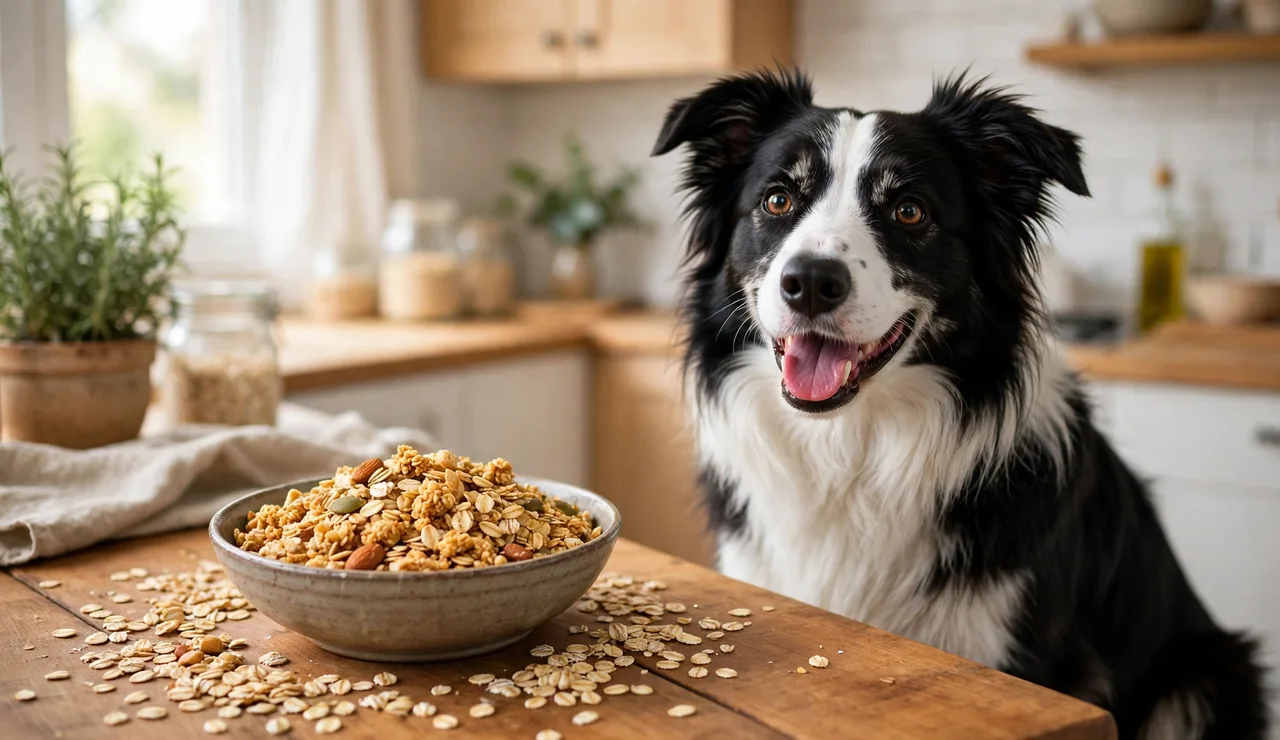
Quick Answer: Be careful with granola, because most shop-bought granola is not safe for dogs. Many blends contain raisins, which are toxic, along with chocolate, nuts, or xylitol. Only plain oat-only granola is safe, and even that should be given in tiny amounts as a rare treat, never as a regular meal.
Key Takeaways
- Most shop-bought granola is not safe for dogs because it contains raisins, chocolate, or nuts.
- Raisins and grapes are toxic to dogs and can cause kidney failure, even in small amounts.
- Some granola brands use xylitol, a sweetener that is extremely dangerous for dogs.
- Plain oat-only granola with no added sugar or dried fruit is the only safe version.
- Granola is high in calories and sugar, so large amounts can cause weight gain.
- Always read the ingredient label before sharing any granola with your dog.
Can Dogs Eat Granola?
Dogs can eat plain oat-only granola, but most granola on shop shelves is not safe for them. Granola is usually sold as a mix, and the extras in that mix are where the danger lies. Raisins are the biggest risk, because they are toxic to dogs and can cause kidney failure even in small amounts. Chocolate is toxic too, and many granola blends contain chocolate chips or cocoa. Nuts such as macadamia nuts are also dangerous, while almonds and walnuts can cause stomach upset and blockages.
Another hidden danger is xylitol, a sweetener used in some sugar-free granola and granola bars. Xylitol is extremely toxic to dogs and can cause a sudden drop in blood sugar, followed by liver failure in severe cases. Even a small amount can be an emergency, so any product with xylitol on the label should be kept far away from your dog. Honey and maple syrup, which are common in regular granola, are not toxic, but they add a lot of sugar that dogs do not need.
The oats at the heart of granola are not the problem. Plain oats are safe and healthy for dogs, and cooked plain oatmeal is a gentle food for dogs with sensitive stomachs. The safest choice is to skip shop-bought granola altogether and offer a small spoonful of plain cooked oats instead. If you do buy granola for your dog, choose a blend whose only ingredients are oats and a little oil, with no dried fruit, nuts, chocolate, or sweetener.
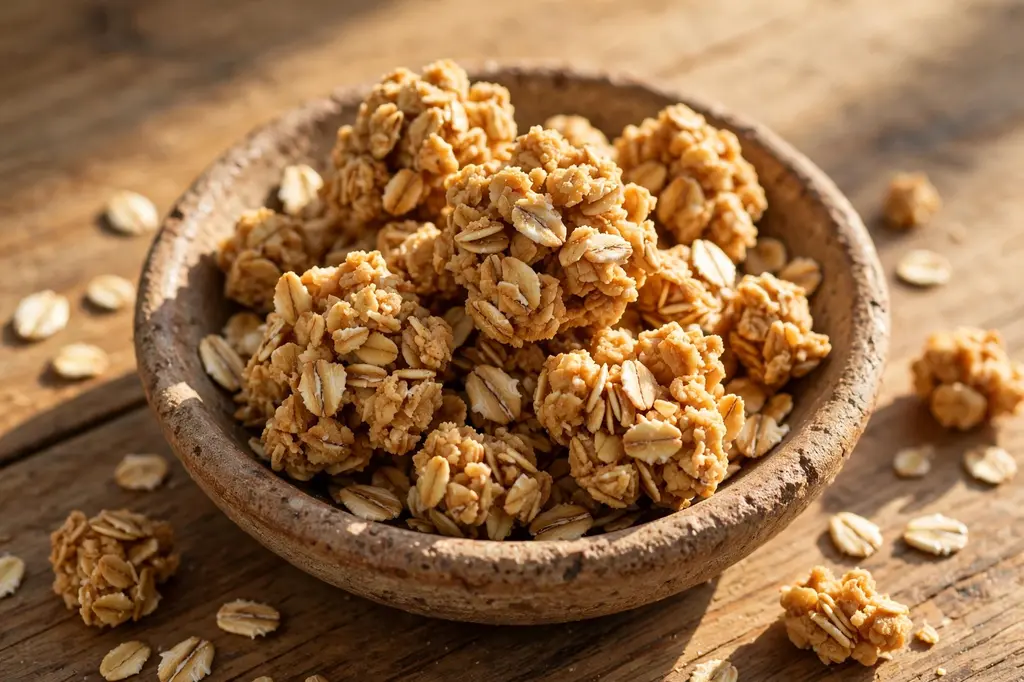
Nutritional Profile of Granola
| Nutrient per 100g | Amount | Benefit for Dogs |
|---|---|---|
| Calories | 471 kcal | Very energy dense, so portions must stay tiny |
| Protein | 10.1 g | Supports muscle maintenance and repair |
| Fiber | 7.5 g | Supports digestion and healthy bowel movements |
| Fat | 20.4 g | Supplies energy but can upset the stomach |
| Iron | 3.4 mg | Helps carry oxygen in the blood |
| Magnesium | 104 mg | Supports muscle and nerve function |
| Vitamin B6 | 0.1 mg | Supports brain function and energy metabolism |
| Zinc | 2.3 mg | Supports the immune system and skin health |
Calories in Granola
Granola contains about 471 calories per 100 grams, which makes it one of the most calorie-dense foods you might offer a dog. A single tablespoon holds around 30 calories, and a small handful can easily reach 100 calories or more. For a small dog eating 400 calories a day, that one handful can use up the whole treat allowance. This is why plain granola should only ever be a tiny sprinkle, never a bowlful.
Benefits of Feeding Plain Oat Granola to Dogs
1. Good Source of Fiber
The oats in plain granola provide soluble fiber, which supports smooth digestion and regular bowel movements. Fiber also feeds the friendly bacteria in the gut, helping to keep your dog’s digestive system balanced. A small sprinkle of plain granola over regular food can add fiber without changing the meal much.
2. Provides Steady Energy
Oats are a complex carbohydrate, which means they release energy slowly rather than all at once. This steady release can help active dogs stay energized through a long walk or a play session. Plain granola gives a small energy boost without the sugar crash that comes from sweet treats.
3. Contains Iron and Magnesium
Plain oat granola provides iron, which helps carry oxygen in the blood, and magnesium, which supports muscle and nerve function. These minerals work together to keep your dog active and healthy. They are present in useful amounts even in a small serving of granola.
4. Supports Skin and Coat Health
Oats contain zinc and B vitamins that help keep the skin healthy and the coat shiny. Zinc supports the immune system and helps the skin heal from minor scratches. Dogs that eat oats regularly as part of a balanced diet often have a softer, healthier-looking coat.
5. A Useful Crunchy Training Reward
The crunchy texture of plain granola makes it an interesting training reward, especially for dogs that enjoy crisp foods. A few clusters can be used as a high-value reward during training sessions. Just keep the total amount small, because the calories add up fast.
Risks and Disadvantages of Granola for Dogs
1. Raisins Are Toxic
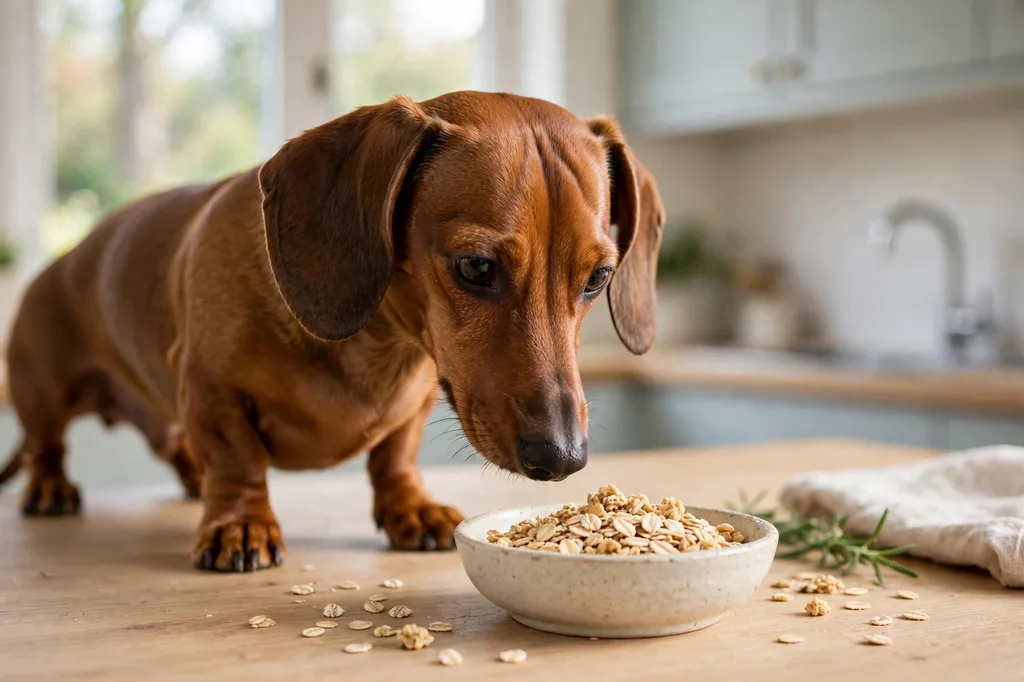
Raisins are the most dangerous ingredient found in granola. They can cause kidney failure in dogs, and scientists still do not know exactly how little is enough to cause harm. Some dogs have become seriously ill after eating only a few raisins. Any granola that contains raisins, sultanas, or currants should never be given to a dog.
2. Xylitol Poisoning
Xylitol is a sweetener used in some sugar-free granola and granola bars, and it is extremely toxic to dogs. It causes a rapid release of insulin, which drops blood sugar to dangerous levels within an hour. Symptoms include vomiting, weakness, shaking, and collapse. Xylitol poisoning is a veterinary emergency that needs treatment right away.
3. Chocolate and Cocoa
Many granola blends contain chocolate chips, cocoa powder, or chocolate coating. Chocolate contains theobromine, which dogs cannot break down properly, and it can cause vomiting, diarrhea, a racing heart, and seizures in larger amounts. Dark chocolate is the most dangerous, but no chocolate is safe for dogs.
4. Nuts and Choking Hazards
Macadamia nuts are toxic to dogs and can cause weakness, vomiting, and tremors. Other nuts, such as almonds and walnuts, are not toxic in the same way, but they are hard to digest and can cause stomach blockages or pancreatitis because of their high fat content. Whole nuts are also a choking hazard for smaller dogs.
5. High Sugar and Weight Gain
Most granola is sweetened with honey, brown sugar, or maple syrup, which adds a lot of sugar that dogs do not need. Eating sugary foods often can lead to weight gain and dental problems, and it can worsen diabetes in dogs that already have it. Plain oat granola avoids this problem, but sweetened blends do not.
Can Dogs Eat Granola Bars?
Most granola bars are not safe for dogs. They are usually made with the same risky ingredients as loose granola, including raisins, chocolate, nuts, and sweeteners, and they often contain xylitol in sugar-free versions. Granola bars are also very dense in calories and sugar. A plain oat bar with no added ingredients would be the only exception, but it is simpler to offer plain cooked rice as a safe grain treat instead.
Can Dogs Eat Honey Granola?
Honey granola is not toxic, but it is not a good choice for dogs. Honey is pure sugar, and it adds a lot of calories without any real nutrition for your dog. Dogs that eat honey granola often can gain weight and develop dental problems. If the honey granola also contains raisins or nuts, it becomes unsafe rather than just unhealthy. Plain oat granola without honey is always the better option.
Can Dogs Eat Granola With Milk?
Granola with milk adds another problem, because many adult dogs are lactose intolerant and cannot digest milk properly. Milk can cause gas, bloating, and diarrhea in dogs that lack the enzyme to break down lactose. If you want to serve plain granola, offer it dry in a tiny amount, or mix it with a spoonful of plain water instead of milk.
How Much Granola Can a Dog Eat?
Only plain oat-only granola should ever be offered, and only in the tiny amounts shown below. Any granola with raisins, chocolate, nuts, or xylitol should never be fed at any size. If your dog eats a granola with raisins or xylitol, contact your vet immediately, because these are emergencies.
| Dog Size | Weight | Plain Oat Granola per Day |
|---|---|---|
| Extra small | Under 5 kg | Half a teaspoon |
| Small | 5 to 10 kg | 1 teaspoon |
| Medium | 10 to 25 kg | 1 tablespoon |
| Large | 25 to 45 kg | 2 tablespoons |
| Giant | Over 45 kg | 3 tablespoons |
Can Puppies Eat Granola?
No, puppies should not eat granola. Their digestive systems are still developing, and they are more sensitive to sugar, fat, and new foods than adult dogs. Puppies also need carefully balanced food to support growth, and granola can upset that balance. Wait until your puppy is fully grown, and even then offer only plain oat granola in a tiny amount, never a shop-bought mix.
How to Safely Feed Plain Granola to Your Dog
The only safe granola for dogs is a plain oat-only blend with no dried fruit, nuts, chocolate, honey, or sweetener. Read the label carefully before you buy, because raisins and xylitol can hide in the ingredient list. Start with a tiny sprinkle and watch your dog for a day to check for any stomach upset before offering it again.
Ways to Serve
- Sprinkle a small amount over your dog’s regular kibble.
- Use a few clusters as a crunchy training reward.
- Mix plain granola into a spoonful of plain yogurt.
- Scatter it on a snuffle mat for slow foraging fun.
- Combine it with mashed banana for a soft textured treat.
Granola vs. Other Grain Foods for Dogs
| Food | Safe for Dogs | Main Concern |
|---|---|---|
| Plain oat granola | Yes, in tiny amounts | High calories and sugar in most blends |
| Shop granola with raisins | No | Raisins can cause kidney failure |
| Plain oatmeal | Yes | Very little risk when plain |
| Plain cooked rice | Yes | Low fiber, so feed in moderation |
| Plain Cheerios | Yes, in small amounts | Low nutrition and added salt in some types |
Frequently Asked Questions
Can dogs eat granola with raisins?
No, dogs must never eat granola with raisins. Raisins are toxic to dogs and can cause kidney failure, even in small amounts. If your dog eats raisin granola, contact your vet immediately, because early treatment makes a big difference.
Is plain granola safe for dogs?
Yes, plain oat-only granola is safe for dogs in tiny amounts. It must contain no raisins, chocolate, nuts, honey, or xylitol. Always check the label, and when in doubt, offer plain cooked oats instead.
Can dogs eat granola bars with chocolate?
No, dogs should never eat granola bars with chocolate. Chocolate contains theobromine, which dogs cannot break down, and it can cause vomiting, a racing heart, and seizures. Keep all chocolate granola bars away from your dog.
Can dogs eat homemade granola?
Homemade granola can be safe if it is made only from oats and a little oil, with no dried fruit, nuts, chocolate, or sweetener. Most homemade recipes add honey and dried fruit, so check your recipe carefully before sharing it with your dog.
What should I do if my dog ate raisin granola?
Call your vet right away, even if your dog seems fine. Raisin poisoning can take hours to show symptoms, and early treatment with vomiting induction or fluids can prevent kidney damage. Do not wait for symptoms to appear, and do not try to treat it at home.
Can dogs eat granola with yogurt?
Dogs can eat a small amount of plain oat granola mixed with mashed banana and plain yogurt as a soft treat, as long as the granola has no raisins, chocolate, or xylitol. Keep the portion tiny, because granola is very calorie dense.