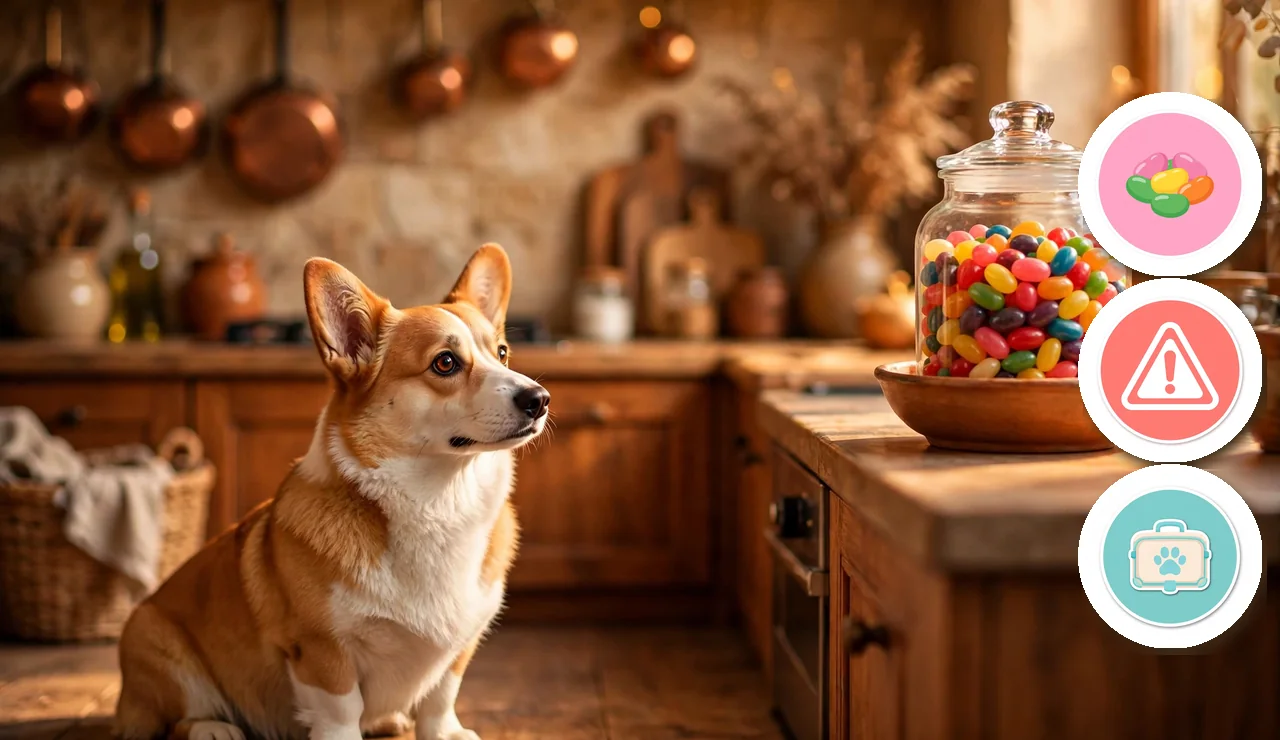
Can Dogs Eat Jelly Beans?

Quick Answer: No, dogs should not eat jelly beans, regardless of the brand or flavor. Despite the name, jelly beans are not a bean or legume of any kind. They are a sugar-based candy shaped to resemble a bean, and they offer no nutritional value while carrying several real risks. Sugar-free jelly beans are the biggest concern, since many are sweetened with xylitol, a compound that is highly toxic to dogs. Some specialty varieties, particularly those marketed as energy or sports jelly beans, also contain caffeine, which is dangerous for dogs as well. Even a plain, regular jelly bean offers nothing beneficial and is best kept away from dogs entirely.
Key Takeaways
- Jelly beans are candy, not an actual bean or legume, despite the shared name.
- Sugar-free jelly beans often contain xylitol, which is highly toxic to dogs and can cause a dangerous, rapid drop in blood sugar.
- Some specialty jelly beans, including energy or sports varieties, contain caffeine, which is also dangerous for dogs.
- Even regular jelly beans with no xylitol or caffeine offer no nutritional benefit and can cause digestive upset from sugar and artificial additives.
- Jelly beans are small and smooth, creating a real choking hazard, particularly for small dogs that swallow food quickly.
- If a dog eats jelly beans containing xylitol, this is a medical emergency and a veterinarian should be contacted immediately.
Can Dogs Eat Jelly Beans?
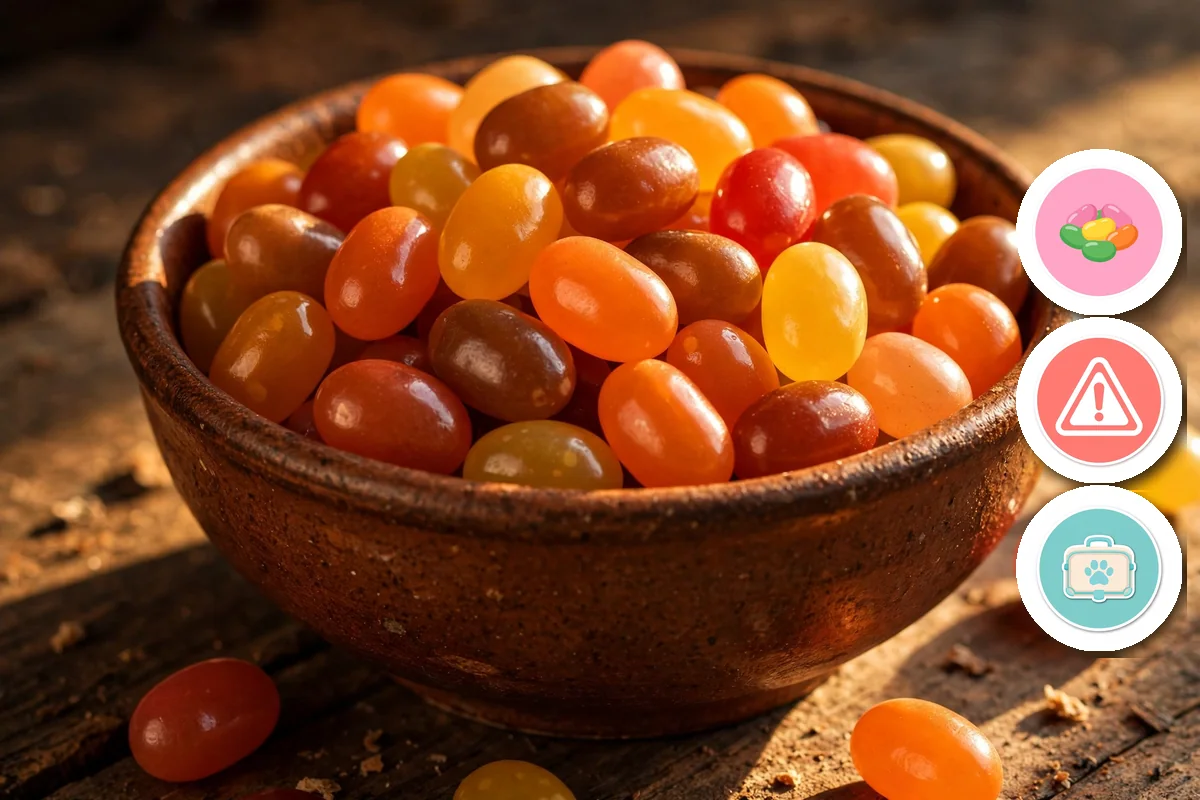
No, dogs should not eat jelly beans. It is worth starting with a simple but important clarification: jelly beans are not actually beans at all. They are a sugar-based candy, typically made with sugar, corn syrup, and a chewy or gel-like center, shaped and colored to resemble a bean purely for visual appeal. This means none of the guidance that applies to actual beans, such as cooking to remove natural toxins, has any relevance here. Jelly beans are candy, plain and simple, and candy is not an appropriate food for dogs.
Whether a jelly bean is dangerous or merely unhealthy for a dog depends heavily on what type it is. Regular, sugar-based jelly beans are not acutely toxic, but they offer nothing beneficial and can still cause digestive upset. Sugar-free jelly beans are a different and much more serious matter, since they frequently contain xylitol, an artificial sweetener that is genuinely dangerous to dogs. Curious about other foods? See if mango is safe for dogs. Curious about other foods? See if cantaloupe is safe for dogs. As you plan dog-friendly treats, find out whether oranges is safe for dogs.
Why Sugar-Free Jelly Beans Are Especially Dangerous
Xylitol, sometimes labeled as birch sugar, wood sugar, or birch bark extract, is used as a sugar substitute in many sugar-free candies, including a number of jelly bean products. In dogs, xylitol triggers a rapid release of insulin, which can cause blood sugar to drop dangerously low within as little as 20 to 30 minutes of ingestion. This can progress to seizures, liver damage, and in severe cases, death if not treated promptly. Xylitol is toxic to dogs in very small amounts, with some sources citing a toxic dose as low as 0.1 gram per kilogram of body weight, which means even a small handful of sugar-free jelly beans could pose a genuine emergency, particularly for a small dog. Checking the ingredient label carefully before assuming any sugar-free candy is safe is an essential habit for any dog owner.
The Surprising Caffeine Risk in Some Jelly Beans
This is a detail many pet owners are not aware of. Certain specialty jelly beans, particularly those marketed as energy beans or sports beans designed to give athletes a quick boost, contain caffeine. A standard one-ounce bag of some jelly bean products has been noted to contain around 50 milligrams of caffeine. Dogs are considerably more sensitive to caffeine than humans, and ingestion can cause restlessness, a rapid heart rate, high blood pressure, tremors, and in severe cases, seizures or death. Because caffeine is not an ingredient most people associate with candy, it is easy to overlook, which makes checking the label especially important for any specialty or novelty jelly bean product.
Are Regular Jelly Beans Safe If They Don’t Contain Xylitol or Caffeine?
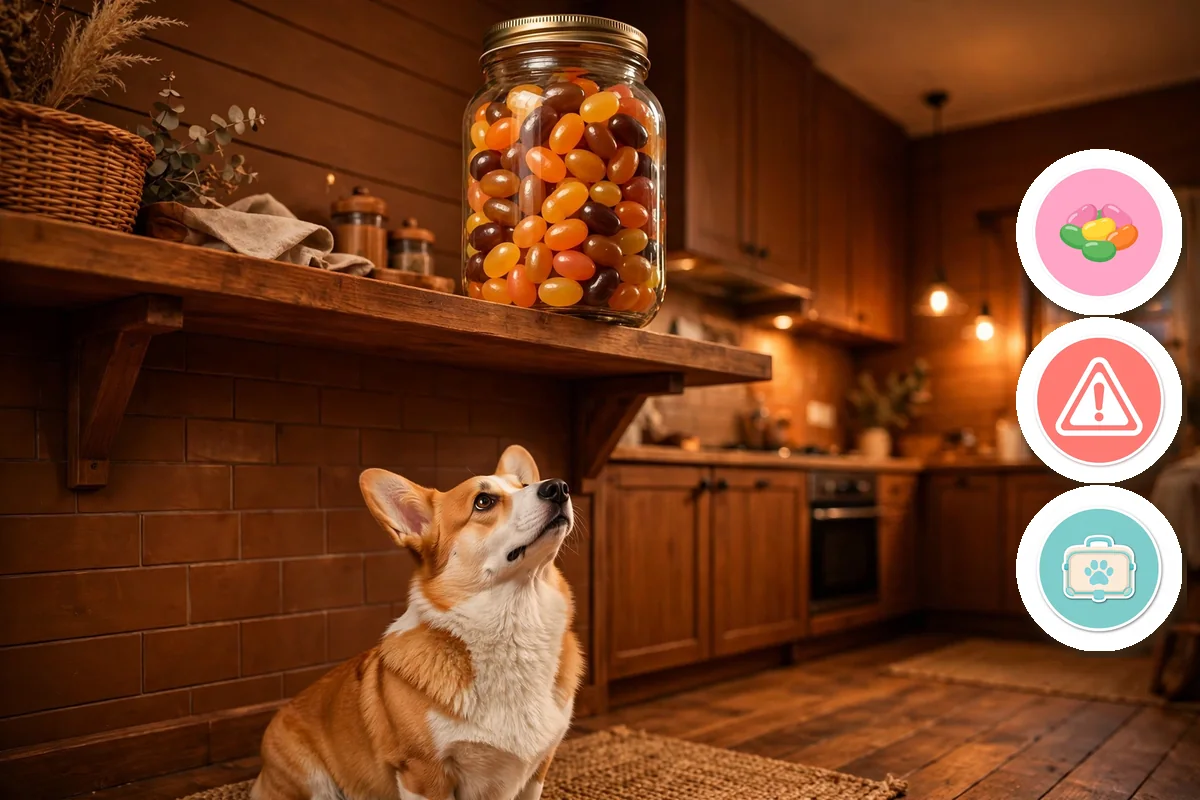
Regular, sugar-based jelly beans without xylitol or caffeine are not classified as acutely toxic, but “not toxic” is different from “safe to feed.” Jelly beans still offer several reasons for concern even in their most basic form.
1. High Sugar Content
Jelly beans are essentially pure sugar. A large quantity can cause an upset stomach, and regular exposure over time contributes to obesity, dental problems, and an increased risk of diabetes.
2. Artificial Colors and Flavors
The bright colors and varied flavors in jelly beans come from artificial additives, which can cause digestive upset or, in sensitive dogs, an allergic reaction.
3. Choking Hazard
Jelly beans are small, smooth, and slightly slippery, which makes them easy for a dog to swallow without chewing, particularly small dogs or dogs that eat quickly. Swallowing several at once could also contribute to an intestinal blockage in rare cases.
4. No Nutritional Value
Unlike an actual bean, a jelly bean provides no protein, fiber, vitamins, or minerals of any kind. There is no upside to offset even the smaller risks involved.
Advantages vs. Disadvantages at a Glance
| Advantages | Disadvantages |
|---|---|
| Regular varieties are not acutely toxic on their own | Sugar-free varieties often contain toxic xylitol |
| Some specialty varieties contain dangerous caffeine | |
| High sugar content contributes to obesity and dental issues | |
| Artificial colors and flavors can cause digestive upset or allergic reaction | |
| Small, smooth shape is a choking hazard | |
| Provides no nutritional value whatsoeve |
What to Do If Your Dog Eats Jelly Beans
- Try to determine what type of jelly bean was eaten, specifically whether it was labeled sugar-free or as an energy or sports variety, and how many were eaten.
- If there is any chance the jelly beans contained xylitol, contact a veterinarian or an emergency animal hospital immediately, even if the dog is not yet showing symptoms, since low blood sugar can develop within 20 to 30 minutes.
- If caffeine may have been involved, treat this with similar urgency and contact a veterinarian promptly.
- For regular, non-sugar-free jelly beans in a small amount, monitor the dog for vomiting, diarrhea, or changes in energy level, and offer fresh water.
- Do not attempt to induce vomiting at home unless specifically instructed by a veterinarian.
- Keep the candy packaging on hand if possible, since the ingredient list can help a veterinarian assess the situation quickly.
Signs of Xylitol Poisoning
Watch closely for the following, which can develop rapidly:
- Vomiting
- Weakness or lethargy
- Tremors or loss of coordination
- Seizures
- Collapse
If a veterinarian is not immediately reachable and a dog begins showing these signs, offering a small amount of food or rubbing a bit of honey on the gums has been suggested as a temporary measure to help support blood sugar on the way to emergency care, though this does not replace prompt veterinary treatment.
Can Puppies Eat Jelly Beans?
No, jelly beans should be kept away from puppies with even greater caution than adult dogs. A puppy’s smaller size means any xylitol or caffeine present represents a much larger relative dose, and even the sugar content alone is more likely to cause a significant reaction in a small, developing digestive system.
Jelly Beans and Dogs with Health Conditions
Certain dogs face a higher risk from jelly beans and should be kept away from them with particular care.
| Condition | Consideration |
|---|---|
| Diabetes | Sugar content can significantly affect blood glucose control |
| Obesity or weight management | Empty sugar calories work directly against weight management goals |
| Small or toy breeds | Higher relative risk from xylitol, caffeine, sugar, and choking hazard |
| Dental disease | Sugar and sticky candy texture can worsen existing dental problems |
How to Prevent Accidental Jelly Bean Exposure
- Store jelly beans and other candy in a sealed container well out of a dog’s reach.
- Be especially cautious around holidays like Easter, when jelly beans are commonly left out in baskets or bowls.
- Check the ingredient label on any sugar-free or specialty jelly bean product before it enters the house, particularly if there are dogs in the household.
- Let children and guests know not to share jelly beans or other candy with a dog.
- Choose a veterinarian-approved treat instead of candy whenever a dog needs a small reward.
Frequently Asked Questions
Are jelly beans actually made from beans?
No, despite the name, jelly beans are a sugar-based candy shaped to resemble a bean. They contain no actual beans or legumes and offer no nutritional value comparable to a real bean.
Can dogs eat regular jelly beans?
Regular jelly beans without xylitol or caffeine are not acutely toxic, but they offer no nutritional benefit and can cause digestive upset from sugar and artificial additives, along with presenting a choking hazard.
Why are sugar-free jelly beans more dangerous than regular ones?
Sugar-free jelly beans often contain xylitol, an artificial sweetener that is highly toxic to dogs and can cause a dangerous, rapid drop in blood sugar within 20 to 30 minutes of ingestion.
Do jelly beans contain caffeine?
Some specialty varieties, particularly energy or sports jelly beans, contain caffeine, sometimes around 50 milligrams per one-ounce bag. Caffeine is dangerous for dogs and can cause a rapid heart rate, tremors, or seizures.
What should I do if my dog eats jelly beans?
Determine what type was eaten and how many. If there is any chance of xylitol or caffeine, contact a veterinarian or emergency animal hospital immediately, even without visible symptoms.
How quickly do symptoms appear if a dog eats xylitol?
Low blood sugar from xylitol can develop within 20 to 30 minutes of ingestion, making prompt veterinary attention essential.
Can jelly beans cause a choking hazard for dogs?
Yes, their small, smooth, slightly slippery shape makes them easy to swallow without chewing, particularly for small dogs, and swallowing several at once could contribute to a blockage in rare cases.
Can puppies eat jelly beans?
No, puppies should never be given jelly beans. Their smaller size means any xylitol, caffeine, or even just sugar represents a larger relative dose and a greater risk.
