
Can Dogs Eat Turkey?

Quick Answer: Yes, dogs can eat turkey as long as it is plain, cooked, boneless, and skinless. Turkey is a lean, high-protein meat that many commercial dog foods use. However, seasoned holiday turkey, with skin, bones, gravy, onion, or garlic, can make your dog seriously ill.
Key Takeaways
- Plain, cooked, boneless, skinless turkey breast is safe for dogs in moderation.
- Turkey is lean and rich in protein, B vitamins, and minerals like zinc and selenium.
- Never feed cooked turkey bones, they splinter and can puncture the digestive tract.
- Remove all skin: it is high in fat and can trigger pancreatitis.
- Avoid seasoned, smoked, deli, or leftover holiday turkey containing onion, garlic, or heavy spices.
- A few small pieces as a treat or food topper is plenty; turkey should not replace balanced dog food.
- Ground turkey (plain, cooked, drained) is an excellent lean protein option for homemade meals.
Can Dogs Eat Turkey?
Yes, plain cooked turkey is one of the safer meats you can share with your dog. It is lean, digestible, and packed with protein. In fact, turkey is a common primary protein in many commercial dog foods, especially formulas designed for dogs with chicken sensitivities. You might also want to know can dogs eat shrimp. Many owners also wonder can dogs eat cheese before sharing snacks. Curious about other foods? See if mozzarella cheese is safe for dogs.

The key word is plain. A simple roasted or boiled turkey breast with no seasoning, no skin, and no bones is a healthy occasional treat. The trouble starts with how humans usually prepare turkey: brined, butter-basted, herb-crusted, served with gravy, and surrounded by stuffing made with onion and garlic. That holiday spread is a recipe for vomiting, diarrhea, or worse in dogs.
Turkey skin deserves special mention. It is extremely high in fat, and fatty foods can trigger pancreatitis in dogs, a painful, potentially life-threatening inflammation of the pancreas. Every holiday season, veterinary emergency clinics see a spike in pancreatitis cases from dogs fed turkey skin and drippings.
Nutritional Profile of Turkey
| Nutrient (per 100g roasted breast) | Amount | Potential Benefit for Dogs |
|---|---|---|
| Protein | 29g | Supports muscle maintenance and repair |
| Fat | 7g | Lower than most meats; good for weight management |
| Niacin (B3) | 11 mg | Supports energy metabolism |
| Vitamin B6 | 0.9 mg | Supports brain health and immune function |
| Vitamin B12 | 2 mcg | Supports nerve function and red blood cells |
| Zinc | 2.5 mg | Supports skin, coat, and immune health |
| Selenium | 31 mcg | Antioxidant; supports thyroid function |
| Phosphorus | 210 mg | Supports bones and teeth |
| Tryptophan | 340 mg | Essential amino acid; precursor to serotonin |
Calories in Turkey
Skinless roasted turkey breast contains roughly 140–155 calories per 100 grams, making it one of the leanest meats available. Turkey thigh meat is slightly higher at around 180 calories per 100g. By contrast, turkey skin alone packs over 400 calories per 100g, almost entirely from fat. As with any treat, turkey should stay within 10% of your dog’s daily calorie intake.
Benefits of Feeding Turkey to Dogs
1. Excellent Lean Protein Source
Turkey breast is nearly as lean as chicken breast, delivering high-quality complete protein with relatively little fat. This makes it ideal for dogs that need to maintain a healthy weight.
2. Good Alternative for Chicken-Sensitive Dogs
Some dogs develop sensitivities to chicken, the most common protein in dog food. Turkey is a closely related but distinct protein that many such dogs tolerate well, though always transition gradually.
3. Rich in B Vitamins
Turkey provides niacin, B6, and B12, which support energy metabolism, brain function, and healthy red blood cells.
4. Contains Zinc and Selenium
These trace minerals support immune function, skin and coat health, and thyroid regulation.
5. Highly Digestible
Plain cooked turkey is gentle on most dogs’ stomachs, which is why veterinarians often recommend it (with plain rice or pumpkin) for dogs recovering from digestive upset.
6. Versatile for Homemade Meals
Plain ground turkey, cooked and drained, is a convenient lean base for home-prepared dog meals when combined with appropriate vegetables and supplements under veterinary guidance.
Risks of Feeding Turkey to Dogs
1. Cooked Bones Splinter Dangerously
Cooked turkey bones, especially leg and wing bones, splinter into sharp fragments that can cut the mouth, throat, or intestines, or cause choking and blockages. Never give your dog cooked turkey bones of any kind.
2. Skin Can Trigger Pancreatitis
Turkey skin is loaded with fat and seasoning. Even a moderate amount can trigger pancreatitis in susceptible dogs, causing severe abdominal pain, vomiting, and lethargy requiring emergency care.
3. Seasoning, Onion, and Garlic Toxicity
Holiday turkey is often prepared with onion, garlic, or onion/garlic powder, all toxic to dogs and capable of damaging red blood cells. Herbs like sage in large quantities and heavy salt brines are also problematic.
4. Gravy and Drippings Are Too Rich
Gravy is essentially concentrated fat and salt. It can cause anything from mild diarrhea to full-blown pancreatitis.
5. Deli and Processed Turkey
Deli slices, smoked turkey, and turkey bacon contain high sodium, nitrates, and preservatives. They are not appropriate for dogs except as a very rare tiny taste.
6. Raw Turkey and Bacterial Risk
Raw turkey can carry Salmonella and Campylobacter. If you feed raw as part of a raw diet, follow strict hygiene and sourcing practices, and consult your vet, for most owners, cooked is the safer choice.
Can Dogs Eat Turkey Bones?
No. Cooked turkey bones are brittle and splinter easily, creating sharp shards that can perforate the digestive tract. This is a genuine emergency risk. Raw turkey bones (such as raw necks) are softer and some raw feeders use them, but they still carry bacterial risks and should only be given under guidance from a vet experienced with raw feeding. When in doubt, no bones at all.
Can Dogs Eat Ground Turkey?
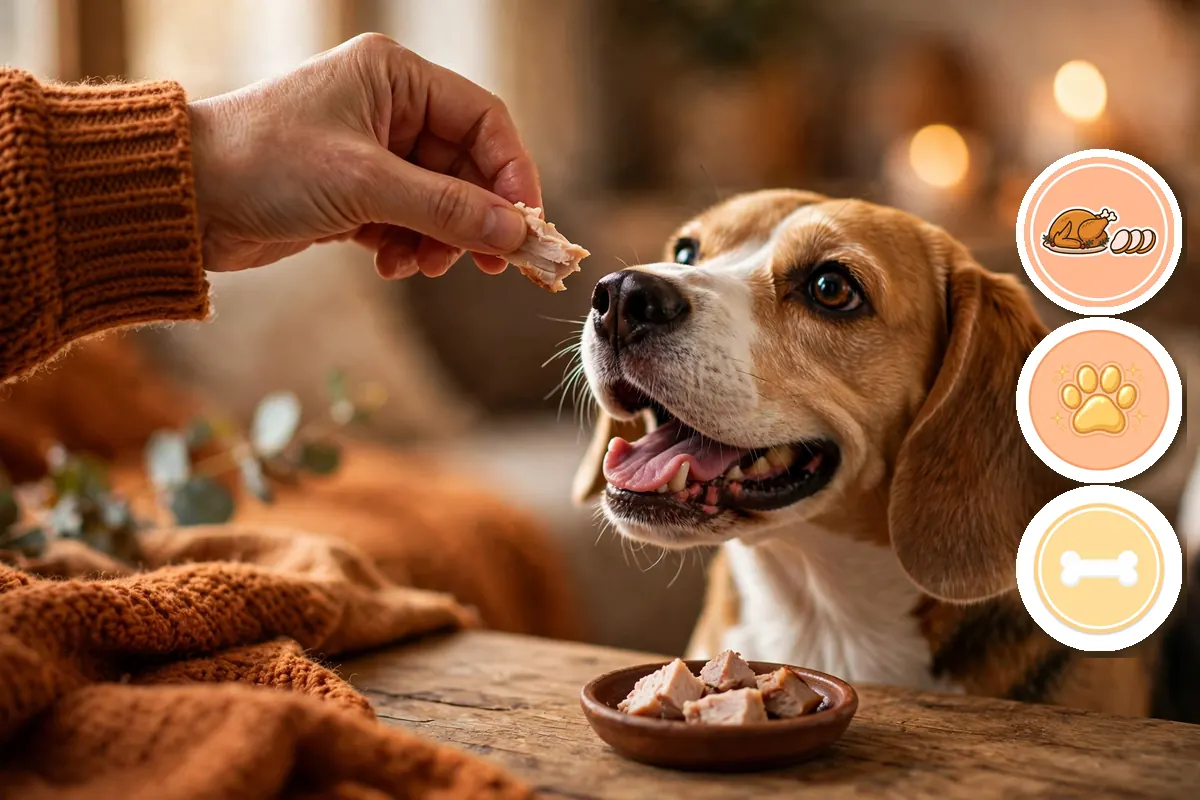
Yes, plain ground turkey that has been cooked thoroughly and drained of fat is an excellent option. Choose the leanest grind available (99% lean if possible). Cook it with no oil, butter, onion, or garlic. Ground turkey works well as a food topper or as the protein base in a vet-approved homemade diet.
Can Dogs Eat Deli Turkey Slices?
It is best to avoid them. Deli turkey is high in sodium and contains preservatives like nitrates. A single small piece on rare occasions is unlikely to harm a healthy dog, but it should never be a regular treat.
How Much Turkey Can a Dog Eat?
Turkey should be a treat or topper, not a meal replacement (unless part of a vet-designed diet). Stick to the portions below, a few times per week at most.
| Dog Size | Weight | Safe Treat Amount |
|---|---|---|
| Extra small | Under 5 kg | 1–2 small pieces (about 1 tbsp) |
| Small | 5–10 kg | 2–3 pieces (about 2 tbsp) |
| Medium | 10–25 kg | A small handful (about 1/4 cup) |
| Large | 25–40 kg | About 1/3 cup diced |
| Giant | Over 40 kg | About 1/2 cup diced |
Can Puppies Eat Turkey?
Yes, puppies can eat small amounts of plain cooked turkey breast. It is gentle and easy to digest. However, puppies have precise nutritional needs for growth, so turkey should only be a tiny treat, their balanced puppy food must remain the main diet. Never give puppies bones, skin, or seasoned meat.
Holiday Turkey Safety Tips
- Set aside a small portion of plain turkey breast for your dog before seasoning or basting the bird.
- Secure trash cans, dogs will raid turkey carcasses, bones, and greasy leftovers.
- Keep stuffing, gravy, and desserts (especially anything with xylitol) out of reach.
- Tell guests not to slip the dog turkey skin or scraps under the table.
- If your dog eats a large amount of fatty leftovers, watch for vomiting, abdominal pain, or lethargy and call your vet promptly.
How to Safely Feed Turkey to Your Dog
Ways to Serve Turkey to Dogs
- Plain diced breast: Roast or boil boneless, skinless breast with no seasoning; dice into bite-size pieces.
- Food topper: Mix a tablespoon or two of plain shredded turkey into regular kibble for a protein boost.
- Cooked ground turkey: Brown lean ground turkey in a dry pan, drain all fat, and serve plain.
- Frozen treats: Blend plain cooked turkey with a little water or low-sodium broth and freeze in molds.
Turkey vs. Other Poultry for Dogs
| Meat | Fat (per 100g) | Protein | Verdict for Dogs |
|---|---|---|---|
| Turkey breast | 7g | 29g | Excellent lean choice |
| Chicken breast | 4g | 31g | Excellent; most common allergy trigger though |
| Duck | 28g | 19g | Too fatty for regular feeding |
| Goose | 22g | 25g | Too fatty; occasional tiny taste only |
Frequently Asked Questions
Can dogs eat turkey skin?
No. Turkey skin is very high in fat and usually coated in butter, oil, and seasoning. It is one of the most common triggers of pancreatitis in dogs.
Can dogs eat turkey lunch meat?
Avoid it. Deli turkey contains too much sodium and preservatives for regular feeding.
What if my dog ate turkey bones?
Monitor closely for choking, drooling, vomiting, abdominal pain, or bloody stool. Do not induce vomiting without veterinary advice, sharp fragments can cause more damage coming back up. Call your vet immediately if you notice any symptoms.
Can dogs eat turkey necks?
Raw turkey necks are used by some raw feeders, but cooked necks splinter like other cooked bones. Only consider raw necks under guidance from a raw-feeding-knowledgeable vet.
Is turkey better than chicken for dogs?
Nutritionally they are similar; turkey is slightly higher in some minerals. Turkey is mainly useful as an alternative for dogs that do not tolerate chicken well.
Can dogs eat leftover Thanksgiving turkey?
Only the plain, unseasoned breast meat with no skin or bones. The typical seasoned, gravy-covered leftovers are not safe.