

Can Dogs Eat Oysters?

Quick Answer: Yes, dogs can eat oysters, but only when they are fully cooked, served plain, and given in small amounts. Cooked oysters are rich in protein, zinc, and omega-3s, which support skin, coat, and immune health. Never feed raw oysters to a dog, because they can carry harmful bacteria such as Vibrio, and always remove the shell and skip all seasoning.
Key Takeaways
- Cooked oysters are safe for dogs in small amounts, but raw oysters are never safe.
- Oysters are rich in zinc, protein, iron, and omega-3 fatty acids.
- Always remove the shell completely, because shells can cut the mouth and block the intestines.
- Serve oysters plain, with no butter, garlic, sauce, or seasoning.
- Too many oysters can cause stomach upset because of their high zinc and fat content.
- Some dogs are allergic to shellfish, so introduce oysters slowly and watch for reactions.
- Buy fresh oysters from a trusted source and cook them thoroughly before serving.
Can Dogs Eat Oysters?
Yes, dogs can eat oysters when they are cooked and plain. Oysters are a nutrient-dense shellfish, packed with zinc, iron, vitamin B12, and omega-3s, which support a healthy coat, strong immunity, and good energy. A small amount of cooked oyster meat makes an excellent occasional treat, especially for dogs that enjoy seafood.
The cooking part is not optional. Raw oysters can carry Vibrio bacteria and other germs that cause serious food poisoning in dogs, with vomiting, diarrhea, and fever. Dogs do not have the same tolerance for raw shellfish that some people assume, and a raw oyster can make a dog very sick. Cooking kills these bacteria, so always steam, boil, or bake oysters until they are fully cooked through.
Portion size matters too. Oysters are very rich in zinc, and too much zinc can cause stomach upset and interfere with how your dog absorbs other minerals. One or two small oysters are plenty for most dogs, and oysters should never replace a balanced meal. If your dog has never had shellfish before, start with a tiny piece and watch for any allergic reaction over the next day.
Nutritional Profile of Oysters
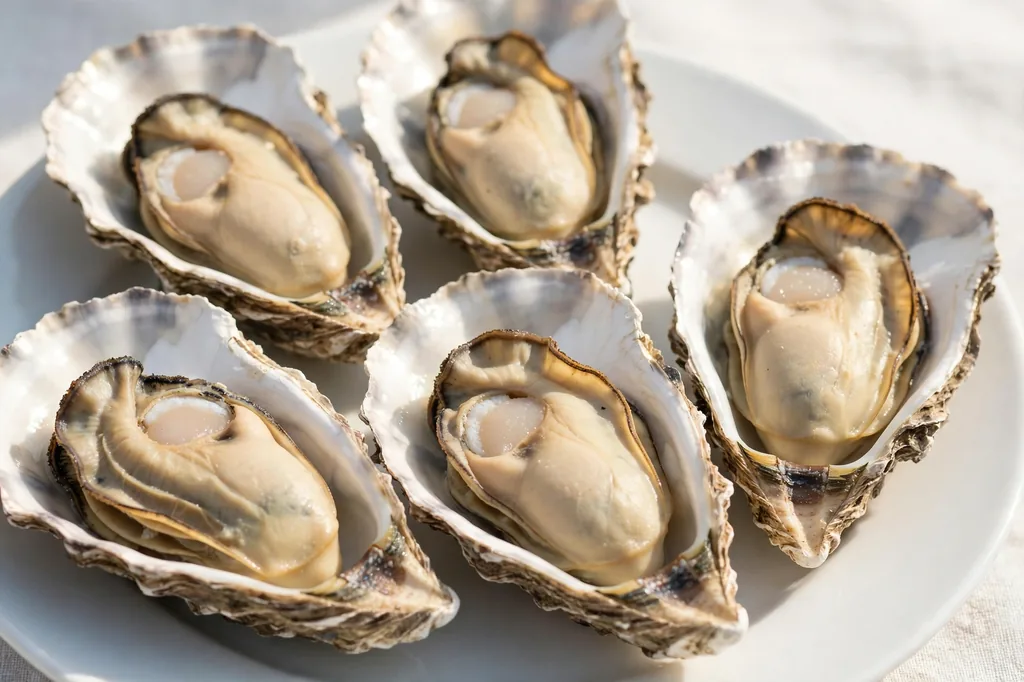
The table below shows the nutrition of cooked oysters per 100 grams and what each nutrient means for a dog. Values are for plain cooked oyster meat with no added butter or sauce.
| Nutrient | Amount per 100g | What it means for dogs |
|---|---|---|
| Calories | 68 kcal | Low in calories for a protein-rich food |
| Protein | 9 g | Lean protein for muscle maintenance |
| Fat | 2 g | Low fat, mostly healthy omega-3s |
| Omega-3 fatty acids | 0.7 g | Supports skin, coat, and joint health |
| Zinc | 16 mg | Very high; supports immunity, but too much upsets the stomach |
| Iron | 5.7 mg | Supports healthy red blood cells |
| Vitamin B12 | 16 mcg | Supports nerves and energy metabolism |
| Selenium | 37 mcg | Antioxidant mineral; supports thyroid health |
| Vitamin D | 8 mcg | Supports bones and immune function |
Calories in Oysters
Oysters are low in calories, with only about 68 calories per 100 grams of cooked meat, and a single medium oyster has roughly 10 to 15 calories. That makes them one of the lightest seafood treats you can offer. Treats should still stay under 10 percent of your dog’s daily calories, but a couple of oysters use up very little of that budget, which is good news for dogs watching their weight.
Benefits of Oysters for Dogs
Oysters are one of the most nutrient-dense foods you can share with your dog, as long as they are cooked and served plain. The benefits below explain why they are worth offering in small amounts.
1. Exceptional Source of Zinc
Oysters contain more zinc per gram than almost any other food. Zinc supports immune function, wound healing, and healthy skin and coat. Dogs with zinc deficiency can develop skin problems, so a small amount of oyster can help, but do not overdo it.
2. Rich in Omega-3 Fatty Acids
Oysters provide EPA and DHA, the omega-3 fatty acids that support skin, coat, and joint health. These are the same healthy fats found in salmon, and they help keep your dog’s coat shiny and their joints comfortable.
3. Lean, High-Quality Protein
Oyster meat is lean protein with all the essential amino acids dogs need for muscle maintenance. It is a good alternative protein for dogs that are sensitive to common meats such as chicken or beef.
4. Iron for Healthy Blood
Oysters are rich in iron, which supports healthy red blood cells and oxygen delivery. Dogs that are active or recovering from illness can benefit, but iron should always come from food, not supplements, unless your vet advises otherwise.
5. Vitamin B12 for Energy and Nerves
Oysters are one of the best natural sources of vitamin B12, which supports nerve function and energy metabolism. A small serving covers a dog’s B12 needs many times over.
6. Selenium and Antioxidant Support
Oysters provide selenium, an antioxidant mineral that helps protect cells and supports thyroid health. Like zinc, selenium is powerful in small amounts, so keep portions small.
Risks and Disadvantages of Oysters for Dogs

1. Raw Oyster Bacteria
Raw oysters can carry Vibrio bacteria, norovirus, and other germs that cause severe food poisoning. Dogs that eat raw oysters can develop vomiting, diarrhea, fever, and dehydration. Always cook oysters fully, and never share raw oysters from a raw bar with your dog.
2. Shell Dangers
Oyster shells are sharp and hard. A shell fragment can cut your dog’s mouth, throat, or intestines, and a whole shell can cause a blockage that needs surgery. Always remove the shell completely and check the meat for fragments before serving.
3. Too Much Zinc
Oysters are extremely high in zinc, and too much can cause vomiting, diarrhea, and lethargy. Very high doses over time can interfere with copper absorption. One or two oysters are plenty.
4. Shellfish Allergies
Some dogs are allergic to shellfish, including oysters. Signs include itching, hives, swollen face, vomiting, or diarrhea after eating. If your dog has never had shellfish, offer a tiny piece first and watch for 24 hours.
5. Seasoning and Preparation Risks
Oysters for people are often served with butter, garlic, hot sauce, or cocktail sauce, all of which are bad for dogs. Garlic is toxic to dogs, and rich sauces can upset the stomach. Serve oysters plain, with nothing added.
6. Contaminants in Polluted Waters
Oysters filter water, so they can accumulate heavy metals and pollutants from dirty waters. Buy from a trusted source, and avoid oysters from unknown or polluted areas.
Can Dogs Eat Raw Oysters?
No, dogs should never eat raw oysters. Raw oysters can carry Vibrio bacteria and other germs that cause serious food poisoning, and dogs are not protected from them. Cooking is the only way to make oysters safe, so always steam, boil, or bake them until fully cooked. If your dog eats a raw oyster, watch closely for vomiting, diarrhea, or fever, and call your vet if symptoms appear.
Can Dogs Eat Oyster Shells?
No, dogs should never eat oyster shells. The shells are sharp, hard, and indigestible, and they can cut the mouth and throat or cause a dangerous intestinal blockage. Some people crush oyster shells as a calcium supplement, but that is not safe to do at home, because fragments can still cause harm. If your dog needs extra calcium, ask your vet about a safe supplement instead.
Can Dogs Eat Smoked Oysters?
Smoked oysters are not recommended for dogs. Canned smoked oysters are usually packed in oil and loaded with salt, and they often contain garlic or other seasonings. The high sodium alone makes them a poor choice. If you want to share oysters with your dog, cook fresh oysters plain at home instead.
How Much Oysters Can a Dog Eat?
Oysters are a treat, not a meal, so keep portions small. The table below gives safe amounts by dog size for plain cooked oyster meat.
| Dog Size | Weight | Safe Amount |
|---|---|---|
| Extra small | Under 10 lbs | Half a small oyster, once a week |
| Small | 10-25 lbs | 1 small oyster, once a week |
| Medium | 25-60 lbs | 1-2 oysters, once or twice a week |
| Large | 60-90 lbs | 2 oysters, once or twice a week |
| Giant | Over 90 lbs | 2-3 oysters, once or twice a week |
Start with a smaller amount the first time to check for allergies. If your dog shows any sign of stomach upset or itching, stop feeding oysters and ask your vet.
Can Puppies Eat Oysters?
Puppies can have a tiny taste of plain cooked oyster once they are eating solid food, but it is best to wait until they are a few months old. Puppies have sensitive stomachs, so the bacteria risk from undercooked shellfish hits them harder. A small piece of fully cooked oyster is fine as an occasional treat, but never give a puppy raw oysters or shells.
How to Safely Feed Oysters to Your Dog
Cooked oysters are easy to serve safely if you follow a few simple steps. Buy fresh, cook fully, remove every bit of shell, and serve plain.
Ways to Serve
- Steamed plain: Steam oysters until fully cooked, remove the meat from the shell, and let it cool before serving.
- Boiled and chopped: Boil oysters for a few minutes, chop the meat into small pieces, and mix into your dog’s regular food.
- Baked without seasoning: Bake oysters plain in the oven, then remove the meat and serve it on its own as a treat.
- Mixed with rice: Stir chopped cooked oyster into plain rice for a gentle seafood meal topper.
- With shrimp: Pair a small piece of cooked oyster with plain cooked shrimp for a seafood treat mix.
Oysters vs. Other Seafood for Dogs
Oysters are nutrient-dense, but they are not the only seafood dogs can enjoy. This table compares oysters with other common seafood options.
| Seafood | Verdict for Dogs | Main Concern |
|---|---|---|
| Oysters (cooked) | Safe in small amounts | Very high zinc; never serve raw |
| Salmon (cooked) | Safe in moderation | Bones must be removed; no seasoning |
| Shrimp (cooked) | Safe in moderation | Remove shell and tail; no seasoning |
| Tuna (cooked) | Small amounts only | Mercury; limit how often you serve it |
| Raw oysters | Never feed | Vibrio bacteria and food poisoning |
| Smoked oysters | Avoid | High salt, oil, and seasoning |
| Crab meat (plain) | Small amounts only | High sodium; shell fragments |
Frequently Asked Questions
Are oysters good for dogs?
Yes, cooked oysters are good for dogs in small amounts. They are rich in zinc, omega-3 fatty acids, iron, and vitamin B12, which support immunity, coat, and energy. Keep portions small because of their very high zinc content, and never serve them raw.
Can dogs eat oysters every day?
No, dogs should not eat oysters every day. Their extremely high zinc content can cause stomach upset and mineral imbalances if eaten too often. Once or twice a week in small amounts is plenty, and most dogs do fine with even less.
What happens if a dog eats a raw oyster?
A raw oyster can cause food poisoning with vomiting, diarrhea, fever, and lethargy, usually within a day. Watch your dog closely and call your vet if symptoms appear, especially if your dog is small, young, or has a weak immune system.
Can dogs eat canned oysters?
Canned oysters are not the best choice, because they are often packed in oil and high in sodium. If you use them, choose ones packed in water with no added salt, rinse them well, and serve only a small amount.
Can dogs eat oyster crackers?
Oyster crackers are not oysters at all: they are small salted crackers with no seafood in them. They are not toxic, but they are high in salt and refined flour, so they are not a good treat. Offer plain cooked oyster meat instead.
Are oysters better than fish for dogs?
Oysters are richer in zinc and iron than most fish, but fish like salmon offer more omega-3s per serving. Both are healthy in moderation, so variety is best.