
Can Dogs Eat Orange Peels?

Quick Answer: No, dogs should not eat orange peels. The flesh of an orange is safe and healthy for dogs in small amounts, but the peel is tough and hard to digest, and can cause stomach upset, vomiting, or even an intestinal blockage. Orange peels also contain essential oils that can irritate a dog’s digestive tract. Always peel the orange first and offer only the flesh.
Key Takeaways
- Orange peels are not safe for dogs, even though orange flesh is healthy.
- The peel is tough and hard to digest, so it can cause vomiting, diarrhea, or a blockage.
- Orange peels contain essential oils that can irritate the stomach and intestines.
- Orange seeds should also be removed, because they contain trace amounts of cyanide compounds.
- A small piece of peel is unlikely to cause a crisis, but it should never be fed on purpose.
- If your dog eats a large amount of peel, watch for vomiting, lethargy, or loss of appetite, and call your vet.
- Offer peeled orange segments instead, in small amounts, as a vitamin C rich treat.
Can Dogs Eat Orange Peels?
No, dogs should not eat orange peels. The peel is the tough, bitter outer skin of the orange, and it is designed by nature to protect the fruit, not to be eaten. Dogs lack the enzymes to break down the thick, fibrous peel, so it can sit in the stomach and cause vomiting, gas, and diarrhea. In larger amounts, or in small dogs, a swallowed piece of peel can even block the intestines.
Orange peels also contain essential oils, mainly d-limonene, which give oranges their strong citrus smell. In small amounts, these oils are harmless, but in the concentrated amounts found in peel, they can irritate a dog’s mouth, stomach, and intestines. Some dogs are more sensitive than others, and a dog that eats a lot of peel may develop drooling, vomiting, or diarrhea within hours.
The good news is that the inside of the orange is a different story. Orange flesh is safe for dogs in moderation, and it provides vitamin C, fiber, and hydration. The key is to peel the orange, remove the seeds, and offer only a few segments. That way your dog gets the benefits of the fruit without any of the risks of the peel.
Nutritional Profile of Orange Peels
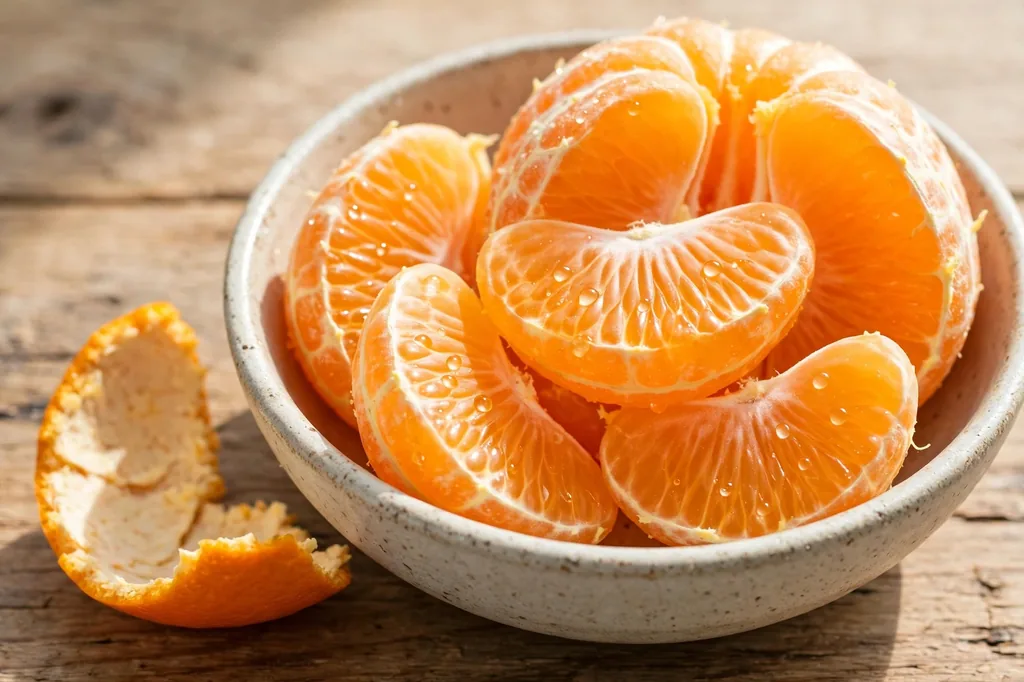
The table below shows the nutrition of orange peel per 100 grams and what each nutrient means for a dog. The peel is compared with orange flesh, which is far gentler on digestion.
| Nutrient | Amount per 100g | What it means for dogs |
|---|---|---|
| Calories | 97 kcal | Moderate, but calories are not the issue |
| Fiber | 10.6 g | Very high, but too tough to digest |
| Vitamin C | 136 mg | High, but dogs make their own vitamin C |
| Calcium | 161 mg | Present, but not worth the digestive risk |
| Essential oils | High | D-limonene can irritate the stomach |
| Potassium | 212 mg | Supports muscles and nerves in small amounts |
| Sugar | 8 g | Low, but irrelevant next to the risks |
| Flavonoids | Present | Antioxidants, but safer sources exist |
| Water | 73 g | Less hydrating than orange flesh |
Calories in Orange Peels
Orange peel contains about 97 calories per 100 grams, which is more than orange flesh at about 47 calories per 100 grams. Calories are not the reason to avoid peel, though: the problem is digestibility, not energy. A dog can handle the calories in a piece of peel, but it cannot handle the tough fiber and concentrated oils, which is why peel causes stomach upset even in small amounts.
Benefits of Orange Peels for Dogs
Be clear first: the verdict on orange peels is still “do not feed them.” The points below describe what the peel contains, but every benefit here is available from orange flesh or other foods without the digestive risk.
1. Very High in Fiber
Orange peel is extremely high in fiber, about 10.6 grams per 100 grams. Fiber supports digestion, but the peel’s fiber is too tough for a dog’s gut to handle. Orange flesh and vegetables like broccoli provide fiber more gently.
2. Rich in Vitamin C
Orange peel contains more vitamin C per gram than the flesh, about 136 mg per 100 grams. Dogs produce their own vitamin C, though, so they do not need it from food.
3. Antioxidant Flavonoids
Orange peel contains flavonoids such as hesperidin, which act as antioxidants. Blueberries are a far better antioxidant treat for dogs, with no digestive downside.
4. Calcium Content
Orange peel contains calcium, about 161 mg per 100 grams, which supports bones and teeth. Balanced dog food already provides calcium in the right amounts, so peel adds nothing your dog needs.
5. Low in Sugar
Orange peel is lower in sugar than many fruits, at about 8 grams per 100 grams. That does not make it a good treat, because the digestive risks outweigh any benefit from the lower sugar.
Risks and Disadvantages of Orange Peels for Dogs

1. Indigestible Fiber and Blockage Risk
Orange peel is thick and fibrous, and a dog’s digestive system cannot break it down. A swallowed piece can irritate the stomach lining, and a larger piece can block the intestines, which may need surgery. Small dogs face the highest risk.
2. Essential Oil Irritation
Orange peels are rich in essential oils, mainly d-limonene, which can irritate the mouth, stomach, and intestines. Dogs that eat peel may drool, vomit, or develop diarrhea, and some dogs are sensitive to citrus oils even in small amounts.
3. Gastrointestinal Upset
The combination of tough fiber and concentrated oils commonly causes vomiting, diarrhea, gas, and stomach pain. Even a moderate amount of peel can upset a sensitive dog’s stomach for a day or more.
4. Pesticide Residue on the Peel
Orange peels carry the highest pesticide residue of any part of the fruit, because sprays land directly on the skin. Even washed peels can retain chemicals not meant to be eaten.
5. Choking Hazard
Pieces of orange peel are stiff and hard to chew, so they can lodge in a dog’s throat, especially in small dogs and puppies that gulp their food. Always remove the peel before offering oranges.
Can Dogs Eat Orange Peel Zest?
No, dogs should not eat orange zest either. Zest is just finely grated peel, so it carries the same essential oils and pesticide residue, in a more concentrated form. A tiny amount of zest baked into a treat is unlikely to harm a dog, but there is no reason to add it on purpose. If you cook with citrus, keep the zest and peel away from your dog’s bowl.
Can Dogs Eat Dried Orange Peels?
No, dried orange peels are even worse for dogs than fresh peel. Drying concentrates the essential oils and makes the peel even tougher and harder to digest. Dried peel is also common in potpourri, which dogs sometimes chew, and those products can contain extra oils and chemicals. Keep dried peels and potpourri well out of your dog’s reach.
Can Dogs Eat Oranges Without the Peel?
Yes, dogs can eat oranges without the peel, in small amounts. Peeled orange segments are safe and provide vitamin C, fiber, and hydration. Remove the peel, the white pith, and the seeds, and offer only one or two segments at a time. Some dogs dislike the tart taste, so if your dog turns away, do not force it.
How Much Orange Peel Can a Dog Eat?
The recommended amount of orange peel for dogs is none. The table below covers accidental eating by dog size, so you can judge the risk.
| Dog Size | Weight | If peel is eaten |
|---|---|---|
| Extra small | Under 10 lbs | Call your vet even for a small piece |
| Small | 10-25 lbs | Monitor closely; call your vet if vomiting starts |
| Medium | 25-60 lbs | Watch for vomiting or diarrhea over 24 hours |
| Large | 60-90 lbs | A small piece often passes without issue, but monitor |
| Giant | Over 90 lbs | Monitor; call promptly if a large amount was eaten |
If your dog ate a large amount of peel, or shows signs of a blockage such as repeated vomiting, straining, or loss of appetite, call your vet right away.
Can Puppies Eat Orange Peels?
No, puppies should not eat orange peels. Puppies have smaller bodies and more sensitive digestive systems, so the tough fiber and essential oils in peel hit them harder per pound of body weight. A piece of peel is also a bigger choking and blockage risk for a puppy. Stick to puppy-formulated food and safe treats, and peel any fruit before offering it to a puppy.
How to Safely Feed Oranges to Your Dog
The safe way to share oranges with your dog is to peel them first and offer only the flesh. A few simple steps keep the treat safe and enjoyable.
Ways to Serve
- Peeled segments: Remove the peel, pith, and seeds, then offer one or two fresh orange segments as a treat.
- Orange in kibble: Chop a peeled segment into small pieces and mix it into your dog’s regular food.
- Frozen orange bites: Freeze small pieces of peeled orange for a cool, refreshing summer snack.
- Mixed fruit bowl: Combine peeled orange with mango chunks and blueberries for a vitamin-rich fruit mix.
- Orange and yogurt: Stir a little peeled orange into plain yogurt for a creamy, probiotic-rich treat.
Orange Peels vs. Other Citrus Parts for Dogs
Not all parts of citrus fruit are equal for dogs. This table shows why the flesh is the only safe part, while the peel, pith, and seeds should stay out of the bowl.
| Citrus Part | Verdict for Dogs | Main Concern |
|---|---|---|
| Orange flesh (peeled) | Safe in small amounts | Acidity; keep portions small |
| Orange peel | Avoid | Indigestible fiber, essential oils, blockage risk |
| Orange pith (white part) | Avoid | Bitter, tough, hard to digest |
| Orange seeds | Avoid | Trace cyanide compounds; choking risk |
| Lemon peel | Avoid | Essential oils and acidity |
| Mandarin segments | Safe in small amounts | Sweeter and gentler than oranges |
| Grapefruit flesh | Small amounts only | Very acidic; many dogs dislike it |
Frequently Asked Questions
Are orange peels poisonous to dogs?
Orange peels are not classed as acutely poisonous, but they are unsafe because of their indigestible fiber and essential oils. The oils can irritate the digestive tract, and a large piece can cause a blockage. Treat orange peels as off-limits for dogs.
What happens if a dog eats orange peel?
A small piece of peel often causes only mild stomach upset, gas, or loose stools. Watch for vomiting, diarrhea, or lethargy over the next 24 hours. If your dog ate a large amount, or shows signs of a blockage, call your vet right away.
Can dogs eat orange peel in small amounts?
A tiny piece of peel is unlikely to cause a crisis in a healthy dog, but orange peel should not be fed intentionally, even in small amounts. The fiber and oils offer no benefit, and peeled orange flesh is a safer treat. If your dog sneaks a piece, monitor them for a day.
Is the white pith of an orange safe for dogs?
No, the white pith is also best avoided. It is bitter, tough, and hard to digest, much like the peel itself. It is less oily than the peel, so it is less irritating, but it still offers no benefit. Remove the pith along with the peel before serving oranges.
Can dogs eat oranges every day?
Oranges should be an occasional treat, not a daily food. The natural sugars and acidity can upset the stomach if eaten too often, and treats should stay under 10 percent of daily calories. One or two segments a few times a week is plenty.
What should I do if my dog ate orange peel?
Check how much peel your dog ate and remove any remaining peel from reach. Monitor for 24 hours for vomiting, diarrhea, or loss of appetite. Call your vet right away if your dog ate a large amount, or if any symptoms appear.