Can Dogs Eat Papaya?

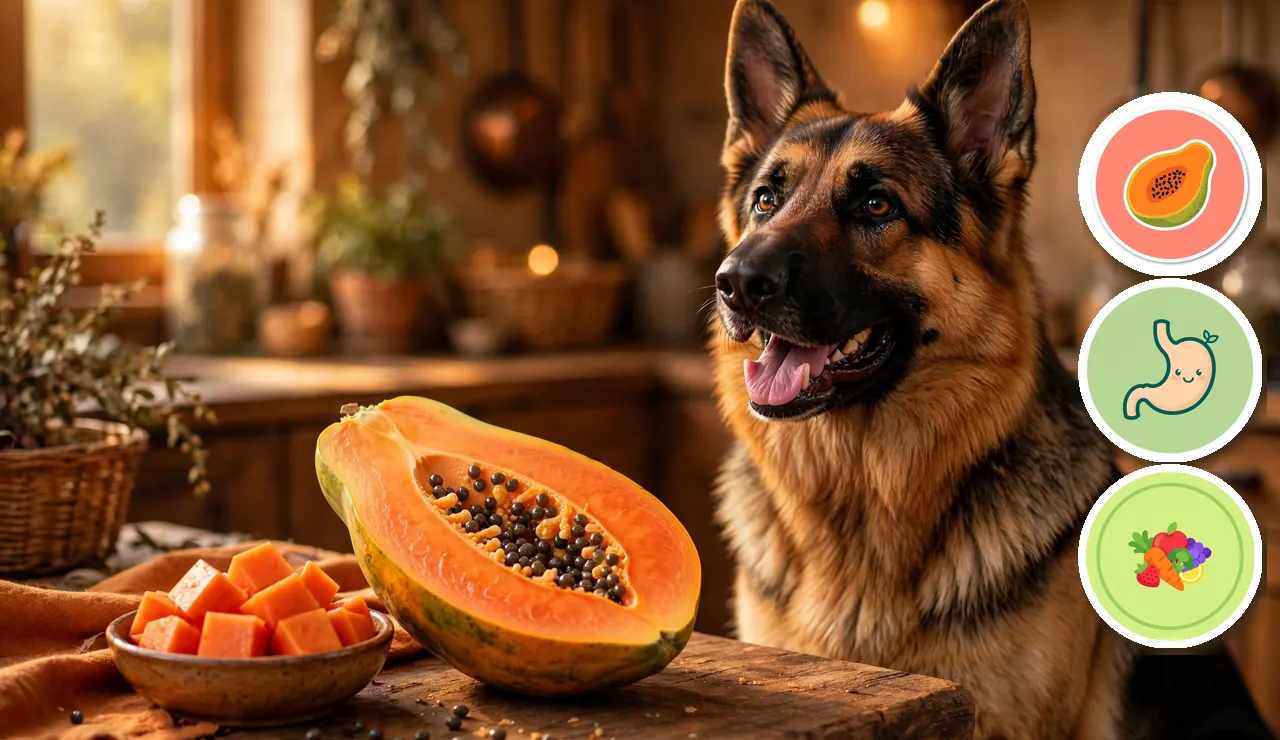
Quick Answer: Yes, dogs can eat papaya as long as it is ripe and served in small amounts with the seeds and peel removed. The soft, sweet flesh is a nutritious tropical treat packed with vitamins and digestive enzymes. The black seeds contain trace amounts of compounds that may be harmful in quantity, so always scoop them out first. Many owners also wonder can dogs eat blueberries before sharing snacks. As you plan dog-friendly treats, find out whether banana peels is safe for dogs.
Key Takeaways
- Ripe papaya flesh is safe and nutritious for dogs in moderation.
- Always remove the black seeds and the tough peel before serving.
- Papaya is rich in vitamins A, C, and E, plus the digestive enzyme papain.
- Its natural sugars and fiber mean portions should stay small, a few cubes is enough.
- Unripe (green) papaya is harder to digest and should be avoided.
- Serve it fresh and plain; skip dried papaya with added sugars or sulfites.
- As with any new food, introduce slowly and watch for digestive upset.
Can Dogs Eat Papaya?
Yes, ripe papaya is a safe, healthy fruit for most dogs when prepared properly. The soft orange flesh is easy to chew and digest, naturally sweet enough that most dogs love it, and loaded with nutrients. Papaya is sometimes even recommended by vets as a gentle fruit option for dogs that need a low-fat treat.
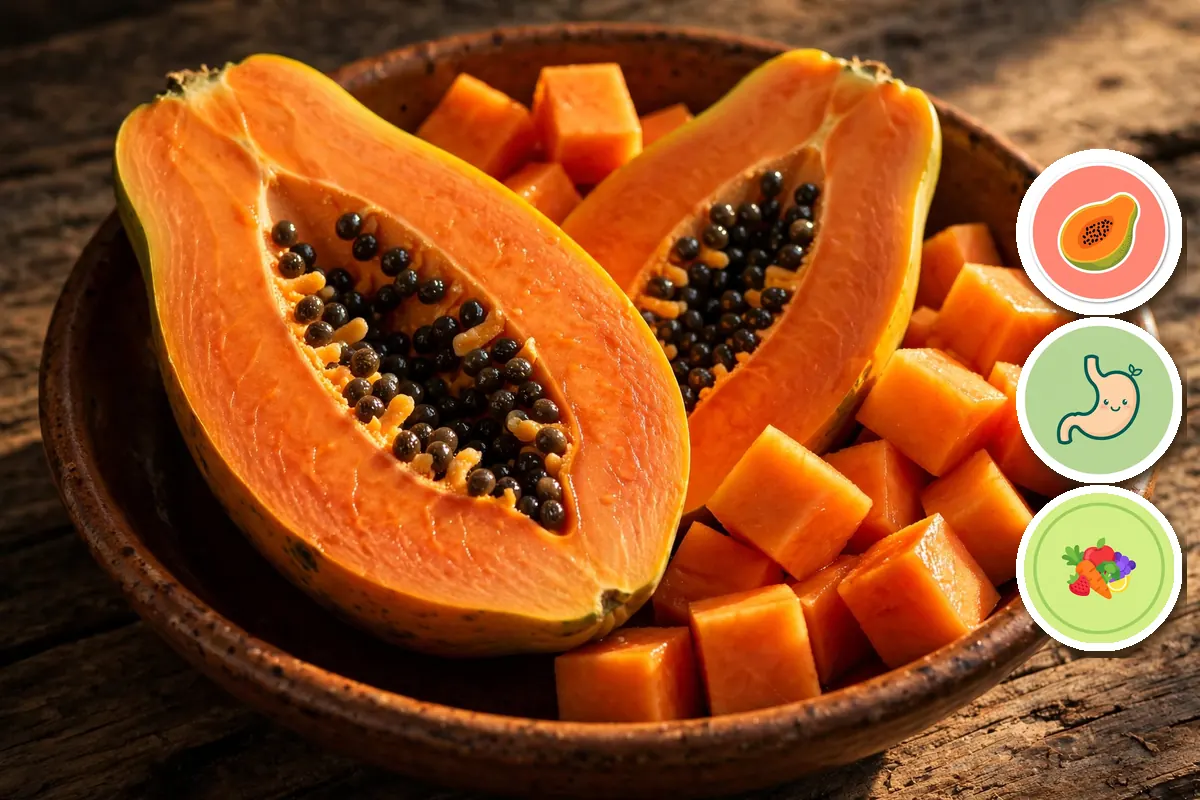
The preparation matters. A whole papaya contains two parts you should never feed: the black seeds clustered in the center, and the tough outer peel. The seeds contain small amounts of cyanogenic compounds and other substances that can be harmful in large quantities, and they have a sharp, peppery taste that suggests they are not meant to be eaten. The peel is difficult to chew and digest and may be treated with waxes or pesticides. Scoop out the seeds, slice away the peel, and serve only the ripe flesh.
Choose a ripe papaya, one that yields slightly to gentle pressure and has mostly yellow-orange skin. Unripe green papaya is firm, bitter, and much harder on a dog’s stomach. When in doubt, let it ripen on the counter for a few days before sharing.
Nutritional Profile of Papaya
| Nutrient (per 100g ripe flesh) | Amount | Potential Benefit for Dogs |
|---|---|---|
| Vitamin C | 61 mg | Antioxidant; supports immune function |
| Vitamin A (as beta-carotene) | 950 IU | Supports vision, skin, and immune health |
| Vitamin E | 0.3 mg | Antioxidant; supports cell health |
| Folate | 38 mcg | Supports cell growth and red blood cell formation |
| Potassium | 182 mg | Supports muscle and nerve function |
| Fiber | 1.7g | Supports healthy digestion |
| Papain (enzyme) | trace | May aid protein digestion |
| Water | 88g | Hydrating, low-calorie treat |
Calories in Papaya
Ripe papaya is a light, low-calorie fruit at roughly 43 calories per 100 grams, about 60 calories per cup of cubed fruit. That makes it an excellent choice for dogs watching their weight, especially compared to calorie-dense treats. Still, the natural sugars add up, so keep servings small and count them within the 10% daily treat allowance.
Benefits of Feeding Papaya to Dogs
1. Excellent Source of Vitamin C and A
Papaya delivers an impressive dose of vitamin C along with beta-carotene, which the body converts to vitamin A. Both support immune function, healthy vision, and skin health.
2. Contains Papain, a Digestive Enzyme
Papaya naturally contains papain, an enzyme that helps break down protein. While dogs produce their own digestive enzymes, papain-rich foods may offer gentle digestive support, one reason papaya is a popular choice for dogs with sensitive stomachs.
3. High Water Content Keeps Dogs Hydrated
At nearly 90% water, papaya is a hydrating snack, especially welcome in warm weather or for dogs that do not drink enough water.
4. Gentle Fiber for Digestion
The soluble fiber in papaya supports healthy gut function and regular bowel movements without the harshness of some higher-fiber foods.
5. Low in Fat, Light on Calories
Papaya is naturally very low in fat, making it a safe treat option even for dogs prone to pancreatitis or weight gain, a rare combination among sweet fruits.
6. Antioxidants Support Healthy Aging
Lycopene, beta-carotene, and vitamin E in papaya act as antioxidants that help protect cells from everyday oxidative stress.
Risks of Feeding Papaya to Dogs
1. Seeds Must Be Removed
Papaya seeds contain small amounts of cyanogenic glycosides and other compounds that can be harmful if eaten in quantity. They also have an intensely bitter, peppery flavor. Always scoop out every seed before serving.
2. Peel Is Indigestible and May Carry Residues
The thick peel is tough, bitter, and hard to digest, and commercial fruit may carry waxes or pesticide residues on the skin. Peel the papaya completely.
3. Natural Sugars Add Up
Ripe papaya is about 8% sugar. Small servings are fine, but large amounts can cause digestive upset and contribute to weight gain, and sugary fruit is not ideal for diabetic dogs without veterinary guidance.
4. Too Much Fiber Can Upset the Stomach
Overdoing papaya can lead to gas, loose stool, or diarrhea, especially in dogs new to fruit. Start with a cube or two.
5. Dried Papaya Often Contains Additives
Commercial dried papaya is frequently loaded with added sugar and preservatives like sulfites, which can upset dogs’ stomachs. Stick to fresh fruit.
6. Possible Latex-Fruit Sensitivity
Papaya contains proteins related to natural latex. Dogs with known latex sensitivities could theoretically react, rare, but worth knowing if your dog has unusual allergies.
Can Dogs Eat Papaya Seeds?
No. Remove all the black seeds before serving papaya to your dog. The seeds contain trace cyanogenic compounds and other substances that are not safe in quantity, and their harsh peppery taste is a clear signal they are not food. If your dog accidentally eats a few seeds, it is unlikely to cause serious harm, but do not offer them intentionally.
Can Dogs Eat Papaya Skin?
No. The peel is tough, bitter, and difficult to digest, and it may carry pesticide residues or wax coatings. Always peel papaya completely and serve only the soft flesh.
Can Dogs Eat Green (Unripe) Papaya?
It is best to avoid it. Unripe papaya is firm, bitter, and contains higher levels of latex-like compounds that can irritate the mouth and stomach. Wait until the fruit is fully ripe, soft, fragrant, and mostly golden-orange.
How Much Papaya Can a Dog Eat?
A few small cubes a few times per week is plenty. Keep fruit treats within 10% of daily calories.
| Dog Size | Weight | Safe Amount (ripe cubes) |
|---|---|---|
| Extra small | Under 5 kg | 1–2 small cubes |
| Small | 5–10 kg | 2–3 cubes |
| Medium | 10–25 kg | A small handful (about 1/4 cup) |
| Large | 25–40 kg | About 1/3 cup cubed |
| Giant | Over 40 kg | About 1/2 cup cubed |
Can Puppies Eat Papaya?
Yes, puppies can have a small piece of ripe papaya as an occasional treat. The soft texture is easy for young teeth. Keep the amount tiny, a single small cube, since puppies’ digestive systems are still developing, and their balanced puppy food must remain the priority.
How to Safely Feed Papaya to Your Dog
Ways to Serve Papaya to Dogs
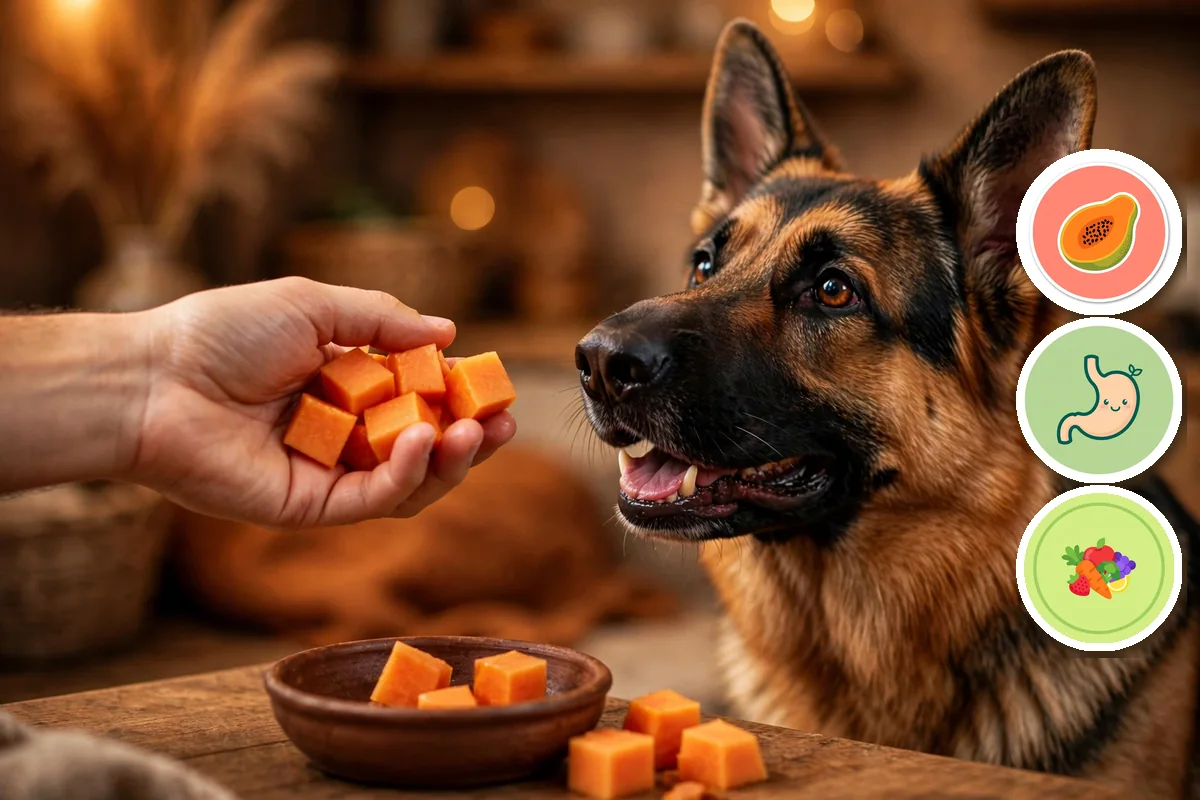
- Fresh cubes: Halve a ripe papaya, scoop out all seeds, peel, and dice the flesh into bite-size pieces.
- Frozen treats: Freeze papaya cubes for a cooling summer snack.
- Food topper: Mash a little ripe papaya and mix it into regular meals.
- Smoothie pupsicles: Blend papaya with water or plain yogurt (no xylitol) and freeze in molds.
Papaya vs. Other Tropical Fruits for Dogs
| Fruit | Safe? | Notes |
|---|---|---|
| Papaya (ripe flesh) | Yes | Remove seeds and peel; low-calorie and gentle |
| Mango (flesh) | Yes | Remove pit and peel; higher in sugar |
| Pineapple (fresh) | Yes | Small amounts; high acidity can upset stomachs |
| Banana | Yes | Higher in sugar and calories; small portions |
| Coconut (flesh) | Yes | High in fat; very small amounts only |
Frequently Asked Questions
Is papaya good for dogs’ digestion?
It can be. The fiber and the papain enzyme may gently support digestion, which is why papaya is a popular fruit for dogs with sensitive stomachs. It is not a treatment for digestive disease, though.
My dog ate papaya seeds, should I worry?
A few accidentally eaten seeds are unlikely to cause serious harm, but monitor for vomiting or digestive upset. The concern is with larger quantities, so keep seeds out of reach going forward.
Can dogs eat dried papaya?
Plain, unsweetened dried papaya in tiny amounts is not toxic, but most commercial dried papaya has added sugar and sulfites. Fresh is far better.
Can diabetic dogs eat papaya?
Papaya contains natural sugars, so diabetic dogs should only have it with veterinary approval and in carefully controlled portions.
Can dogs eat papaya every day?
A small daily piece is fine for most healthy dogs, but a few times per week is a safer habit to keep sugar and fiber in check.
What part of papaya is safe for dogs?
Only the ripe, seedless, peeled flesh. Seeds, peel, and unripe green fruit should all be avoided.