
Can Dogs Eat Plums?

Quick Answer: Yes, dogs can eat plums, but only the flesh and only in small amounts. The ripe flesh is safe and offers vitamins and fiber, yet the pit is toxic because it contains cyanide compounds, and it can also choke a dog or block the intestines. Always remove the pit completely, cut the flesh into small pieces, and offer just a few bites as an occasional treat.
Key Takeaways
- Ripe plum flesh is safe for dogs in small amounts, but the pit must always be removed first.
- Plum pits contain amygdalin, a compound that can release cyanide when chewed or digested.
- A swallowed pit can also block the intestines, especially in small dogs.
- Plums are naturally sweet, so too many can upset your dog’s stomach or add unwanted sugar.
- Dried plums, known as prunes, are not a good choice because they are very high in sugar and can cause diarrhea.
- Offer only plain, fresh, ripe plum flesh, never plum jam or canned plums in syrup.
- If your dog eats a plum pit, call your veterinarian right away, even if your dog seems fine.
Can Dogs Eat Plums?
Yes, dogs can eat plums when the fruit is prepared the right way. The ripe flesh is soft, juicy, and mildly sweet, and it carries useful nutrients such as vitamin C, vitamin A, potassium, and dietary fiber. A few small pieces now and then make a refreshing summer treat, much like the flesh of a ripe peach prepared without its pit.
The safety of plums depends entirely on which part your dog eats. The flesh is the only safe part. The pit, stem, and leaves contain amygdalin, which can release cyanide when chewed or digested. A whole swallowed pit may pass through without releasing much cyanide, but a chewed pit is far more dangerous, and any pit can lodge in the throat or gut. Never toss a whole plum to your dog.
Portion size matters too. Plums are sweet fruit, and a dog that eats several whole plums may develop stomach upset, loose stools, or gas. Dogs with diabetes or weight problems should eat plums only rarely, if at all, and only with your veterinarian’s approval. Keep the serving small, remove every trace of the pit, and choose fresh ripe fruit for the safest treat.
Nutritional Profile of Plums
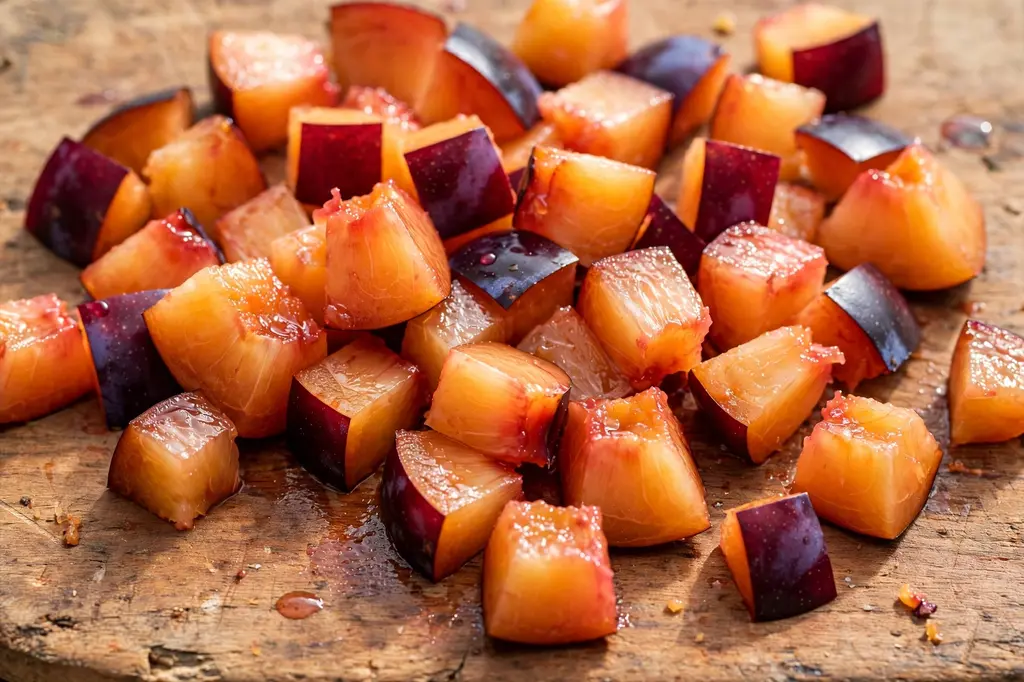
Plums are a low calorie stone fruit with a useful mix of vitamins and minerals. The table below shows the nutrients in 100 grams of fresh raw plums.
| Nutrient per 100g | Amount | Benefit for Dogs |
|---|---|---|
| Calories | 46 kcal | Low in calories, so a few pieces fit a treat allowance. |
| Vitamin C | 9.5 mg | Supports the immune system and healthy skin. |
| Vitamin A | 17 mcg | Supports healthy vision and skin. |
| Vitamin K | 6.4 mcg | Helps with normal blood clotting and bone health. |
| Potassium | 157 mg | Supports healthy muscles, nerves, and fluid balance. |
| Dietary fiber | 1.4 g | Supports digestion and regular bowel movements. |
| Natural sugars | 9.9 g | Provide quick energy, so limit portions. |
| Antioxidants | Present | Help protect cells from everyday damage. |
Calories in Plums
A single medium plum weighs about 66 grams and contains roughly 30 calories. That is modest for a medium or large dog, but it is still a meaningful share of a small dog’s daily treat allowance. Treats of all kinds, including fruit, should make up no more than 10 percent of your dog’s daily calories, so a couple of small pieces of plum flesh are plenty. The natural sugars are the main reason to keep portions small. If your dog needs to lose weight, a few bites can still fit if you count them in the daily treat budget.
Benefits of Feeding Plums to Dogs
When served safely, plums offer several small benefits as a light, hydrating treat.
1. Supports Immune Health
Plums contain vitamin C and vitamin A, which help support a healthy immune system, skin, and vision.
2. Adds Hydration on Warm Days
Fresh plums are about 87 percent water, so a few cool pieces can help top up your dog’s fluid intake on a hot day.
3. Provides Fiber for Digestion
The fiber in plum flesh supports healthy digestion and regular bowel movements.
4. Supplies Potassium for Muscles and Nerves
Plums supply potassium, which helps muscles contract normally and nerves send signals.
5. Offers Antioxidants That Protect Cells
Dark red and purple plums contain phenolic compounds that help protect cells from oxidative damage, and similar compounds are found in blueberries, another antioxidant rich fruit dogs can enjoy.
6. A Low Fat Treat Option
Plums contain almost no fat, which makes them useful for dogs watching fat intake or prone to pancreatitis.
Risks and Disadvantages

Plums carry real risks. Most of the danger comes from the pit and from overfeeding, and both are easy to avoid.
1. Plum Pits Contain Cyanide Compounds
The most serious risk is the pit. Plum pits contain amygdalin, which can release hydrogen cyanide when chewed or digested. Cyanide stops the body using oxygen properly, and symptoms can include bright red gums, difficulty breathing, and vomiting. Any chewed pit is an emergency, so call your veterinarian right away.
2. Choking and Intestinal Blockage
Even without the cyanide risk, a plum pit is a hard, smooth object that can choke a dog or block the intestines. Small dogs are at the highest risk. Signs of a blockage include vomiting, loss of appetite, and lethargy, and a blockage can require surgery.
3. Stomach Upset from Too Much Fruit
Eating too many plums at once can cause stomach upset, gas, and loose stools. Introduce plums slowly and watch your dog for a day before offering more.
4. High Sugar Content
Plums are sweeter than many fruits dogs eat, with about 10 grams of sugar per 100 grams of flesh. Regular large servings can add to weight gain, and dogs with diabetes should avoid plums unless your veterinarian says it is safe.
5. Allergic Reactions and Sensitivities
Some dogs are sensitive to stone fruits, including plums. A first serving may cause itching, a swollen face, or stomach upset. Start with a tiny piece and watch your dog for several hours, and call your veterinarian if you notice swelling or trouble breathing.
6. Fallen Fruit and Plum Trees in the Yard
If you have a plum tree, fallen fruit can be a hidden danger. A dog may eat whole plums, pits and all, or fruit that has started to ferment on the ground. Fermenting fruit can contain small amounts of alcohol, which is toxic to dogs, so pick up fallen plums regularly.
Can Dogs Eat Plum Pits?
No, dogs must never eat plum pits. The pit contains amygdalin, which can release cyanide when chewed, and its hard, smooth shape makes it a choking and blockage hazard. Even a pit swallowed whole should be treated seriously. If your dog eats a plum pit, call your veterinarian right away and describe your dog’s size and whether the pit was chewed. Do not try to make your dog vomit unless a veterinarian tells you to.
Can Dogs Eat Dried Plums or Prunes?
Dried plums, known as prunes, are not recommended for dogs. Drying concentrates their sugar to about 38 grams per 100 grams, and prunes have a strong laxative effect. A dog that eats prunes is likely to develop diarrhea and stomach cramps. Fresh plum flesh is always safer.
Can Dogs Eat Plum Skin?
Yes, plum skin is safe for dogs when the fruit is washed well. The skin holds fiber and antioxidants. Wash the plum under running water to remove dirt and pesticide residue, or peel it if your dog has a sensitive stomach.
How Much Plum Can a Dog Eat?
Plums are a treat, not a meal, so keep the serving small: one or two small pieces for a small dog and up to half a plum for a large dog, no more than two or three times a week. Always remove the pit and cut the flesh into bite sized pieces.
| Dog Size | Weight | Plum Flesh per Serving |
|---|---|---|
| Extra small | Under 10 lbs | 1 small piece, about 1 tablespoon |
| Small | 10 to 25 lbs | 2 small pieces, about 2 tablespoons |
| Medium | 25 to 50 lbs | 3 to 4 pieces, about 1/4 of a plum |
| Large | 50 to 90 lbs | Up to 1/2 of a plum, cut into pieces |
| Giant | Over 90 lbs | Up to 1 whole plum, pit removed, cut into pieces |
Can Puppies Eat Plums?
Puppies can eat a tiny piece of ripe plum flesh once they are eating solid food, but the risks are higher for them. A pit is a much bigger choking hazard for a small puppy, so give only one small piece with the pit completely removed.
How to Safely Feed Plums to Your Dog
Safe serving starts with preparation. Choose a ripe plum that gives slightly when pressed and smells sweet. Wash it well, cut the flesh away from the pit, and discard the pit, stem, and leaves immediately. Cut the flesh into small pieces suited to your dog’s size, and offer a few pieces by hand or mixed into the food bowl.
Ways to Serve
- Fresh and raw: Wash a ripe plum, remove the pit, and cut the flesh into small pieces.
- Mixed into meals: Stir a few pieces of plum flesh into kibble or wet food.
- Frozen for summer: Freeze small pieces of plum flesh for a cool treat on a hot day.
- As a training reward: Use tiny pieces of plum flesh as a low fat reward during training.
- Mashed into a lick mat: Mash ripe plum flesh and spread it thinly on a lick mat.
Plums vs. Other Fruits for Dogs
Plums sit in the middle of the fruit safety range. They are safer than grapes and cherries, which are toxic, but need more preparation than blueberries or banana. The same rule applies to watermelon, where the rind and seeds must be removed before serving.
| Fruit | Safe for Dogs | Main Concern | Preparation Needed |
|---|---|---|---|
| Plums | Yes, flesh only | Toxic pit with cyanide | Remove pit, cut flesh into pieces |
| Blueberries | Yes | Very low risk | Wash and serve whole |
| Bananas | Yes | High sugar | Peel and slice |
| Peaches | Yes, flesh only | Toxic pit with cyanide | Remove pit, cut flesh into pieces |
| Watermelon | Yes, flesh only | Seeds and rind | Remove seeds and rind |
| Grapes | No | Can cause kidney failure | Do not feed at all |
Frequently Asked Questions
Are plums poisonous to dogs?
Plum flesh is not poisonous, but the pit is dangerous because it contains amygdalin, which can release cyanide when chewed. The pit is also a choking and blockage hazard, so remove it completely first.
How many plums can a dog eat?
Most dogs should eat no more than half a plum at a time, and small dogs just one or two small pieces. Offer plums only two or three times a week.
What should I do if my dog eats a plum pit?
Call your veterinarian right away, even if your dog seems fine. Describe your dog’s size, how many pits were eaten, and whether the pit was chewed.
Can dogs eat plum jam or canned plums?
No, plum jam and canned plums in syrup are not good for dogs. Jam is very high in sugar and may contain xylitol, which is toxic to dogs. Stick to fresh, plain plum flesh only.
Are plums good for dogs with diabetes?
Plums are not ideal for dogs with diabetes because they contain about 10 grams of sugar per 100 grams of flesh. Ask your veterinarian first before offering any.
Can dogs eat green or unripe plums?
Unripe plums are not recommended for dogs. They are sour, hard, and more likely to cause stomach upset. Offer only ripe plums.
Do plum pits always cause cyanide poisoning?
No, a whole pit may pass through without releasing much cyanide, but a chewed pit is far more dangerous, and any pit can cause a blockage. Treat every eaten pit as an emergency.