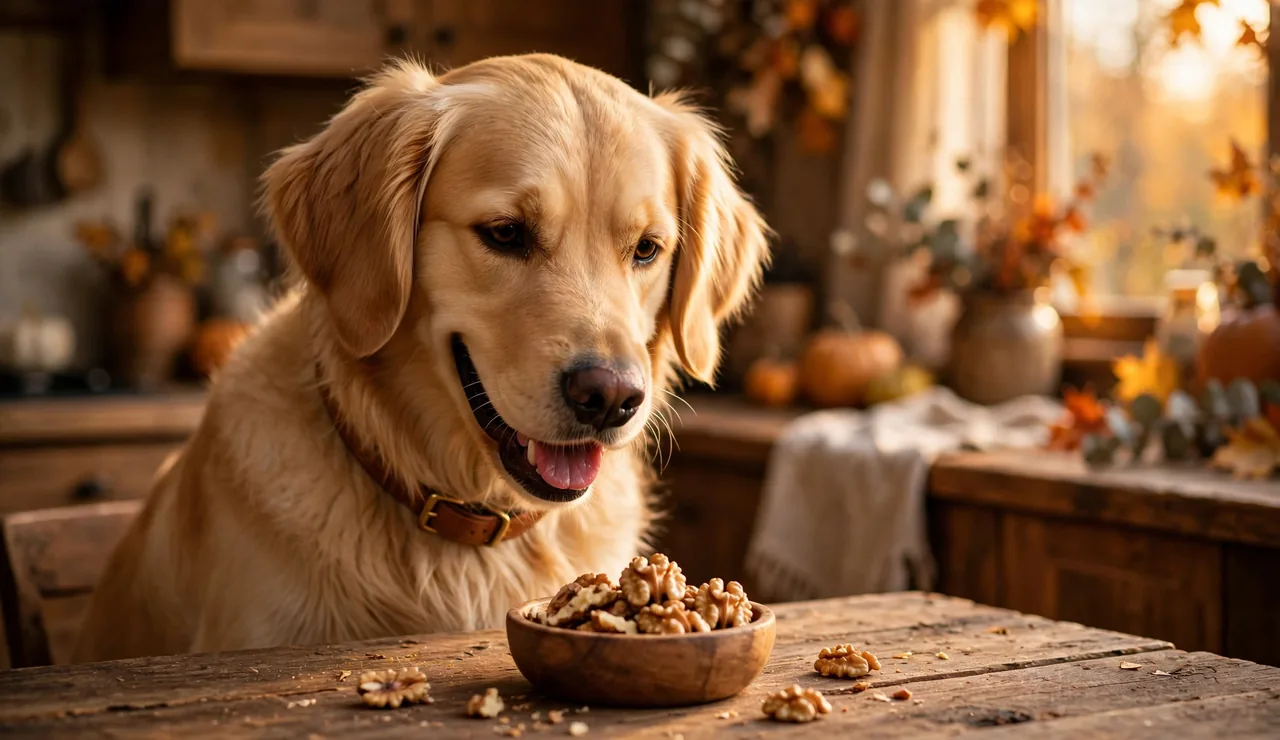
Can Dogs Eat Walnuts?

Quick Answer: No, dogs should not eat walnuts. English walnuts are very high in fat, which can trigger vomiting, diarrhea, and even pancreatitis, while black walnuts are genuinely toxic to dogs. Moldy walnuts carry tremorgenic mycotoxins that can cause tremors and seizures, and whole walnuts are a choking hazard. If your dog grabs a walnut, watch closely and call your vet if symptoms appear.
Key Takeaways
- Walnuts are not recommended for dogs, even though English walnuts are not classed as acutely toxic like grapes or chocolate.
- English walnuts are about 65% fat, and fatty foods can trigger painful pancreatitis in dogs.
- Black walnuts are toxic to dogs because of juglone, which causes vomiting, lethargy, and loss of appetite.
- Fallen, moldy walnuts can carry tremorgenic mycotoxins that attack the nervous system.
- Whole walnuts and walnut shells are a choking hazard and can block the intestines.
- If your dog ate walnuts, monitor for vomiting, diarrhea, lethargy, or tremors, and call your vet if symptoms appear.
- Safer snacks exist, such as blueberries or a spoonful of xylitol-free peanut butter.
Can Dogs Eat Walnuts?
No, walnuts are best kept out of your dog’s reach. English walnuts, the kind sold in grocery stores, pack enormous fat into a small package: one ounce contains about 18 grams of fat and 185 calories. For a small dog, that is a major overload that can upset the stomach and, in some cases, trigger pancreatitis, a painful inflammation of the pancreas that can require hospitalization. This is why walnuts sit in the “avoid” category even though they are not famous for being acutely toxic like grapes or xylitol.
There is an important distinction between English walnuts and black walnuts. English walnuts (Juglans regia) are the commercial variety. Black walnuts (Juglans nigra) grow on trees in many yards and parks, and they are genuinely toxic to dogs. The compound juglone in the nuts, husks, and wood can cause vomiting, lethargy, and appetite loss in dogs that chew the nuts or gnaw fallen branches. If you have a black walnut tree, this is a real seasonal hazard each autumn.
The third risk is mold. Fallen walnuts sitting on damp ground can develop molds that produce tremorgenic mycotoxins. Dogs that eat moldy walnuts can develop tremors, stumbling, fever, and seizures within hours, a veterinary emergency. Between the fat load, the choking risk, black walnut toxicity, and the mold danger, walnuts are not worth offering when safer snacks exist.
Nutritional Profile of Walnuts

The table below shows the nutrition of English walnuts per 100 grams and how each relates to a dog’s needs. Safer, lower-risk foods provide most of these nutrients.
| Nutrient | Amount per 100g | What it means for dogs |
|---|---|---|
| Calories | 654 kcal | Extremely energy-dense, easy to overfeed |
| Fat | 65.2 g | Very high; raises GI upset and pancreatitis risk |
| Omega-3 ALA | 9.1 g | Plant omega-3s; dogs convert ALA poorly |
| Protein | 15.2 g | Moderate plant protein; animal protein suits dogs better |
| Carbohydrates | 13.7 g | Low, mostly fiber and sugars |
| Fiber | 6.7 g | Some digestive support, but excess can cause loose stool |
| Vitamin E | 0.7 mg | Antioxidant nutrient; safer sources exist |
| Vitamin B6 | 0.54 mg | Supports metabolism in small amounts |
| Magnesium | 158 mg | Supports muscles and nerves; excess can upset digestion |
| Manganese | 3.4 mg | Trace mineral for metabolism |
Calories in Walnuts
Walnuts are one of the most calorie-dense natural foods, with about 654 calories per 100 grams. A 10-pound dog may need only around 300 to 400 calories per day, so a small handful of walnuts could represent a quarter of their entire daily intake, with almost all of it from fat. Treats should stay under 10% of daily calories, and walnuts blow past that limit with just a few pieces.
| Serving | Calories | Fat |
|---|---|---|
| 1 ounce (28 g, about 14 halves) | 185 kcal | 18.5 g |
Benefits of Walnuts for Dogs
A caveat first: the verdict on walnuts is still “do not feed them.” The nutrients below explain walnuts’ health-food reputation for people, but dogs can get every one of them from safer foods. This is context, not a reason to share your walnuts.
1. Rich in Plant Omega-3s
Walnuts are the only nut with significant alpha-linolenic acid (ALA), a plant-based omega-3 linked to skin, coat, and joint health. But dogs convert ALA inefficiently, so fish-based sources or vet-recommended supplements are more reliable.
2. Antioxidant Content
Walnuts contain polyphenols and vitamin E, antioxidants that help protect cells from damage. Safer snacks such as blueberries deliver them without the fat load or toxicity concerns.
3. Fiber for Digestion
Walnuts contain about 6.7 grams of fiber per 100 grams, but the fat bundled with that fiber cancels out any digestive benefit. Plain pumpkin or vegetables offer fiber more safely.
4. B Vitamins and Folate
Walnuts provide vitamin B6 and folate for metabolism and cell function. Balanced dog food already supplies these, and meat, eggs, and vegetables provide them without walnuts’ downsides.
5. Minerals Including Magnesium and Manganese
Walnuts are a source of magnesium and manganese, but dogs need these only in small amounts, and complete dog foods already include them.
Risks and Disadvantages of Walnuts for Dogs

1. High Fat Load and Pancreatitis Risk
At 65% fat, walnuts are far richer than anything in a dog’s normal diet. A fatty snack can trigger pancreatitis, a painful inflammation of the pancreas that causes vomiting, abdominal pain, and lethargy, and may require hospitalization. Dogs with a history of pancreatitis are especially vulnerable.
2. Gastrointestinal Upset
High-fat walnuts commonly cause vomiting and diarrhea, and sensitive dogs may react to a single walnut.
3. Black Walnut Toxicity
Black walnuts are toxic to dogs. Juglone in the nuts, husks, and wood can cause vomiting, drooling, lethargy, and loss of appetite. If you have a black walnut tree, rake up fallen nuts promptly.
4. Moldy Walnut Poisoning
Walnuts on the ground can grow molds that produce tremorgenic mycotoxins, powerful neurotoxins. Dogs that eat moldy walnuts may develop tremors, stumbling, fever, and seizures within hours. This is a veterinary emergency.
5. Choking and Intestinal Blockage
Whole walnuts in the shell can lodge in a dog’s throat or intestines, and shells can splinter into sharp pieces. Even shelled halves can be a choking risk for small dogs. An intestinal blockage is a surgical emergency.
6. Excess Calories and Weight Gain
At 185 calories per ounce, walnuts are a fast track to overfeeding. Regular nut snacking contributes to weight gain, raising the risks of joint problems and diabetes.
Can Dogs Eat Black Walnuts?
No, dogs should never eat black walnuts. They contain juglone and other toxic compounds that can poison dogs, causing vomiting, drooling, lethargy, and loss of appetite. The nuts, the green husks, and even the wood are all potentially harmful. Dogs in yards with black walnut trees are at highest risk each fall when nuts drop. If you suspect your dog ate black walnuts, call your veterinarian right away.
Can Dogs Eat English Walnuts in Small Amounts?
A tiny taste of a plain English walnut is unlikely to cause a crisis in a healthy dog, but walnuts should not be fed intentionally, even in small amounts. One walnut half may pass without incident for a large dog, while the same amount could upset a small or sensitive dog. Since every walnut nutrient is available from safer foods, there is no good reason to offer them on purpose. If your dog sneaks one, watch for vomiting, diarrhea, or lethargy over the next 24 hours.
Can Dogs Eat Walnut Shells?
No, walnut shells are dangerous for dogs. The shells are extremely hard and can splinter into sharp fragments that cut the mouth, throat, or digestive tract. Their size and shape also make them a choking hazard and a potential cause of intestinal blockage, which can require emergency surgery. Never give dogs walnuts in the shell.
How Much Walnuts Can a Dog Eat?
The recommended amount of walnuts for dogs is none. The table below covers accidental ingestion by dog size.
| Dog Size | Weight | If a walnut is eaten |
|---|---|---|
| Extra small | Under 10 lbs | Call your vet even for one walnut |
| Small | 10-25 lbs | Monitor closely for 24 hours; call your vet if symptoms appear |
| Medium | 25-60 lbs | Watch for GI symptoms; contact your vet if several walnuts were eaten |
| Large | 60-90 lbs | A single walnut often passes without issue, but monitor |
| Giant | Over 90 lbs | Monitor; call promptly if black or moldy walnuts were involved |
Any black or moldy walnuts warrant a prompt vet call no matter how big your dog is. When in doubt, call your vet or a pet poison helpline.
Can Puppies Eat Walnuts?
No, puppies should not eat walnuts. Puppies have smaller bodies and more sensitive digestive systems, making them more vulnerable to every walnut risk: the fat load hits harder per pound of body weight, and the choking hazard is greater. Supervise them closely around walnut trees in autumn, and stick to puppy-formulated food and vet-approved treats.
How to Safely Feed Walnuts to Your Dog
The safest way to feed walnuts to your dog is not to feed them at all. No preparation method removes the fat content, and home processing cannot guarantee a walnut is free of mold toxins.
Ways to Serve (Safer Alternatives to Walnuts)
- Blueberries: A handful of fresh blueberries makes a sweet, low-calorie treat packed with antioxidants.
- Plain unsalted peanuts: A few plain unsalted peanuts are generally considered safer than walnuts; skip salt, flavorings, and shells.
- Xylitol-free peanut butter: A thin smear inside a puzzle toy gives your dog the nutty flavor experience safely. Always check the label for xylitol, also called birch sugar.
- Carrot sticks or apple slices: Crunchy and low-calorie, these satisfy the urge to snack without fat overload. Remove apple seeds and core first.
Walnuts vs. Other Nuts for Dogs
Not all nuts are equal for dogs. This table shows why walnuts rank among the worst choices while a few alternatives are considered safer in strict moderation. See our guides on almonds and cashews for more detail on those two.
| Nut | Verdict for Dogs | Main Concern |
|---|---|---|
| English walnuts | Avoid | Very high fat, pancreatitis risk, mold toxins |
| Black walnuts | Toxic, never feed | Juglone toxicity, vomiting and lethargy |
| Macadamia nuts | Toxic, never feed | Weakness, vomiting, tremors, hyperthermia |
| Almonds | Not recommended | High fat, choking hazard |
| Cashews | Small amounts only | High fat; plain and unsalted only |
| Peanuts (plain) | Small amounts only | High fat; must be unsalted and shell-free |
Frequently Asked Questions
Are walnuts poisonous to dogs?
English walnuts are not classified as acutely poisonous the way grapes or chocolate are, but they are still unsafe because of their very high fat content and mold toxin risk. Black walnuts are genuinely toxic due to juglone. Treat all walnuts as off-limits.
What happens if a dog eats a walnut?
A single plain English walnut often causes only mild stomach upset, or no symptoms at all, especially in a larger dog. Watch for vomiting, diarrhea, or lethargy over the next 24 hours. If your dog ate black or possibly moldy walnuts, contact your vet immediately.
How many walnuts are dangerous for a dog?
There is no fixed number. Plain English walnuts are rarely fatal on their own, while black and moldy walnuts can be dangerous in small amounts. The greater dangers from English walnuts are pancreatitis and intestinal blockage. Treat any black or moldy walnut ingestion as an emergency.
Can dogs eat walnuts that fell from a tree?
No, fallen walnuts are the riskiest kind. Nuts on the ground are likely moldy, and moldy walnuts can carry tremorgenic mycotoxins that cause tremors and seizures. Fallen nuts may also be black walnuts, which are toxic. Keep dogs away from walnut trees in autumn.
What should I do if my dog ate walnuts?
Figure out what kind they were: English, black, or possibly moldy, and roughly how many. Remove any remaining walnuts from reach. Monitor your dog for 24 hours for vomiting, diarrhea, lethargy, tremors, or stumbling. Call your vet if any symptoms appear, and call immediately if black or moldy walnuts were involved.