

Can Dogs Eat Acorns?

Quick Answer: No, dogs should never eat acorns. Despite looking like a harmless natural object that falls from trees every autumn, acorns are genuinely toxic to dogs. They contain tannins, plant compounds that can irritate the digestive system and, in significant amounts, cause liver or kidney damage. On top of this chemical risk, acorns are hard and can cause choking or an intestinal obstruction, and acorns that have been sitting on the ground can develop mold that produces additional toxins affecting the nervous system. If a dog eats an acorn, whether one or several, this should be treated as a reason to contact a veterinarian, not something to wait out at home.
Key Takeaways
- Acorns contain tannins, which can irritate the digestive system and, in larger amounts, cause liver or kidney damage.
- Acorns are hard and can cause choking or an intestinal blockage, which is a separate risk from the tannin toxicity.
- Acorns that have been on the ground for a while can grow mold that produces mycotoxins capable of causing tremors and other neurological symptoms.
- There is no established safe number of acorns, since toxicity depends on the dog’s size, the acorn’s tannin content, and individual sensitivity.
- Oak leaves and bark contain the same tannins as acorns and carry a similar risk if chewed or eaten.
- If a dog eats an acorn, contact a veterinarian immediately, even before symptoms appear, since early treatment significantly improves the outcome.
Can Dogs Eat Acorns?
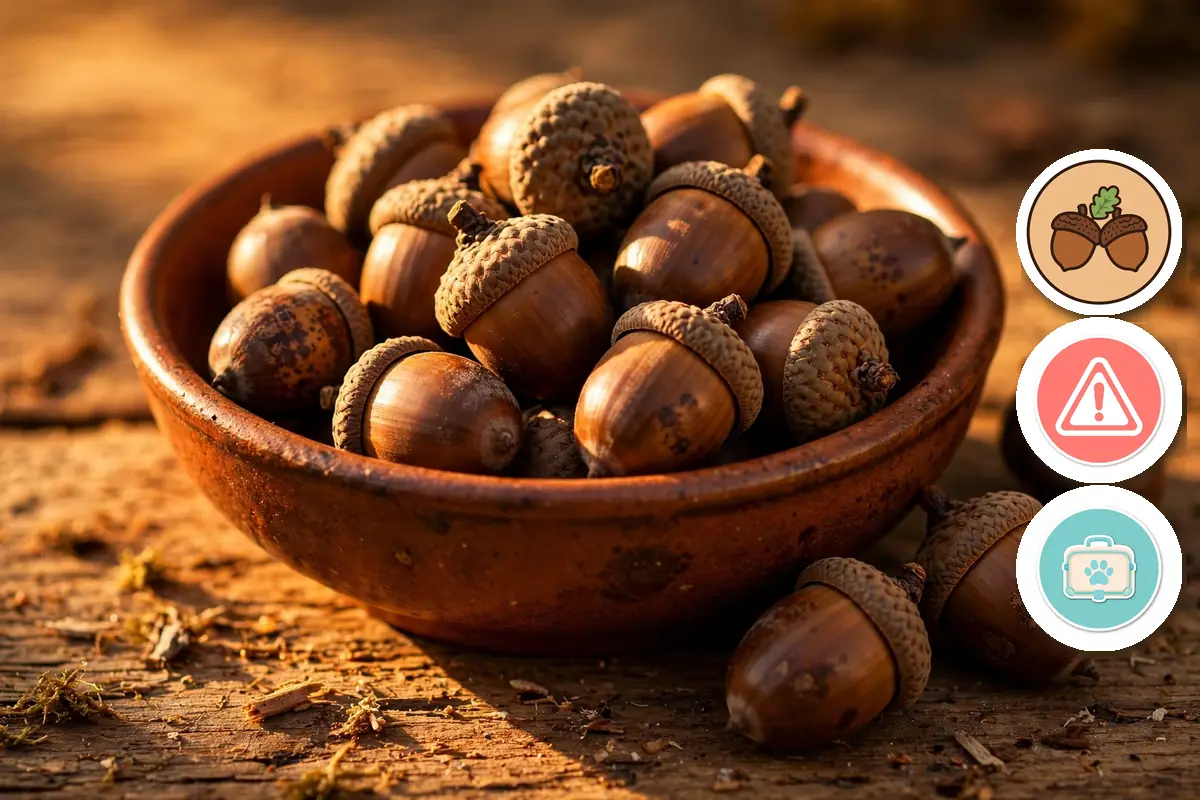
No, dogs should not eat acorns under any circumstances. Acorns are the nut-like fruit of oak trees, and while they may look like a natural, harmless object for a dog to sniff, chew, or swallow, veterinarians consistently describe acorn ingestion as a genuine medical concern rather than a minor curiosity. This is sometimes referred to as acorn poisoning or Quercus poisoning, named after the oak tree genus.
Acorns present risk from several different directions at once: a chemical toxin, a physical choking and obstruction hazard, and in some cases, a mold-related toxin if the acorn has been on the ground for a while. Because these risks stack rather than replace one another, acorns should be treated with the same seriousness as other backyard hazards like certain mushrooms or specific toxic plants. You might also want to know can dogs eat blueberries. As you plan dog-friendly treats, find out whether cantaloupe is safe for dogs. If you are exploring other safe treats, learn whether dogs can eat pineapple.
Why Are Acorns Toxic? Understanding Tannins
The primary toxic component in acorns is a group of naturally occurring plant compounds called tannins. Tannins are bitter-tasting substances that act as antinutrients, meaning they can interfere with the body’s ability to absorb certain vitamins and minerals. When a dog eats acorns, the digestive system breaks down these tannins, producing a byproduct called gallic acid. This byproduct is what is primarily responsible for the organ damage seen in more severe cases of acorn toxicity, particularly affecting the liver and kidneys.
Immature, green acorns, the kind commonly found on the ground in early autumn, tend to contain the highest concentration of tannins, which makes them especially risky. However, even acorns that have browned and matured still contain enough tannin to cause problems, particularly if a dog eats several at once or eats them repeatedly over time.
How Many Acorns Does It Take to Cause Poisoning?
There is no reliable, established number that defines a safe amount, and veterinarians are consistently clear on this point. The risk depends on several factors working together: the size of the dog, the specific tannin concentration in that batch of acorns, which can vary by tree and season, and the individual dog’s sensitivity. A single acorn might cause only mild stomach upset in a large, healthy dog, while the same acorn could pose a more serious risk to a small breed or a dog with an already sensitive digestive system. Because there is no safe threshold to rely on, the only reliable approach is to treat any acorn ingestion as worth a call to the veterinarian, rather than trying to estimate whether the amount eaten was “enough” to cause a problem.
The Choking and Obstruction Risk

Separate from the tannin toxicity, acorns pose a straightforward physical danger. They are hard, and depending on the size of the dog and the acorn, they can become lodged in the esophagus, stomach, or intestines. This is sometimes described alongside the toxicity risk but is really its own distinct emergency, since a mechanical obstruction requires urgent attention regardless of how much tannin was involved. Larger chunks or whole acorns swallowed by smaller dogs are especially concerning for this reason, and in some cases, surgery is needed to remove an acorn that has become stuck.
Why Moldy Acorns Are Even More Dangerous
Acorns that have fallen and been sitting on the ground, especially in damp conditions, can develop mold. Certain molds that grow on decaying acorns and other nuts produce compounds called tremorgenic mycotoxins. If a dog eats moldy acorns, these mycotoxins can affect the nervous system directly, potentially causing tremors, muscle rigidity, seizures, and other neurological symptoms that are distinct from, and often more immediately alarming than, the digestive symptoms caused by tannins alone. This is an important reason why acorns found later in the season, after they have had time to sit outside, deserve just as much caution as fresh ones, if not more.
Symptoms of Acorn Poisoning
Symptoms typically develop within a few hours of ingestion, though this can vary. Watch for:
- Vomiting, which may occasionally contain blood in more severe cases
- Diarrhea, which may also occasionally contain blood
- Loss of appetite or complete refusal to eat
- Lethargy, weakness, or reduced activity
- Abdominal pain, which may show up as whining, pacing, stretching, or a hunched posture
- Excessive drooling
- Bloating or visible abdominal swelling
- Tremors, muscle rigidity, or other neurological signs, particularly if moldy acorns were involved
- In more severe or advanced cases, signs consistent with liver or kidney distress, which a veterinarian would need to confirm through blood testing
One veterinary source notes that roughly three out of four dogs show some symptom after eating acorns, most commonly affecting the stomach, kidneys, or liver, which underscores how often this actually causes a noticeable reaction rather than passing unnoticed.
What to Do If Your Dog Eats an Acorn
- Stay calm, and immediately remove access to any remaining acorns in the area.
- Contact a veterinarian right away, even if your dog seems completely fine at that moment. Do not wait for symptoms to appear or worsen before reaching out.
- Offer fresh water, which can help dilute the tannins somewhat, but this is a supportive measure, not a substitute for veterinary guidance.
- Do not attempt to induce vomiting at home unless a veterinarian specifically instructs you to. Acorns can splinter as they come back up, potentially causing additional injury to the mouth or throat.
- If possible, note roughly how many acorns were eaten and bring a sample or a photo to show the veterinary team, since this can help guide their assessment.
- Monitor closely for the symptoms listed above, and seek emergency care immediately if you see repeated vomiting or diarrhea, especially with blood, severe abdominal swelling or pain, sudden weakness or collapse, tremors, or a refusal to eat or drink for more than 24 hours.
Acting early matters significantly with acorn ingestion. Veterinarians consistently emphasize that delayed treatment increases the risk of permanent organ damage, while prompt care greatly improves the chances of a full recovery.
How Veterinarians Diagnose and Treat Acorn Poisoning
When a dog is brought in for suspected acorn ingestion, a veterinarian will typically ask about the timing and estimated amount eaten, then perform a physical examination. Blood tests are commonly used to assess kidney and liver function, since these are the organs most at risk from tannin byproducts. Treatment is generally supportive and tailored to the dog’s specific symptoms, and may include:
- Intravenous fluids to maintain hydration and help flush tannins from the system
- Medication to control vomiting, diarrhea, and abdominal pain
- Activated charcoal in some cases, to help bind remaining toxins in the digestive tract
- Hospitalization and close monitoring for more severe cases
- Imaging or surgical intervention if a physical obstruction is suspected
The specific treatment plan depends heavily on how the dog is presenting and what the bloodwork shows, which is part of why prompt veterinary evaluation matters more than trying to guess the severity at home.
Oak Leaves and Bark Carry the Same Risk
Acorns are not the only part of an oak tree that poses a danger. Oak leaves contain the same tannins found in acorns and can cause similar gastrointestinal upset if a dog chews or eats them in any quantity. This risk is considered particularly notable in spring, when new leaf buds emerge, and in autumn, when green, immature acorns are falling alongside mature ones. Oak bark and sap may also contain compounds that are best avoided. In practice, this means a dog spending time under or near oak trees faces a broader exposure risk than acorns alone, and supervision should extend to leaves and fallen branches as well.
Why Do Dogs Want to Eat Acorns?
Dogs explore much of the world through their mouths, and a small, round, natural object scattered across the ground during a walk is often simply too interesting to ignore. Some dogs may also be drawn to the broken pieces of acorns left behind by squirrels foraging nearby. This natural curiosity is exactly why acorn season, typically autumn, calls for extra vigilance rather than an assumption that a dog will simply leave them alone.
How to Prevent Acorn Poisoning
- Walk dogs on a leash during acorn season, particularly in areas with oak trees.
- Avoid letting a dog linger in areas with heavy ground cover of fallen acorns or leaves.
- Teach and reinforce a reliable “leave it” or “drop it” command, which is especially useful the moment a dog shows interest in something on the ground.
- Rake and remove fallen acorns from yards and regularly used outdoor spaces where a dog spends time.
- Supervise dogs closely during off-leash time in wooded areas or parks with oak trees, particularly in early autumn when green acorns are dropping.
- Be aware that acorns and oak debris can persist on the ground well after they fall, so ongoing vigilance through the season matters, not just on the day acorns first start dropping.
Are Some Dogs More at Risk Than Others?
Yes. Small dogs and puppies face a higher relative risk from the same number of acorns compared to a large adult dog, both because of the tannin dose relative to body size and because of the increased choking and obstruction risk from their smaller airways and digestive tracts. Dogs with existing liver or kidney issues are also more vulnerable to the organ-related effects of tannin byproducts, and dogs that tend to scavenge or eat quickly without discrimination are naturally more likely to encounter and ingest acorns in meaningful quantities during a walk or time outdoors.
Frequently Asked Questions
Are acorns poisonous to dogs?
Yes. Acorns contain tannins that can irritate the digestive system and, in significant amounts, cause liver or kidney damage. They are also a physical choking and obstruction hazard.
How many acorns are dangerous for a dog?
There is no established safe number. Risk depends on the dog’s size, the tannin concentration of the specific acorns, and individual sensitivity, so any ingestion should prompt a call to a veterinarian.
What are the symptoms of acorn poisoning in dogs?
Common symptoms include vomiting, diarrhea, loss of appetite, lethargy, abdominal pain or discomfort, drooling, and in more severe cases, tremors or signs of organ distress.
How long after eating an acorn will a dog show symptoms?
Symptoms typically develop within a few hours, though this can vary depending on how many acorns were eaten and the individual dog.
Are moldy acorns more dangerous than fresh ones?
Yes. Acorns that have been on the ground and developed mold can contain tremorgenic mycotoxins, which can cause tremors, muscle rigidity, seizures, and other neurological symptoms in addition to the usual tannin-related risks.
Should I make my dog vomit if they ate an acorn?
No, not without direct veterinary instruction. Acorns can splinter on the way back up and cause additional injury to the mouth or throat.
Are oak leaves also dangerous to dogs?
Yes, oak leaves contain the same tannins found in acorns and can cause similar digestive upset if eaten in quantity, particularly new leaf buds in spring.
What should I do if my dog eats several acorns?
Contact a veterinarian immediately, even if your dog seems fine. Bringing a sample of the acorns or noting how many were likely eaten can help guide their assessment and treatment.