

Can Dogs Eat Peaches?

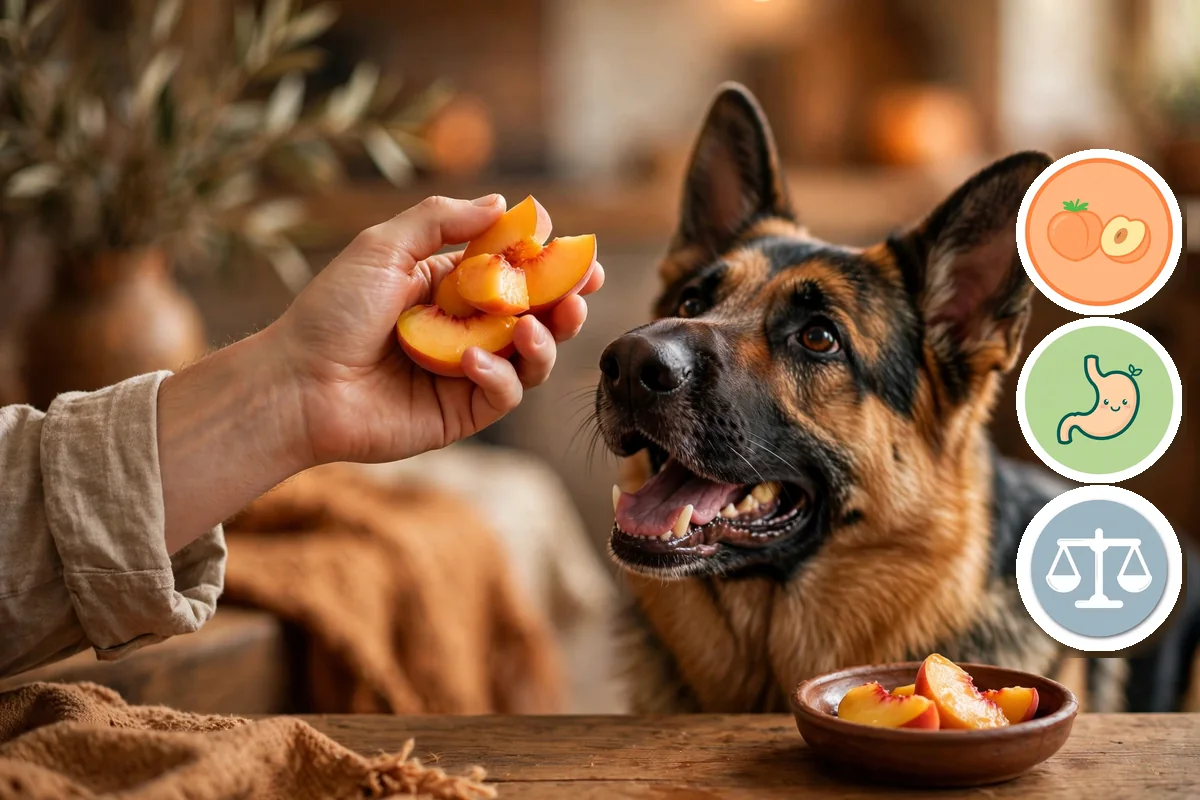
Quick Answer: Yes, dogs can eat peaches. The flesh of a fresh, ripe peach is safe and even nutritious for most dogs when the pit, stem, and leaves are removed and it is served in small amounts. Peaches are low in calories and provide fiber, vitamin A, and vitamin C, but the pit is a serious concern. It poses a choking and intestinal blockage risk and contains a cyanide-producing compound that is toxic to dogs. Canned and dried peaches should be avoided due to their high sugar content.
Key Takeaways
- Dogs can safely eat fresh peach flesh in small, controlled portions once the pit, stem, and leaves are removed.
- Peaches are low in calories and offer fiber, vitamin A, and vitamin C.
- The peach pit contains amygdalin, a compound that releases cyanide, and is also a serious choking and blockage hazard.
- Peach skin is not toxic and can generally be left on, though peeling it can help dogs with sensitive stomachs.
- Canned, dried, and syrup-packed peaches should be avoided due to their high sugar content.
- Nectarines follow the same safety rules as peaches, since they are essentially a smooth-skinned variety of the same fruit.
Can Dogs Eat Peaches?

Yes, dogs can eat peaches safely when the fruit is prepared correctly. The soft, juicy flesh of a fresh peach is non-toxic and can be a refreshing, low-calorie treat, particularly in warm weather. Peaches are not on any major list of toxic fruits for dogs, which is part of why they are commonly recommended in moderation by veterinarians and pet nutrition sources alike. Many owners also wonder can dogs eat mango before sharing snacks. For more variety in safe snacks, check our guide on whether dogs can eat oranges. As you plan dog-friendly treats, find out whether watermelon rind is safe for dogs.
The concern with peaches is not the flesh itself but two specific parts of the fruit: the pit, which carries both a physical and a chemical risk, and any processed peach product, which typically introduces far more sugar than a dog needs. As long as these are avoided, plain, fresh peach flesh is a reasonable occasional treat for most healthy dogs.
Nutritional Profile of Peaches
Peaches offer a decent range of nutrients for a low-calorie fruit.
| Nutrient | Benefit for Dogs |
|---|---|
| Vitamin A | Supports vision, skin health, and immune function |
| Vitamin C | Acts as an antioxidant and supports immune health |
| Fibe | Supports healthy digestion |
| Potassium | Supports muscle and nerve function |
| Water content | Offers a mild hydration boost |
While peaches offer genuine nutritional value, a dog already receives everything it needs from a complete and balanced commercial dog food. Peaches should be viewed as an occasional, flavorful treat rather than a nutritional necessity.
Calories in Peaches
Peaches are relatively low in calories, which makes them a reasonable treat option even for dogs watching their weight.
| Portion | Approximate Calories |
|---|---|
| 1 medium peach (flesh only) | About 50 to 60 calories |
| 1 small peach cube (½ inch) | About 3 to 5 calories |
| A small handful of cubes (6 to 8 pieces) | About 20 to 35 calories |
Because a whole peach carries a moderate number of calories, it is best offered in small, cut pieces rather than as a whole fruit, particularly for small dogs. The general treat guideline still applies. Treats, including peaches, should make up no more than 10 percent of a dog’s total daily calorie intake.
Why Is the Peach Pit Dangerous?
The peach pit, sometimes called the stone, presents two distinct and serious risks that are worth understanding separately.
1. Physical Hazard
The pit is large, hard, and does not digest. If swallowed, it can become lodged in a dog’s throat or intestines, creating a choking hazard or an intestinal blockage that may require emergency veterinary treatment, including surgery in more serious cases. The rough, uneven surface of the pit can also scratch or damage the lining of the mouth or digestive tract as it passes through, or attempts to.
2. Chemical Toxicity
Peach pits contain amygdalin, a naturally occurring compound that releases cyanide when it is broken down in the body. A dog would generally need to chew up and swallow a significant number of pits for cyanide toxicity to develop, but a single pit still carries real risk given its physical size relative to a dog’s throat and digestive tract. Signs of cyanide-related toxicity can include vomiting, diarrhea, lethargy, loss of appetite, red or bright gums, and excessive panting.
Because of these combined risks, the pit should always be removed completely and disposed of somewhere a dog cannot access it, including secured trash and any compost pile.
What to Do If Your Dog Eats a Peach Pit
If a dog swallows a peach pit, whether whole or in a large piece, contact a veterinarian or the Pet Poison Helpline promptly, even if the dog seems fine at first. Do not wait to see whether symptoms develop. Watch closely for vomiting, diarrhea, lethargy, loss of appetite, red gums, or excessive panting, and seek emergency care immediately if any of these appear or if the dog shows signs of choking or difficulty breathing.
Advantages of Feeding Peaches to Dogs
1. Low in Calories
Peaches allow for a reasonable treat portion without significantly affecting a dog’s daily calorie budget.
2. Rich in Vitamin A and Vitamin C
These vitamins support immune function, vision, and skin health.
3. Contains Fiber
The fiber in peach flesh can support healthy digestion when given in appropriate amounts.
4. Hydrating and Refreshing
Peaches have a high water content, which can offer a mild hydration boost, particularly when served fresh or frozen during warm weather.
5. Easy to Prepare
Peaches require no cooking and can be served fresh, frozen, or mashed with minimal preparation once the pit is removed.
Disadvantages and Risks of Feeding Peaches to Dogs
1. The Pit Is a Serious Hazard
As detailed above, the pit combines a choking and blockage risk with a cyanide-related toxicity risk and should always be removed and disposed of safely.
2. Natural Sugar Content
Peaches contain a moderate amount of natural sugar, particularly white peach varieties, which tend to be sweeter than yellow peaches. Overfeeding can contribute to weight gain and may complicate blood sugar control in diabetic dogs.
3. Skin Can Be Harder to Digest for Some Dogs
While peach skin is not toxic, its slightly fuzzy texture can be harder to digest for dogs with a sensitive stomach. Peeling the skin is a reasonable precaution for these dogs, even though it is not necessary for every dog.
4. Canned and Dried Peaches Add Unnecessary Sugar
Canned peaches, particularly those packed in syrup, and dried peaches concentrate sugar well beyond what fresh peach flesh contains, along with sometimes including added preservatives.
5. Pesticide Residue on Non-Organic Skin
Since peaches are often grown with pesticide treatment, washing the fruit thoroughly before serving, or choosing organic when leaving the skin on, is a reasonable precaution.
6. Not a Nutritional Requirement
Peaches are a supplemental treat, not a required part of a dog’s diet. A complete and balanced commercial dog food already provides everything a dog needs.
Advantages vs. Disadvantages at a Glance
| Advantages | Disadvantages |
|---|---|
| Low in calories | The pit is a serious choking and toxicity hazard |
| Rich in vitamin A and vitamin C | Contains natural suga |
| Contains fibe | Skin can be harder to digest for sensitive dogs |
| Hydrating and refreshing | Canned and dried varieties add unnecessary suga |
| Easy to prepare | Non-organic skin may carry pesticide residue |
| Not nutritionally required |
How Much Peach Can a Dog Eat?
Portion size should scale with a dog’s body weight. Use this chart as a general starting point, and adjust based on the individual dog’s activity level, health status, and any veterinary recommendations. Each piece should generally be no larger than about ½ inch wide.
| Dog Size | Weight Range | Safe Serving | Frequency |
|---|---|---|---|
| Extra small | 2 to 10 lbs | 1 to 2 small cubes | 1 to 2 times per week |
| Small | 11 to 20 lbs | 2 to 3 cubes | 1 to 2 times per week |
| Medium | 21 to 50 lbs | 3 to 5 cubes | 1 to 2 times per week |
| Large | 51 to 90 lbs | A small handful of cubes | 1 to 2 times per week |
| Extra large | 91+ lbs | A generous handful of cubes | 1 to 2 times per week |
As with any new treat, it is best to start with a small amount and monitor for any signs of digestive upset before offering peach again.
Can Dogs Eat Peach Skin?
Yes, peach skin is not toxic, and many dogs can eat it without any issue as long as the peach has been washed thoroughly. That said, the skin’s texture can be a bit harder to digest than the flesh, particularly for dogs with a sensitive stomach. If a dog has a history of digestive sensitivity, peeling the skin off before serving is a reasonable precaution, though it is not strictly necessary for every dog.
Can Dogs Eat Canned or Dried Peaches?
No, canned and dried peaches are best avoided. Canned peaches, especially those packed in syrup, contain significantly more sugar than fresh fruit, along with sometimes including preservatives that offer no benefit to a dog. Dried peaches concentrate the natural sugar even further through the dehydration process, and their sticky texture can also contribute to dental issues with regular feeding. Fresh, pitted peach flesh is always the better and safer choice.
Can Dogs Eat Peaches and Nectarines?
Yes, nectarines follow the same safety guidelines as peaches. Nectarines are essentially a smooth-skinned variety of the same stone fruit species, and the flesh is prepared and served the same way, with the pit, stem, and leaves removed. The same cautions around the pit’s choking and toxicity risk, portion size, and avoiding canned or dried versions apply equally to nectarines. There is no meaningful difference in safety between the two fruits, so a dog that tolerates peaches well can typically have nectarines in the same manner and amount.
Can Puppies Eat Peaches?
Yes, puppies can have small amounts of pitted peach flesh once they are eating solid food. As with any new food, it is best to introduce peaches gradually, starting with a very small piece, and to watch closely for any signs of digestive upset over the following day. Puppies have more sensitive digestive systems than adult dogs, so smaller portions and a slower introduction are recommended.
Peaches and Dogs with Health Conditions
Certain dogs should approach peaches with more caution.
| Condition | Consideration |
|---|---|
| Diabetes | Natural sugar content can affect blood glucose levels, so veterinary approval is recommended |
| Obesity or weight management | Sugar and calorie content mean portions should be kept small and infrequent |
| Pancreatitis | Rich or sugary treats can be harder on a sensitive digestive system |
| Kidney disease | Potassium content should be discussed with a veterinarian before regular feeding |
| Dogs that eat quickly without chewing | Higher risk from the pit if a whole peach is accessible |
How to Safely Feed Peaches to Your Dog
- Choose a fresh, ripe peach and wash it thoroughly to remove dirt or pesticide residue.
- Cut the peach open and remove the pit completely, along with the stem.
- Decide whether to leave the skin on or peel it, based on the dog’s digestive sensitivity.
- Cut the flesh into small, bite-sized pieces no larger than about ½ inch, appropriate for the dog’s size.
- Start with a small amount and monitor for digestive reaction before offering it regularly.
- Dispose of the pit securely, out of the dog’s reach, including in any compost pile.
Ways to Serve Peaches to Dogs
- Fresh cubes: Serve small pieces of pitted, washed peach as a simple treat.
- Frozen chunks: Freeze small peach pieces for a refreshing snack during warm weather.
- Mashed topper: Mix a small mashed portion into a dog’s regular food.
- Blended smoothie: Blend peach with other dog-safe fruits and plain, xylitol-free yogurt, then freeze in an ice cube tray or spread on a lick mat.
If You Have a Peach Tree at Home
Dogs with yard access to a peach tree face an additional layer of risk, since fallen fruit, pits, and leaves may be scattered on the ground without supervision. It is worth picking up windfall fruit regularly, fencing off the area under the tree if a dog cannot be reliably supervised during peach season, and disposing of prunings and wilted leaves securely, since oak leaves and stems from stone fruit trees can also carry some of the same compounds found in the pit.
Signs of an Adverse Reaction
Watch for the following after a dog eats peach:
- Vomiting or diarrhea
- Gas or bloating
- Lethargy
- Decreased or loss of appetite
- Signs of an allergic reaction, such as facial itching, hives, or excessive face rubbing
If any of these symptoms appear, especially in combination with red gums or excessive panting, which can suggest exposure to the pit, contact a veterinarian promptly.
Frequently Asked Questions
Can dogs eat peaches every day?
Most healthy dogs can have small amounts of peach a couple of times a week, but it is best treated as an occasional treat rather than a daily food, due to its sugar content.
Are peach pits poisonous to dogs?
Yes, peach pits contain amygdalin, a compound that releases cyanide, and they are also a serious choking and intestinal blockage hazard. They should always be removed and disposed of safely.
Can dogs eat peach skin?
Yes, peach skin is not toxic and can generally be left on, though peeling it is a reasonable option for dogs with a sensitive stomach.
Can dogs eat canned peaches?
No, canned peaches typically contain added sugar or syrup and are best avoided in favor of fresh, pitted peach flesh.
Are nectarines safe for dogs the same way peaches are?
Yes, nectarines are a smooth-skinned variety of the same fruit species and follow identical safety guidelines, including removing the pit before serving.
What should I do if my dog eats a peach pit?
Contact a veterinarian or the Pet Poison Helpline promptly, even if the dog seems fine at first, and watch closely for vomiting, lethargy, red gums, or excessive panting.
Can puppies eat peaches?
Yes, in small amounts of pitted flesh once a puppy is eating solid food. It is best to introduce it gradually and watch for any signs of digestive upset.
Is peach safe for dogs with diabetes?
Peaches contain a moderate amount of natural sugar, so it is best to consult a veterinarian before offering them to a dog with diabetes or another condition that requires careful sugar management.