

Can Dogs Eat Clams?

Yes, dogs can eat clams as long as they are fully cooked, served plain, and given only in small amounts as an occasional treat. Clam meat is a good source of lean protein, iron, and B vitamins, but raw clams can carry harmful bacteria, and the shells are a serious choking and injury hazard. Never feed your dog raw clams, fried clams, or clams cooked with butter, garlic, onion, or heavy seasoning. For more variety in safe snacks, check our guide on whether dogs can eat blue cheese. Many owners also wonder can dogs eat cheddar cheese before sharing snacks.
Key Takeaways
- Dogs can safely eat cooked, plain clam meat in small portions.
- Always remove the shells, they can splinter, choke, or cut your dog’s mouth and digestive tract.
- Never feed raw clams due to the risk of bacterial contamination.
- Avoid clams prepared with garlic, onion, butter, or heavy salt, which are unhealthy or toxic for dogs.
- Clams are high in sodium and cholesterol, so they should only be an occasional treat, not a regular meal.
- Dogs with shellfish allergies or kidney issues should avoid clams, check with your vet first.
Can Dogs Eat Clams?
Yes, clams can be a safe occasional treat for most dogs when prepared correctly. Clam meat is naturally low in fat and rich in protein, making it a reasonably healthy snack compared to many processed dog treats. A few small pieces of steamed or boiled clam mixed into your dog’s regular food can add variety and some extra nutrients.
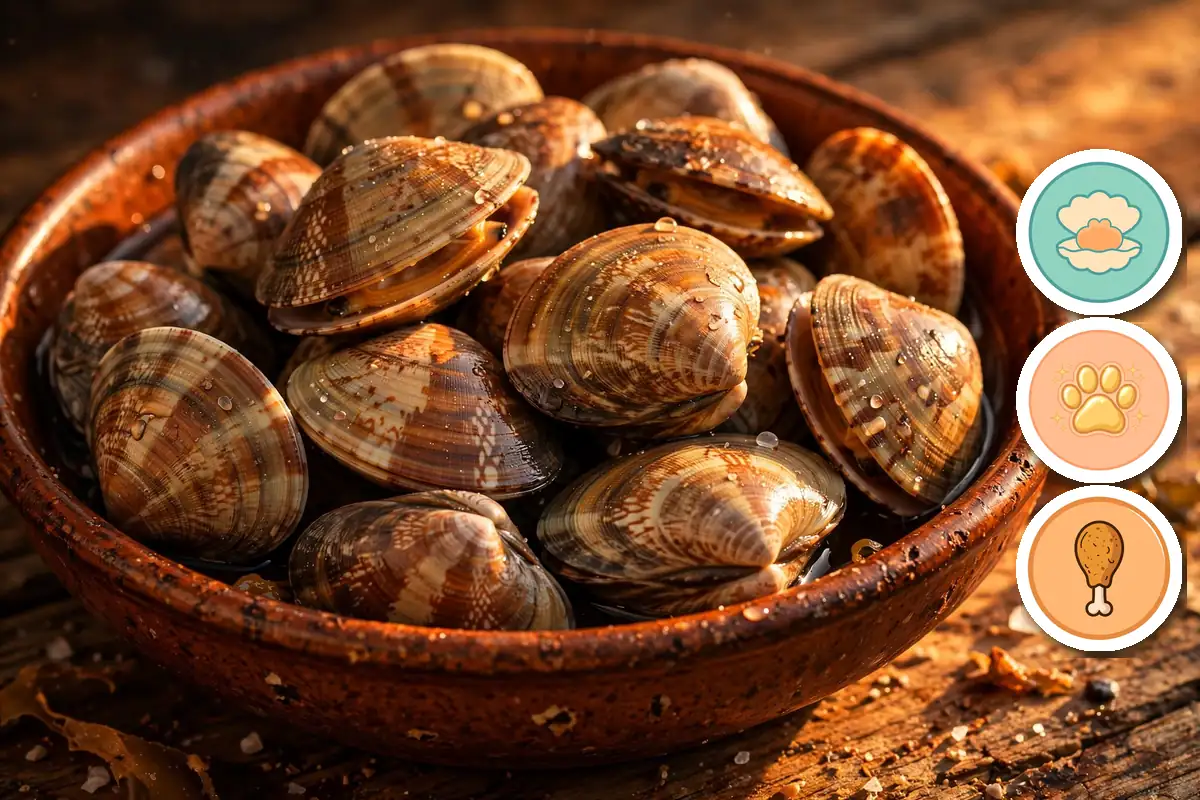
However, preparation matters enormously. The clams people usually eat, fried clam strips, clams casino, or clams in garlic butter sauce, are not safe for dogs. Frying adds unhealthy fats, and common seasonings like garlic and onion are toxic to dogs. Only plain, thoroughly cooked clam meat should ever reach your dog’s bowl.
It is also worth noting that shellfish allergies, while uncommon in dogs, do exist. If your dog has never eaten clams before, start with a very small piece and watch for signs of an allergic reaction such as itching, swelling, vomiting, or diarrhea over the next 24 hours.
Nutritional Profile of Clams
Clams are nutrient-dense shellfish. Here is what a 3-ounce (85g) serving of cooked clam meat roughly contains:
| Nutrient | Amount (per 3 oz cooked) | Why It Matters for Dogs |
|---|---|---|
| Protein | 22g | Supports muscle maintenance and repair |
| Iron | 24mg | Essential for healthy red blood cells |
| Vitamin B12 | 84mcg | Supports nervous system and energy metabolism |
| Zinc | 2.3mg | Supports immune function and skin health |
| Selenium | 55mcg | Antioxidant that protects cells |
| Omega-3 fatty acids | 0.3g | May support skin, coat, and joint health |
| Sodium | 95mg | Needed in trace amounts, but excess is harmful |
| Cholesterol | 57mg | Fine in tiny amounts; a concern in large portions |
Calories in Clams
Cooked clam meat contains roughly 125–150 calories per 3-ounce serving, which makes it a relatively low-calorie protein source. However, a whole 3-ounce serving is far too much for most dogs. Treats of any kind, including clams, should make up no more than 10% of your dog’s daily calorie intake. For a medium-sized dog, that means just one or two small clam pieces are plenty. Overfeeding clams can lead to digestive upset simply because of their richness and sodium content.
Benefits of Clams for Dogs
1. Excellent source of lean protein
Clams provide high-quality, easily digestible protein with very little fat, which helps maintain lean muscle without adding excess calories.

2. Rich in iron
Clams are one of the best natural sources of iron. Adequate iron supports healthy blood and oxygen transport, which is especially helpful for active dogs.
3. Packed with vitamin B12
A tiny amount of clam meat delivers far more B12 than a dog needs in a day. B12 supports nerve function and the formation of red blood cells.
4. Contains zinc and selenium
These trace minerals support immune health, wound healing, and healthy skin and coat, areas where many dogs benefit from extra nutritional support.
5. Provides omega-3 fatty acids
While not as rich in omega-3s as oily fish like salmon, clams still contribute these beneficial fats, which may help with coat shine and mild inflammation.
6. Low in fat
Compared to many meat treats, clam meat is very lean, making it a reasonable choice for dogs that need to watch their fat intake, as long as portions stay small.
Risks of Feeding Clams to Dogs
1. Bacterial contamination from raw clams
Raw or undercooked clams can harbor bacteria such as Vibrio, as well as other pathogens from polluted water. Always cook clams thoroughly, steaming or boiling until the shells open fully.
2. Shell hazards
Clam shells are hard and can splinter into sharp fragments. They pose a choking risk and can cut the mouth, throat, or intestines. Always serve only the meat, never the shell.
3. High sodium content
Clams are naturally salty, and canned clams are often packed in even saltier liquid. Too much sodium can cause excessive thirst, and in large amounts, sodium ion poisoning. Rinse canned clams and choose low-sodium options if using them.
4. Seasonings and preparation methods
Garlic, onion, butter, and heavy salt, common in human clam dishes, range from unhealthy to genuinely toxic for dogs. Only plain-cooked clams are safe.
5. Possible shellfish allergy
Some dogs are allergic to shellfish. Symptoms include itching, hives, facial swelling, vomiting, or diarrhea. Introduce clams slowly and stop immediately if you notice any reaction.
6. Heavy metals and pollutants
As filter feeders, clams can accumulate heavy metals and pollutants from their environment. This is another reason clams should be an occasional treat, not a dietary staple. Buy from reputable sources.
Can Dogs Eat Raw Clams?
No. Raw clams should never be fed to dogs. Beyond the bacterial risks, raw shellfish may contain parasites and can be contaminated with toxins from algal blooms (such as red tide) that cooking does not always fully neutralize. Always cook clams completely before offering any to your dog.
Can Dogs Eat Canned Clams?
Canned clams are acceptable only if they are packed in water with no added salt or seasonings, and even then they should be rinsed thoroughly to reduce sodium. Many canned clams contain added salt, and some are packed in clam juice with flavorings. Check the ingredient label carefully, rinse well, and keep the portion small.
Can Dogs Eat Fried Clams or Clam Strips?
No. Fried clam strips are coated in batter and deep-fried in oil, making them high in unhealthy fats that can trigger digestive upset or pancreatitis in dogs. The breading often contains salt and seasonings as well. Stick to plain steamed or boiled clam meat.
How Much Clams Can a Dog Eat?
Clams should be an occasional treat only, no more than once or twice a week. Use these rough portion guidelines for plain, cooked clam meat:
| Dog Size | Weight | Safe Amount (occasional treat) |
|---|---|---|
| Small | Under 20 lbs | 1 small clam or 1 teaspoon of chopped clam meat |
| Medium | 20–50 lbs | 1–2 small clams or 1 tablespoon of chopped clam meat |
| Large | Over 50 lbs | 2–3 small clams or 2 tablespoons of chopped clam meat |
When in doubt, give less. If your dog has kidney disease, heart disease, or is on a sodium-restricted diet, skip clams entirely unless your vet approves.
Can Puppies Eat Clams?
Puppies can technically eat a tiny piece of plain cooked clam, but there is little reason to offer shellfish to a young puppy. Puppies have sensitive digestive systems and very specific nutritional needs that are best met by a balanced puppy food. If you want to introduce clams, wait until your puppy is at least 6 months old, start with a pea-sized piece, and watch for any digestive upset or allergic reaction.
How to Safely Feed Clams to Your Dog
Ways to Serve
- Steamed or boiled: Cook fresh clams until the shells open fully; discard any that stay closed. Remove all meat from shells.
- Chopped and mixed: Chop the cooked meat finely and mix a small amount into your dog’s regular food.
- As a training treat: Use tiny pieces of plain cooked clam as a high-value reward, most dogs find the smell irresistible.
- Rinsed canned (in water): If using canned clams, choose no-salt-added varieties packed in water, rinse thoroughly, and serve a small spoonful.
Never serve clams with shells, and never use clam dishes prepared for humans that contain butter, garlic, onion, wine, or heavy seasoning.
Clams vs. Other Seafood for Dogs
| Seafood | Safe for Dogs? | Notes |
|---|---|---|
| Clams (cooked, plain) | Yes, in moderation | Remove shells; watch sodium |
| Shrimp (cooked, plain) | Yes, in moderation | Remove shell, tail, and vein |
| Salmon (cooked, plain) | Yes, in moderation | Excellent omega-3 source; never raw |
| Tuna | Small amounts only | Higher mercury; occasional treat at most |
| Mussels (cooked, plain) | Yes, in moderation | Similar rules to clams |
| Oysters (raw) | No | Raw oysters carry the same bacterial risks |
Frequently Asked Questions
Are clam shells dangerous for dogs?
Yes. Clam shells can splinter into sharp pieces that may cut the mouth or throat, cause choking, or damage the digestive tract. Always remove every trace of shell before serving clam meat.
Can dogs eat clam chowder?
No. Clam chowder typically contains onion, garlic, butter, cream, and salt, several of which are toxic or unhealthy for dogs. Only plain cooked clam meat is safe.
What should I do if my dog ate a clam shell?
Monitor your dog closely. If they are choking, pawing at the mouth, drooling excessively, vomiting, or showing abdominal pain, contact your vet immediately. Do not try to induce vomiting unless your vet instructs you to.
Can dogs be allergic to clams?
Yes, shellfish allergies occur in some dogs. Signs include itching, hives, swelling of the face, vomiting, or diarrhea. Introduce clams in a tiny amount first and watch for reactions.
Are canned clams better than fresh for dogs?
Neither is clearly better, it depends on preparation. Fresh clams steamed plain are ideal. Canned clams are convenient but often high in sodium, so choose no-salt-added varieties packed in water and rinse them well.
How often can I give my dog clams?
Once or twice a week at most, in the small portions listed above. Clams are a treat, not a meal replacement, and their sodium and potential contaminant load make frequent feeding unwise.