Can Dogs Eat Pumpkin Seeds?

Quick Answer: Yes, dogs can eat pumpkin seeds as long as they are plain, unsalted, and free of seasonings or coatings. Pumpkin seeds are a nutritious little snack rich in antioxidants, zinc, and healthy fats. The key rules are simple: keep them plain, keep portions small, and for smaller dogs, grind or shell them to reduce any choking risk. As you plan dog-friendly treats, find out whether banana peels is safe for dogs. If you are exploring other safe treats, learn whether dogs can eat blueberries. Many owners also wonder can dogs eat watermelon before sharing snacks.
Key Takeaways
- Plain roasted or raw unsalted pumpkin seeds are safe for dogs in small amounts.
- Pumpkin seeds offer zinc, magnesium, antioxidants, and beneficial fatty acids.
- Always avoid salted, seasoned, or flavored pumpkin seeds, excess salt and spices can upset your dog’s stomach.
- Whole shells can be tough to chew; ground or shelled seeds are the safest option, especially for small dogs.
- A teaspoon or two is plenty for most dogs; pumpkin seeds are calorie-dense.
- Seeds should be an occasional treat, never a meal replacement, your dog’s balanced food comes first.
- If your dog has a sensitive stomach, kidney issues, or a history of pancreatitis, check with your vet first.
Can Dogs Eat Pumpkin Seeds?
Yes, pumpkin seeds are one of the safer seeds you can share with your dog. Unlike macadamia nuts or many other seeds and nuts that pose real dangers, pumpkin seeds do not contain compounds that are toxic to dogs. They are packed with beneficial nutrients, from immune-supporting zinc to heart-friendly unsaturated fats. Many dog owners reach for them in the fall, when fresh pumpkins are everywhere, and wonder whether the seeds scooped out of the pumpkin are safe. They are, with a bit of preparation.
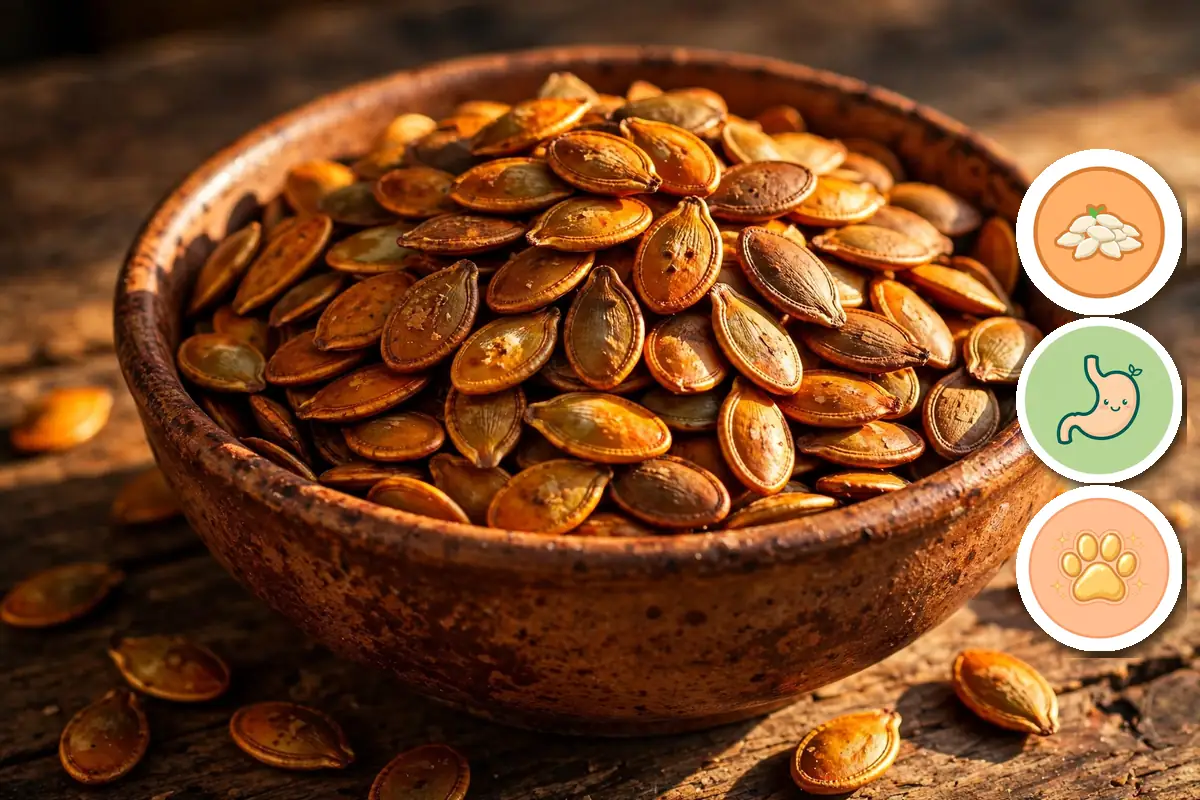
The most important distinction is plain versus processed. The roasted, salted pumpkin seeds sold as human snacks are seasoned with salt, garlic powder, and spice blends, ingredients that are not good for dogs. Garlic and onion powders are genuinely toxic to dogs, and too much salt can cause dehydration and sodium ion issues. Seeds you prepare at home, rinsed, roasted plain with no oil or salt, are the safest choice.
The shell is the other consideration. Whole pumpkin seeds in the shell are edible for dogs, but the tough hull can be difficult to chew and digest, particularly for small dogs or enthusiastic eaters who swallow without chewing. Ground pumpkin seeds or shelled seeds (pepitas) remove that concern entirely and make the nutrients easier to absorb.
Nutritional Profile of Pumpkin Seeds
| Nutrient (per 100g, dried) | Amount | Potential Benefit for Dogs |
|---|---|---|
| Protein | 30g | Supports muscle maintenance and repair |
| Fat (mostly unsaturated) | 49g | Provides essential fatty acids in small doses |
| Fiber | 6g | Supports healthy digestion |
| Zinc | 7.8 mg | Supports immune function, skin, and coat health |
| Magnesium | 592 mg | Supports muscle and nerve function |
| Iron | 8.8 mg | Supports healthy red blood cells |
| Vitamin E | 2.2 mg | Antioxidant; supports cell health |
| Vitamin K | 7 mcg | Supports normal blood clotting |
| Cucurbitacin (amino acid compound) | trace | Traditionally believed to have anti-parasitic properties; evidence in dogs is limited |
Calories in Pumpkin Seeds
Dried pumpkin seeds contain roughly 560 calories per 100 grams, they are one of the most calorie-dense snacks you can offer a dog. A single tablespoon of shelled pumpkin seeds carries about 70–75 calories. For a small dog whose total daily intake may be only 300–400 calories, even a few spoonfuls is a significant addition. That is why portions matter so much: the nutrients are real, but so are the calories. Keep pumpkin seeds within the 10% treat rule and adjust meal sizes slightly on days your dog gets them.
Benefits of Feeding Pumpkin Seeds to Dogs
1. Rich in Zinc for Skin and Coat Health
Pumpkin seeds are an outstanding natural source of zinc, a mineral that supports healthy skin, a shiny coat, and normal immune function. Dogs that are low in zinc can develop skin issues, so zinc-rich whole foods are a welcome addition to a balanced diet.
2. Packed With Antioxidants
Pumpkin seeds contain vitamin E, carotenoids, and phenolic compounds that act as antioxidants. Antioxidants help protect cells from oxidative stress, which is part of normal aging and immune function in dogs.
3. Healthy Fats for Skin and Coat
The fats in pumpkin seeds are predominantly unsaturated, including omega-3 and omega-6 fatty acids. In small amounts, these fats can contribute to healthy skin and a soft coat.
4. Good Source of Magnesium and Iron
Magnesium supports muscle and nerve function, while iron is essential for healthy red blood cells and oxygen transport. Pumpkin seeds deliver meaningful amounts of both in a small package.
5. Fiber Supports Digestion
Ground pumpkin seeds add a gentle dose of fiber, which can support regular digestion. Many owners already know pumpkin puree as a digestive aid; the seeds share some of that fiber benefit.
6. Traditionally Used for Intestinal Parasites
Pumpkin seeds contain cucurbitacin, a compound long used in traditional remedies against intestinal worms. Some holistic veterinarians discuss ground pumpkin seeds as a supportive measure. The scientific evidence in dogs is limited, so treat this as a folk remedy, not a replacement for vet-prescribed deworming.
7. Convenient, Shelf-Stable Treat
Roasted plain pumpkin seeds keep well in an airtight container, making them an easy, ready-to-serve treat you can sprinkle over meals or use during training.
Risks of Feeding Pumpkin Seeds to Dogs
1. Salted and Seasoned Varieties Are Unsafe
Store-bought roasted pumpkin seeds are usually heavily salted and may contain garlic powder, onion powder, or spicy coatings. Garlic and onion are toxic to dogs, and excess sodium can cause vomiting, dehydration, and in severe cases sodium ion poisoning. Only offer seeds that are plain.
2. Choking and Digestive Blockage From Shells
Whole pumpkin seeds in the shell are hard and can pose a choking hazard, especially for small dogs or dogs that gulp their food. Large quantities of tough shells could also contribute to digestive irritation. Shelled seeds or ground seeds eliminate this risk.
3. High Calorie and Fat Content
With nearly 50% fat by weight, pumpkin seeds are calorie-dense. Overfeeding can contribute to weight gain, and very fatty treats can upset sensitive stomachs. In dogs prone to pancreatitis, any high-fat food should be cleared with a vet first.
4. Potential for Stomach Upset
Dogs with sensitive stomachs may react to the fiber and fat in pumpkin seeds with gas, soft stool, or vomiting. Introduce them gradually, a few seeds at first, and watch how your dog responds.
5. Rancidity in Stored Seeds
Because they are high in unsaturated fats, pumpkin seeds can go rancid. Rancid seeds taste bitter and can cause digestive upset. Store them in an airtight container in a cool, dark place, and discard any that smell off.
Can Dogs Eat Whole Pumpkin Seeds With the Shell?
They can, but shelled or ground seeds are the safer and more digestible choice. The shell is not toxic, but it is tough and fibrous. Large dogs that chew carefully can handle whole roasted seeds in small amounts. For small dogs, puppies, and gulpers, always use shelled seeds (pepitas) or grind whole seeds into a powder, this also makes the nutrients more available.
Can Dogs Eat Raw Pumpkin Seeds?
Yes, raw unsalted pumpkin seeds are safe, though lightly roasted plain seeds are often preferred because roasting makes them easier to chew and digest. If using raw seeds, make sure they are fresh and unsalted. Avoid any seeds that have been treated with preservatives or coatings.
Can Dogs Eat Pumpkin Seed Oil?
Pumpkin seed oil is generally considered safe in very small amounts, and some pet supplement products include it. However, it is extremely calorie-dense, a teaspoon carries around 40 calories, so a tiny drizzle is the maximum. If you want the nutritional benefits of pumpkin seeds, feeding the ground seeds themselves is simpler and easier to portion.
How Much Pumpkin Seeds Can a Dog Eat?
Think of pumpkin seeds as a garnish, not a snack bowl. A few times per week is plenty, and treats of all kinds should stay under 10% of daily calories.
| Dog Size | Weight | Safe Amount (shelled/ground) |
|---|---|---|
| Extra small | Under 5 kg | 1/2 teaspoon ground, 2–3 times per week |
| Small | 5–10 kg | 1 teaspoon, 2–3 times per week |
| Medium | 10–25 kg | 1–2 teaspoons, a few times per week |
| Large | 25–40 kg | 1 tablespoon, a few times per week |
| Giant | Over 40 kg | 1–1.5 tablespoons, a few times per week |
Can Puppies Eat Pumpkin Seeds?
Yes, in tiny amounts. A pinch of finely ground pumpkin seeds sprinkled on a puppy’s food is fine for most puppies. Puppies have very precise nutritional needs for growth, so keep treats minimal and never let seeds displace balanced puppy food. Avoid whole seeds for puppies, ground is the only safe texture.
How to Safely Feed Pumpkin Seeds to Your Dog
Ways to Serve Pumpkin Seeds to Dogs
- Plain roasted at home: Rinse seeds from a fresh pumpkin, pat dry, roast at 150°C (300°F) for 15–20 minutes with no oil or salt, then cool completely.
- Ground into powder: Grind shelled seeds in a clean coffee grinder and sprinkle over meals, the easiest way to serve any size dog.
- Training treats: Use a few individual shelled seeds as low-mess training rewards for medium and large dogs.
- Mixed into homemade treats: Fold ground seeds into vet-approved homemade biscuit recipes for added nutrition.
- Combined with pumpkin puree: Stir ground seeds into plain canned pumpkin for a fiber-rich digestive topper.
Pumpkin Seeds vs. Other Seeds for Dogs
| Seed | Safe for Dogs? | Notes |
|---|---|---|
| Pumpkin seeds (plain) | Yes | Nutritious; keep plain and portioned |
| Sunflower seeds (shelled, unsalted) | Yes | Similar nutrition; shells must be removed |
| Chia seeds | Yes | Tiny amounts; expand with water before serving |
| Flaxseeds (ground) | Yes | Ground only; whole seeds pass through undigested |
| Sesame seeds | Yes | Safe in small amounts; very calorie-dense |
Frequently Asked Questions
Are pumpkin seeds good for dogs with worms?
Pumpkin seeds contain cucurbitacin, traditionally believed to help expel intestinal parasites. However, scientific evidence in dogs is limited, and seeds are not a substitute for veterinary deworming medication. Talk to your vet if you suspect worms.
Can pumpkin seeds cause diarrhea in dogs?
In large amounts, the fiber and fat can cause loose stool or gas. Stick to the small portions above and introduce gradually.
Can dogs eat salted pumpkin seeds?
No, avoid them. The excess salt can cause vomiting, excessive thirst, and dehydration. Seasoned varieties may also contain garlic or onion powder, which are toxic to dogs.
Do pumpkin seeds need to be cooked for dogs?
They do not have to be, but light plain roasting makes them easier to chew and digest. Raw seeds are fine as long as they are fresh and unsalted.
Can dogs eat pumpkin seed shells?
The shells are not toxic, but they are hard to chew and digest. Shelled seeds or ground seeds are safer, especially for small dogs.
How should I store pumpkin seeds for my dog?
Keep plain roasted seeds in an airtight container in a cool, dark place for up to a few months. Because of their fat content, they can go rancid, discard any that smell bitter or off.