

Can Dogs Eat Mandarins?

Quick Answer: Yes, dogs can eat mandarins in small amounts. The soft, sweet segments of a mandarin orange are safe for most healthy dogs and provide vitamin C, potassium, and fiber. Keep the portion small because mandarins are sweet and acidic, and always remove the peel, pith, and seeds before serving. Dogs with sensitive stomachs or diabetes should have only a tiny amount, or skip mandarins entirely.
Key Takeaways
- Mandarin flesh is safe for dogs in small amounts; the peel, pith, and seeds must be removed.
- Mandarins are sweet and acidic, so large amounts can cause stomach upset and diarrhea.
- Offer only a few segments at a time, a couple of times a week at most.
- Mandarin peel contains essential oils that can irritate a dog’s stomach and should never be eaten.
- Seeds should be removed, since they contain small amounts of compounds that can release cyanide.
- Choose seedless mandarins when possible to make preparation easier.
- If your dog has diabetes, ask your vet before offering any citrus fruit.
Can Dogs Eat Mandarins?
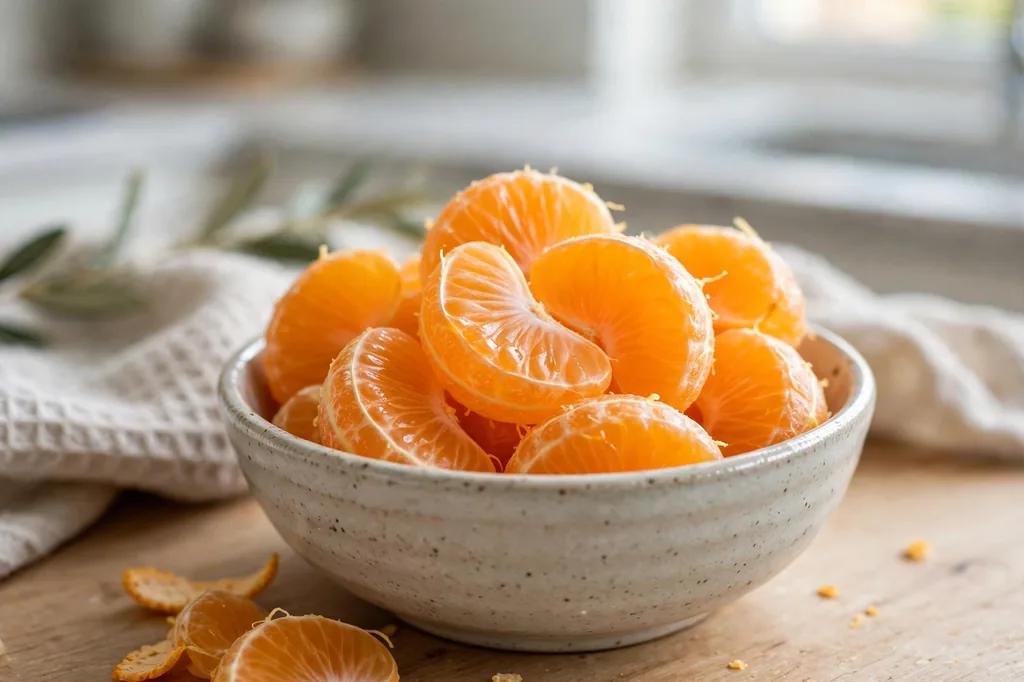
Yes, dogs can eat mandarins. Mandarins, also known as mandarin oranges or tangerines, are small, sweet citrus fruits with loose, easy-to-peel skin and soft segments inside. The flesh is safe for dogs and provides vitamin C, vitamin A, potassium, and fiber. Many dogs enjoy the sweet, juicy segments, and a couple of pieces make a refreshing treat, especially in winter when mandarins are in season.
Preparation matters as much as portion. The peel, the white pith underneath it, and the seeds should all be removed before serving. Mandarin peel contains essential oils, including limonene, which can irritate a dog’s digestive tract and cause vomiting, diarrhea, and drooling. The pith is bitter and hard to digest, and the seeds contain small amounts of amygdalin, which can release cyanide when chewed. Peel the mandarin fully, pull the segments apart, pick out any seeds, and offer only the clean flesh. Mango segments are a less acidic sweet fruit if your dog finds citrus too sharp.
Nutritional Profile of Mandarins
| Nutrient (per 100g mandarin flesh) | Amount | Potential Benefit for Dogs |
|---|---|---|
| Vitamin C | 27 mg | Supports immune function and healthy skin |
| Potassium | 166 mg | Supports nerve and muscle function |
| Fiber | 1.8 g | Supports digestion and healthy stools |
| Vitamin A | 34 mcg | Supports vision and immune health |
| Calcium | 37 mg | Supports bones and teeth in small amounts |
| Folate | 16 mcg | Supports cell growth and repair |
| Vitamin B6 | 0.1 mg | Supports brain health and energy metabolism |
| Natural sugars | 11 g | Quick energy, but a reason to keep portions small |
Calories in Mandarins
A mandarin contains roughly 53 calories per 100 grams, and a single medium mandarin (about 75 grams) holds around 40 calories. A single segment (about 10 grams) contains only 5 calories, which makes it easy to offer a small treat without breaking the calorie budget. Treats should stay within 10 percent of your dog’s daily calories, so a couple of segments fit easily, while a whole mandarin is too much for a small dog. The calorie count is moderate for a fruit, but the sugar is the limiting factor rather than the calories alone.
Benefits of Feeding Mandarins to Dogs
Mandarins are a pleasant, vitamin-rich fruit with several real benefits when served in small amounts to a dog that tolerates citrus well.
1. Excellent Source of Vitamin C
Mandarins provide about 27 mg of vitamin C per 100 grams, which is far more than most fruits. Vitamin C supports immune function, healthy skin, and wound healing. Dogs make their own vitamin C, so they do not depend on fruit for it, but the extra amount in a mandarin segment is a useful bonus, especially in winter when dogs may need extra immune support.
2. Hydrating and Refreshing
Mandarins are about 85 percent water, so they add moisture to your dog’s diet and make a refreshing treat on a warm day. The juicy segments are easy to eat and do not need any preparation beyond peeling, which makes them a convenient snack to share while you eat one yourself.
3. Fiber Supports Healthy Digestion
The fiber in mandarin flesh supports regular bowel movements and feeds beneficial gut bacteria. In small amounts this is a genuine benefit, although the combination of fiber and acid can loosen stools if a dog eats too much. Start with one segment and see how your dog’s digestion responds.
4. Potassium Supports Muscle and Nerve Function
With 166 mg of potassium per 100 grams, mandarins are a decent source of this mineral, which supports normal muscle and nerve function and helps regulate fluid balance. The amount in a few segments is modest, but it contributes to an overall varied diet.
5. Antioxidants Support Eye and Immune Health
Mandarins contain beta-carotene, beta-cryptoxanthin, and other carotenoids that act as antioxidants and support eye health and immune function. The bright orange color is a visible sign of these compounds. Bananas offer a similar potassium boost with less acidity, which makes them a good alternative for dogs that find citrus too sharp.
Risks and Disadvantages

1. Acidity Can Upset the Stomach
Citrus fruits are acidic, and too much acid can irritate a dog’s stomach lining, causing vomiting, diarrhea, or loss of appetite. Dogs with sensitive stomachs, gastritis, or acid reflux are most at risk. If your dog vomits or has loose stools after eating mandarin, do not offer it again, and choose a less acidic fruit instead.
2. Peel Contains Irritating Essential Oils
Mandarin peel contains essential oils, including limonene and linalool, which are toxic to dogs in larger amounts and irritating even in small amounts. Eating peel can cause vomiting, diarrhea, drooling, and lethargy. Never let your dog chew on mandarin peel, and dispose of peels where your dog cannot reach them.
3. Seeds Contain Amygdalin
Mandarin seeds contain small amounts of amygdalin, which can release cyanide when chewed. A single swallowed seed is unlikely to harm a dog, because the seed usually passes through whole, but chewed seeds and several seeds together are a real risk. Always remove every seed before serving, or choose a seedless variety such as clementines.
4. Too Much Sugar for Diabetic Dogs
Mandarins contain about 11 grams of sugar per 100 grams, which is high for a fruit. Regular servings can contribute to weight gain and blood sugar spikes, and diabetic dogs should only eat mandarin if their vet approves it. Even for healthy dogs, the sugar is a reason to keep the portion to a few segments.
5. Choking Risk From Whole Segments
A whole mandarin segment is soft and usually safe, but a large segment given to a small dog or a puppy can still be gulped whole and cause choking. Break large segments in half for small dogs, and always supervise your dog while they eat any fruit.
Can Dogs Eat Clementines?
Yes, clementines are safe for dogs in the same way as mandarins. Clementines are a type of mandarin, usually seedless, sweet, and easy to peel, which makes them one of the best citrus choices for dogs. The same rules apply: remove the peel and pith, offer only a few segments, and keep the portion small because of the sugar and acidity.
Can Dogs Eat Tangerines?
Yes, tangerines are safe in small amounts, just like mandarins. Tangerines are closely related to mandarins and have a similar nutritional profile, although they are slightly more acidic and often contain more seeds. Peel them fully, remove all seeds, and offer only a couple of segments. If your dog finds tangerines too tart, try a sweeter clementine instead.
Can Dogs Eat Mandarin Peel?
No, dogs should never eat mandarin peel. The peel contains essential oils that can irritate the stomach and cause vomiting, diarrhea, and drooling, and the tough, fibrous peel can also cause a blockage if a large piece is swallowed. The white pith is also bitter and hard to digest. Always peel the fruit completely and throw the peel away where your dog cannot get to it.
How Much Mandarin Can a Dog Eat?
Mandarin should be an occasional treat, offered a couple of times a week at most. These amounts are for peeled, seedless segments only.
| Dog Size | Weight | Maximum per Serving |
|---|---|---|
| Extra small | Under 5 kg | 1 small segment |
| Small | 5 to 10 kg | 1 to 2 segments |
| Medium | 10 to 25 kg | 2 to 3 segments |
| Large | 25 to 40 kg | 3 to 4 segments |
| Giant | Over 40 kg | Half a mandarin |
Can Puppies Eat Mandarins?
Yes, puppies can eat a tiny amount of mandarin once they are weaned and eating solid food, but there is little reason to offer it. A puppy’s stomach is sensitive, and the acidity and sugar in citrus can easily cause an upset stomach. If you want to introduce fruit to a puppy, start with milder options like banana or blueberries. If you do offer a mandarin, make it a single small segment, peeled and seedless, and watch for loose stools.
How to Safely Feed Mandarins to Your Dog
Preparing a mandarin for a dog is quick, but peeling fully and removing every seed are steps that must not be skipped.
Ways to Serve Mandarins
- Fresh peeled segments: Peel the fruit completely, remove all pith and seeds, and offer a few segments as a treat.
- Halved segments for small dogs: Break large segments in half so small dogs and puppies can eat them safely.
- Frozen segments: Freeze peeled segments for a cool, refreshing summer treat.
- Mixed with plain yogurt: Stir a chopped segment into plain unsweetened yogurt for a creamy treat, if your dog tolerates dairy.
- As a training reward: Use single segments as a high-value reward during training sessions for dogs that enjoy citrus.
- Juice only in tiny amounts: A teaspoon of fresh mandarin juice mixed into food is safe, but never offer juice as a drink, since it is concentrated sugar and acid.
Mandarins vs. Other Citrus and Sweet Fruits for Dogs
| Fruit | Calories (per 100g) | Vitamin C (per 100g) | Verdict for Dogs |
|---|---|---|---|
| Mandarin | 53 | 27 mg | Safe in small amounts, peel and seeds removed |
| Orange | 47 | 53 mg | Safe in small amounts, more acidic |
| Grapefruit | 42 | 31 mg | Too bitter and acidic for most dogs |
| Banana | 89 | 9 mg | Good in small amounts, less acidic |
| Watermelon (seedless) | 30 | 8 mg | Excellent hydrating treat |
Mandarins are sweeter and less acidic than oranges and grapefruit, which makes them the most dog-friendly citrus fruit. Watermelon is an even gentler choice if your dog dislikes citrus altogether, since it is hydrating, low in acid, and very low in calories.
Frequently Asked Questions
Can dogs eat mandarins every day?
No, mandarins should not be an everyday food. They are sweet and acidic, and daily citrus can upset a dog’s stomach and add unnecessary sugar. Offer a few segments a couple of times a week at most.
Are mandarins toxic to dogs?
The flesh is not toxic, but the peel contains essential oils that can irritate a dog’s stomach, and the seeds contain small amounts of amygdalin, which can release cyanide. Only the peeled, seedless flesh should ever be fed to a dog.
What should I do if my dog ate mandarin peel?
Watch for vomiting, diarrhea, drooling, or lethargy over the next 24 hours. A small amount of peel usually causes only mild stomach upset, but if your dog ate a large amount or shows persistent vomiting, contact your veterinarian.
Can dogs eat satsumas?
Yes, satsumas are safe in the same way as mandarins. They are a type of mandarin, usually seedless and easy to peel, which makes them a good choice. Remove the peel and pith and offer only a few segments.
Can dogs eat canned mandarins?
No, canned mandarins are usually packed in syrup with added sugar, and some are packed in juice with preservatives. They are far too sweet for dogs. Only fresh mandarins, peeled and seedless, are suitable.