

Can Dogs Eat Jasmine Rice?

Quick Answer: Yes, dogs can eat jasmine rice, and it is one of the gentlest grains you can offer. Jasmine rice is a fragrant white rice that cooks soft and fluffy, and it is easy to digest, low in fat, and rarely causes allergies. It is often used in bland diets for dogs with stomach upsets, since it is gentle and binding. Serve it cooked and plain, with no salt, butter, oil, or seasoning, and keep portions small so it stays a healthy addition rather than the main meal.
Key Takeaways
- Cooked plain jasmine rice is safe for most dogs and is gentle on digestion.
- Jasmine rice is easy to digest, which makes it a good choice for sensitive stomachs.
- Always serve jasmine rice plain, with no salt, butter, oil, or seasoning.
- Jasmine rice is a starchy carbohydrate, so keep portions small to avoid weight gain.
- White jasmine rice is gentler than brown rice, but brown rice has more fiber.
- Uncooked rice and rice with onion, garlic, or sauce should never be fed to dogs.
Can Dogs Eat Jasmine Rice?
Yes, jasmine rice is safe for dogs, and it is one of the easiest grains for a dog to digest. Jasmine rice is a long grain white rice with a soft, slightly sticky texture when cooked, and a light floral aroma that most dogs find appealing. Because it is a refined white rice, it has very little fiber, which means it moves through the stomach gently and rarely causes irritation. This is why vets often include white rice in bland diets for dogs recovering from stomach upsets.
Jasmine rice is similar to regular white rice, but it has a softer texture and a more pleasant smell, which can tempt a picky dog to eat. It provides quick energy from carbohydrates, along with small amounts of B vitamins and minerals. It is not a complete food on its own, so it should always be served alongside a balanced diet, not as a replacement for it. Plain white rice for dogs follows the same rules, and jasmine rice is simply a fragrant version of that same safe grain.
The most important rule is to serve jasmine rice plain. Rice cooked in broth with onion or garlic, fried rice with soy sauce, or rice with butter and salt are all unsafe for dogs. Plain jasmine rice, cooked in water and cooled, is the only version your dog should eat. Rinse the rice before cooking if you like, and cook it until it is soft and fully done.
Nutritional Profile of Jasmine Rice
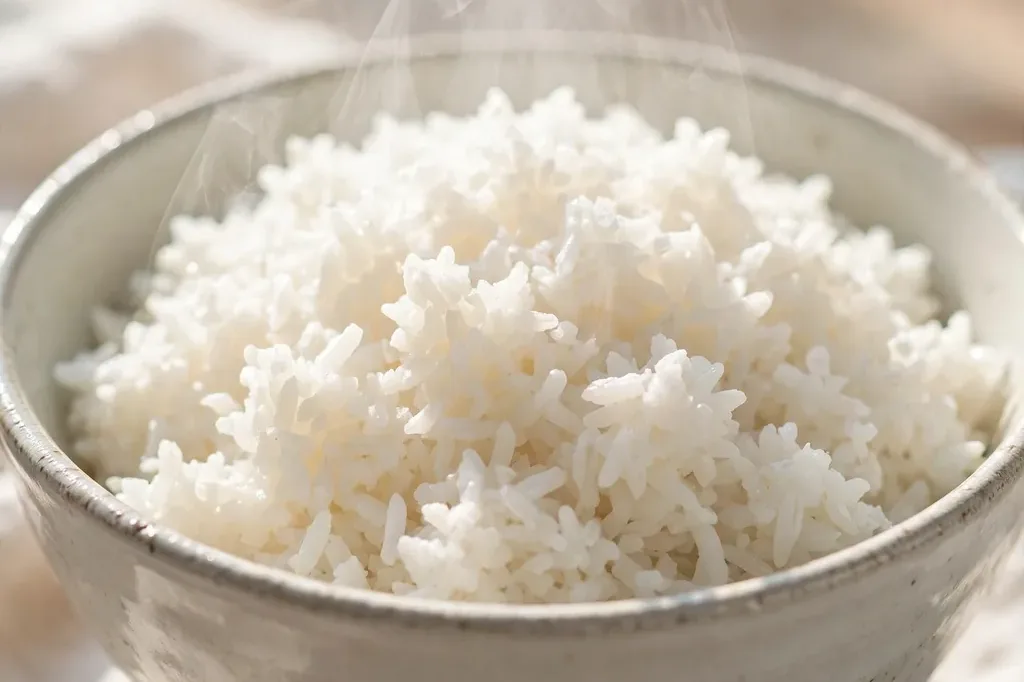
The values below are for cooked jasmine rice per 100 grams. Jasmine rice is mostly carbohydrate and water, with small amounts of B vitamins and minerals, and almost no fat or fiber.
| Nutrient per 100g | Amount | Benefit for Dogs |
|---|---|---|
| Carbohydrates | 28 g | Provides quick energy for active dogs |
| Protein | 2.7 g | A small amount that supports muscle maintenance |
| Vitamin B1 | 0.1 mg | Supports energy metabolism and nerve health |
| Vitamin B3 | 1.6 mg | Supports skin health and energy metabolism |
| Iron | 0.2 mg | Supports healthy red blood cells and energy |
| Magnesium | 13 mg | Supports muscle, nerve, and bone health |
| Potassium | 35 mg | Supports muscle function and healthy blood pressure |
Calories in Jasmine Rice
Cooked jasmine rice has about 130 calories per 100 grams, which is moderate for a grain. A small serving adds useful energy without too many calories, but a large bowl can quickly add up, especially for a small dog. Because jasmine rice is low in fiber, it does not fill a dog up for long, so it is easy to overfeed. Measure the portion, mix it with protein and vegetables, and keep rice to a small part of the meal rather than the main event.
Benefits of Feeding Jasmine Rice to Dogs
1. Gentle on Sensitive Stomachs
Jasmine rice is one of the gentlest foods for a dog with an upset stomach. Its low fiber and soft texture make it easy to digest, and it helps bind loose stools.
2. Provides Quick Energy
The carbohydrates in jasmine rice give your dog quick, easily available energy. This is useful for active dogs, working dogs, and dogs recovering from illness that need calories without a heavy meal.
3. Rarely Causes Allergies
Rice is one of the least allergenic foods for dogs, and jasmine rice is no exception. Dogs with food sensitivities often do well on rice-based diets, since it rarely triggers a reaction.
4. Supports Recovery After Illness
A bland meal of jasmine rice and boiled chicken is a classic recovery food for dogs. It is easy to eat, easy to digest, and gentle on a stomach that is getting back to normal.
5. Soft Texture for Picky Eaters
The soft, fluffy texture and mild aroma of jasmine rice can tempt a picky dog to eat. Mixing a little rice into kibble adds moisture and a new texture that many dogs enjoy.
6. Low in Fat
Plain jasmine rice is naturally very low in fat, so it will not add grease to your dog’s diet. This makes it a good choice for dogs that need a low fat diet, such as those recovering from pancreatitis. Always check with your vet about the right diet for your dog’s condition.
Risks and Disadvantages of Jasmine Rice for Dogs

1. Weight Gain From Large Portions
Jasmine rice is a starchy carbohydrate, and large portions can lead to weight gain, especially in less active dogs. Rice is easy to overfeed because it is soft and filling in the short term.
2. Low Fiber Means Less Fullness
White jasmine rice has very little fiber, so it does not keep a dog full for long. A dog that eats a lot of rice may feel hungry again soon and beg for more food.
3. Blood Sugar Spikes
Jasmine rice has a high glycemic index, which means it raises blood sugar quickly. This is a concern for diabetic dogs, which need slow, steady energy instead.
4. Seasoned or Fried Rice Is Unsafe
Fried rice, rice cooked in broth, and rice with soy sauce, onion, garlic, or butter are not safe for dogs. Soy sauce is very high in salt, onion and garlic are toxic, and fried rice adds unhealthy fats. Only plain rice cooked in water should ever be fed to a dog.
5. Uncooked Rice Is Dangerous
Uncooked rice can swell in the stomach and cause discomfort, bloating, and blockages. Dogs should never eat dry rice grains, and uncooked rice should be stored where dogs cannot reach it. Always cook rice fully and let it cool before serving.
Is Jasmine Rice Better Than White Rice for Dogs?
Jasmine rice and regular white rice are very similar for dogs, and both are safe when cooked plain. Jasmine rice is slightly softer and more fragrant, which some dogs prefer, but the nutrition is almost the same. Either one works well in a bland diet. Choose whichever your dog enjoys more, and serve it plain in small portions.
Can Dogs Eat Jasmine Rice Every Day?
Yes, most dogs can eat a small amount of jasmine rice every day as part of a balanced diet. Rice should never replace the main meal, since it lacks the protein, fat, and nutrients a dog needs. Keep rice to a small portion of the meal, mix it with protein and vegetables, and watch your dog’s weight. Plain oatmeal for dogs is another gentle grain you can rotate with rice for variety.
Can Dogs Eat Brown Jasmine Rice?
Yes, dogs can eat brown jasmine rice, and it has more fiber and nutrients than white jasmine rice. The extra fiber is good for digestion, but it also makes brown rice a little harder to digest, so it is not the best choice for a dog with a very sensitive stomach. White jasmine rice is gentler, while brown jasmine rice is more nutritious, so pick the one that suits your dog.
How Much Jasmine Rice Can a Dog Eat?
Jasmine rice is a side dish, not a main meal, so keep portions small and mix it with protein and vegetables. The amounts below are for cooked plain jasmine rice per meal, and they assume your dog eats a balanced diet overall.
| Dog Size | Weight | Suggested Amount |
|---|---|---|
| Extra small | Under 5 kg | 1 to 2 tablespoons |
| Small | 5 to 10 kg | 2 to 3 tablespoons |
| Medium | 11 to 25 kg | 1/4 to 1/2 cup |
| Large | 26 to 45 kg | 1/2 to 3/4 cup |
| Giant | Over 45 kg | 3/4 to 1 cup |
Can Puppies Eat Jasmine Rice?
Yes, puppies can eat cooked plain jasmine rice once they are weaned and eating solid food, usually from about eight weeks of age. Jasmine rice is gentle and easy to digest, so it is a good first grain for a puppy. Offer a small amount mixed into their regular puppy food, and watch for any stomach upset. Rice should never replace puppy food, which has the protein and nutrients a growing puppy needs. If your puppy has diarrhea, a little jasmine rice with boiled chicken can help settle the stomach, but ask your vet if it lasts more than a day.
How to Safely Feed Jasmine Rice to Your Dog
The safest way to serve jasmine rice is cooked plain in water, with no salt, butter, oil, or seasoning. Rinse the rice, cook it until it is soft and fully done, and let it cool completely before serving. Mix it into your dog’s regular food or serve it with a lean protein.
Ways to Serve Jasmine Rice
- Cook jasmine rice in plain water until soft, with no salt, butter, or seasoning.
- Let the rice cool completely before mixing it into your dog’s food.
- Mix rice with boiled chicken and a little pumpkin for a gentle bland meal.
- Use a small amount of rice as a base for hiding medicine or supplements.
- Store leftover cooked rice in the fridge and use it within two days.
Jasmine Rice vs Other Grains
Jasmine rice is one of the gentlest grains for dogs, and it compares well with other common grains. Each grain has its own strengths, so rotating them gives your dog more variety.
| Food | Safe for Dogs? | Notes |
|---|---|---|
| Jasmine rice | Yes | Gentle, easy to digest, low fiber |
| White rice | Yes | Gentle, easy to digest, classic bland diet grain |
| Oatmeal | Yes | Higher fiber, good for digestion, cook plain |
| Brown rice | Yes | More fiber and nutrients, slightly harder to digest |
Frequently Asked Questions
Can dogs eat jasmine rice daily?
Yes, most dogs can eat a small amount of jasmine rice daily as part of a balanced diet.
Is jasmine rice good for dogs with diarrhea?
Yes, jasmine rice is often recommended for dogs with diarrhea because it is gentle, low in fiber, and helps bind loose stools.
Can dogs eat jasmine rice with chicken?
Yes, jasmine rice with plain boiled chicken is a classic bland diet for dogs and is safe for most dogs. Cook both plain, with no salt, seasoning, or oil, and serve them in small meals.
Is jasmine rice better than brown rice for dogs?
Jasmine rice is gentler and easier to digest, while brown rice has more fiber and nutrients. For a sensitive stomach, white jasmine rice is better, and for everyday nutrition, brown rice is slightly better. Both are safe when cooked plain.
Can dogs eat uncooked jasmine rice?
No, dogs should never eat uncooked jasmine rice. Dry rice can swell in the stomach and cause discomfort or blockage. Always cook rice fully and let it cool before serving it to your dog.
Can diabetic dogs eat jasmine rice?
Diabetic dogs should eat jasmine rice only in small amounts and only with vet approval, since it raises blood sugar quickly. A lower glycemic grain or a smaller portion may be safer for your dog.