
Can Dogs Eat Prunes?

Quick Answer: Prunes are not recommended for dogs. Prunes are dried plums, and they pack a lot of sugar into a small fruit, with a strong laxative effect that can cause diarrhea and stomach cramps. The pits are the real danger, because plum pits contain cyanide compounds toxic to dogs. A tiny piece of pitted prune is not an emergency, but there is no reason to feed them.
Key Takeaways
- Prunes are not recommended for dogs because of their high sugar content and strong laxative effect.
- Plum pits contain cyanide compounds and are toxic to dogs, so never feed prunes with pits.
- Even a few prunes can cause diarrhea, gas, and stomach cramps in dogs.
- Prunes are very high in sugar, which contributes to obesity and dental problems.
- A tiny piece of pitted prune is unlikely to cause a crisis, but it is not a good treat.
- If your dog eats prunes with pits, call your vet, especially if several pits were swallowed.
- Fresh plums without pits, or safer fruits like blueberries, are better choices.
Can Dogs Eat Prunes?
Prunes are best avoided for dogs. A prune is simply a dried plum, and drying concentrates everything in the fruit: the sugar, the fiber, and the laxative compounds. A single prune contains about 7 grams of sugar, which is a lot for a dog, and the sorbitol in prunes draws water into the intestines, which is exactly why prunes are used as a natural laxative for people. In a dog, that same effect often means loose stools, gas, and stomach cramps.
The bigger concern is the pit. Prunes are usually sold pitted, but whole dried plums and prunes with pits still exist, and plum pits contain amygdalin, a compound that releases cyanide when chewed or digested. Cyanide poisoning is rare from a single pit, but it is a genuine risk, and pits also pose a choking hazard and can block the intestines. Never let your dog chew on plum pits.
There is also a simple value question. Prunes offer dogs nothing they cannot get from safer fruits. Fresh blueberries, apple slices, or banana pieces provide fiber, vitamins, and sweetness without the laxative punch or the pit risk. When a food brings real downsides and no unique benefit, the sensible choice is to skip it.
Nutritional Profile of Prunes
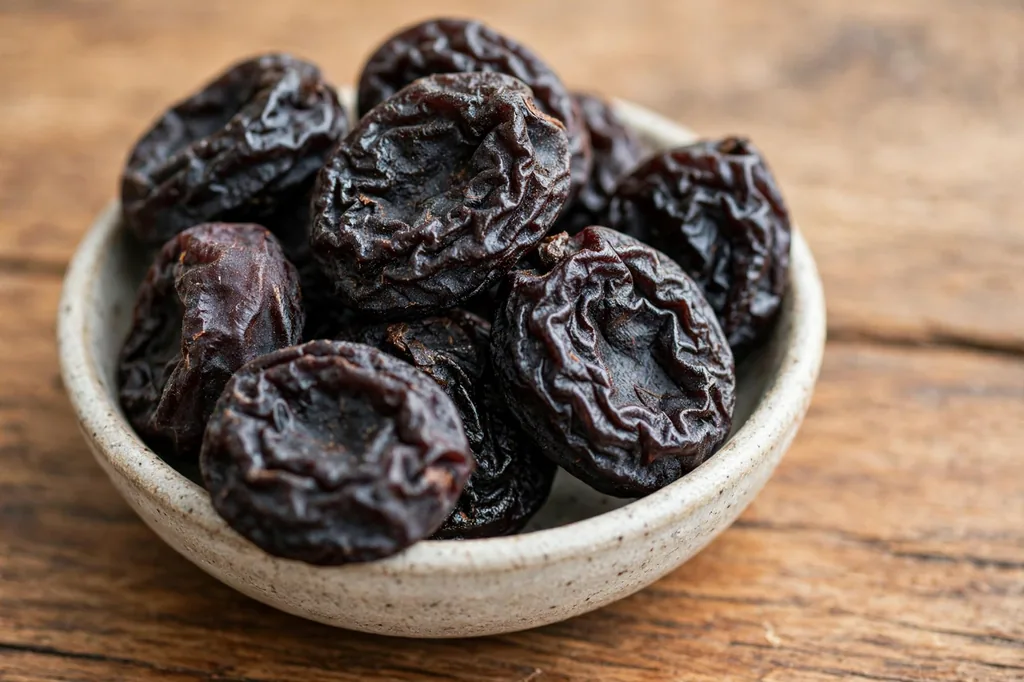
The table below shows the nutrition of prunes per 100 grams and what each nutrient means for a dog. Drying concentrates the sugar far above fresh plums, which have about 10 grams of sugar per 100 grams.
| Nutrient | Amount per 100g | What it means for dogs |
|---|---|---|
| Calories | 240 kcal | High for a fruit; easy to overfeed |
| Sugar | 38 g | Very high; contributes to obesity and dental issues |
| Fiber | 7 g | High, but the laxative effect is too strong |
| Sorbitol | 15 g | Natural laxative; causes loose stools and gas |
| Potassium | 732 mg | Supports muscles and nerves in small amounts |
| Vitamin A | 39 mcg | Small amount; safer sources exist |
| Vitamin K | 60 mcg | Supports blood clotting; dogs get enough from food |
| Iron | 0.9 mg | Trace amount; not a reason to feed prunes |
| Carbohydrates | 64 g | Mostly sugar; very energy-dense |
Calories in Prunes
Prunes contain about 240 calories per 100 grams, which is high for a fruit, and a single prune has around 20 to 25 calories. Treats should stay under 10 percent of your dog’s daily calories, and a handful of prunes can use up that budget fast. A 20-pound dog needs only about 400 to 500 calories a day, so five prunes could take up a quarter of their daily intake with sugar alone.
Benefits of Prunes for Dogs
Be clear first: the verdict on prunes is still “avoid them.” The points below describe what prunes contain, but every benefit here is available from safer foods without the laxative effect or the pit risk.
1. Fiber for Digestion
Prunes are famous for their fiber, about 7 grams per 100 grams, which supports regular bowel movements. The problem is that prunes overshoot: their sorbitol makes the effect far stronger than a dog needs. Plain pumpkin gives fiber with a gentler effect.
2. Potassium for Muscles and Nerves
Prunes are rich in potassium, which helps muscles and nerves work properly. Dogs get enough potassium from balanced dog food, and bananas offer it without the sugar load of prunes.
3. Vitamin K for Blood Clotting
Prunes provide vitamin K, which supports normal blood clotting. Complete dog foods already include vitamin K, so dogs do not need prunes to get it.
4. Antioxidants
Prunes contain phenolic compounds that act as antioxidants, helping protect cells from damage. Blueberries are a far better antioxidant treat for dogs, with much less sugar.
5. Iron in Small Amounts
Prunes contain a small amount of iron, which supports healthy red blood cells. Meat-based dog food provides iron in a form dogs absorb far better, so prunes add nothing useful here.
Risks and Disadvantages of Prunes for Dogs
1. Plum Pit Toxicity
Plum pits contain amygdalin, which releases cyanide when chewed or digested. Cyanide poisoning can cause dilated pupils, difficulty breathing, bright red gums, and collapse. A single pit rarely causes severe poisoning, but several pits, or a pit chewed by a small dog, are a real emergency.
2. Strong Laxative Effect
Prunes are a natural laxative because of their sorbitol and fiber. Even a few prunes can cause diarrhea, gas, and stomach cramps in dogs, and a larger amount can lead to dehydration from fluid loss.
3. Very High Sugar Content
At 38 grams of sugar per 100 grams, prunes are one of the sweetest fruits. Regular sugary treats contribute to weight gain, dental disease, and diabetes, and prunes deliver that sugar in a small, easy-to-overeat package.
4. Choking and Intestinal Blockage
Whole prunes with pits are a choking hazard, and a swallowed pit can block the intestines, which may need surgery. Even pitted prunes are sticky and dense, so large dogs can gulp them down without chewing properly.
5. Upset Stomach and Gas
The combination of concentrated sugar, sorbitol, and fiber ferments in the gut, causing gas, bloating, and discomfort. Dogs with sensitive stomachs may react to a single prune.
Can Dogs Eat Dried Plums?
Dried plums and prunes are the same thing: prunes are simply dried plums sold under a different name. The same warnings apply, so dried plums should be avoided for the same reasons: high sugar, strong laxative effect, and pit danger if they are not pitted. Fresh plums, with the pit removed, are a safer option in small amounts, but they are still sugary, so keep portions small.
Can Dogs Eat Prune Juice?
No, dogs should not drink prune juice. Prune juice is even more concentrated than whole prunes, with all the sugar and sorbitol and none of the fiber to slow it down. It can cause diarrhea quickly, and it offers your dog nothing useful. If your dog is constipated, ask your vet about safe options such as plain pumpkin or a fiber supplement made for dogs, rather than reaching for prune juice.
Can Dogs Eat Prunes for Constipation?
It may seem logical to give a constipated dog a natural laxative, but prunes are not safe. The laxative effect is hard to control, and a dog that gets diarrhea on top of constipation ends up dehydrated and uncomfortable. Vets usually recommend plain pumpkin, which adds gentle fiber, or a vet-approved laxative with a known dose. Never treat constipation with prunes, and call your vet if your dog has not passed stool for more than two days.
How Much Prunes Can a Dog Eat?
The recommended amount of prunes for dogs is none. The table below covers accidental eating by dog size, so you can judge the risk.
| Dog Size | Weight | If prunes are eaten |
|---|---|---|
| Extra small | Under 10 lbs | Call your vet even for one prune with a pit |
| Small | 10-25 lbs | Monitor closely; call your vet if pits were eaten |
| Medium | 25-60 lbs | Watch for diarrhea; call your vet if several pits were eaten |
| Large | 60-90 lbs | A pitted prune often passes without issue, but monitor |
| Giant | Over 90 lbs | Monitor; call promptly if pits were swallowed |
Any pits swallowed, no matter the dog’s size, warrant a vet call. When in doubt, call your vet or a pet poison helpline.
Can Puppies Eat Prunes?
No, puppies should not eat prunes. Puppies have smaller bodies and more sensitive digestive systems, so the sugar and laxative effect of prunes hit them harder per pound of body weight. A pit is also a bigger choking and blockage risk for a puppy. Stick to puppy-formulated food and vet-approved treats, and keep prunes and plums well out of reach.
How to Safely Feed Prunes to Your Dog
The safest way to feed prunes to your dog is not to feed them at all. Offer safer fruits instead, which give your dog sweetness and fiber without the laxative punch or the pit danger.
Ways to Serve
- Fresh blueberries: A handful of fresh blueberries makes a sweet, low-calorie treat packed with antioxidants.
- Apple slices: Crisp apple slices, with seeds and core removed, give fiber and crunch without the laxative effect.
- Banana pieces: A few small pieces of banana offer potassium and sweetness in a gentler form than prunes.
- Plain pumpkin: A spoonful of plain pumpkin adds fiber for digestion without the strong laxative effect of prunes.
- Watermelon chunks: Seedless watermelon chunks are hydrating and low in calories, a much safer fruit treat.
Prunes vs. Other Fruits for Dogs
Not all fruits are equal for dogs. This table shows why prunes rank among the worst fruit choices, while several alternatives are safe in moderation.
| Fruit | Verdict for Dogs | Main Concern |
|---|---|---|
| Prunes | Avoid | High sugar, strong laxative effect, pit toxicity |
| Fresh plums (pitted) | Small amounts only | Sugar; pit must be removed |
| Raisins | Toxic, never feed | Can cause kidney failure |
| Blueberries | Safe in moderation | Low sugar, rich in antioxidants |
| Apples (no seeds) | Safe in moderation | Seeds contain cyanide compounds |
| Bananas | Safe in moderation | Sugary, so keep portions small |
| Watermelon (seedless) | Safe in moderation | Remove rind and seeds |
Frequently Asked Questions
Are prunes poisonous to dogs?
Prune flesh itself is not classed as acutely poisonous, but plum pits are toxic because they contain cyanide compounds. The flesh is still unsafe as a treat because of its sugar and laxative effect. Treat prunes with pits as dangerous and pitted prunes as food to avoid.
What happens if a dog eats prunes?
A small piece of pitted prune often causes only mild stomach upset or loose stools. Watch for diarrhea, vomiting, or lethargy over the next 24 hours. If your dog ate prunes with pits, call your vet right away, especially if several pits were swallowed.
How many prunes are dangerous for a dog?
There is no fixed number. One or two pitted prunes may only cause loose stools, while several prunes with pits can be dangerous because of the cyanide in the pits and the blockage risk. Treat any pit ingestion as a reason to call your vet.
Can dogs eat prunes with pits removed?
A tiny piece of pitted prune is unlikely to cause a crisis in a healthy dog, but prunes should not be fed on purpose. The sugar and laxative effect offer no benefit, and safer fruits exist. If your dog sneaks a pitted prune, monitor them for a day.
Can dogs eat plum pits?
No, dogs should never eat plum pits. Pits contain amygdalin, which releases cyanide when chewed, and they can also choke a dog or block the intestines. If your dog chews or swallows a plum pit, call your vet immediately.
What should I do if my dog ate prunes?
Check whether the prunes had pits and roughly how many your dog ate. Remove any remaining prunes from reach. Monitor for 24 hours for diarrhea, vomiting, or lethargy. Call your vet right away if pits were involved, or if any symptoms appear.