Can Dogs Eat Scallops?

Quick Answer: Yes, dogs can eat scallops as long as they are plain, fully cooked, and served in small amounts. Scallops are lean, high-protein seafood with beneficial minerals. However, they are naturally high in sodium, so they should only be an occasional treat, and never feed raw scallops or scallops cooked with butter, garlic, or heavy seasoning. Many owners also wonder can dogs eat american cheese before sharing snacks. If you are exploring other safe treats, learn whether dogs can eat cheddar cheese.
Key Takeaways
- Plain, fully cooked scallops are safe for dogs in small, occasional servings.
- Scallops are lean and rich in protein, vitamin B12, magnesium, and potassium.
- They are naturally high in sodium, moderation is essential, especially for small dogs.
- Never feed raw scallops: risk of bacterial contamination and parasites.
- Avoid scallops cooked with butter, garlic, onion, or heavy spices.
- Remove the tough side muscle if present, and cut scallops into small pieces to prevent choking.
- Introduce slowly, some dogs are sensitive to shellfish.
Can Dogs Eat Scallops?
Yes, scallops can be a safe occasional treat for dogs when prepared correctly. They are a lean source of high-quality protein and contain impressive amounts of vitamin B12, magnesium, potassium, and omega-3 fatty acids. Compared to fattier seafood, scallops are relatively low in calories, which makes them an attractive treat option.
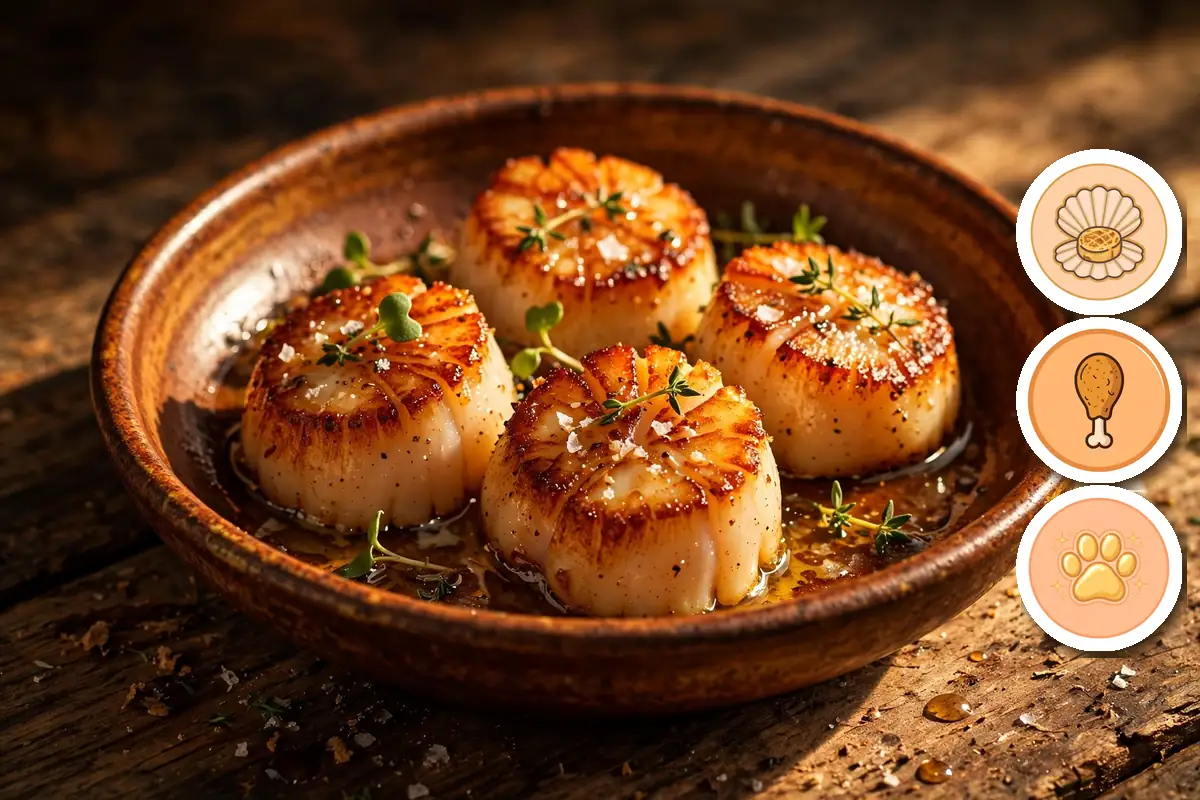
The key considerations are preparation and portion. Scallops must always be fully cooked, raw or undercooked scallops can harbor harmful bacteria (including Vibrio) and parasites that cause serious illness in dogs. And while scallops are nutritious, they contain significantly more sodium than most meats. A few plain scallops now and then are fine, but they should not become a regular part of your dog’s diet, particularly for dogs with heart or kidney conditions that require sodium restriction.
How you cook them matters enormously. Restaurant scallops are typically seared in butter with garlic, salt, and wine, all inappropriate for dogs. At home, steam, boil, or dry-sear scallops with no oil, butter, or seasoning, let them cool completely, and cut them into bite-sized pieces.
Nutritional Profile of Scallops
| Nutrient (per 100g cooked) | Approximate Amount | Benefit for Dogs |
|---|---|---|
| Protein | 20 g | Supports muscle maintenance and repair |
| Vitamin B12 | 2 mcg | Supports nerve function and red blood cells |
| Magnesium | 37 mg | Supports bones and muscle function |
| Potassium | 314 mg | Supports heart and muscle health |
| Omega-3 fatty acids | Moderate | Supports skin, coat, and anti-inflammatory effects |
| Sodium | 660 mg | High, the main reason for strict moderation |
Calories in Scallops
Cooked scallops contain roughly 110–120 calories per 100g, quite lean for seafood. A single large sea scallop is about 25–35 calories. Treats should make up no more than 10% of your dog’s daily calories, so one or two scallops is plenty for most dogs as an occasional treat.
Benefits of Feeding Scallops to Dogs
1. High-Quality Lean Protein
Scallops provide complete, easily digestible protein that supports muscle maintenance, tissue repair, and overall health, ideal for active dogs.
2. Rich in Vitamin B12
B12 supports nervous system function and red blood cell formation. Dogs with digestive issues that impair B12 absorption may particularly benefit from B12-rich foods.
3. Omega-3 Fatty Acids
Scallops contain beneficial omega-3s that support healthy skin and coat and may help manage inflammatory conditions like arthritis.
4. Important Minerals
Magnesium, potassium, and phosphorus in scallops support bone health, muscle function, and cellular processes.
5. Low in Fat
Compared to salmon or mackerel, scallops are very lean, a good protein treat option for dogs that need to watch their fat intake.
Risks and Disadvantages
1. High Sodium Content
Scallops are naturally salty, far saltier than most meats. Excess sodium causes thirst, and in large amounts can contribute to hypertension or harm dogs with heart or kidney disease. Keep servings small and infrequent.
2. Raw Seafood Dangers
Raw scallops can carry Vibrio bacteria, norovirus, and parasites. Always cook scallops to an internal temperature of 145°F (63°C).
3. Shellfish Allergies
Some dogs are allergic to shellfish. Introduce scallops with a tiny amount first and watch for itching, swelling, vomiting, or diarrhea.
4. Seasoning and Butter
Garlic butter, salt, pepper, and wine sauces common in human scallop dishes are all inappropriate for dogs. Only plain-cooked scallops are safe.
5. Choking Risk
Large sea scallops can be a choking hazard, especially for small dogs. Always cut into small, bite-sized pieces.
Can Dogs Eat Raw Scallops?
No. Raw scallops pose risks of bacterial infection and parasites. Sashimi-grade scallops prepared for humans still carry risks for dogs, whose digestive systems handle raw seafood differently. Always cook scallops thoroughly before sharing.
Can Dogs Eat Fried or Bacon-Wrapped Scallops?
No. Fried scallops absorb excess oil, and bacon adds dangerous levels of fat and sodium, a combination that can trigger pancreatitis. Bacon-wrapped scallops are a double hazard. Stick to steamed, boiled, or dry-seared plain scallops.
How Much Scallops Can a Dog Eat?
| Dog Size | Weight | Safe Occasional Serving |
|---|---|---|
| Extra small | Under 10 lbs | ½ small scallop, cut up |
| Small | 10–25 lbs | 1 small scallop |
| Medium | 25–60 lbs | 1–2 scallops |
| Large | 60–100 lbs | 2–3 scallops |
| Giant | Over 100 lbs | 3–4 scallops |
Offer scallops no more than once or twice a week due to the sodium content.
Can Puppies Eat Scallops?
A tiny piece of plain cooked scallop is unlikely to harm a puppy, but puppies have developing digestive systems and lower sodium tolerance. It is best to wait until your puppy is older and stick to puppy-formulated food and vet-approved treats during growth.
How to Safely Feed Scallops to Your Dog
Ways to Serve
- Steam or boil scallops with no oil, butter, salt, or seasoning until fully opaque and firm.
- Alternatively, dry-sear in a non-stick pan with no fat until cooked through.
- Remove the small tough side muscle (the “foot”) if still attached.
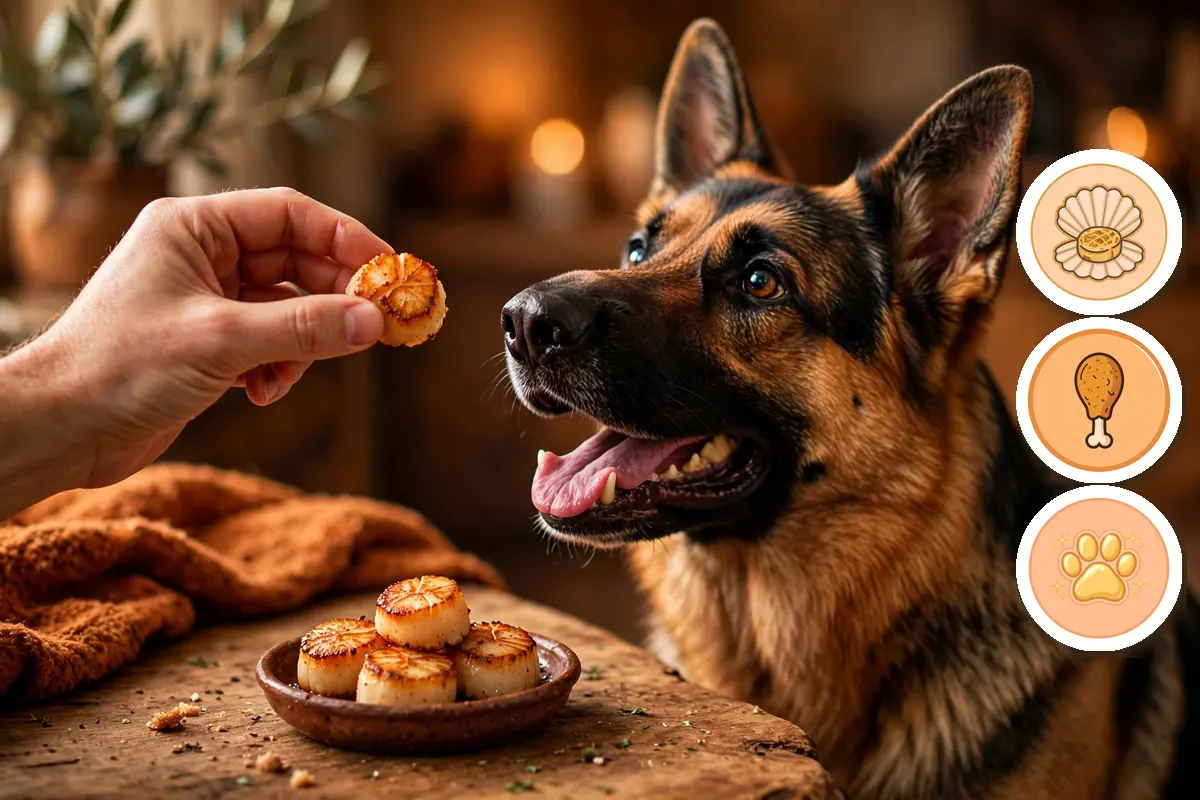
- Let cool completely, then chop into small bite-sized pieces.
- Serve as an occasional topper on regular dog food, not as a meal replacement.
- Introduce with a single small piece first to check for shellfish sensitivity.
Scallops vs. Other Seafood for Dogs
| Seafood | Safety | Notes |
|---|---|---|
| Scallops (plain, cooked) | Safe in moderation | High sodium, limit frequency |
| Shrimp (plain, cooked) | Safe in moderation | Lower sodium; remove shells and tails |
| Salmon (plain, cooked) | Safe in moderation | Rich in omega-3s; watch for bones |
| Tuna | Occasional only | Mercury concerns with frequent feeding |
| Raw shellfish | Avoid | Bacteria and parasite risk |
Frequently Asked Questions
Can dogs eat scallops from a restaurant?
Generally no, restaurant scallops are cooked with butter, salt, garlic, and often wine. Only share scallops you have cooked plainly at home.
Can dogs eat the orange part (roe) of the scallop?
The roe is edible but richer and stronger-tasting. It is safe in the tiny amounts attached to a scallop, but the white muscle is the best part to share.
Are bay scallops or sea scallops better for dogs?
Both are fine when plain and cooked. Bay scallops are smaller (less choking risk); sea scallops must be cut into pieces.
Can dogs eat dried scallops?
Dried scallops (conpoy) are extremely high in sodium and should be avoided.
My dog ate a garlic-butter scallop. What should I do?
One scallop is unlikely to cause serious harm in a medium or large dog, but monitor for vomiting, diarrhea, or lethargy. Call your vet if your dog is small or ate several.
How often can dogs eat scallops?
Once or twice a week at most, in the small portions above, due to sodium content.