
Can Humans Eat Dog Food?

Quick Answer: Technically yes, a human can eat a small bite of dog food, but it is not recommended. Dog food is not toxic to people in general, yet it is made for a dog’s needs, not a human’s, and it can carry Salmonella and other bacteria. A taste will not send you to the hospital, but dog food should never become part of a human diet.
Key Takeaways
- A small taste of dog food is not usually dangerous, but it is not recommended.
- Dog food is formulated for dogs, so it does not meet human nutritional needs.
- Raw and wet dog food can carry Salmonella and other bacteria.
- Dog food may contain meat by-products, bone meal, and additives not approved for human food.
- Children, pregnant women, and people with weak immune systems face higher risk from dog food.
- After eating dog food by accident, watch for nausea, vomiting, or diarrhea.
- Store dog food separately and wash your hands after handling it.
Can Humans Eat Dog Food?
Yes, humans can technically eat dog food, and a single bite is unlikely to cause serious harm in a healthy adult. Dog food is made from ingredients that are generally edible, such as meat, grains, and vegetables, and it is not designed to be poisonous. People have eaten it by accident or out of curiosity and usually walked away with nothing worse than a bad taste. That said, “not poisonous” is very different from “safe to eat.”
The main problem is that dog food is made for dogs, not people. Dogs and humans have different nutritional needs and different tolerances for bacteria. A dog’s stomach handles bacteria that would make a person sick, and dog food is produced under pet food safety rules, which are less strict than human food rules.
There is also a nutritional mismatch. Dog food is high in certain nutrients dogs need and low in others that humans need. It is often very high in protein and fat, low in fiber, and missing the vitamin C a human diet requires. Eating it once will not hurt your nutrition, but eating it regularly could strain your kidneys and liver over time.
Nutritional Profile of Dog Food
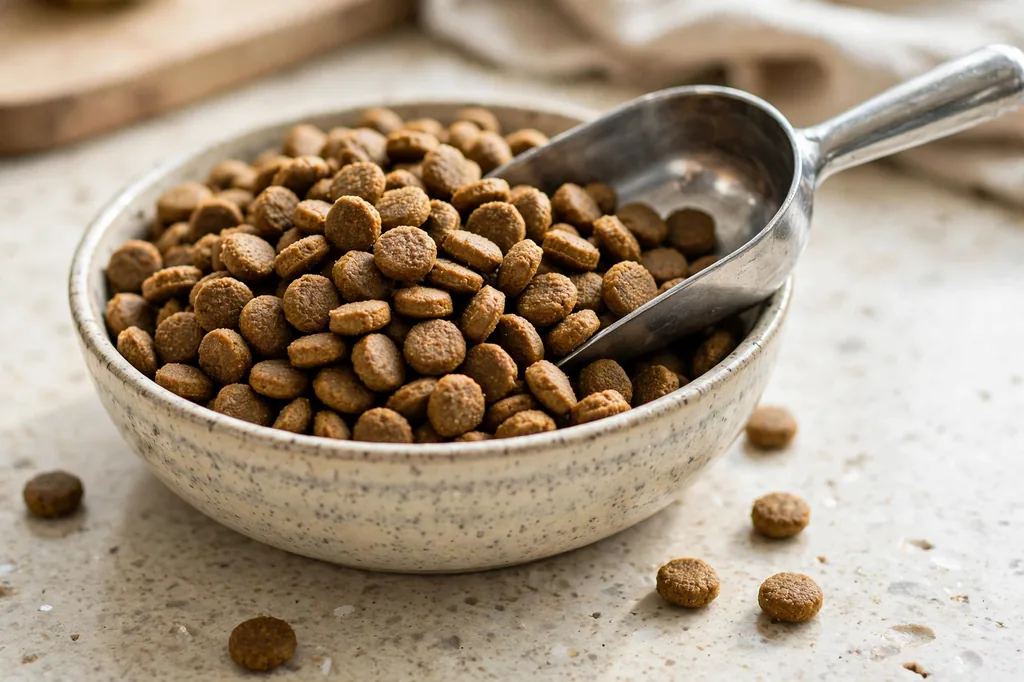
The table below shows the typical nutrition of dry dog food per 100 grams and what each nutrient means for a human who eats it. Values vary by brand and recipe.
| Nutrient | Amount per 100g | What it means for humans |
|---|---|---|
| Calories | 360 kcal | Energy-dense, mostly from fat and protein |
| Protein | 24 g | High protein; more than most human snacks |
| Fat | 14 g | Moderate to high; often rendered animal fat |
| Carbohydrates | 48 g | Mostly from corn, wheat, or rice fillers |
| Fiber | 4 g | Low for a human diet, which needs more fiber |
| Sodium | 0.3 g | Within normal range, but varies by brand |
| Vitamin A | 500 IU | Present, but dogs and humans absorb it differently |
| Calcium | 1.2 g | High for humans; excess calcium can strain kidneys |
| Vitamin C | 0 mg | Absent, because dogs make their own |
Calories in Dog Food
Dry dog food contains about 360 calories per 100 grams, similar to many human snacks. Wet dog food is much lower, around 80 to 120 calories per 100 grams, because it is mostly water. The calories themselves are not the problem. The problem is what they are made of: rendered fats, meat meals, and grain fillers that offer little of what a human body needs.
Benefits of Dog Food for Humans
Let us be honest: there are no real health benefits to eating dog food as a human. The points below explain what dog food contains, not reasons to eat it.
1. High in Protein
Dog food is rich in protein, usually 20 to 30 percent by weight in dry kibble. Humans get better protein from foods like plain cooked chicken, eggs, fish, and beans, which are produced under human food safety rules.
2. Contains Some Vitamins and Minerals
Dog food is fortified with vitamins A, D, E, and B vitamins, plus zinc and iron. These are added in amounts meant for dogs, so the balance is wrong for people.
3. Provides Quick Energy
The fat and carbohydrate content of dog food delivers fast calories, which is why it can seem filling in a pinch. In a true emergency, those calories could help, but so could any human snack.
4. Long Shelf Life
Dry kibble keeps for months without refrigeration, which makes it practical as pet food. That shelf life comes from heavy processing and preservatives.
5. Cheap Source of Calories
Dog food is inexpensive per calorie, which is part of why some people ask about it in hard times. Human staples such as plain white rice, oats, lentils, and potatoes are just as cheap and far safer.
Risks and Disadvantages of Dog Food for Humans

1. Bacterial Contamination
The biggest risk is bacteria. Dog food, especially raw and wet varieties, can carry Salmonella, Listeria, and E. coli. Dogs often tolerate these bacteria, but humans can develop food poisoning with vomiting, diarrhea, and fever.
2. Ingredients Not Approved for Human Food
Dog food may contain meat by-products, rendered fats, bone meal, and animal parts not approved for human consumption. These ingredients are legal in pet food but would not pass human food inspection.
3. Nutritional Imbalance
Dog food lacks vitamin C entirely, because dogs produce it in their own bodies and humans do not. It is also often too high in protein and calcium for humans, and regular eating could lead to deficiency and kidney strain.
4. Risk for Vulnerable People
Children, pregnant women, older adults, and people with weakened immune systems face much higher risk from contaminated dog food. A child who eats kibble from the bowl can develop a serious infection from a small dose.
5. Possible Toxins and Contaminants
Pet food has been recalled for contaminants such as aflatoxins from moldy grain and excess vitamin D, both of which can harm humans too. Pet food safety testing is less strict than human food testing.
What Happens If a Human Eats Dog Food?
In most cases, nothing serious happens after a single bite. You may notice an unpleasant taste and mild stomach discomfort. The real concern begins with larger amounts or with raw and wet food, where bacterial contamination is more likely. Symptoms of food poisoning, such as nausea, vomiting, diarrhea, and cramps, usually appear within 6 to 72 hours. If symptoms are severe, or if a child or vulnerable person ate the food, contact your doctor.
Is Dog Food Safe for Humans to Eat Regularly?
No, dog food is not safe for humans to eat regularly. A one-time taste is one thing, but a regular diet of dog food would leave you short on vitamin C and fiber while giving you excess protein, calcium, and fat. Over weeks and months, that imbalance can strain your kidneys and liver. Human food is cheaper, safer, and nutritionally complete, so there is no reason to rely on dog food.
Can Humans Eat Dog Food in an Emergency?
In a genuine survival emergency, a small amount of dry dog food is one of the least dangerous non-human foods you could eat. It can provide calories when nothing else is available. Even then, choose dry kibble over raw or wet food, eat as little as possible, and drink clean water with it. This is a last-resort option only, and you should return to human food as soon as you can.
How Much Dog Food Can a Human Eat?
There is no safe recommended amount of dog food for humans, because it is not human food. The table below describes what to expect at different amounts after an accidental taste.
| Amount Eaten | Who It Affects | What to Expect |
|---|---|---|
| A single bite | Healthy adult | Usually no symptoms, bad taste only |
| A small handful | Healthy adult | Possible mild stomach upset; monitor 24 hours |
| A small bowl | Healthy adult | Higher food poisoning risk; watch for vomiting |
| A full meal | Anyone | Call your doctor if symptoms appear |
| Any amount | Child or vulnerable person | Call your doctor promptly, even for a small bite |
If you swallowed dog food and develop fever, bloody diarrhea, or symptoms that last more than a day, seek medical care.
Can Children Eat Dog Food?
No, children should never eat dog food. Toddlers are the most likely to grab kibble from a pet bowl, and they are also the most vulnerable to the bacteria it can carry. A child’s smaller body and developing immune system mean a dose that barely affects an adult can cause a serious infection in a child. Keep pet food bowls out of reach, store dog food in sealed containers, and teach children that pet food is for pets only. If your child eats dog food, call your pediatrician.
How to Safely Serve Dog Food Around Humans
Dog food belongs to your dog, and safe handling protects everyone in the house.
Ways to Serve
- Use a dedicated scoop: Keep a scoop just for dog food and wash it regularly, so kibble never touches human food utensils.
- Feed in one spot: Serve meals in your dog’s usual feeding area, away from the kitchen counter and children’s play areas.
- Store it sealed: Keep kibble in a sealed container off the floor, so children and pets cannot help themselves.
- Wash your hands: Wash with soap and water after handling dog food, especially raw or wet food, before you touch human food.
- Offer safe foods instead: If you want to share a snack with your dog, offer foods made for both, such as plain pumpkin, rather than eating from the dog’s bowl.
Dog Food vs. Human Food for People
Dog food and human food may look similar, but they are made to different standards for different species. This table shows why human food wins for people.
| Factor | Dog Food | Human Food |
|---|---|---|
| Safety standards | Pet food rules, less strict testing | Human food rules, strict inspection |
| Bacteria risk | Higher; Salmonella recalls common | Lower; strict handling rules |
| Vitamin C | Absent | Present in fruits and vegetables |
| Protein level | Very high, set for dogs | Balanced for human needs |
| Calcium level | High, set for dogs | Balanced for human needs |
| Ingredient quality | By-products and rendered fats | Human-grade ingredients |
| Cost per calorie | Cheap | Cheap for staples |
Frequently Asked Questions
Is dog food toxic to humans?
No, dog food is not generally toxic to humans, and a small bite is unlikely to cause poisoning. The danger comes from bacteria and contaminants, not from a poison built into the food.
Can eating dog food make you sick?
Yes, eating dog food can make you sick, mainly through food poisoning from bacteria such as Salmonella. Symptoms include nausea, vomiting, diarrhea, cramps, and fever, usually within 6 to 72 hours. Most healthy adults recover within a few days.
Why do people eat dog food?
People eat dog food mostly by accident, out of curiosity, or because a child grabbed it from a pet bowl. In rare cases, people in extreme poverty or survival situations have eaten it for calories.
Is dry kibble safer than wet dog food for humans?
Yes, dry kibble is generally safer than wet or raw dog food, because it has less moisture for bacteria to grow in. It is still not safe by human food standards, and it can still carry Salmonella.
What should I do if my child eats dog food?
Stay calm and check how much they ate. Remove any remaining food from their mouth, give them water, and watch for vomiting, diarrhea, or fever over the next day or two. Call your pediatrician for advice.
Can dogs eat human food instead?
Many human foods are safe for dogs in small amounts, such as plain cooked chicken, rice, and pumpkin, but the reverse is not true. Human food is made to stricter safety standards, which is why sharing your food with your dog is safer than eating from your dog’s bowl.