Can Dogs Eat Pork Chops?

Quick Answer: Yes, dogs can eat pork chops if the meat is plain, fully cooked, boneless, and trimmed of fat. The chop itself is just pork, a safe protein. The real hazards are the bone, the fatty edge, and the seasonings people usually add. Remove the bone, trim the fat, skip the seasoning, and a pork chop becomes a perfectly fine occasional treat. Curious about other foods? See if shrimp is safe for dogs. Many owners also wonder can dogs eat parmesan cheese before sharing snacks. As you plan dog-friendly treats, find out whether brie cheese is safe for dogs.
Key Takeaways
- The meat of a plain cooked pork chop is safe for dogs in moderation, always remove the bone first.
- Pork chop bones are among the most dangerous bones for dogs: they splinter into sharp shards.
- Trim the thick fat cap, excess fat can cause digestive upset or pancreatitis.
- Serve pork chops completely plain: garlic, onion, and heavy salt are all dangerous for dogs.
- Cook pork chops thoroughly (at least 145°F / 63°C internal), never feed raw or rare pork.
- Center-cut loin chops are the leanest option; rib chops are fattier and bonier.
- A few bite-size pieces as an occasional treat is plenty; pork chops should not replace balanced dog food.
Can Dogs Eat Pork Chops?
Yes, a pork chop is simply a cut of pork, and plain cooked pork is a safe, nutritious meat for dogs. A boneless, skinless, unseasoned chop that has been cooked through provides quality protein, B vitamins, zinc, and iron. Many dogs enjoy pork, and it is a common protein in commercial dog foods made for dogs with chicken or beef sensitivities.
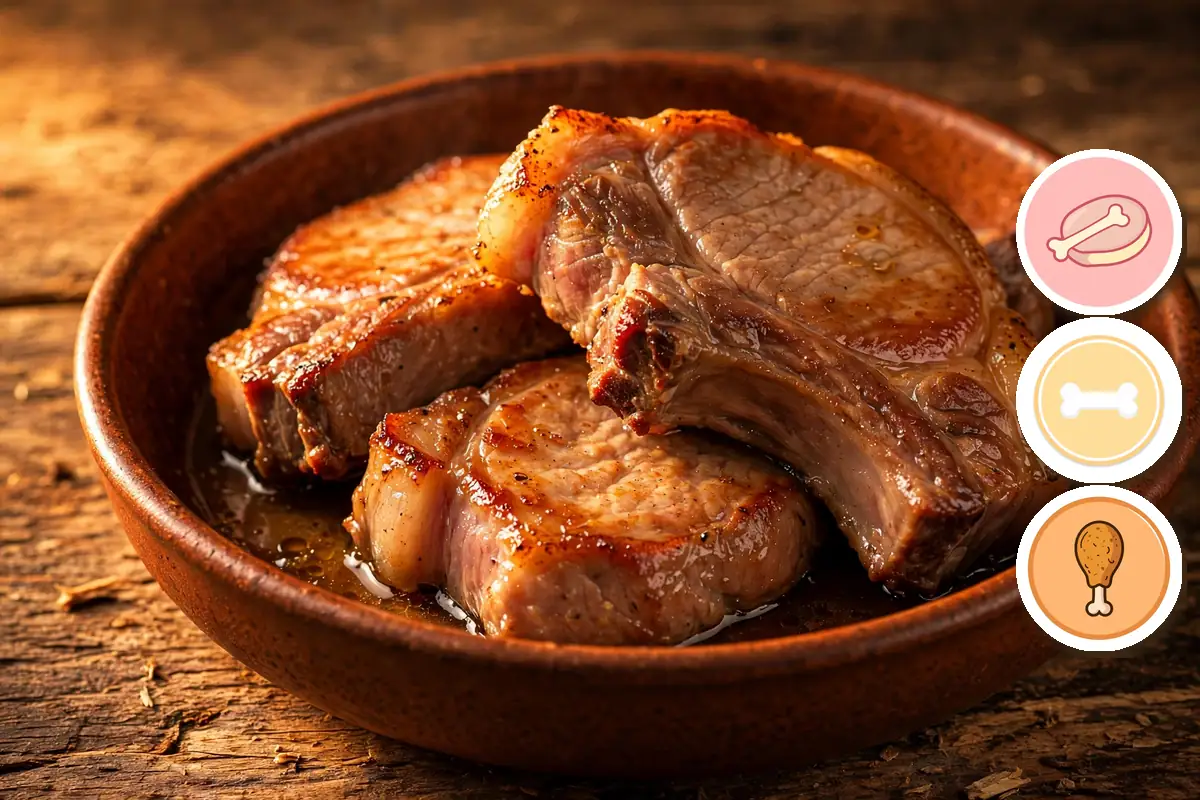
What makes pork chops specifically risky is everything around the meat: the bone, the fat cap, and the seasoning. Pork chops are typically cooked with the bone in, fringed with a thick layer of fat, and rubbed with garlic, onion powder, salt, and herbs. Every one of those extras needs to go before the meat reaches your dog’s bowl.
The single most important step is bone removal. Pork chop bones, especially after cooking, are brittle and break into sharp splinters that can lacerate the mouth and throat, cause choking, or puncture the stomach and intestines. This is a genuine veterinary emergency risk, not a minor concern. Always debone the chop completely, including small fragments near the joint.
Nutritional Profile of Pork Chops
| Nutrient (per 100g cooked loin chop, lean only) | Amount | Potential Benefit for Dogs |
|---|---|---|
| Protein | 27g | Supports muscle maintenance and repair |
| Fat | 12–14g | Energy source; trim the fat cap to reduce |
| Thiamine (B1) | 0.9 mg | Supports energy metabolism and nerves |
| Niacin (B3) | 6.5 mg | Supports skin and digestive health |
| Vitamin B6 | 0.7 mg | Supports brain and immune function |
| Zinc | 2.4 mg | Supports skin, coat, and immunity |
| Iron | 1 mg | Supports red blood cells and oxygen transport |
| Phosphorus | 240 mg | Supports bones and teeth |
Calories in Pork Chops
A lean cooked pork chop contains roughly 230–250 calories per 100 grams of meat. The fatty edge and any breading or frying can push that much higher, a breaded, fried pork chop can exceed 350 calories per 100g. As with any treat, pork chop pieces should stay within 10% of your dog’s daily calorie intake, and leaner center-cut chops are the better pick.
Benefits of Feeding Pork Chops to Dogs
1. High-Quality Complete Protein
Pork chop meat provides all essential amino acids in digestible form, supporting muscle maintenance and overall condition.
2. Rich in B Vitamins
Pork is especially rich in thiamine, plus niacin and B6, which support energy metabolism, nerve function, and immunity.
3. Provides Zinc and Iron
These minerals support immune health, a healthy coat, and red blood cell production.
4. Good Alternative for Sensitive Dogs
Dogs that react to chicken or beef often do well on pork, and it is a common novel protein in limited-ingredient diets.
5. Lean Cuts Are Reasonably Low in Fat
A trimmed center-cut loin chop is relatively lean, comparable to many other meats dogs eat regularly.
Risks of Feeding Pork Chops to Dogs
1. Bones Splinter and Can Cause Emergencies
Cooked pork chop bones splinter into sharp fragments that can cut the mouth and throat, cause choking, or perforate the intestines. Never let your dog chew pork chop bones.
2. The Fat Cap Can Trigger Pancreatitis
The thick rim of fat on many chops is a concentrated dose of grease. Eating it can cause vomiting and diarrhea, or trigger pancreatitis in susceptible dogs. Trim all visible fat.
3. Seasoning, Garlic, and Onion Are Toxic
Pork chops are routinely seasoned with garlic powder, onion powder, and heavy salt. Garlic and onion damage dogs’ red blood cells. Only ever share completely plain meat.
4. Raw or Undercooked Pork Carries Parasites
Raw pork can carry Trichinella parasites and, in some regions, the fatal Aujeszky’s disease virus. Always cook pork chops thoroughly to at least 145°F (63°C).
5. Fried or Breaded Chops Are Too Rich
Breading and frying add fat, salt, and often onion or garlic in the coating. Stick to baked, boiled, or grilled chops with no coating.
6. Smoked or Cured Chops
Smoked pork chops and similar cured products contain high sodium and preservatives, not suitable for dogs beyond a rare tiny taste.
Can Dogs Eat Pork Chop Bones?
No. Cooked pork chop bones are one of the most hazardous bones you can give a dog. They splinter easily into sharp shards that can lacerate the digestive tract or cause life-threatening blockages. Raw pork bones carry parasite and bacterial risks. Remove every trace of bone, including small chips near the joint, before sharing any pork chop meat.
Can Dogs Eat Raw Pork Chops?
No. Raw pork can transmit Trichinella spiralis parasites and the Aujeszky’s disease (pseudorabies) virus, which is almost always fatal in dogs. Always cook pork chops fully through; pink or rare pork is not safe for dogs.
Can Dogs Eat the Fat on Pork Chops?
No, trim it off. The fat cap is pure grease with no nutritional upside for your dog. Even a modest amount can cause an upset stomach, and in sensitive dogs a fatty meal can trigger pancreatitis, which causes severe abdominal pain, vomiting, and lethargy requiring emergency care.
How Much Pork Chop Can a Dog Eat?
Deboned, fat-trimmed, plain cooked pork chop meat should be an occasional treat or topper, not a meal. A few times per week at most.
| Dog Size | Weight | Safe Treat Amount (deboned lean meat) |
|---|---|---|
| Extra small | Under 5 kg | 1–2 small pieces (about 1 tbsp) |
| Small | 5–10 kg | 2–3 pieces (about 2 tbsp) |
| Medium | 10–25 kg | A small handful (about 1/4 cup) |
| Large | 25–40 kg | About 1/3 cup diced |
| Giant | Over 40 kg | About 1/2 cup diced |
Can Puppies Eat Pork Chops?
Yes, in small amounts, plain, fully cooked, deboned, fat-trimmed pork chop meat is digestible for puppies. But puppies have precise growth nutrition needs, so it should only be a tiny treat on top of their balanced puppy food. Never give puppies bones, fat, or seasoned meat.
How to Safely Feed Pork Chops to Your Dog
Ways to Serve Pork Chops to Dogs
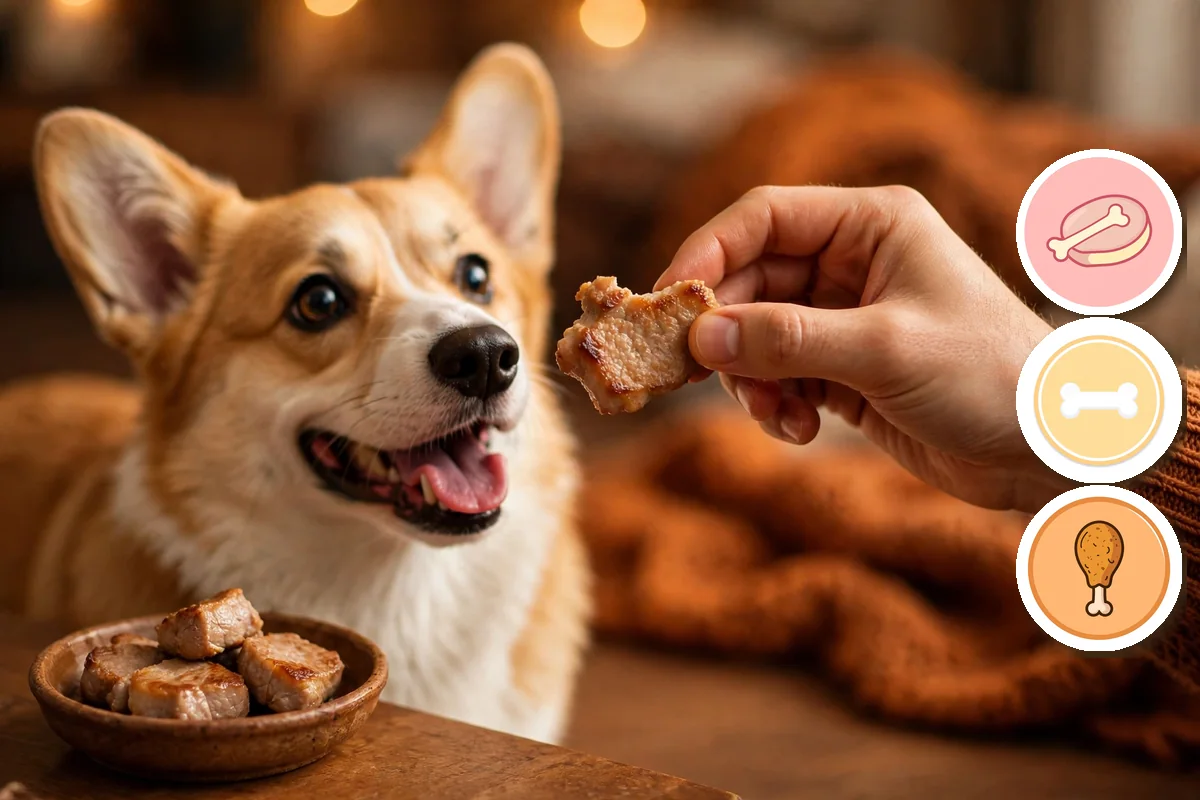
- Debone and dice: Cook a plain chop, remove every bone fragment, trim all fat, and cut the meat into bite-size pieces.
- Set aside a plain portion: Cook your dog’s piece separately with no seasoning, oil, or marinade.
- Food topper: Mix a tablespoon or two of diced plain pork chop into regular kibble.
- Frozen rewards: Freeze small pieces of plain cooked chop for high-value training treats.
Pork Chops vs. Other Pork Cuts for Dogs
| Cut | Fat Level | Bone | Verdict for Dogs |
|---|---|---|---|
| Center-cut loin chop | Lean | Usually bone-in, remove it | Best chop choice, deboned and trimmed |
| Rib chop | Higher fat | Bone-in, remove it | Okay in small amounts after trimming |
| Pork tenderloin | Very lean | Boneless | Excellent; easiest safe option |
| Smoked/cured chop | Varies | Varies | Avoid, too much sodium |
Frequently Asked Questions
Can dogs eat pork chop bones if they are raw?
No. Raw pork bones carry the same parasite and bacterial risks as raw pork meat. No pork bones, cooked or raw.
My dog stole a pork chop bone, what should I do?
Remove any remaining bone, then watch for choking, drooling, vomiting, abdominal pain, loss of appetite, or bloody stool. Do not induce vomiting without veterinary advice. Call your vet promptly if you see any symptoms.
Can dogs eat breaded pork chops?
No. Breading adds fat and salt, and the coating often contains onion or garlic powder. Only share plain, uncoated meat.
Are pork chops better than chicken for dogs?
Nutritionally similar; chicken breast is leaner. Pork chops are mainly useful as an alternative protein for dogs that do not tolerate chicken.
Can dogs eat pork chop fat trimmings?
No. Fat trimmings can cause digestive upset and pancreatitis. Discard them instead.
Can dogs eat pork chops with apple sauce?
Plain unsweetened applesauce in a tiny amount is fine, but most apple sauces contain added sugar. The pork itself must still be plain, deboned, and fat-trimmed.