
Can Dogs Eat Apples?

Quick Answer: Yes, dogs can eat apples. Fresh apple flesh is safe and healthy for most dogs when the seeds and core are removed and the fruit is served in small pieces. Apples are low in fat, rich in fiber, vitamin C, and vitamin A, and they make a crunchy, hydrating treat. A whole apple, the core, or a mouthful of seeds is a different matter, so preparation matters more than the fruit itself.
Key Takeaways
- Yes, fresh apple flesh is safe for most dogs when seeds and core are removed.
- Apples are low in fat and rich in fiber, vitamin C, vitamin A, and potassium.
- Apple seeds contain amygdalin, which can release cyanide, so always remove the seeds and core.
- Wash apples well before serving to remove pesticide residue from the skin.
- Keep apple portions small, since treats should stay under 10 percent of daily calories.
- Green apples follow the same rules as red apples, they are just more tart.
- Apple pie, apple juice, and caramel apples are not safe treats because of added sugar, butter, and spices.
Can Dogs Eat Apples?
Yes, dogs can eat apples, and most dogs enjoy them. The flesh of a fresh apple is safe, and it gives your dog fiber, vitamin C, vitamin A, and potassium without much fat or protein. Apples are one of the easiest fruits to share with a dog, because they are cheap, available all year, and easy to cut into safe pieces. Like bananas, which are safe for dogs in small portions, apples work best as an occasional treat rather than a daily food.
The important part is what you leave out. Apple seeds contain a compound called amygdalin, which can release cyanide when the seeds are chewed or digested. A single swallowed seed is unlikely to harm a healthy dog, but a dog that chews many seeds, or a small dog that eats several cores, faces a real risk. The core itself is a choking hazard, and the stem can lodge in the throat. Remove the core, seeds, and stem, then cut the flesh into thin slices or small cubes.
Your dog does not need apples to be healthy. A balanced dog food already provides the vitamins and minerals your dog needs, so apples add variety and crunch rather than filling a gap. Keep portions small and occasional.
Nutritional Profile of Apples
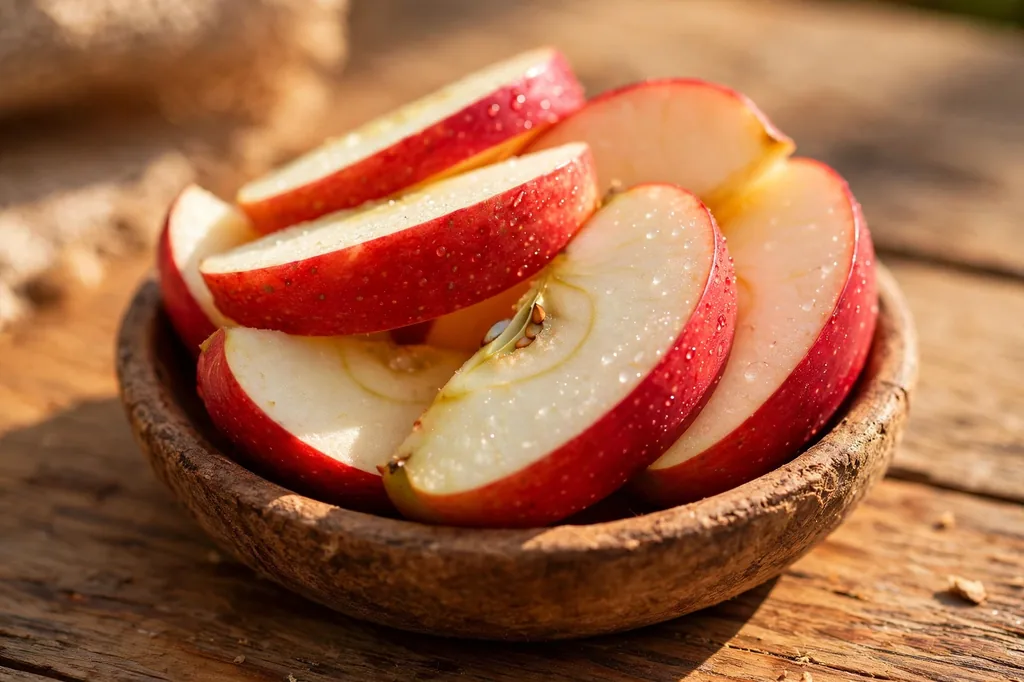
The values below are for raw apple flesh with the skin on, per 100 grams. A medium apple weighs about 182 grams, so one whole apple roughly doubles these amounts.
| Nutrient | Amount per 100g | Benefit for Dogs |
|---|---|---|
| Calories | 52 kcal | Low in energy, fits the treat allowance |
| Carbohydrates | 14 g | Natural sugars with fiber to slow digestion |
| Fiber | 2.4 g | Supports healthy digestion and stools |
| Sugars | 10 g | Natural fruit sugar, so portions stay small |
| Vitamin C | 4.6 mg | Supports the immune system and skin |
| Vitamin A | 3 mcg | Supports vision, skin, and immunity |
| Potassium | 107 mg | Supports muscle and nerve function |
| Vitamin K | 2.2 mcg | Supports normal blood clotting |
| Calcium | 6 mg | Supports bones and teeth in small amounts |
Calories in Apples
A medium apple carries about 95 calories, which is modest but meaningful for a dog. Treats should stay under 10 percent of your dog’s daily calories, and a single medium apple can use up that whole allowance for a small dog. Slices make portion control easy.
| Amount | Approximate Calories |
|---|---|
| 1 thin slice (about 10 g) | 5 kcal |
| Half a medium apple (about 91 g) | 47 kcal |
| 1 medium apple (182 g) | 95 kcal |
| 100 g of apple flesh | 52 kcal |
Benefits of Feeding Apples to Dogs
The benefits below come from fresh apple flesh served plain. Cooking, sweetening, or mixing apple into desserts changes the picture, so keep the fruit simple.
1. Fiber for Healthy Digestion
Apples contain soluble fiber, mostly pectin, which feeds the good bacteria in the gut and helps stools stay firm. A few slices can help mild constipation, while too much fiber at once can loosen stools, so start small.
2. Vitamin C for Immune Support
Apples provide vitamin C, which supports the immune system and helps the body make collagen for healthy skin and joints. Dogs make their own vitamin C, so apples are a bonus rather than a necessity, but the extra still helps.
3. Vitamin A for Eyes and Skin
The vitamin A in apples supports vision, skin health, and immune function.
4. Low-Calorie Crunch
At 52 calories per 100 grams, apples are one of the lowest-calorie sweet treats you can offer. The crunch also gives dogs something satisfying to chew, and chewing firm fruit can help scrape plaque from teeth, though it never replaces brushing.
5. Hydration and Potassium
Apples are about 86 percent water, so slices add hydration on a hot day. Their potassium supports normal muscle and nerve function. For a lower-sugar berry option, blueberries offer similar hydration with even fewer calories per bite.
Risks and Disadvantages of Apples for Dogs

Apples are safe for most dogs, but the risks are real when the fruit is served whole, in large amounts, or in processed form. All five below are easy to avoid.
1. Apple Seeds and Cyanide
Apple seeds contain amygdalin, which releases cyanide when chewed. A dog would need to chew quite a few seeds to reach a dangerous dose, but the risk is not worth taking. Always core the apple and throw the seeds away before serving.
2. Choking on the Core or a Whole Apple
A whole apple is too large for most dogs to chew safely, and the hard core can lodge in the throat or block the intestines. Puppies and small dogs face the highest risk. Cut the flesh into thin slices or small cubes, and never toss a whole apple to your dog.
3. Too Much Sugar
Apples are sweet, and their natural sugar adds up fast. Too much can upset the stomach, add weight, and make blood sugar harder to control in diabetic dogs. Keep servings small and count them as part of the daily treat allowance.
4. Stomach Upset from Too Much Fiber
A sudden large serving of apple can cause gas, soft stools, or diarrhea, especially in dogs with sensitive stomachs. Introduce apples slowly and stop if your dog shows digestive upset.
5. Pesticides and Wax on the Skin
Apple skins can carry pesticide residue and a wax coating. Wash every apple under running water and rub the skin before serving.
Can Dogs Eat Apple Seeds?
No, dogs should not eat apple seeds. Apple seeds contain amygdalin, a compound that releases cyanide when the seeds are chewed and digested. A single seed swallowed whole usually passes through without harm, because the hard coating protects it, but chewed seeds release the compound, and a small dog that eats several apple cores could ingest enough to cause vomiting, rapid breathing, and weakness. Always remove the core and seeds first, and keep fallen apples away from dogs in the garden.
Can Dogs Eat Apple Cores?
No, dogs should not eat apple cores. The core is the hard center of the apple, and it holds the seeds in a tight pocket that is easy to swallow but hard to chew safely. The core can lodge in the throat and cause choking, and it can block the intestines if swallowed in a large piece. Cut the apple into slices and throw the core away.
Can Dogs Eat Green Apples?
Yes, dogs can eat green apples such as Granny Smith, and the same rules apply. Green apples are more tart and slightly lower in sugar than red varieties, which makes them a good choice for dogs that need to watch their sugar intake. The flesh is just as safe, and the seeds, core, and stem still need to be removed. Offer one small slice first and see how your dog reacts.
How Much Apples Can a Dog Eat?
Apples are a treat, not a meal, so the 10 percent rule applies: treats should stay under 10 percent of your dog’s daily calories. The amounts below are daily maximums for healthy adult dogs, not targets. Start with half the amount and increase only if your dog tolerates it well.
| Dog Size | Weight | Max Apple per Day |
|---|---|---|
| Small | Under 10 kg | 1 to 2 thin slices |
| Medium | 10 to 25 kg | 3 to 4 slices |
| Large | 25 to 40 kg | Half a medium apple |
| Giant | Over 40 kg | Half to one small apple |
Can Puppies Eat Apples?
Yes, puppies can eat apples in very small pieces, once they are eating solid food. Cut the flesh into tiny cubes that cannot block the throat, and remove every seed and piece of core. Puppies have smaller bodies and more sensitive digestive systems, so start with a single small cube and watch for soft stools or stomach upset. Never give a puppy a whole apple or a slice with the core attached.
How to Safely Feed Apples to Your Dog
Serve apples plain, washed, cored, and cut into pieces that match your dog’s size. No sugar, no caramel, and no cooking in butter.
Ways to Serve
- Thin slices: Cut a washed, cored apple into thin slices for easy chewing and portion control.
- Small cubes: Dice the flesh into small cubes for puppies and small dogs.
- Frozen slices: Freeze thin slices for a cooling summer treat that also soothes teething puppies.
- Stuffed in a toy: Tuck apple cubes into a puzzle toy to slow your dog down and add mental stimulation.
- Paired with other foods: Mix apple cubes with plain cooked sweet potatoes for a fiber-rich snack that most dogs love.
- Baked plain: Bake cored apple slices with no sugar or spice for a soft treat for older dogs with weak teeth.
Apples vs Other Fruits for Dogs
Apples are safe when prepared and risky when whole. This table compares apples with other common fruits.
| Fruit | Safe for Dogs? | Main Concern |
|---|---|---|
| Apples | Yes, flesh only | Seeds and core must be removed |
| Bananas | Yes | High in sugar, keep portions small |
| Blueberries | Yes | Very low risk, watch for choking in tiny dogs |
| Watermelon | Yes, flesh only | Remove seeds and rind before serving |
| Grapes | No | Toxic to dogs, can cause kidney failure |
| Oranges | Yes, in small amounts | Acidic, can upset sensitive stomachs |
Frequently Asked Questions
Can dogs eat apple skin?
Yes, dogs can eat apple skin, and it holds much of the fiber. Wash the apple well first to remove pesticide residue and wax.
Can dogs eat apple pie?
No, apple pie is not safe for dogs. The filling has sugar, butter, and spices, and some recipes use xylitol, which is toxic to dogs.
Can dogs drink apple juice?
No, apple juice is not a good drink for dogs. It is high in sugar and low in fiber, and it can cause stomach upset and weight gain.
How many apple seeds are dangerous for a dog?
There is no fixed number, because it depends on the dog’s size and whether the seeds are chewed. Remove all seeds every time, and call your vet if your dog eats several cores.
Can dogs eat dried apples?
Plain dried apples with no added sugar are safe in very small amounts, but they are much higher in sugar per bite than fresh apples. Avoid sweetened dried apples.
Can dogs eat crab apples?
No, dogs should not eat crab apples. They are very tart, their seeds carry the same cyanide risk, and fallen crab apples ferment on the ground, which can cause stomach upset.
What should I do if my dog ate an apple core?
Stay calm and watch your dog for 24 to 48 hours. Remove any remaining apple pieces, offer water, and call your veterinarian if your dog shows symptoms.
Are apples good for dogs with diabetes?
Apples can fit into a diabetic dog’s diet in very small amounts, but they still contain natural sugar. Ask your veterinarian for a portion that fits your dog’s insulin plan.